
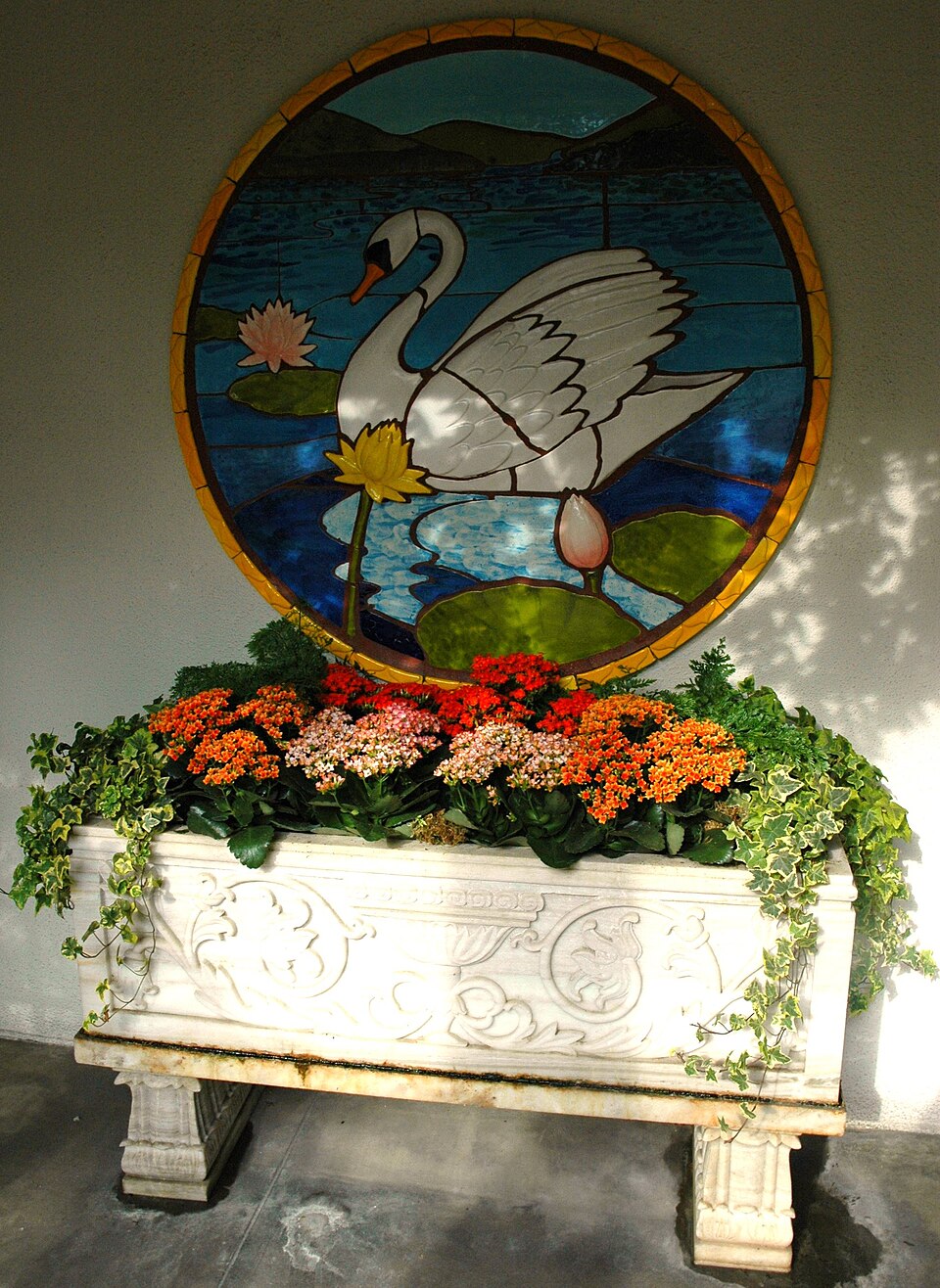
Hamsa (Swan) — Brahma's Vahana and Symbol of Discrimination
Discover the sacred symbolism of Hamsa, the divine swan serving as Lord Brahma's vahana. Learn about Neera-Ksheera Viveka, spiritual purity, and yogic meaning.
यह लेख अभी अंग्रेज़ी में उपलब्ध है। हिंदी अनुवाद के लिए नीचे बटन दबाएँ।
Next Vasant Panchami
Thursday, 11 February 2027· in 158 days
Set a reminder so you never miss Vasant Panchami.
Introduction
The scriptural origins of the Hamsa trace back to the most ancient layers of Vedic revelation. In the Rigveda, the Hamsa represents luminous celestial entities, the rays of the Sun, and the liberating movement of the soul toward truth. In the Upanishads—most explicitly in texts such as the Hamsa Upanishad, the Paramahamsa Upanishad, and the Chandogya Upanishad—the bird transcends its zoological form to become an allegory for the indwelling Self (the Jivatman) and its non-dual identity with the Supreme Reality (Brahman). The movement of the swan across terrestrial lakes and celestial skies reflects the soul's ability to inhabit the empirical realm of name and form while remaining anchored in absolute freedom.
The Puranic lore deeply enriches this sacred symbolism. In the Srimad Bhagavatam (Canto 11), Lord Vishnu incarnates as the Hamsa Avatara (the Golden Swan) to resolve the subtle, perplexing metaphysical queries posed by the Sanatkumāras regarding how an aspiring seeker can sever the mind's attachment to sense objects. Assuming this glorious avian form, Vishnu delivers the profound 'Hamsa Gita,' imparting the path of self-inquiry and detached devotion. As Lord Brahma's vahana, the Hamsa carries the cosmic architect across the manifest universe, reminding all created beings that the creation of the cosmos is not merely an act of material engineering, but an outpouring of divine intelligence governed by cosmic law (Rta).
Beyond cosmic mythology, the Hamsa holds an indispensable place in traditional Yogic philosophy. The very sound of natural human respiration is identified with the mystic rhythm of the swan: the natural inward breath resonates with the subtle sound of 'Ham' (or 'Sah'), and the outward breath resonates with 'Sah' (or 'Ham'). This spontaneous, unceasing cadence forms the 'Ajapa-Japa'—the effortless, continuous mantra 'Hamsah' or 'Soham' ('I am That') uttered by every living being twenty-one thousand six hundred times a day. Thus, the Hamsa is not an external creature to be admired from afar; it is the living breath of life that animates every sentient existence, constantly affirming our intrinsic divinity.
Culturally and monastically, the Hamsa serves as the definitive archetype of renunciation and self-realization within Sanatana Dharma. An ascetic who has attained the summit of spiritual illumination and severed all bonds of worldly attachment is consecrated with the sacred title of 'Paramahamsa' (the Supreme Swan)—a title borne by revered preceptors such as Sri Ramakrishna Paramahamsa and Paramahansa Yogananda. By contemplating the nature, grace, and inner esoteric architecture of the Hamsa, the spiritual seeker is guided to rise above the currents of illusion, embrace absolute purity of heart, and cross the ocean of mundane transmigration (Samsara).
Significance
In its theological association with Lord Brahma and Goddess Saraswati, the Hamsa signifies the primacy of pure Sattva Guna (the quality of light, harmony, and wisdom). Lord Brahma creates the manifest universe through cosmic ideation, which necessitates flawless clarity, equilibrium, and judgment unclouded by Rajas (passion) or Tamas (inertia). Similarly, Goddess Saraswati, draped in radiant white garments and holding the veena, rides upon the Hamsa to illustrate that true knowledge (Vidya) is sterile without the discernment to reject falsehood, malice, and sensory delusion. Her swan teaches students and practitioners that intellectual acquisition must lead directly to inner spiritual purification.
From a physical and ecological lens, the Hamsa provides a profound lesson in non-attachment (Asanga). Although the swan spends its entire life floating upon rivers and lakes, its feathers are naturally coated with a waxy substance that repels moisture. When it rises from the water and shakes its wings, not a single droplet clings to its plumage. In identical fashion, the Bhagavad Gita exhorts the spiritual aspirant to live fully within the waters of the empirical world, executing one's duties diligently, yet remaining entirely untouched by the clinging residues of desire, egoism, and karmic bondage. This quality of living in the world without being of the world is the very essence of Jivanmukti (living liberation).
In the realm of subtle yogic anatomy, the Hamsa represents the movement of Prana (vital life force) through the central subtle channel known as the Sushumna Nadi. The syllables 'Ham' and 'Sa' represent the union of masculine and feminine polarities—Shiva and Shakti, solar and lunar currents (Pingala and Ida). When the mind is calmed and breath is regulated through Pranayama, the inner Hamsa ascends beyond the lower chakras to the Sahasrara (the thousand-petaled lotus at the crown of the head), yielding the nectar of immortality and unitive bliss. Astrologically and ritualistically, meditating upon the Hamsa alleviates the malefic influences of planets associated with intellectual confusion or mental agitation (such as afflicted Mercury or Moon), blessing the sadhaka with razor-sharp intellect (Medha), eloquence (Vak Siddhi), and profound peace.
Best Time to Recite
Find your exact auspicious time Check the shubh muhurat and choghadiya for your city and date.
How to Recite
- 1Achamana & Sankalpa: Take three sips of sanctified water from your right palm reciting 'Om Keshavaya Namah, Om Narayanaya Namah, Om Madhavaya Namah'. State your sacred intention (Sankalpa) to cultivate spiritual discrimination (Viveka), mental purity, and wisdom.
- 2Dhyana (Contemplation): Close your eyes and visualize a radiant, pure white Hamsa gliding across the calm, crystalline waters of Lake Manasarovar, illuminated by the golden rays of dawn. Contemplate the bird as the personification of your inner Self.
- 3Avahana & Upachara: Mentally or ritualistically invoke Lord Brahma and Goddess Saraswati seated upon the Hamsa. Offer white chandan, unbroken white rice (akshata), and white fragrant blossoms at the base of the image or lamp.
- 4Pranayama & Ajapa-Japa: Focus completely on the natural ingress and egress of the breath. Silently witness the sound 'Ham' as the breath enters (or expands) and 'Sah' as it departs. Maintain this rhythmic awareness for 5 to 10 minutes, feeling the soul's identity as 'Soham' ('He am I').
- 5Mantra Japa: Take your Sphatik or white sandalwood mala and chant the Hamsa Gayatri Mantra or Saraswati Dhyana Mantra for 108 repetitions with reverence and single-pointed concentration.
- 6Naivedya & Arati: Offer freshly prepared kheer (sweet rice milk) or pure cow's milk as Naivedya. Perform a gentle Arati with burning camphor or the ghee lamp, singing or meditating upon the divine light that dispels inner darkness.
- 7Kshama Prarthana & Samarpana: Offer reverent prostrations (Pranama) touching the ground. Conclude by praying for forgiveness for any inadvertent flaws in meditation and surrender all fruits (Phala) of the practice to the Divine Supreme.
Mantras
Hamsa Gayatri Mantra
ॐ परमहंसाय विद्महे महाहंसाय धीमहि। तन्नो हंसः प्रचोदयात्॥
Om Paramahamsāya Vidmahe Mahāhamsāya Dhīmahi, Tanno Hamsah Pracodayāt.
Meaning: Om. May we realize the Supreme Swan (the transcendental Self). May we meditate deeply upon the Great Swan of cosmic truth. May that divine Hamsa inspire and awaken our spiritual intellect.
Saraswati Hamsa-Vahana Dhyana Shloka
हंसारूढा विपुला मतिदा शुभ्रवस्त्रा मनोहरा। भारती मे सदा पातु सर्वविद्याप्रदायिनी॥
Hamsārūḍhā Vipulā Matidā Śubhravastrā Manoharā, Bhāratī Me Sadā Pātu Sarvavidyāpradāyinī.
Meaning: Mounted upon the sacred swan, granter of expansive wisdom, attired in immaculate white garments, captivating to the heart—may Goddess Bharati (Saraswati), bestower of all sacred arts and sciences, protect and illumine me forever.
Ajapa Soham-Hamsa Mantra
हंसेन विष्णुरुपेण चक्ररूपेण पातु माम्। सोऽहं हंसः परं ब्रह्म आत्मरूपं विभावये॥
Hamsena Viṣṇurūpeṇa Cakrarūpeṇa Pātu Mām, So'ham Hamsaḥ Paraṁ Brahma Ātmarūpaṁ Vibhāvaye.
Meaning: May Lord Vishnu, manifest as the divine Swan and cosmic wheel, protect me. I contemplate the sacred identity: 'That Supreme Reality am I, the unblemished eternal Self.'
Do's
- ✓Do cultivate the attitude of 'Neera-Ksheera Viveka' in daily interactions by embracing virtues and ignoring transient defects in others.
- ✓Do focus on gentle, rhythmic, and conscious breathing during meditation to align with the Ajapa-Japa rhythm.
- ✓Do use items made of pure natural materials such as brass, copper, cotton wicks, and natural flowers for worship.
- ✓Do extend charity, compassion, and water/grain to birds and animals, honoring the divinity present in all living creatures.
Don'ts
- ✗Do not harbor cynicism, malice, or intellectual pride, as these directly contradict the Sattvic purity symbolized by the Hamsa.
- ✗Do not blow out sacred lamps or incense with the breath from your mouth.
- ✗Do not consume non-vegetarian food, alcohol, or other intoxicants on days dedicated to contemplative Hamsa sadhana.
- ✗Do not treat the spiritual symbol merely as a mythological curiosity; approach it as an instructional blueprint for the soul's liberation.
Common Mistakes to Avoid
- •Conflating the mythological and spiritual Hamsa solely with the common domestic goose or duck, missing its elevated metaphysical symbolism as the migratory swan of Manasarovar.
- •Chanting the Hamsa/Soham mantra rapidly with physical tension rather than synchronizing it gently with the organic, effortless flow of natural respiration.
- •Focusing merely on intellectual debates and philosophical terminology without applying practical discernment (Viveka) in one's personal moral conduct.
- •Ignoring the scriptural rule that sacred symbols representing wisdom require absolute humility and internal purification rather than ostentatious ritual display.
Frequently Asked Questions
Why is the Hamsa chosen as the vehicle (vahana) for both Lord Brahma and Goddess Saraswati?▾
What is the metaphorical meaning of 'Neera-Ksheera Viveka'?▾
Why are great spiritual masters called 'Paramahamsa'?▾
How is the Hamsa connected to the natural rhythm of human breathing?▾
Is the Hamsa a swan or a goose according to ancient texts?▾
लोकप्रिय टूल
References & Traditional Notes
- •Rigveda Samhita: Multiple suktas referencing the Hamsa as solar rays and liberated beings traversing the atmospheric realms.
- •Hamsa Upanishad (Shukla Yajurveda): Detailed esoteric discourse on the internal Hamsa, the 21,600 daily breaths, and the manifestation of inner unstruck sounds (Nada).
- •Srimad Bhagavata Purana (Canto 11, Chapter 13): The sacred narration of Vishnu's Hamsa Avatara and the profound dialogue known as the Hamsa Gita.
- •Chandogya Upanishad (4.7): Teachings regarding the four-fold quarters of Brahman where the Hamsa appears as an instructor of sacred truth.
Related Audio & Bhajans
Story Prahlad Holika Symbol Victory Lord Vishnu story|mythology|festival
फ्लिपकार्ट पर पूजा और त्योहारी सामग्री खरीदें
क्लिक करने पर हमारे एफ़िलिएट लिंक से फ्लिपकार्ट खुलता है। कीमत और उपलब्धता बदल सकती है।
फ्लिपकार्ट पर खरीदेंCueLinks प्रकाशक: 300371
मिंत्रा पर त्योहारी परिधान खरीदें
क्लिक करने पर हमारे एफ़िलिएट लिंक से मिंत्रा खुलता है। कीमत और उपलब्धता बदल सकती है।
CueLinks प्रकाशक: 300371