
Kabir Das — Life, Dohe, and Universal Spiritual Teachings
Explore the profound life, mystical Dohe, and timeless Nirguna philosophy of Sant Kabir Das, uniting devotional wisdom beyond religious sectarianism.
एफ़िलिएट प्रकटीकरण: सनातन हिंदू अमेज़न एसोसिएट्स प्रोग्राम और CueLinks एफ़िलिएट नेटवर्क (मिंत्रा और फ्लिपकार्ट) में भाग लेता है। इस पृष्ठ पर एफ़िलिएट लिंक हैं: यदि आप क्लिक करके खरीदते हैं तो हमें एक छोटा कमीशन मिलता है, आप पर बिना किसी अतिरिक्त लागत के। अमेज़न एसोसिएट के रूप में हम पात्र खरीद से कमाते हैं। पूरा प्रकटीकरण।
यह लेख अभी अंग्रेज़ी में उपलब्ध है। हिंदी अनुवाद के लिए नीचे बटन दबाएँ।
Introduction
Kabir’s spiritual initiation is inextricably tied to Swami Ramananda, a pioneering Vaishnava master of Kashi. According to sacred lore, recognizing that social conventions of ritual purity might prevent the orthodox guru from accepting a Muslim-caste weaver, young Kabir lay upon the steps of the Panchganga Ghat in the pre-dawn darkness. As Ramananda walked down toward the sacred Ganga for his morning ablutions, his foot accidentally brushed the young seeker. Startled, the master uttered the holy name 'Ram! Ram!' Kabir accepted this sacred utterance as his gurumantra, forever honoring Ramananda as his spiritual father while elevating the name of 'Ram' far beyond mythological boundaries into the infinite, formless Supreme Reality (Nirguna Parabrahman).
What set Kabir apart within the tapestry of Sanatana Dharma and North Indian mysticism was his fierce commitment to experiential truth (Anubhuti) over bookish knowledge (Pustakiya Gyan). He addressed both the Hindu Brahmin and the Muslim Qazi with equal fearlessness, exposing the hypocrisy of empty rituals, pilgrimage tours, rigid scriptural recital, and superstitious asceticism that failed to purify the inner soul. Kabir belonged to the Sant tradition, often categorized under the Nirguna Bhakti Shakha (the devotional path centered on the attributeless Divine), alongside masters like Guru Nanak and Sant Dadu Dayal. His verses did not merely teach an abstract philosophical monism; they throbbed with the raw agony of longing (viraha) and the ecstatic union of the soul (atma) with the eternal beloved (Paramatma).
Kabir's legacy was preserved not in classical Sanskrit, but in the accessible vernacular dialect known as 'Sadhukkadi' or 'Panchmel Khichdi'—a rich synthesis of Awadhi, Braj Bhasha, Bhojpuri, Punjabi, and Persian. His immense body of work was compiled posthumously into sacred collections like the 'Kabir Bijak', the 'Kabir Granthavali', and most notably, substantial portions of his compositions were reverently incorporated by Guru Arjan Dev Ji into the Guru Granth Sahib, establishing his immortal sanctuary in the heart of Sikh scripture. Today, the followers of the Kabir Panth preserve his memory not as an idol to be worshiped, but as a guiding light reminding humanity of its innate divinity and universal brotherhood.
Significance
Culturally and socially, Kabir served as a fearless social reformer and an unyielding bridge between warring traditions. In an era marked by geopolitical friction and rigid religious divisions, Kabir boldly asserted: 'Hindu kahe mohi Ram piyara, Turk kahe Rahmana; Aapas mein dou lari lari mue, maram na kou jana' (The Hindu says Ram is dear to him, the Muslim says Rahman; both quarrel and die, oblivious to the hidden truth). His teachings dissolved social untouchability by identifying the divine light in the untouchable, the weaver, the cobbler, and the sage alike, laying the ethical foundation for egalitarian movements across northern and western India for centuries to come.
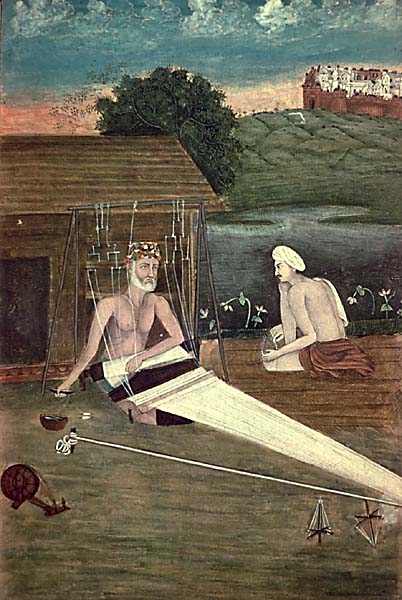
From an esoteric and yogic perspective, Kabir’s poetry is saturated with the imagery of internal transmutation. He spoke constantly of the Sahaja state (effortless, spontaneous union), the awakening of the inner sound (Anahata Nada), and the dripping of the nectar of immortality (Amrita) from the tenth gate (Brahmarandhra). Unlike severe ascetics who advocated torturing the physical body, Kabir celebrated the divine mechanism of the human frame as a sacred loom, weaving the fabric of actions with mindfulness, humility, and constant remembrance (Japa) of the Divine Name. His 'Ulatbansi' (upside-down poetry) serves as a potent contemplation tool designed to baffle the rational intellect and force the seeker into intuitive, non-conceptual realization.
Practically, engaging with Kabir’s Dohe (couplets) and Padas functions as an active Sadhana of self-reflection and ego-dissolution. In a modern world saturated with consumerism, external validation, and spiritual superficiality, Kabir commands the seeker to turn inward, to examine personal flaws before judging others, and to cultivate quiet detachment. His life concluded with a final defiance of superstition: choosing to leave his mortal frame in Magahar—a town traditionally believed to condemn departing souls to hell—rather than Kashi, proving unequivocally that liberation is a condition of awakened consciousness, not the consequence of geographic destiny.
Auspicious Time
Find your exact auspicious time Check the shubh muhurat and choghadiya for your city and date.
Required Samagri (Materials)
Preparation Steps
- 1Take a purificatory bath in the morning and dress in clean, unstitched or simple white cotton attire reflecting internal purity and simplicity.
- 2Cleanse the meditation or prayer area thoroughly, sweeping away dust as a symbolic act of sweeping negative tendencies from the mind.
- 3Place a wooden low table (chowki) covered with a clean white cloth, positioning the portrait or holy text of Kabir Das upon it.
- 4Light the earthen lamp and incense to sanctify the atmosphere, keeping the focus on inner stillness rather than elaborate physical offerings.
- 5Sit facing East or North on your asana in a steady, comfortable posture (Sukhasana, Padmasana, or Siddhasana), keeping the spine erect and relaxed.
- 6Perform three deep, conscious breaths (Pranayama) to calm the fluctuating modifications of the mind (chitta-vritti).
Steps
- 1Sankalpa (Intention Setting): Take a drop of water in the right palm and make a conscious mental declaration to cultivate humility, truthful speech, compassion, and devotional awareness inspired by Sant Kabir.
- 2Deepa Prajvalan (Lighting the Lamp): Light the ghee lamp while acknowledging the light within your own heart as identical to the eternal Supreme Reality (Paramatma).
- 3Guru Vandana: Pay reverent homage to the Guru lineage, Swami Ramananda, and Sant Kabir Das, recognizing the spiritual master as the vital boatman across the ocean of worldly illusion (Samsara).
- 4Dohe Svadhyaya (Sacred Recitation and Reflection): Chant 5 to 11 selected couplets of Kabir Das slowly, focusing on both the poetic rhythm and the razor-sharp spiritual inquiry behind each word.
- 5Naam Japa (Remembrance of the Supreme): Using your Tulsi mala, engage in silent or softly audible chanting of the Divine Name ('Ram', 'Soham', or 'Om'), directing your awareness to the heart center (Anahata Chakra) for 15-20 minutes.
- 6Dhyana (Silent Contemplation): Sit completely still for several minutes, letting go of all mental formulations, observing the inner stillness where the formless Divine resides.
- 7Arpan and Prasad Vitaran: Offer the simple satvik food offering (gur-chana or fruits) with genuine devotion, partake of it as sanctified grace, and resolve to practice honesty and compassion throughout the day.
Mantras
Guru Mahima Doha (Supreme Glory of the Guru)
गुरु गोविंद दोऊ खड़े, काके लागूं पांय। बलिहारी गुरु आपने, गोविंद दियो बताय॥
Guru Govinda dou khade, kake lagoon paanv; Balihari Guru aapne, Govinda diyo batay.
Meaning: Both the Guru and God stand before me; at whose feet should I bow first? All glory belongs to the Guru, who illuminated my path and revealed God unto me.
Kasturi Kundali Doha (The Inner Dwelling of the Divine)
कस्तूरी कुण्डलि बसै, मृग ढूँढै बन माहि। ऐसे घट-घट राम हैं, दुनिया देखै नाहिं॥
Kastoori kundali basai, mrig dhoondhai ban maahi; Aise ghat-ghat Ram hain, duniya dekhai naahin.
Meaning: The musk resides within the deer's own navel, yet it searches tirelessly through the entire forest. In the same way, Ram resides within every beating heart, yet the oblivious world looks outside.
Mati Kahe Kumhar Se (The Fragility of Ego and Life)
माटी कहे कुम्हार से, तू क्या रूँधे मोय। एक दिन ऐसा आएगा, मैं रूँधूँगी तोय॥
Maati kahe kumhaar se, tu kya roondhe moy; Ek din aisa aayega, main roondhoongi toy.
Meaning: The clay says to the potter: Why do you trample and knead me today? A day will inevitably arrive when you shall return to dust, and I will trample you beneath the earth.
Bura Jo Dekhan Main Chala (Self-Examination and Humility)
बुरा जो देखन मैं चला, बुरा न मिलिया कोय। जो दिल खोजा आपना, मुझसे बुरा न कोय॥
Bura jo dekhan main chala, bura na miliya koy; Jo dil khoja aapna, mujhse bura na koy.
Meaning: I set out in search of an evil person, but could not find a single one anywhere. When I finally peered deep into my own heart, I realized no one was more flawed than myself.
Pothi Padhi Padhi Doha (True Wisdom through Love)
पोथी पढ़ि पढ़ि जग मुआ, पंडित भया न कोय। ढाई आखर प्रेम का, पढ़े सो पंडित होय॥
Pothi padhi padhi jag mua, pandit bhaya na koy; Dhaai aakhar prem ka, padhe so pandit hoy.
Meaning: The whole world passed away reading heavy tomes and scriptures, yet none became truly wise. The one who masters the two-and-a-half letters of pure divine love alone is the true sage.
Guidelines
- •Observe pure satvik diet—strictly abstain from meat, fish, eggs, alcohol, onion, garlic, and processed stimulants on days dedicated to Kabir contemplation or Kabir Jayanti.
- •Practice absolute truthfulness (Satya) in speech and commercial dealings throughout the day, avoiding deceptive exaggeration or harsh words.
- •Maintain silence (Mauna) for at least one hour during the morning or evening hours to listen to the inner murmur of consciousness.
- •Engage in non-judgmental awareness; consciously restrain the mind whenever an urge arises to condemn, criticize, or mock another person's faith or social standing.
- •Perform voluntary acts of service (Seva)—such as feeding birds, stray animals, or giving unostentatious charity to the needy without seeking public recognition.
Do's
- ✓Read, chant, and deeply reflect upon at least one Doha of Kabir Das daily before starting your worldly work.
- ✓Treat your daily occupation (whether weaving, coding, teaching, or cleaning) as sacred worship performed for the Supreme.
- ✓Cultivate inner humility by continually acknowledging personal blind spots and egoistic tendencies.
- ✓Honor spiritual seekers across all traditions, understanding the fundamental unity of divine existence.
- ✓Practice simplicity in home decor, lifestyle, food, and wardrobe to reflect the spirit of Aparigraha (non-possessiveness).
Don'ts
- ✗Do not fall into the trap of empty religious showmanship, hypocritical ostentation, or external displays of piety while harboring malice inside.
- ✗Do not treat Kabir's songs as mere secular folk poetry; remember they are profound spiritual direct transmissions born of intense realization.
- ✗Do not engage in disputes over sectarian dogmas, scriptural superiority, or communal supremacy.
- ✗Do not overlook the suffering or basic needs of fellow human beings while spending resources on lavish religious rituals.
- ✗Do not confuse Kabir's Nirguna 'Ram' with narrow political or purely sectarian ideologies.
Common Mistakes to Avoid
- •Mistaking Kabir's sharp critique of ritualism for atheism or cynicism; in reality, Kabir was overflowing with intense, personal devotion to the Formless Supreme.
- •Equating the 'Ram' in Kabir's poetry exclusively with historical narrative, ignoring his explicit clarification that his Ram is unborn, all-pervading, and beyond form.
- •Chanting Kabir's Dohe superficially for poetic entertainment without assimilating the radical moral overhaul they demand in one's personal life.
- •Believing that one must leave family life and run away to forests to realize God, contrary to Kabir's living example of a householder-weaver saint.
Regional Variations
- •Kabir Panth Tradition: Practiced widely in Uttar Pradesh, Bihar, Chhattisgarh, and Madhya Pradesh, where formal Ashrams (like the Kabir Chaura Math in Varanasi) conduct specialized morning and evening Chouka aartis and singing of Bijak hymns.
- •Sikh Tradition: In Punjab and worldwide Gurudwaras, Kabir's 227 Padas and 237 Saloks preserved in the Sri Guru Granth Sahib are sung with profound veneration in classical Ragas as Gurbani/Bhagat Bani.
- •Malwa Folk Tradition: In Madhya Pradesh and Rajasthan, folk singers like Prahlad Singh Tipanya and wandering Baul/Nath minstrels sing Kabir’s verses with the rustic tambura and kartal, emphasizing personal mysticism and social liberation.
- •Dharamdasi Branch: A prominent lineage of the Kabir Panth centered in Chhattisgarh founded by Kabir's disciple Dharamdas, featuring distinct initiation rites (Kanthi Bandhan) and monastic orders.
Frequently Asked Questions
Was Sant Kabir Das a Hindu or a Muslim?▾
What is the core message of Kabir's philosophy?▾
What is the Kabir Bijak?▾
Why did Kabir choose to die in Magahar instead of Kashi?▾
What happened upon the passing of Sant Kabir?▾
लोकप्रिय टूल
References & Traditional Notes
- •Kabir Bijak, edited by Sukdev Singh and translated by Linda Hess and Shukdev Singh (Oxford University Press).
- •Sri Guru Granth Sahib Ji, containing 227 Padas and 237 Saloks of Bhagat Kabir Ji placed under various classical ragas (Raga Gauri, Raga Asa, etc.).
- •Kabir Granthavali, compiled and edited by Shyam Sunder Das and later scrutinized by Hazari Prasad Dwivedi.
- •Traditional oral records and chronicles preserved at the Kabir Chaura Math (Moolgadi), Varanasi, and Magahar Dham, Uttar Pradesh.
Related Audio & Bhajans
Spiritual Journey
The Stages of Spiritual Growth
Diwali Festival & Spirituality
Exploring Sant Mat Teachings Found in the Hindu Scriptures Plus Several Other Sant Mat Related Topics
Spirituality
एफ़िलिएट प्रकटीकरण: सनातन हिंदू अमेज़न एसोसिएट्स प्रोग्राम और CueLinks एफ़िलिएट नेटवर्क (मिंत्रा और फ्लिपकार्ट) में भाग लेता है। इस पृष्ठ पर एफ़िलिएट लिंक हैं: यदि आप क्लिक करके खरीदते हैं तो हमें एक छोटा कमीशन मिलता है, आप पर बिना किसी अतिरिक्त लागत के। अमेज़न एसोसिएट के रूप में हम पात्र खरीद से कमाते हैं। पूरा प्रकटीकरण।
Amazon.in पर पूजा सामग्री खरीदें
क्लिक करने पर Amazon.in खुलता है। कीमत और उपलब्धता बदल सकती है।
सभी पूजा वस्तुएँ देखेंअमेज़न एसोसिएट्स टैग: geekydevelope-21
फ्लिपकार्ट पर पूजा और त्योहारी सामग्री खरीदें
क्लिक करने पर हमारे एफ़िलिएट लिंक से फ्लिपकार्ट खुलता है। कीमत और उपलब्धता बदल सकती है।
फ्लिपकार्ट पर खरीदेंCueLinks प्रकाशक: 300371
मिंत्रा पर त्योहारी परिधान खरीदें
क्लिक करने पर हमारे एफ़िलिएट लिंक से मिंत्रा खुलता है। कीमत और उपलब्धता बदल सकती है।
CueLinks प्रकाशक: 300371