
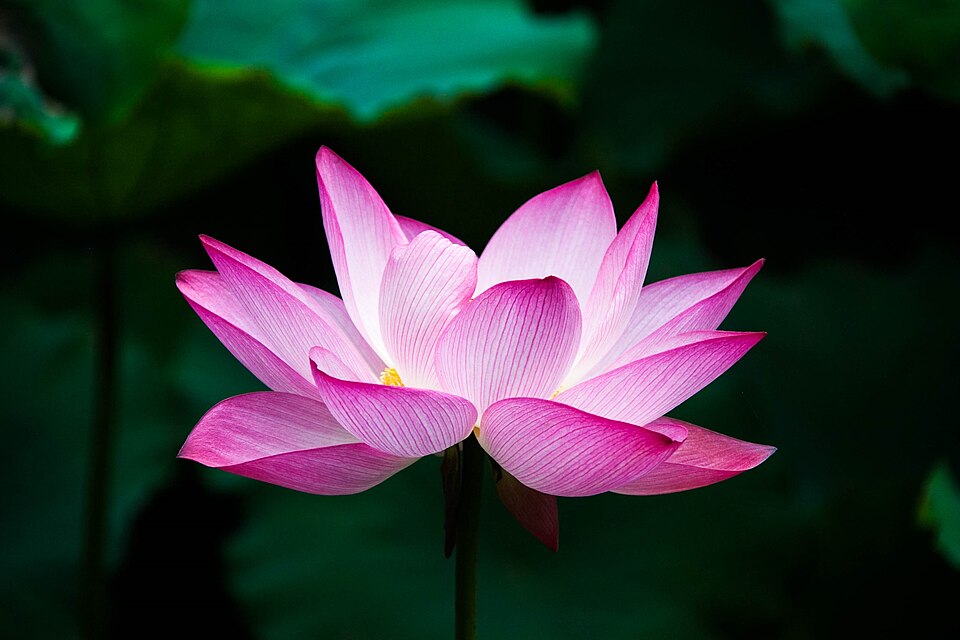
Lotus (Padma) — Symbol of Purity and Spiritual Awakening
Explore the profound symbolism of the lotus (Padma) in Hinduism — its scriptural origins, spiritual significance, role in deity iconography, and practical use in meditation and worship.
एफ़िलिएट प्रकटीकरण: सनातन हिंदू अमेज़न एसोसिएट्स प्रोग्राम और CueLinks एफ़िलिएट नेटवर्क (मिंत्रा और फ्लिपकार्ट) में भाग लेता है। इस पृष्ठ पर एफ़िलिएट लिंक हैं: यदि आप क्लिक करके खरीदते हैं तो हमें एक छोटा कमीशन मिलता है, आप पर बिना किसी अतिरिक्त लागत के। अमेज़न एसोसिएट के रूप में हम पात्र खरीद से कमाते हैं। पूरा प्रकटीकरण।
Next Diwali
Sunday, 8 November 2026· in 16 days
Set a reminder so you never miss Diwali.
परिचय
महत्व
शुभ समय
अपना सटीक शुभ समय जानें अपने शहर और तिथि के लिए शुभ मुहूर्त और चौघड़िया देखें।
आवश्यक सामग्री
तैयारी के चरण
- 1Bathe and wear clean, preferably white, yellow, or red clothing (avoid black).
- 2Clean the puja altar or meditation space thoroughly; sprinkle Ganga jal or clean water.
- 3Place a clean cloth on the altar; arrange a small mandala or yantra (Shri Yantra for Lakshmi, Vishnu Yantra for Vishnu).
- 4Fill the kalasha with water, add a few drops of Ganga jal, place mango leaves around the rim, and cover with a coconut wrapped in red cloth.
- 5Arrange the lotus flowers in a vase with water or place them gently on the altar — stems intact if possible.
- 6Light the lamp and incense; invoke the Guru parampara and Ganesha for obstacle removal.
- 7Set a clear sankalpa (intention): e.g., 'I offer this lotus to cultivate inner purity and awaken the lotus of my heart.'
- 8Prepare the mind with a few minutes of breath awareness (pranayama) before beginning.
चरण
- 1Begin with Guru Vandana and Ganesha Dhyanam: chant 'Om Gam Ganapataye Namaha' 3 times.
- 2Invoke the chosen deity (Lakshmi, Vishnu, Saraswati, or the Universal Divine) with the appropriate dhyana shloka, visualizing the deity seated on a lotus in your heart center (Anahata).
- 3Offer achamana (sipping water) and pranayama (3 rounds of alternate nostril breathing).
- 4Offer the lotus flower(s) with both hands at the deity's feet or on the altar, chanting the pushpa mantra: 'Om [Deity Name] Padma Hastaya Namaha' or 'Om Padma Pushpam Samarpayami'.
- 5Apply sandalwood paste (tilak) to the deity's image/yantra and to your own forehead (ajna chakra).
- 6Offer akshata, incense (circular motion), lamp (circular motion), and naivedya.
- 7Recite the selected mantras (see mantras section) with a mala — 108 repetitions minimum.
- 8Meditate for 10–20 minutes on the lotus imagery: visualize a lotus bud at the heart, opening petal by petal with each inhalation, revealing a radiant light within.
- 9Perform aarti with camphor, singing or playing a lotus-themed aarti (e.g., 'Om Jai Lakshmi Mata' or 'Om Jai Jagdish Hare').
- 10Offer pradakshina (circumambulation) 3 times clockwise (or mentally if space is limited).
- 11Offer pushpanjali (handful of flowers) with the prayer: 'Yani kancha papani janma kritani cha...' (forgiveness mantra).
- 12Distribute prasadam; keep one lotus on your personal altar or float it in a clean water body as visarjana (returning to nature).
मंत्र
Lakshmi Padma Mantra
ॐ श्रीं ह्रीं कमले कमलालये प्रसीद प्रसीद श्रीं ह्रीं कमले कमलालये नमः
Om Shreem Hreem Kamale Kamalalaye Praseeda Praseeda Shreem Hreem Kamale Kamalalaye Namaha
अर्थ: Salutations to Lakshmi, who dwells in the lotus, who is the lotus. May She be pleased, may She be pleased. This mantra invokes prosperity, grace, and spiritual purity.
Vishnu Padma Hasta Mantra
ॐ नमो भगवते वासुदेवाय पद्महस्ताय नमः
Om Namo Bhagavate Vasudevaya Padmahastaya Namaha
अर्थ: Salutations to Lord Vasudeva (Vishnu), who holds the lotus in His hand. The lotus represents the universe unfolding from divine will.
Saraswati Shveta Padma Mantra
ॐ ऐं सरस्वत्यै श्वेतपद्मासनायै नमः
Om Aim Sarasvatyai Shvetapadmasanayai Namaha
अर्थ: Salutations to Goddess Saraswati, seated on the white lotus. Invokes pure knowledge, wisdom, and creative expression unstained by ego.
Sahasrara Padma Dhyana Mantra (from Shiva Samhita)
सहस्रदलपद्मे निर्लेपे निरंजने । ज्योतिरूपे परं ब्रह्म तस्मै श्रीगुरवे नमः ॥
Sahasradala-padme nirlepe niranjane. Jyotirupe param brahma tasmai shri-gurave namaha.
अर्थ: In the thousand-petaled lotus, unstained and pure, shines the light of the Supreme Brahman. Salutations to that Guru. Used in Kundalini meditation to awaken the crown chakra.
Padma Purana Lotus Offering Verse
पद्मं पुष्पं समर्पयामि देवदेवाय धीमहि । पद्मासनाय पद्मनाभाय पद्महस्ताय नमो नमः ॥
Padmam pushpam samarpayami deva-devaya dhimahi. Padmasanaya padmanabhaya padmahastaya namo namaha.
अर्थ: I offer the lotus flower to the God of gods, meditating upon Him. Salutations again and again to the One seated on the lotus, with lotus-navel, and lotus in hand.
Bhagavad Gita 5.10 — Lotus Leaf Analogy (for contemplation)
ब्रह्मण्याधाय कर्माणि सङ्गं त्यक्त्वा करोति यः । लिप्यते न स पापेन पद्मपत्रमिवाम्भसा ॥
Brahmanyadhaya karmani sangam tyaktva karoti yah. Lipyate na sa papena padma-patram ivambhasa.
अर्थ: One who acts offering all actions to Brahman, abandoning attachment, is not tainted by sin — just as a lotus leaf is untouched by water. The essence of karma yoga.
दिशानिर्देश
- •Observe silence (mauna) or speak only truth/sacred words during the sadhana period.
- •Maintain a sattvic diet — avoid onion, garlic, meat, alcohol, and stale food on days of lotus puja.
- •Fast optionally until the puja is complete (water/fruits allowed); break with prasadam.
- •Do not pluck lotus flowers after sunset; harvest at dawn with reverence, asking the plant's permission.
- •If observing a Lakshmi vrata (e.g., Varalakshmi Vratam), follow the specific vrata kalpa for that tradition.
- •Sleep on the floor or a simple mat on vrata nights; avoid luxury.
- •Donate lotus flowers, seeds, or makhana to temples or the needy as dana.
करें
- ✓Use only fresh, unblemished lotus flowers; the flower should be fully or partially open, not wilted.
- ✓Offer the lotus with the stem facing downward (roots toward earth) and petals upward — honoring its natural growth.
- ✓Chant mantras with correct pronunciation (varna shuddhi); learn from a guru if possible.
- ✓Meditate on the lotus as a living symbol, not a mere ritual object — feel its qualities in your being.
- ✓Keep the puja area clean, fragrant, and free from distractions (phones, noise).
- ✓Share the prasadam and lotus blessings with family, neighbors, and those in need.
- ✓Respect regional and family traditions — some offer 108 lotuses, others 1, 5, or 1080; follow your lineage.
न करें
- ✗Do not use artificial, plastic, or dried lotus flowers for primary worship — they lack prana (life force).
- ✗Do not step over or crush fallen lotus petals; gather them respectfully and immerse in flowing water or bury.
- ✗Do not offer lotus flowers that have been smelled or touched by unclean hands before offering.
- ✗Do not combine lotus offerings with tamasic items (alcohol, meat) in the same puja.
- ✗Do not pluck lotus from protected wetlands, temple tanks without permission, or at night.
- ✗Do not treat the lotus as a decorative commodity — it is a sacred embodiment of the Divine.
- ✗Do not rush the vidhi; each step is an act of devotion, not a checklist.
सामान्य गलतियाँ
- •Confusing the water lily (Nymphaea) with the true lotus (Nelumbo nucifera) — they are botanically and symbolically distinct.
- •Offering closed lotus buds instead of open flowers to Lakshmi, who prefers the fully bloomed lotus (symbol of manifested grace).
- •Reciting mantras mechanically without bhava (feeling) or visualization of the lotus in the heart.
- •Neglecting the inner lotus (hridaya kamala) while focusing only on external flowers.
- •Using chemically treated or florist lotuses sprayed with pesticides — grow your own or source organically.
- •Ignoring the ecological dimension: lotus ponds are ecosystems; harvest sustainably.
- •Assuming one color fits all deities — pink/red for Lakshmi, white for Saraswati/Vishnu, blue for Krishna/Kali, yellow for Ganesha (rare).
क्षेत्रीय विविधताएँ
- •In Bengal and Odisha, the blue lotus (Nilotpala/Krishna Kamal) is offered to Kali and Krishna, especially during Kali Puja and Jhulan Yatra.
- •In Tamil Nadu, the 'Thamarai' (lotus) is central to Lakshmi worship in Varalakshmi Vratam; 108 lotuses are offered in some Smarta traditions.
- •In Kerala, 'Thamara' flowers are used in Vishnu temples (Guruvayur, Padmanabhaswamy) for pushpanjali and archana; lotus garlands (thamara mala) are prized.
- •In Gujarat and Rajasthan, the lotus is linked to Jain Tirthankara iconography (Padmaprabha) and offered during Paryushana.
- •In Kashmir, the lotus (Pamposh) grows in Dal Lake and is offered to Sharika Devi (Tripura Sundari) at Hari Parbat.
- •In Maharashtra, the 'Kamal' is offered during Diwali Lakshmi Pujan and on Kojagiri Purnima; lotus seeds (makhana) are a fasting staple.
- •In the Himalayan regions (Uttarakhand, Himachal), the Brahma Kamal (Saussurea obvallata) — a high-altitude 'lotus' — is offered to Shiva and Nanda Devi, distinct from the aquatic lotus.
अक्सर पूछे जाने वाले प्रश्न
Can I use a water lily instead of a true lotus for puja?▾
Why does Lakshmi sit on a lotus? What does it mean?▾
What is the significance of the thousand-petaled lotus (Sahasrara) in yoga?▾
Can I grow lotus at home for daily puja?▾
Are there any festivals specifically dedicated to the lotus?▾
What is the difference between offering lotus to Vishnu vs. Lakshmi vs. Shiva?▾
लोकप्रिय टूल
संदर्भ और पारंपरिक टिप्पणियाँ
- •Rig Veda 5.81.1 — Lotus as symbol of cosmic beauty and order.
- •Chandogya Upanishad 8.1.1 — Heart as lotus bud containing the Atman.
- •Bhagavad Gita 5.10 — Lotus leaf analogy for detached action (karma yoga).
- •Vishnu Purana 1.4 — Narayana on Ananta, lotus from navel, Brahma born.
- •Lakshmi Tantra (Pancharatra) — Lakshmi as Padma, Kamala, seated on lotus.
- •Padma Purana, Srishti Khanda — Glories of lotus offering; 1 lotus = 1000 yajnas.
- •Shiva Samhita 2.1-2 — Sahasrara as thousand-petaled lotus (Sahasradala Padma).
- •Hatha Yoga Pradipika 3.1-3 — Chakras as lotuses (padma/chakra synonyms).
- •Saundarya Lahari (Adi Shankara), Verse 1 — Devi's feet worshipped by lotus-born Brahma.
- •Tirumantiram (Tirumular), Verse 400+ — Lotus of the heart (hridaya kamala) in Tamil Siddha tradition.
- •Charaka Samhita, Sushruta Samhita — Medicinal properties of lotus parts (Ayurveda).
- •Manasara, Mayamata — Lotus motifs in temple architecture (padma-kosa, padma-bandha).
- •National Flower of India (1950) — Nelumbo nucifera declared by Government of India.
Related Audio & Bhajans
Lotus Padma Symbol Purity Spiritual Lakshmi, Vishnu, Saraswati, Brahma, Shiva other
एफ़िलिएट प्रकटीकरण: सनातन हिंदू अमेज़न एसोसिएट्स प्रोग्राम और CueLinks एफ़िलिएट नेटवर्क (मिंत्रा और फ्लिपकार्ट) में भाग लेता है। इस पृष्ठ पर एफ़िलिएट लिंक हैं: यदि आप क्लिक करके खरीदते हैं तो हमें एक छोटा कमीशन मिलता है, आप पर बिना किसी अतिरिक्त लागत के। अमेज़न एसोसिएट के रूप में हम पात्र खरीद से कमाते हैं। पूरा प्रकटीकरण।
Amazon.in पर पूजा सामग्री खरीदें
क्लिक करने पर Amazon.in खुलता है। कीमत और उपलब्धता बदल सकती है।
सभी पूजा वस्तुएँ देखेंअमेज़न एसोसिएट्स टैग: geekydevelope-21
फ्लिपकार्ट पर पूजा और त्योहारी सामग्री खरीदें
क्लिक करने पर हमारे एफ़िलिएट लिंक से फ्लिपकार्ट खुलता है। कीमत और उपलब्धता बदल सकती है।
फ्लिपकार्ट पर खरीदेंCueLinks प्रकाशक: 300371
मिंत्रा पर त्योहारी परिधान खरीदें
क्लिक करने पर हमारे एफ़िलिएट लिंक से मिंत्रा खुलता है। कीमत और उपलब्धता बदल सकती है।
CueLinks प्रकाशक: 300371
Need a website? Describe it, and AI builds it.
Perfect for a temple, pooja service, astrology practice or small shop. Tell the AI what you want — or drag and drop the classic way — and go live on your own web address in minutes with Sitova. Hosting, SEO, forms and analytics are all included.
- Build with AI or drag & drop
- Your domain + SEO built in
- Free forever plan
Opens sitova.site