Hindu PhilosophyBrahman

Mundaka Upanishad — Two Types of Knowledge Explained

Explore the Mundaka Upanishad's classification of knowledge into Para Vidya (Higher Knowledge) and Apara Vidya (Lower Knowledge) for spiritual liberation.

By Sanatan Hindu6 min readUpdated 14 August 2026Audio available
Share:

एफ़िलिएट प्रकटीकरण: सनातन हिंदू अमेज़न एसोसिएट्स प्रोग्राम और CueLinks एफ़िलिएट नेटवर्क (मिंत्रा और फ्लिपकार्ट) में भाग लेता है। इस पृष्ठ पर एफ़िलिएट लिंक हैं: यदि आप क्लिक करके खरीदते हैं तो हमें एक छोटा कमीशन मिलता है, आप पर बिना किसी अतिरिक्त लागत के। अमेज़न एसोसिएट के रूप में हम पात्र खरीद से कमाते हैं। पूरा प्रकटीकरण

Mundaka Upanishad — Two Types of Knowledge Explained

यह लेख अभी अंग्रेज़ी में उपलब्ध है। हिंदी अनुवाद के लिए नीचे बटन दबाएँ।

Introduction

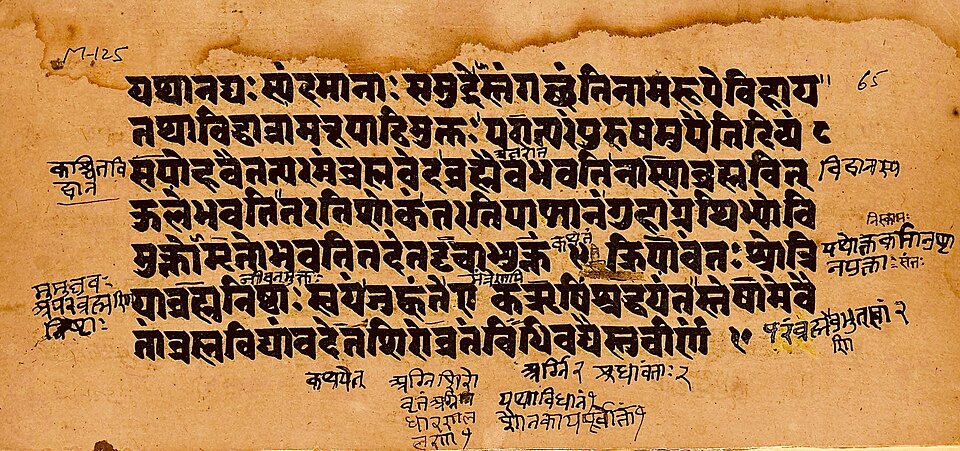
The Mundaka Upanishad, belonging to the Atharva Veda, stands as one of the most celebrated and foundational texts of Vedantic philosophy. The word 'Mundaka' originates from the Sanskrit root 'Munda', which translates to 'shaven head' or 'cleared'. This title carries a dual symbolic meaning: it refers to the ascetics who took the sacred vow of Sirovrata (bearing fire upon the head) and signifies the intellect that has been thoroughly shaved or purged of all ignorance, illusion, and superimposition. Structured in three chapters (Mundakas), each containing two sections (Khandas), this Upanishad delivers a poetic, profound, and structured exposition on the nature of ultimate reality, the limitations of worldly pursuits, and the path to spiritual liberation.
The text unfolds as an intimate dialogue between Saunaka, a distinguished householder of vast learning, and Sage Angiras, a revered spiritual master. Saunaka approaches Angiras with utmost humility and asks a seminal question that resonates across all philosophical inquiries: 'Kasmin nu bhagavo vijnate sarvam idam vijnatam bhavati iti?'—'O Venerable Sir, what is that by knowing which all this world becomes known?' This inquiry goes beyond mere intellectual curiosity; it seeks the fundamental, indivisible substrate of all manifest reality, the supreme principle from which everything originates and into which everything resolves.
In response to this cosmic query, Sage Angiras establishes a pivotal framework that forms the bedrock of Hindu epistemology: the classification of all knowledge into two distinct categories: Apara Vidya (lower knowledge) and Para Vidya (higher knowledge). This division is not intended to condemn secular or lower learning, but to clarify its relative place in human development. Angiras systematically delineates what can be known through the senses and intellect versus what can only be realized through direct spiritual experience.
Apara Vidya, or lower knowledge, encompasses the entire domain of empirical, logical, scientific, and even traditional religious learning. Sage Angiras explicitly includes within Apara Vidya the four Vedas (Rig, Yajur, Sama, and Atharva) along with the six Vedangas—phonetics (Siksha), ritual codes (Kalpa), grammar (Vyakarana), etymology (Nirukta), metrics (Chhandas), and astronomy (Jyotisha). While this domain provides mastery over the material universe, moral order, and temporal post-mortem realms, it remains finite and bound by cause and effect. It yields temporary rewards (phala) but cannot grant permanent freedom from suffering.
Conversely, Para Vidya, or higher knowledge, is defined as that wisdom by which the Imperishable (Akshara) is realized. Para Vidya is not an accumulation of external facts, philosophical theories, or intellectual arguments. Rather, it is the direct, unmediated intuitive realization of Brahman—the ultimate, eternal, birthless, decayless, and supreme reality that pervades all existence. Through Para Vidya, the individual soul (Jiva) recognizes its non-different identity with Brahman, thereby achieving Moksha, the final liberation from the cycle of birth, death, and rebirth.

Significance

The distinction between Para Vidya and Apara Vidya presented in the Mundaka Upanishad holds immense spiritual, philosophical, and practical significance. Prior to this teaching, many seekers mistakenly believed that meticulous performance of Vedic rituals and exhaustive mastery of sacred scriptures were sufficient for ultimate salvation. Sage Angiras corrects this misconception by pointing out that rituals and intellectual knowledge are like 'unsteady rafts' (adridha yajna-rupa). They yield transient heavenly enjoyments, after which one must return to the mortal realm. By placing ritualistic and scholarly achievements in the category of Apara Vidya, the text directs the seeker's attention toward the higher objective of self-realization.
Philosophically, the Mundaka Upanishad offers some of the most memorable metaphors in world literature to illustrate the relationship between the individual soul, the world, and Brahman. Among these, the famous imagery of two birds seated on the same tree (Dva Suparna) stands out. One bird eats the varied sweet and bitter fruits of the tree (representing the individual soul caught in karma and worldly experience), while the other bird sits quietly, watching without eating (representing the witnessing supreme consciousness, Paramatman). When the lower bird realizes its true identity with the serene upper bird, it is instantly freed from grief and delusion. This metaphor profoundly illuminates the mechanics of bondage and liberation.
Another central symbolic contribution of the text is the imagery of the bow and arrow. Sage Angiras compares the sacred syllable OM (Pranava) to a bow, the individual Atman to the arrow, and Brahman to the target. The practitioner is instructed to draw the bow with deep concentration and aim without distraction, so that the arrow becomes merged with the target. This verse provides practical guidance for meditation (Nididhyasana), illustrating how focused devotion and quietude merge individual consciousness into universal spirit.
Furthermore, the Mundaka Upanishad is the original source of India's national motto: 'Satyameva Jayate' ('Truth alone triumphs'). The text emphasizes that Truth (Satya), austerity (Tapas), right knowledge (Samyag-Jnana), and self-control (Brahmacharya) are the non-negotiable pillars required to tread the divine path (Devayana). It establishes that ultimate reality is intrinsically bound to truthfulness, making ethical living an indispensable foundation for spiritual enlightenment.
In modern life, where humanity is inundated with vast amounts of information and technological knowledge, the Mundaka Upanishad's message remains strikingly urgent. It reminds modern seekers that material success, academic degrees, and information gathering—no matter how advanced—belong to Apara Vidya and cannot fulfill the inner hunger for eternal peace. True fulfillment requires cultivating Para Vidya: turning the mind inward to discover the immortal Self beyond the transient world.

Auspicious Time

Ideal for daily contemplation during Brahma Muhurta (4:00 AM - 6:00 AM), during calm evening periods (Sandhya time), or during dedicated study sessions (Svadhyaya) and Vedantic retreats.

Find your exact auspicious time Check the shubh muhurat and choghadiya for your city and date.

Required Samagri (Materials)

A clean, quiet space for study and meditation
A traditional Asana (seating mat made of darbha grass or natural wool)
A authentic text copy of the Mundaka Upanishad with commentary
A traditional oil or ghee lamp (Diya) symbolizing the light of wisdom
Incense (Agarbatti) to purify the ambiance
A notebook or journal for Manana (reflective contemplation)

Preparation Steps

  1. 1Purify the seating area and light a ghee lamp to represent the illuminating light of divine knowledge (Jnana-Deepa).
  2. 2Sit comfortably in a stable posture (Siddhasana or Padmasana) facing North or East.
  3. 3Practice simple Pranayama (alternate nostril breathing) for 5-10 minutes to calm the mind and steady the senses.
  4. 4Offer mental reverence to the Vedic Rishi lineage (Angiras, Saunaka, and Shankara) and one's personal Guru.
  5. 5Chant the Atharva Veda Peace Prayer (Shanti Mantra) to invoke harmony, physical health, and mental clarity.

Steps

  1. 1Initiate the session by chanting the Shanti Mantra: 'Om Bhadram Karnebhih Srunuyama Devah...'
  2. 2Begin the practice of Sravana (systematic listening or reading): Read a selected section of the Mundaka Upanishad attentively, focusing on the distinction between Para and Apara Vidya.
  3. 3Engage in Manana (intellectual reflection): Reason deeply upon the text. Question how empirical knowledge (Apara) differs from spiritual realization (Para), and recognize the impermanant nature of worldly pursuits.
  4. 4Transition into Nididhyasana (deep meditation): Close your eyes and shift awareness away from sensory inputs. Meditate on the inner Witness (Sakshi) that observes all thoughts and feelings, unaffected by them.
  5. 5Visualize the bow and arrow metaphor: Imagine OM as the bow, your mind/self as the arrow, and Brahman as the target. Quietly chant OM and feel your awareness merging into infinite consciousness.
  6. 6Reflect on truthfulness and moral purity (Satyameva Jayate), resolving to align daily conduct with inner integrity.
  7. 7Conclude the session with quiet silence, followed by reciting the closing Peace Mantra and bowing to the divine within.

Mantras

Atharva Veda Shanti Mantra (Peace Invocation)

ॐ भद्रं कर्णेभिः शृणुयाम देवाः । भद्रं पश्येमाक्षभिर्यजत्राः । स्थिरैरङ्गैस्तुष्टुवांसस्तनूभिः । व्यशेम देवहितं यदायुः ॥ ॐ शान्तिः शान्तिः शान्तिः ॥

Om bhadram karnebhih srunuyama devah | bhadram pasyemaksabhir yajatrah | sthirair angais tustuvamsas tanubhih | vyasema devahitam yadayuh || Om santih santih santih ||

Meaning: O Devas, may we hear with our ears what is auspicious. O Holy Ones, may we see with our eyes what is divine. May we live a full life span allocated by the divine, offering praise with steady bodies and calm minds. Om Peace, Peace, Peace.

Two Types of Knowledge (Mundaka Upanishad 1.1.4-5)

द्वे विद्ये वेदितव्ये इति ह स्म यद्ब्रह्मविदो वदन्ति परा चैवापरा च ॥ तत्रापरा ऋग्वेदो यजुर्वेदः सामवेदोऽथर्ववेदः शिक्षा कल्पो व्याकरणं निरुक्तं छन्दो ज्योतिषमिति । अथ परा यया तदक्षरमधिगम्यते ॥

Dve vidye veditavye iti ha sma yad brahmavido vadanti para chaivapara cha || Tatrapara rigvedo yajurvedah samavedo'tharvavedah siksa kalpo vyakaranam niruktam chando jyotisamiti | Atha para yaya tad aksaram adhigamyate ||

Meaning: Two kinds of knowledge are to be known, as declared by the knowers of Brahman: the Higher (Para Vidya) and the Lower (Apara Vidya). Of these, the lower consists of the Rig Veda, Yajur Veda, Sama Veda, Atharva Veda, phonetics, ritual, grammar, etymology, metrics, and astronomy. The higher knowledge is that by which the Imperishable (Akshara) is realized.

The Bow and Arrow Metaphor (Mundaka Upanishad 2.2.4)

प्रणवो धनुः शरो ह्यात्मा ब्रह्म तल्लक्ष्यमुच्यते । अप्रमत्तेन वेद्धव्यं शरवत्तन्मयो भवेत् ॥

Pranavo dhanuh saro hyatma brahma tal laksyam ucyate | Apramattena veddhavyam saravat tanmayo bhavet ||

Meaning: Pranava (OM) is the bow, the Atman is the arrow, and Brahman is the target. It must be pierced with undivided focus; one should become one with the target, just as an arrow becomes absorbed in its mark.

Truth Alone Triumphs (Mundaka Upanishad 3.1.6)

सत्यमेव जयते नानृतं सत्येन पन्था विततो देवयानः । येनाक्रमन्त्यृषयो ह्याप्तकामा यत्र तत् सत्यस्य परमं निधानम् ॥

Satyameva jayate nanrtam satyena pantha vitato devayanah | Yenakramanty rsayo hy aptakama yatra tat satyasya paramam nidhanam ||

Meaning: Truth alone triumphs, not falsehood. By truth is laid out the divine path (Devayana) along which sages, whose desires are fully fulfilled, ascend to where lies the supreme treasury of Truth.

Guidelines

  • Practice strict truthfulness (Satya) in speech, action, and thought.
  • Cultivate sense-restraint and mental discipline (Brahmacharya).
  • Maintain daily scriptural study (Svadhyaya) with consistency.
  • Observe simplicity and non-possessiveness (Aparigraha).
  • Approach study with deep humility (Vinaya) and reverence for the teacher.

Do's

  • Approach Upanishadic teachings under the guidance of an enlightened and traditional Guru.
  • Recognize that lower knowledge (science, arts, rituals) has secular utility, but higher knowledge alone liberates.
  • Practice Sravana (listening), Manana (reflection), and Nididhyasana (meditation) daily.
  • Develop Vairagya (dispassion) toward transient worldly enjoyments.

Don'ts

  • Do not mistake mere academic or intellectual mastery of scriptures for true spiritual realization.
  • Do not discard or disrespect moral guidelines or secular duties while pursuing higher knowledge.
  • Avoid dry intellectual debate (Vada) driven by ego or pride.
  • Do not rush through scriptural reading without adequate reflection and quiet meditation.

Common Mistakes to Avoid

  • Confusing rote memorization of Sanskrit mantras with Para Vidya.
  • Assuming that Apara Vidya is evil or useless, rather than recognizing it as a helpful stepping stone.
  • Attempting deep Vedantic meditation without practicing moral discipline (Yama and Niyama).
  • Expecting instantaneous enlightenment without sustained intellectual and meditative effort.

Regional Variations

  • Advaita Vedanta traditions emphasize Adi Shankara's commentary, focusing on the absolute identity of Atman and Brahman.
  • Vishishtadvaita and Dvaita traditions interpret the two birds metaphor to emphasize the distinct yet intimately connected nature of the Jiva and Ishvara.
  • In traditional Gurukuls across India, the Mundaka Upanishad is taught only after foundational training in Sanskrit grammar and the Vedangas.

Frequently Asked Questions

What is the primary theme of the Mundaka Upanishad?
The primary theme is Brahma-Vidya—the knowledge of ultimate reality. It clearly distinguishes between lower knowledge (Apara Vidya) comprising worldly sciences and rituals, and higher knowledge (Para Vidya) which leads to direct realization of the imperishable Brahman.
Why are even the four Vedas listed under Apara Vidya?
The four Vedas, when studied merely as texts, hymns, or ritual instructions, yield finite, heavenly, or worldly results. Sage Angiras includes them under Apara Vidya to emphasize that reading words about truth is not the same as directly experiencing the Imperishable Truth (Brahman).
What does 'Satyameva Jayate' mean and where does it come from?
'Satyameva Jayate' translates to 'Truth alone triumphs'. It comes from Mundaka Upanishad (3.1.6) and highlights that ultimate reality and liberation are rooted in truthfulness and ethical living.
What is the significance of the two birds metaphor?
The two birds on a single tree represent the Jiva (individual soul) and Paramatman (supreme soul). The Jiva eats the bitter-sweet fruits of worldliness and experiences joy and sorrow, while Paramatman sits as a witness. Realizing oneness with the witness bird frees the individual from suffering.
How can a modern person cultivate Para Vidya?
A modern individual can cultivate Para Vidya by balancing daily duties with regular meditation, scriptural reflection (Svadhyaya), practice of truthfulness, turning attention inward, and seeking guidance from traditional Vedantic teachings.

References & Traditional Notes

  • Mundaka Upanishad Bhashya by Adi Shankaracharya
  • Principal Upanishads by Swami Nikhilananda
  • Atharva Veda Shakha traditions
  • Lectures on Upanishads by Swami Vivekananda

Related Audio & Bhajans

Brahman Ultimate Reality Brahman The Ultimate Reality Other

otherYouTube
Open on YouTube →
Lyrics

Samsara Cycle Rebirth Explained Brahma, Vishnu, Shiva other

otherYouTube
Open on YouTube →
Lyrics

Vishnu Gayatri Mantra 108 Upanishads Vishnu Mantra

otherNeha Rajpal
View Lyrics

ఉపనిషత్ ఉద్యానవనం - 108 ఉపనిషత్తులు - వాల్యూమ్ – 4 of 6 by యేలేశ్వరపు హనుమ రామకృష్ణ Upanishad Udyanavanam – 108 Upanishads Volume – 4 of 6 by Yeleswarapu Hanuma RamaKrishna

other
View Lyrics

Upanishads

otherYouTube
Open on YouTube →
Lyrics

Types Of Lines

otherUncle Math Team
View Lyrics

Types of Pujas and their purposes

otherYouTube
Open on YouTube →
Lyrics

Knowledge and Wisdom

otherYouTube
Open on YouTube →
Lyrics

Understanding Concept Ishvara God Different Brahman, the ultimate reality spiritual reflection and study

otherYouTube
Open on YouTube →
Lyrics

Brahmanda Exploring Largest Complex Divine Brahman / Vishnu other

otherYouTube
Open on YouTube →
Lyrics

एफ़िलिएट प्रकटीकरण: सनातन हिंदू अमेज़न एसोसिएट्स प्रोग्राम और CueLinks एफ़िलिएट नेटवर्क (मिंत्रा और फ्लिपकार्ट) में भाग लेता है। इस पृष्ठ पर एफ़िलिएट लिंक हैं: यदि आप क्लिक करके खरीदते हैं तो हमें एक छोटा कमीशन मिलता है, आप पर बिना किसी अतिरिक्त लागत के। अमेज़न एसोसिएट के रूप में हम पात्र खरीद से कमाते हैं। पूरा प्रकटीकरण

Amazon.in पर पूजा सामग्री खरीदें

क्लिक करने पर Amazon.in खुलता है। कीमत और उपलब्धता बदल सकती है।

सभी पूजा वस्तुएँ देखें

अमेज़न एसोसिएट्स टैग: geekydevelope-21

फ्लिपकार्ट पर पूजा और त्योहारी सामग्री खरीदें

क्लिक करने पर हमारे एफ़िलिएट लिंक से फ्लिपकार्ट खुलता है। कीमत और उपलब्धता बदल सकती है।

फ्लिपकार्ट पर खरीदें

CueLinks प्रकाशक: 300371

मिंत्रा पर त्योहारी परिधान खरीदें

क्लिक करने पर हमारे एफ़िलिएट लिंक से मिंत्रा खुलता है। कीमत और उपलब्धता बदल सकती है।

CueLinks प्रकाशक: 300371

Share:

दैनिक पंचांग व त्योहार अपडेट पाएँ

हमारे निःशुल्क न्यूज़लेटर से जुड़ें, कोई स्पैम नहीं, कभी भी अनसब्सक्राइब करें।