Sacred Texts & ScripturesRamaRama Navami

Ramayana of Valmiki — Full Summary and Key Teachings

Explore the profound depth of Valmiki Ramayana, a comprehensive guide to Dharma, the life of Lord Rama, and its timeless spiritual and ethical teachings.

By Sanatan Hindu4 min readUpdated 19 August 2026Audio available
Share:

एफ़िलिएट प्रकटीकरण: सनातन हिंदू अमेज़न एसोसिएट्स प्रोग्राम और CueLinks एफ़िलिएट नेटवर्क (मिंत्रा और फ्लिपकार्ट) में भाग लेता है। इस पृष्ठ पर एफ़िलिएट लिंक हैं: यदि आप क्लिक करके खरीदते हैं तो हमें एक छोटा कमीशन मिलता है, आप पर बिना किसी अतिरिक्त लागत के। अमेज़न एसोसिएट के रूप में हम पात्र खरीद से कमाते हैं। पूरा प्रकटीकरण

Ramayana of Valmiki — Full Summary and Key Teachings

यह लेख अभी अंग्रेज़ी में उपलब्ध है। हिंदी अनुवाद के लिए नीचे बटन दबाएँ।

Introduction

The Valmiki Ramayana is not merely an epic poem; it is the 'Adikavya,' the first poem ever composed in Sanskrit literature, attributed to the sage Valmiki. It serves as the foundational bedrock of Hindu civilization, detailing the life, journey, and divine essence of Lord Rama, the seventh avatar of Lord Vishnu. The epic is composed of nearly 24,000 verses (shlokas) divided into seven distinct books, known as Kandas, each representing a crucial phase in the cosmic play of Dharma (righteousness) against Adharma (unrighteousness). Through the lyrical genius of Valmiki, the narrative transcends simple storytelling to become a profound exploration of human morality, duty, and the complex interplay between destiny and free will.
The origins of the Ramayana are steeped in divine legend. It is said that Valmiki, once a robber named Ratnakara, was transformed into a sage through the power of penance and the chanting of the name of Rama. The impetus for the first shloka came from observing the sudden, unnatural death of a bird by a hunter, which prompted Valmiki to express his grief in a perfectly rhythmic verse. This spontaneous expression of sorrow—shoka—transformed into shloka, the foundation of Sanskrit poetry. This transition from grief to poetic expression symbolizes the spiritual journey from worldly suffering to divine wisdom.
Central to the epic is the concept of the 'Maryada Purushottama'—the Supreme Man who adheres strictly to the limits of righteousness. Unlike other avatars who might display more overt displays of power, Rama's divinity is expressed through his unwavering adherence to his duties as a son, a brother, a husband, and a king, even when those duties demand immense personal sacrifice. This makes the Ramayana a manual for living a life of integrity in a world filled with complexity and moral ambiguity.
Historically and culturally, the Ramayana has shaped the socio-political and spiritual landscape of South and Southeast Asia. It is a living tradition, recited in temples, dramatized in folk plays like Ramlila, and woven into the very fabric of daily ethics. To study the Valmiki Ramayana is to study the blueprint of a righteous society, where the individual's purpose is aligned with the cosmic order, and where every action is a step toward the realization of higher truth.

Significance

The significance of the Valmiki Ramayana is multifaceted, spanning the spiritual, ethical, and social dimensions of human existence. Spiritually, the epic is considered a means of achieving Moksha (liberation) through the contemplation of the divine qualities of Lord Rama. The act of listening to or reading the Ramayana—known as Ramayana Parayana—is believed to cleanse the mind of impurities and cultivate 'Bhakti' (devotion). In many traditions, the names and stories of Rama are treated as sacred vibrations that can elevate one's consciousness from the material to the transcendental.
Philosophically, the Ramayana provides a deep exploration of Dharma. It does not present Dharma as a simple set of rules, but as a nuanced, often difficult path of duty. Through characters like Rama, Lakshmana, Bharata, and Sita, the epic examines different facets of Dharma: the duty of a ruler (Raja Dharma), the duty of a householder (Grihastha Dharma), and the duty of a student (Brahmacharya Dharma). It poses the question of how one should act when two righteous duties conflict, teaching that the higher Dharma is always the one that upholds the cosmic order and minimizes harm to the soul's evolution.
Culturally and socially, the Ramayana provides a model for ideal human relationships. The bond between Rama and Lakshmana exemplifies selfless brotherhood; the devotion of Hanuman represents the pinnacle of service (Seva) and surrender; and the relationship between Rama and Sita, though fraught with trials, represents the ideal of companionship and resilience. These archetypes serve as guiding principles for family structures and social conduct across generations.
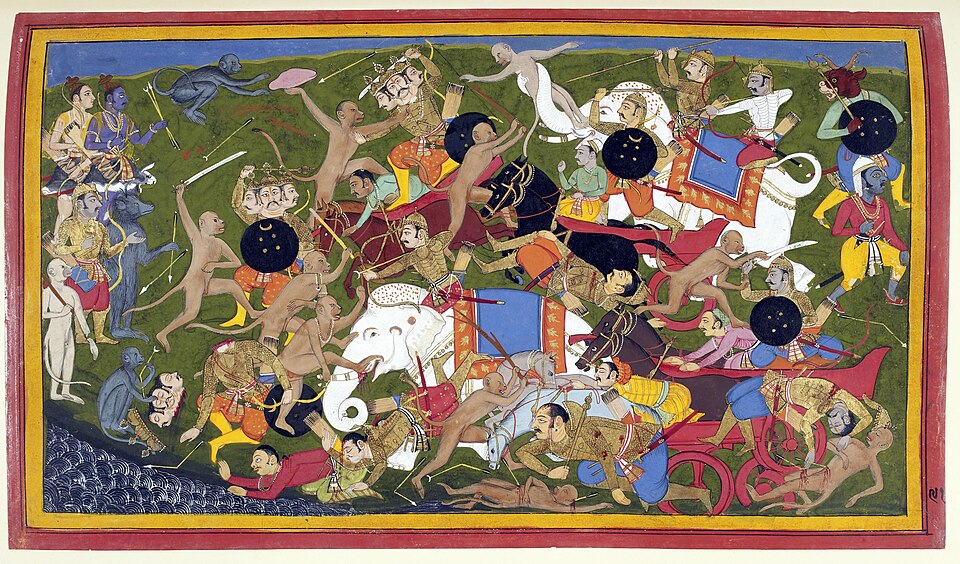
Furthermore, the epic carries immense symbolic weight. The battle between Rama and Ravana is not just an external war between good and evil, but an internal battle within the human psyche. Ravana represents the ego, lust, and excessive intellect untethered from morality, while Rama represents the disciplined soul. The conquest of Lanka is the conquest of the lower self by the higher self. By studying these themes, practitioners gain tools for self-regulation and spiritual growth, making the ancient text profoundly relevant to modern psychological and spiritual challenges.

Auspicious Time

Reading or listening to the Ramayana is best performed during the Brahma Muhurta (early morning hours before sunrise) or during auspicious periods such as Navratri, Rama Navami, or during the transition of seasons.

Find your exact auspicious time Check the shubh muhurat and choghadiya for your city and date.

Required Samagri (Materials)

A clean seat (asana)
A lamp (diya) with ghee or oil
Incense sticks (agarbatti)
Fresh flowers
A copy of the Valmiki Ramayana or a picture of Lord Rama, Sita, Lakshmana, and Hanuman
Sandalwood paste (chandan)
A small bell

Preparation Steps

  1. 1Perform personal purification by taking a bath (snanam).
  2. 2Clean the space where the reading or recitation will take place.
  3. 3Set up a small altar (puja mandir) with the sacred text or deities.
  4. 4Light the lamp and incense to create a sanctified atmosphere.
  5. 5Sit in a comfortable, meditative posture (Sukhasana or Padmasana).

Steps

  1. 1Achaman: Sip water three times to purify the inner self.
  2. 2Sankalpa: State your intention for reading the Ramayana (e.g., for spiritual growth or peace).
  3. 3Guru Vandana: Offer prayers to your guru and to Sage Valmiki.
  4. 4Deepa Prajvalan: Light the lamp and offer incense to the deities.
  5. 5Ramayana Parayana: Begin reading or listening to the verses with focus and devotion.
  6. 6Arati: After finishing, perform a simple aarti of Lord Rama.
  7. 7Pradakshina: Rotate clockwise around your seating area to signify centering yourself in the divine.

Mantras

Rama Nama Japa

श्री राम जय राम जय जय राम

Shri Rama Jaya Rama Jaya Jaya Rama

Meaning: Victory to Lord Rama, Victory to Lord Rama, Victory, Victory to Lord Rama.

Rama Dhyana Mantra

रामाय रामभद्राय रामचन्द्राय वेधसे। रघुनाथाय नाथाय सीतायाः पतये नमः॥

Rāmāya Rāmabhadrāya Rāmacandrāya Vedhase | Raghunāthāya Nāthāya Sītāyāḥ Pataye Namaḥ ||

Meaning: I bow to Rama, the auspicious one, the moon-like Rama, the creator; I bow to the Lord of the Raghus, the protector, and the husband of Sita.

Guidelines

  • Maintain a sense of Brahmacharya (celibacy/restraint) during intensive reading periods.
  • Adhere to Sattvic diet (avoiding onion, garlic, and non-vegetarian food).
  • Practice Mauna (silence) as much as possible to internalize the teachings.
  • Focus on compassionate speech and avoid criticizing others.

Do's

  • Read with a sense of reverence and humility.
  • Try to understand the meaning of the Sanskrit verses.
  • Reflect on how the teachings apply to your current life situation.
  • Maintain a clean and peaceful environment.

Don'ts

  • Do not read the text with a distracted or disrespectful mind.
  • Avoid engaging in arguments or heated debates during the period of study.
  • Do not consume intoxicants or heavy, impure foods.
  • Do not skip the lighting of the lamp as a sign of respect to the light of knowledge.

Common Mistakes to Avoid

  • Treating the Ramayana as mere mythology or fiction rather than spiritual truth.
  • Focusing only on the external rituals without internalizing the moral lessons.
  • Rushing through the recitation without feeling the emotional/devotional weight (Bhava).

Regional Variations

  • In North India, the Ramcharitmanas (by Tulsidas) is more commonly recited in households, though Valmiki's version is the source.
  • In South India, the Kamba Ramayanam is highly revered and often studied.
  • In Southeast Asian traditions (like Thailand's Ramakien), the narrative is adapted with local cultural motifs.

Frequently Asked Questions

What is the difference between Valmiki Ramayana and Ramcharitmanas?
Valmiki Ramayana is the original Sanskrit epic composed by Sage Valmiki, focusing on Dharma and human qualities. Ramcharitmanas, composed by Tulsidas in Awadhi, is a Bhakti-oriented retelling that emphasizes the divine, miraculous aspects of Rama.
Can I read the Ramayana if I am not a Hindu?
Yes, the Ramayana is a profound philosophical and literary masterpiece that offers universal ethical lessons applicable to all of humanity.
Why is Rama called Maryada Purushottama?
He is called so because he is the 'Supreme Man' who never violates the 'Maryada' (boundaries/laws) of social, moral, and spiritual righteousness, regardless of the personal cost.

References & Traditional Notes

  • Note: Always respect the hierarchy of the Kandas when studying.
  • Traditional practitioners suggest that listening to the Ramayana (Shravanam) is just as meritorious as reading it (Pathanam).
  • Different Sampradayas may emphasize different characters (e.g., Vaishnavas focus on Rama's divinity, while others focus on his human struggle).

Related Audio & Bhajans

Hanuman Chalisa

chalisaHari Om Sharan9:20
View Lyrics

Rama Navami

otherM.M. Keeravani
View Lyrics

Shiv Tandav Stotram - Breathless - Very Powerfull.

stotra
View Lyrics

Hanuman Chalisa Meaning

chalisaShri Raj Mahajan
View Lyrics

Hanuman Chalisa Meaning

chalisaYouTube
Open on YouTube →
Lyrics

Exploring Sant Mat Teachings Found in the Hindu Scriptures Plus Several Other Sant Mat Related Topics

other
View Lyrics

Hanuman Chalisa (From "Hanuman Chalisa - Zee Music Devotional")

otherSanjeev-Ajay
View Lyrics

The role of gods and goddesses in Hinduism, including Lord Rama and Lord Vishnu

otherYouTube
Open on YouTube →
Lyrics

Chahun Main Ya Naa Full Video Song Aashiqui 2 Aditya Roy Kapur Shraddha Kapoor

other
View Lyrics

Ramayana

otherNarci
View Lyrics

एफ़िलिएट प्रकटीकरण: सनातन हिंदू अमेज़न एसोसिएट्स प्रोग्राम और CueLinks एफ़िलिएट नेटवर्क (मिंत्रा और फ्लिपकार्ट) में भाग लेता है। इस पृष्ठ पर एफ़िलिएट लिंक हैं: यदि आप क्लिक करके खरीदते हैं तो हमें एक छोटा कमीशन मिलता है, आप पर बिना किसी अतिरिक्त लागत के। अमेज़न एसोसिएट के रूप में हम पात्र खरीद से कमाते हैं। पूरा प्रकटीकरण

Amazon.in पर पूजा सामग्री खरीदें

क्लिक करने पर Amazon.in खुलता है। कीमत और उपलब्धता बदल सकती है।

सभी पूजा वस्तुएँ देखें

अमेज़न एसोसिएट्स टैग: geekydevelope-21

फ्लिपकार्ट पर पूजा और त्योहारी सामग्री खरीदें

क्लिक करने पर हमारे एफ़िलिएट लिंक से फ्लिपकार्ट खुलता है। कीमत और उपलब्धता बदल सकती है।

फ्लिपकार्ट पर खरीदें

CueLinks प्रकाशक: 300371

मिंत्रा पर त्योहारी परिधान खरीदें

क्लिक करने पर हमारे एफ़िलिएट लिंक से मिंत्रा खुलता है। कीमत और उपलब्धता बदल सकती है।

CueLinks प्रकाशक: 300371

Share:

दैनिक पंचांग व त्योहार अपडेट पाएँ

हमारे निःशुल्क न्यूज़लेटर से जुड़ें, कोई स्पैम नहीं, कभी भी अनसब्सक्राइब करें।