
अनंत शेष स्तोत्रम (प्रारंभिक श्लोक)
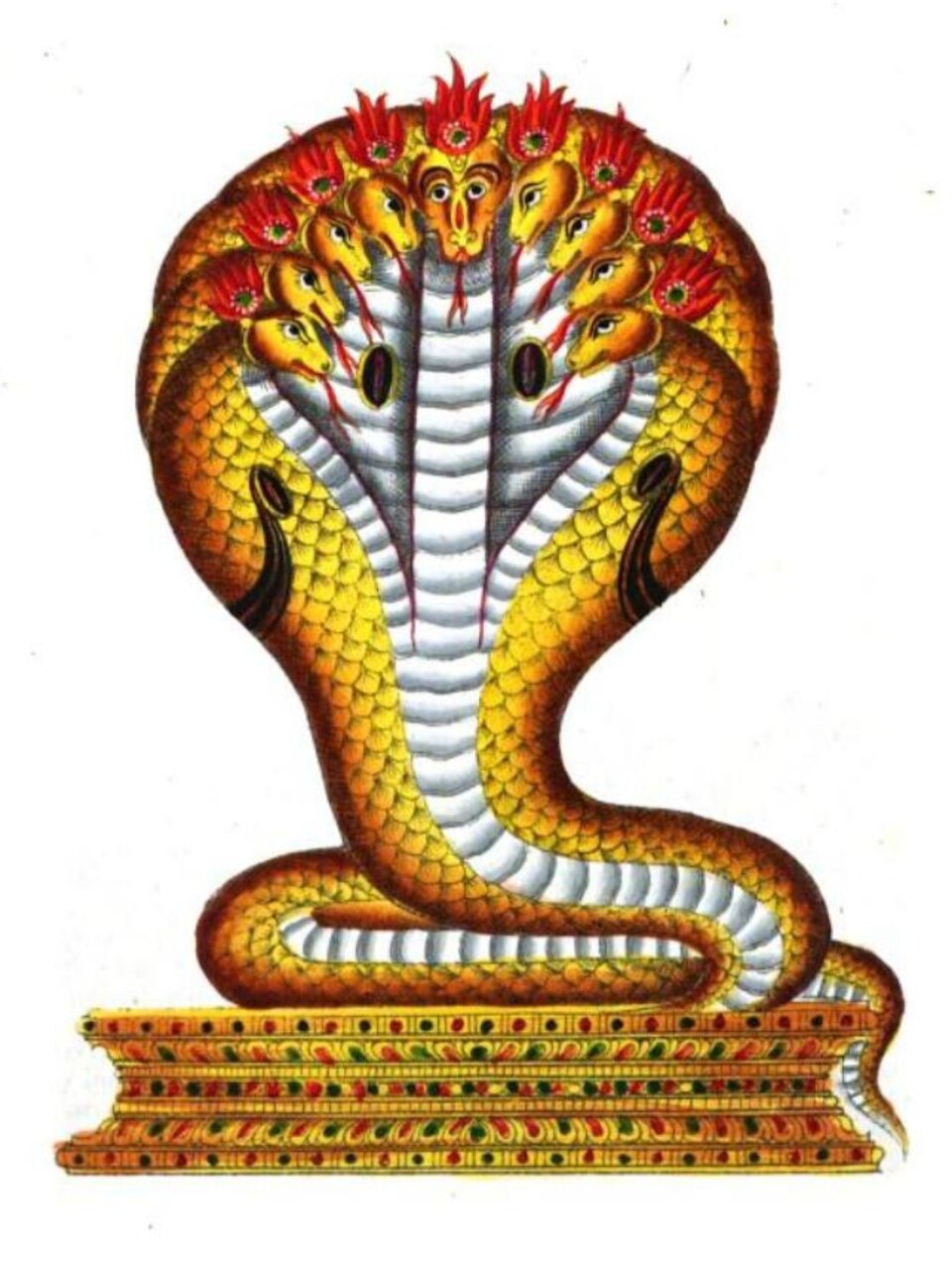
Explore Sheshnaga, the thousand-hooded cosmic serpent who upholds the universe, serves as Vishnu's divine couch, and embodies infinite time and dharma in Hindu cosmology.
एफ़िलिएट प्रकटीकरण: सनातन हिंदू अमेज़न एसोसिएट्स प्रोग्राम और CueLinks एफ़िलिएट नेटवर्क (मिंत्रा और फ्लिपकार्ट) में भाग लेता है। इस पृष्ठ पर एफ़िलिएट लिंक हैं: यदि आप क्लिक करके खरीदते हैं तो हमें एक छोटा कमीशन मिलता है, आप पर बिना किसी अतिरिक्त लागत के। अमेज़न एसोसिएट के रूप में हम पात्र खरीद से कमाते हैं। पूरा प्रकटीकरण।
Next Nag Panchami
Friday, 6 August 2027· in 292 days
Set a reminder so you never miss Nag Panchami.
परिचय
महत्व
करने का सर्वोत्तम समय
अपना सटीक शुभ समय जानें अपने शहर और तिथि के लिए शुभ मुहूर्त और चौघड़िया देखें।
आवश्यक सामग्री
तैयारी के चरण
- 1Clean the puja area thoroughly and sprinkle Ganga jal or clean water to purify the space
- 2Set up a clean altar facing east or north, covered with a fresh white or yellow cloth
- 3Place the Sheshnaga idol on a raised platform or copper plate
- 4Prepare panchamrita (mixture of milk, curd, ghee, honey, and sugar) in a clean vessel
- 5Arrange all samagri items neatly in separate small bowls or plates
- 6Light the ghee lamp and incense before beginning
- 7Take a bath and wear clean, preferably white or yellow clothes
- 8Sit on an asana (mat) facing the deity, calm the mind with a few deep breaths
- 9Invoke Lord Ganesha first to remove obstacles (Ganapati Atharvashirsha or simple mantra)
- 10Mentally offer the puja to Sheshnaga as a form of Lord Vishnu's eternal servant
चरण-दर-चरण विधि
- 1Begin with Achamana: sip water three times from right palm while chanting 'Om Achyutaya Namah, Om Anantaya Namah, Om Govindaya Namah' to purify body and mind
- 2Perform Pranayama: three rounds of alternate nostril breathing while meditating on Sheshnaga as the breath of life (prana) sustaining all beings
- 3Invoke the deity (Avahana): chant 'Om Anantaya Namah, Om Sheshaaya Namah, Om Vasukaye Namah' while offering flowers and akshata at the feet of the idol, visualizing the cosmic serpent descending upon the altar
- 4Offer Asana (seat): place a few flowers and akshata saying 'Om Anantaya Asanam Samarpayami' — offering the seat of your heart to the infinite one
- 5Perform Padya (washing feet): offer water mixed with sandalwood and flowers to the deity's feet (or base of idol) chanting 'Om Sheshaaya Padyam Samarpayami'
- 6Offer Arghya (water for hands): 'Om Anantaya Arghyam Samarpayami' — symbolizing surrender of one's actions to the cosmic order
- 7Perform Abhisheka (ritual bathing): slowly pour milk over the idol while chanting the Ananta Stotra or 'Om Namo Narayanaya', then pour water, then panchamrita, then pure water again — each representing purification of the five koshas (sheaths)
- 8Apply sandalwood paste (Gandha) on the hoods: 'Om Sheshaaya Gandham Samarpayami' — cooling the fiery energy of infinite time
- 9Offer kumkum and haldi on each hood: 'Om Anantaya Kumkumam Samarpayami, Om Anantaya Haridram Samarpayami' — honoring the thousand hoods as thousand facets of divine knowledge
- 10Offer white flowers (Pushpa) on each hood while reciting the thousand names of Vishnu (Vishnu Sahasranama) or at least 108 names — each flower a prayer for stability in one aspect of life
- 11Offer Durva grass (three blades) at the base: 'Om Sheshaaya Durvam Samarpayami' — symbolizing the three gunas (sattva, rajas, tamas) offered back to their source
- 12Perform Dhupa (incense): wave incense in clockwise circles chanting 'Om Anantaya Dhupam Aghrapayami' — purifying the subtle atmosphere
- 13Perform Deepa (lamp): wave ghee lamp chanting 'Om Sheshaaya Deepam Darshayami' — offering the light of consciousness to the lord of infinite time
- 14Offer Naivedya (food): place fruits, sweets, and panchamrita saying 'Om Anantaya Naivedyam Samarpayami' — sharing the fruits of one's labor with the sustainer of all
- 15Offer Tambula (betel): 'Om Sheshaaya Tambulam Samarpayami' — completing the hospitality
- 16Perform Aarti with camphor: sing Sheshnaga Aarti (provided in mantras section) while waving camphor in clockwise circles
- 17Do Pradakshina (circumambulation): walk around the altar 3, 7, or 108 times clockwise, each step a prayer for the stability of dharma in your life
- 18Offer Namaskara (prostration): full body prostration (Sashtanga) or folded hands, surrendering the ego to the cosmic foundation
- 19Distribute Prasad: share the offered food with family, neighbors, and especially those in need — completing the cycle of grace
मंत्र
Sheshnaga Moola Mantra
ॐ अनन्ताय नमः
Om Anantaya Namah
अर्थ: Salutations to the Infinite One (Sheshnaga), who has no beginning or end, the eternal support of the universe.
Sheshnaga Gayatri Mantra
ॐ अनन्ताय विद्महे सहस्रशिर्षाय धीमहि तन्नो नागः प्रचोदयात्
Om Anantaya Vidmahe Sahasrashirsaya Dhimahi Tanno Nagah Prachodayat
अर्थ: We meditate upon the Infinite One (Ananta), the thousand-hooded serpent; may that Nagadeva inspire and illuminate our intellect.
Ananta Shesha Stotram (Opening Verses)
अनन्तं शेषं पद्मनाभं सुरेशं विश्वाधारं विश्वभर्तारम्। नागेन्द्रं नागशयनं प्रभुं वन्देऽहं शेषमखिलेश्वरम्॥
Anantam Shesham Padmanabham Suresham Vishvadharam Vishvabhartaram. Nagendram Nagashayanam Prabhum Vande'ham Sheshamakhileshvaram॥
अर्थ: I bow to Shesha, the Infinite One, the lord of Padmanabha (Vishnu), the lord of gods, the support and sustainer of the universe, the king of serpents, the couch of the Lord, the master of all lords.
Sheshnaga Aarti (Complete)
जय अनन्त देवा, जय शेष नागा। सहस्र शिर्ष धारी, विश्व आधार सारा॥ जय अनन्त देवा... क्षीर सागर में शयन, करे विष्णु बिहारी। शेष शय्या सुन्दर, सजे सब सुखकारी॥ जय अनन्त देवा... पृथ्वी धरतल धारै, नहिं भार अनुभारी। अधर्म बढ़े जब जग में, काँपे धरती सारी॥ जय अनन्त देवा... नाग पञ्चमी पूजत, नर नारी सब जाई। दूध लावा चढ़ावत, भक्ति भाव बँधाई॥ जय अनन्त देवा... योगी जन ध्यान धरैं, सिद्धि पावैं अपारा। शेष शरण जो आवै, त्राहि त्राहि उबारा॥ जय अनन्त देवा...
Jai Ananta Deva, Jai Shesha Naga. Sahasra Shirsha Dhari, Vishva Adhara Sara. Jai Ananta Deva... Kshira Sagara Mein Shayana, Kare Vishnu Bihari. Shesha Shayya Sundara, Saje Sab Sukhakari. Jai Ananta Deva... Prithvi Dharatal Dharai, Nahi Bhara Anubhari. Adharma Bade Jab Jag Mein, Kampen Dharti Sari. Jai Ananta Deva... Naga Panchami Pujat, Nar Nari Sab Jai. Dudh Lava Chadhavat, Bhakti Bhav Bandhai. Jai Ananta Deva... Yogi Jan Dhyan Dharain, Siddhi Pavai Apara. Shesha Sharan Jo Avai, Trahi Trahi Ubara. Jai Ananta Deva...
अर्थ: Victory to the Infinite God, Victory to Shesha Naga. The thousand-hooded bearer, the very essence of the universe's support. Victory to the Infinite God... In the Ocean of Milk He reposes, while Vishnu enjoys divine play. The beautiful serpent-couch is adorned, bestowing all happiness. Victory to the Infinite God... He holds the earth upon the surface, feeling no burden. When unrighteousness increases in the world, the entire earth trembles. Victory to the Infinite God... On Nag Panchami, men and women all come to worship. They bring and offer milk, binding devotion with love. Victory to the Infinite God... Yogis meditate upon Him and attain supreme perfection. Whoever takes refuge in Shesha is saved from all calamities. Victory to the Infinite God...
Vishnu Sahasranama Reference to Shesha
शेषः शेषी च सर्वस्य शेषशायी च केशवः। शेषवाहनः शेषशय्यः शेषशायी च माधवः॥
Sheshah Sheshi Cha Sarvasya Sheshashayi Cha Keshavah. Sheshavahanah Sheshashayyah Sheshashayi Cha Madhavah॥
अर्थ: From Vishnu Sahasranama: He is Shesha (the remainder), Sheshi (the lord of the remainder), the remainder of all, He who reclines on Shesha (Keshava), He whose vehicle is Shesha, He whose bed is Shesha, He who reclines on Shesha (Madhava).
Nag Panchami Special Mantra
ॐ नमो भगवते वासुकये अनन्ताय शेषाय नागेन्द्राय नमः
Om Namo Bhagavate Vasukaye Anantaya Sheshaya Nagendraya Namah
अर्थ: Salutations to the Blessed Vasuki, the Infinite One, Shesha, the King of Serpents. Chanted especially on Nag Panchami for protection from snake afflictions, kaal sarpa dosha, and for family welfare.
करें
- ✓Approach Sheshnaga worship with humility, recognizing him as the foundation of your own existence
- ✓Maintain cleanliness of body, mind, and puja space — Shesha represents purity (sattva)
- ✓Offer white flowers and milk — his preferred offerings representing purity and nourishment
- ✓Meditate on the symbolism: Shesha's stillness amidst infinite hoods = focused consciousness amidst multiplicity
- ✓Chant mantras with correct pronunciation and understanding of meaning
- ✓Perform the puja facing east or north, during Brahma Muhurta if possible
- ✓Include family members, especially children, in the worship to transmit the tradition
- ✓Donate to environmental causes protecting snakes and their habitats — true worship in action
- ✓Study the Ananta Shesha Stotram and Vishnu Purana passages about Shesha to deepen understanding
- ✓Wear rudraksha or tulsi mala during japa for enhanced focus
न करें
- ✗Do not harm, kill, or disturb any snake — they are considered living manifestations of Shesha's energy
- ✗Do not offer alcohol, meat, or tamasic substances to Sheshnaga — he is pure sattva
- ✗Do not perform the puja in a distracted, angry, or impure state of mind
- ✗Do not use plastic or synthetic items in the puja — use only natural, biodegradable materials
- ✗Do not step over the puja area or offerings — maintain sanctity of the space
- ✗Do not rush through the rituals — each step is a meditation on cosmic order
- ✗Do not worship Sheshnaga for purely material gains without spiritual aspiration
- ✗Do not imitate snake charmers or exploit snakes for entertainment — this incurs severe karmic debt
- ✗Do not neglect the ecological aspect: protecting snake habitats is worship of Shesha
- ✗Do not argue or speak harshly during the puja day — maintain peace (shanti)
सामान्य गलतियाँ
- •Confusing Sheshnaga (Ananta) with Vasuki (the churning rope serpent) — they are distinct though related nagas
- •Offering boiled or pasteurized milk — raw, unboiled milk is traditionally required for abhisheka
- •Performing abhisheka with only water, skipping milk — milk represents the nectar of immortality (amrita) from the churning Shesha participated in
- •Neglecting the Durva grass offering — the three blades represent the three gunas offered back to the source
- •Chanting mantras mechanically without bhava (feeling) and understanding
- •Using a plastic or painted idol instead of clay, silver, or stone — natural materials hold prana better
- •Forgetting to invoke Lord Ganesha first — no puja is complete without removing obstacles
- •Not performing pradakshina — circumambulation aligns one's microcosm with the macrocosm Shesha upholds
- •Eating the prasad before offering to the deity and distributing to others
- •Treating Nag Panchami as merely a folk festival without understanding its deep cosmological significance
क्षेत्रीय विविधताएँ
- •In South India (Tamil Nadu, Kerala, Karnataka), Sheshnaga is worshipped as Adishesha at temples like Ananthapadmanabhaswamy (Thiruvananthapuram) where Vishnu reclines on him — special abhishekams with 108 kalashas are performed
- •In Maharashtra and Gujarat, Nag Panchami involves drawing snake images on walls with cow dung and turmeric, offering milk and khichdi, and women applying mehndi with snake motifs
- •In Bengal and Odisha, Manasa Devi (snake goddess, sister of Vasuki) is worshipped alongside Shesha during Nag Panchami with elaborate rituals and folk songs (Manasa Mangal)
- •In Punjab and North India, snake charmers (saperas) are traditionally given alms and milk offerings on Nag Panchami, though this practice is now discouraged for wildlife protection
- •In Nepal, the Nag Panchami festival includes posting serpent images on doorways for protection, and the Nagdaha lake in Kathmandu is a major pilgrimage site
- •In the Nath Sampradaya (Gorakhnath tradition), Sheshnaga is identified with Kundalini Shakti — the coiled serpent at the base of the spine — and worshipped through yogic practices
- •In Kashmir Shaivism, Ananta is one of the eight Bhairavas and represents the infinite space of consciousness (cidakasha)
- •Among the tribal communities of Central India (Gonds, Bhils), serpent worship is integrated with ancestor worship and earth goddess rituals
- •In the Vaikhanasa and Pancharatra Agama traditions (temple rituals), Shesha has specific mantras for each of his thousand hoods used in daily temple worship of Vishnu
- •In the ISKCON tradition, Shesha is honored as Baladeva (Balarama), the first expansion of Krishna, and his appearance day (Balarama Jayanti) is celebrated with great fervor
अक्सर पूछे जाने वाले प्रश्न
Is Sheshnaga the same as Vasuki?▾
Why does Sheshnaga have a thousand hoods?▾
What is the connection between Sheshnaga and Kundalini?▾
Can women perform Sheshnaga puja during menstruation?▾
What is Kaal Sarpa Dosha and how does Sheshnaga worship help?▾
Why is milk offered to Sheshnaga?▾
Is Sheshnaga worship only for Nag Panchami?▾
What is the significance of Shesha as 'Sankarshana'?▾
लोकप्रिय टूल
संदर्भ और पारंपरिक टिप्पणियाँ
- •Vishnu Purana, Book 2, Chapter 5 — Detailed description of Shesha upholding the earth and the fourteen lokas
- •Bhagavata Purana (Srimad Bhagavatam), Canto 5, Chapter 25 — The glories of Ananta Shesha and his role in cosmic order
- •Mahabharata, Adi Parva (Astika Parva) — The birth of the Nagas from Kadru and Kashyapa, Shesha's tapasya and blessing from Brahma
- •Ramayana, Bala Kanda — Shesha as Lakshmana's previous incarnation (Lakshmana is Shesha's avatar)
- •Harivamsa, Vishnu Parva — Shesha as Balarama (Sankarshana), the first expansion of Krishna
- •Padma Purana, Patala Khanda — Detailed Nagaloka description and Shesha's court
- •Skanda Purana, Nagara Khanda — Nag Panchami rituals and Shesha worship procedures
- •Vishnu Sahasranama (Mahabharata, Anushasana Parva) — Multiple names referring to Shesha (Shesha, Sheshi, Sheshashayi, Sheshavahana, Ananta)
- •Ananta Shesha Stotram (traditional hymn attributed to various sages) — Recited for stability and protection
- •Vaikhanasa Agama and Pancharatra Agama — Temple ritual manuals with specific Shesha mantras for each hood
- •Goraksha Samhita and Hatha Yoga Pradipika — Shesha as Kundalini symbolism in yogic tradition
- •Manasa Mangal (Bengali medieval text) — Folk tradition of snake worship integrating Shesha and Manasa Devi
- •Nitya Karma Puja Prakash (Gita Press) — Household puja procedures including Shesha worship
- •Regional temple traditions: Ananthapadmanabhaswamy Temple (Kerala), Sheshnag Temple (Jammu), Nag Vasuki Temple (Prayagraj), Mannarasala Temple (Kerala)
Related Audio & Bhajans
Serpent
COSMIC CHARIOT LIVE 1-14-23 ART FESTIVAL, CAPE CORAL, FLORIDA @ THE COSMIC KITCHEN
Cosmic Dance
Lord Shiva's Hidden Cosmic Names (Receive Mahadev's Blessings)
एफ़िलिएट प्रकटीकरण: सनातन हिंदू अमेज़न एसोसिएट्स प्रोग्राम और CueLinks एफ़िलिएट नेटवर्क (मिंत्रा और फ्लिपकार्ट) में भाग लेता है। इस पृष्ठ पर एफ़िलिएट लिंक हैं: यदि आप क्लिक करके खरीदते हैं तो हमें एक छोटा कमीशन मिलता है, आप पर बिना किसी अतिरिक्त लागत के। अमेज़न एसोसिएट के रूप में हम पात्र खरीद से कमाते हैं। पूरा प्रकटीकरण।
Amazon.in पर पूजा सामग्री खरीदें
क्लिक करने पर Amazon.in खुलता है। कीमत और उपलब्धता बदल सकती है।
सभी पूजा वस्तुएँ देखेंअमेज़न एसोसिएट्स टैग: geekydevelope-21
फ्लिपकार्ट पर पूजा और त्योहारी सामग्री खरीदें
क्लिक करने पर हमारे एफ़िलिएट लिंक से फ्लिपकार्ट खुलता है। कीमत और उपलब्धता बदल सकती है।
फ्लिपकार्ट पर खरीदेंCueLinks प्रकाशक: 300371
मिंत्रा पर त्योहारी परिधान खरीदें
क्लिक करने पर हमारे एफ़िलिएट लिंक से मिंत्रा खुलता है। कीमत और उपलब्धता बदल सकती है।
CueLinks प्रकाशक: 300371
Need a website? Describe it, and AI builds it.
Perfect for a temple, pooja service, astrology practice or small shop. Tell the AI what you want — or drag and drop the classic way — and go live on your own web address in minutes with Sitova. Hosting, SEO, forms and analytics are all included.
- Build with AI or drag & drop
- Your domain + SEO built in
- Free forever plan
Opens sitova.site