
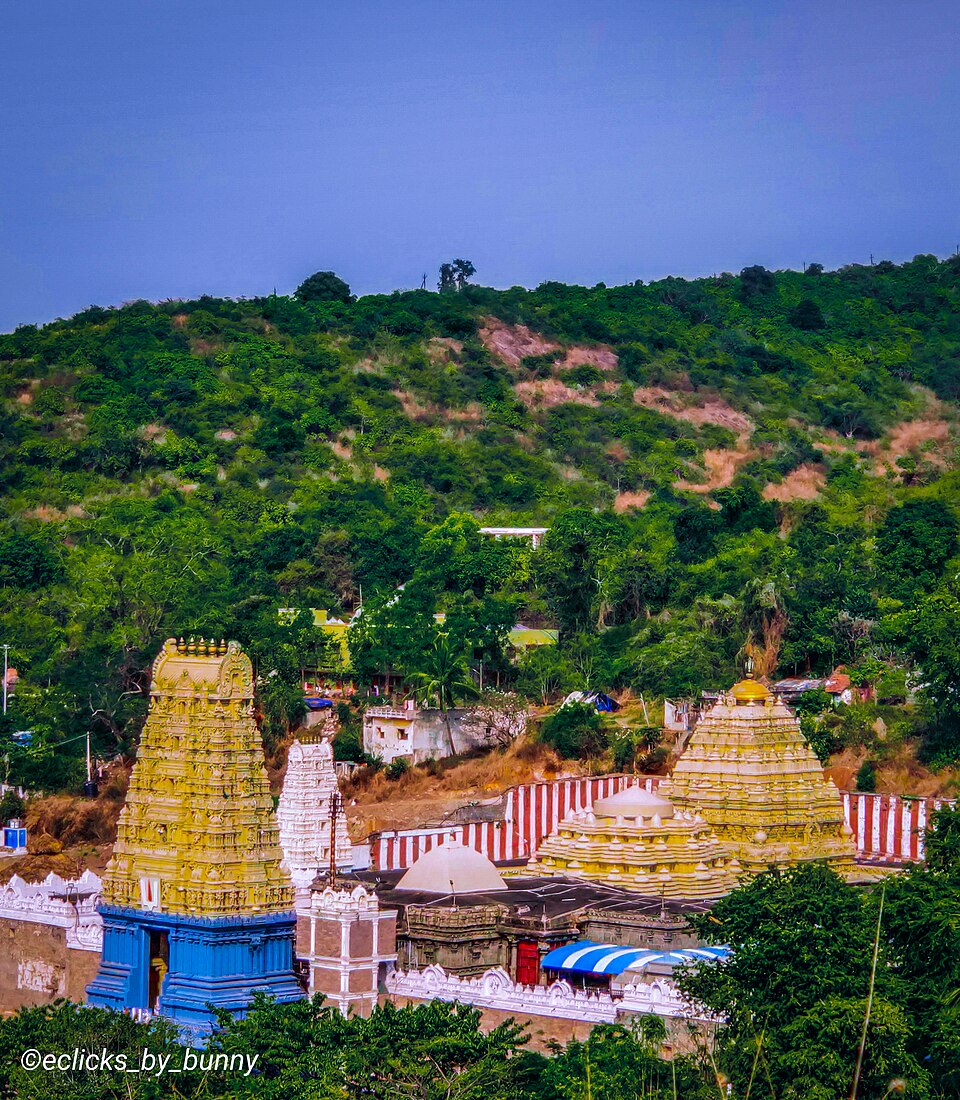
Simhachalam Varaha Narasimha Temple: A Divine Journey through History and Darshan
Discover the profound history, legends, and spiritual significance of the Simhachalam Varaha Narasimha Temple, an ancient abode of Lord Narasimha in Andhra Pradesh.
एफ़िलिएट प्रकटीकरण: सनातन हिंदू अमेज़न एसोसिएट्स प्रोग्राम और CueLinks एफ़िलिएट नेटवर्क (मिंत्रा और फ्लिपकार्ट) में भाग लेता है। इस पृष्ठ पर एफ़िलिएट लिंक हैं: यदि आप क्लिक करके खरीदते हैं तो हमें एक छोटा कमीशन मिलता है, आप पर बिना किसी अतिरिक्त लागत के। अमेज़न एसोसिएट के रूप में हम पात्र खरीद से कमाते हैं। पूरा प्रकटीकरण।
यह लेख अभी अंग्रेज़ी में उपलब्ध है। हिंदी अनुवाद के लिए नीचे बटन दबाएँ।
Next Akshaya Tritiya
Sunday, 9 May 2027· in 270 days
Set a reminder so you never miss Akshaya Tritiya.
Introduction
The origins of Simhachalam are deeply rooted in the ancient Puranas, particularly the Bhagavata Purana, which narrates the descent of Lord Narasimha to protect the child-devotee Prahlada. While the Narasimha avatar is globally celebrated, Simhachalam offers a unique theological layer where the deity is seen in a composite form, reflecting the interconnectedness of Vishnu's various manifestations. Local legends suggest that the presiding deity appeared here to end the tyranny of various asuras, establishing a sanctum where the cosmic balance is perpetually maintained.
Historically, the temple's evolution is a tapestry of various dynasties, including the Eastern Gangas, the Chalukyas, and the Gajapatis, each contributing to its architectural splendor and spiritual prestige. The temple's unique characteristic—the 'Chandanotsavam' or the ritual of applying sandalwood paste—is central to its identity. Unlike many other temples where the deity's form is clearly visible in all seasons, here, the deity remains covered in thick sandalwood paste for a significant portion of the year, making the 'Darshan' an act of faith and mystical unveiling.
Spiritually, Simhachalam serves as a 'Kshethra' (sacred ground) that attracts seekers from all walks of life. It is believed that the hills themselves are sacred, and the atmosphere is permeated with the vibrations of ancient Vedic chants. For a newcomer, entering this temple is akin to stepping into a realm where time slows down, and the presence of the Divine becomes palpable through the rhythmic bells, the scent of incense, and the profound silence of the hilltops.
Significance
Culturally, the temple is a cornerstone of Andhra Pradesh's heritage. The intricate carvings on the temple walls depict scenes from the Puranas and the various avatars of Vishnu, serving as a visual scripture for the masses. The temple's festivals, especially the Akshaya Tritiya and the Chandanotsavam, are communal events that unify the region in devotion, reinforcing the social fabric through shared ritualistic practices.
Astrologically, the temple is often associated with the mitigation of malefic planetary influences, particularly Rahu and Ketu, as well as the strengthening of Mars (Mangala). It is believed that performing prayers here can alleviate the 'Doshas' that cause sudden obstacles or mental unrest. The worship of Narasimha is particularly recommended for those seeking protection from enemies or legal disputes.
From a scriptural perspective, the temple is linked to the concept of 'Saranagati' or total surrender. The legends of the saints and devotees who attained liberation (Moksha) at this site emphasize that the grace of Varaha Narasimha is accessible to anyone who approaches Him with a pure heart, regardless of their social standing or previous transgressions. The 'Phala' (fruit) of visiting Simhachalam is described in various local stotrams as the attainment of 'Shanti' (peace) and 'Abhaya' (fearlessness).
Auspicious Time
Find your exact auspicious time Check the shubh muhurat and choghadiya for your city and date.
Required Samagri (Materials)
Preparation Steps
- 1Perform personal purification (Snana) before visiting the temple.
- 2Wear clean, traditional attire (Dhoti for men, Saree/Salwar for women) as per temple customs.
- 3Maintain a state of mental stillness through light meditation or Japa before entering the sanctum.
- 4Ensure you have completed any necessary fasting if intending to participate in specific Vratas.
Steps
- 1Approach the temple entrance and offer prayers to the Bali Peetam (sacrificial altar).
- 2Circumambulate (Pradakshina) the main shrine in a clockwise direction.
- 3Offer flowers and Tulsi leaves at the designated counters or directly to the priest if permitted.
- 4In the presence of the deity, chant the Narasimha Maha-mantra with deep focus.
- 5Receive the Prasadam (sanctified food or sandalwood) from the priest with both hands as a mark of respect.
- 6Sit quietly in the temple premises for a few minutes to absorb the spiritual vibrations before exiting.
Mantras
Narasimha Maha-Mantra
उग्रं वीरं महाविष्णुं ज्वलन्तं सर्वतोमुखम्। नृसिंहं भीषणं भद्रं मृत्युमृत्युं नमाम्यहम्॥
Ugram Veeram Maha-Vishnum Jvalantam Sarvato-Mukham | Nrsimham Bhishanam Bhadram Mrityu-Mrityum Namamy-Aham ||
Meaning: I bow to the ferocious and heroic Maha-Vishnu, who burns with light and faces all directions; to the terrifying yet auspicious Narasimha, who is the death of death itself.
Shrimad Narasimha Pranama
नमस्ते नरसिंहाय प्रह्लादह्लाददायिने। हिरण्यकशिपुवधाय विघ्नविनाशनाय च॥
Namaste Narasimhaya Prahlada-Hladadayine | Hiranyakashipu-Vadhaya Vighna-Vinashanaya Cha ||
Meaning: Salutations to Lord Narasimha, who gives joy to Prahlada, who destroyed Hiranyakashipu, and who destroys all obstacles.
Guidelines
- •Maintain strict celibacy (Brahmacharya) on the day of the Vrata.
- •Observe a fast (Upavasa) or eat only Satvik food (no onion, garlic, or meat).
- •Avoid negative speech or anger throughout the day.
- •Focus the mind entirely on the form of Lord Narasimha.
Do's
Don'ts
- ✗Do not carry non-vegetarian food or leather items into the temple premises.
- ✗Avoid loud conversations or disruptive behavior.
- ✗Do not touch the idols directly unless permitted by the priests.
- ✗Avoid wearing footwear inside the sacred inner precincts.
Common Mistakes to Avoid
- •Visiting without mental preparation or focus.
- •Ignoring the specific customs of the Chandanotsavam ritual.
- •Treating the visit as a mere sightseeing tour rather than a spiritual pilgrimage.
- •Failing to show respect to the local traditions and priests.
Regional Variations
- •In local Andhra traditions, the emphasis is heavily on the Chandanotsavam (sandalwood ritual).
- •Some families follow specific lineage-based (Sampradaya) prayers that may differ from the general temple ritual.
- •Vedic traditions may prioritize Sanskrit chanting, while Bhakti traditions may focus on Telugu devotional songs (Kirtanas).
Frequently Asked Questions
Why is the deity covered in sandalwood paste?▾
What is the best way to seek protection from enemies at Simhachalam?▾
Is there a dress code for the temple?▾
लोकप्रिय टूल
References & Traditional Notes
- •Refer to the Bhagavata Purana for the foundational legends of Narasimha.
- •Consult local temple priests (Archakas) for the specific timings of the Chandanotsavam.
- •The temple's history is documented in local Telugu inscriptions and historical chronicles of the Eastern Gangas.
Related Audio & Bhajans
Spiritual Journey
Darshan
Halima Al Balushi ' One Traditional Oman. How Customs Differ Throughout The Sultanate
The History
एफ़िलिएट प्रकटीकरण: सनातन हिंदू अमेज़न एसोसिएट्स प्रोग्राम और CueLinks एफ़िलिएट नेटवर्क (मिंत्रा और फ्लिपकार्ट) में भाग लेता है। इस पृष्ठ पर एफ़िलिएट लिंक हैं: यदि आप क्लिक करके खरीदते हैं तो हमें एक छोटा कमीशन मिलता है, आप पर बिना किसी अतिरिक्त लागत के। अमेज़न एसोसिएट के रूप में हम पात्र खरीद से कमाते हैं। पूरा प्रकटीकरण।
Amazon.in पर पूजा सामग्री खरीदें
क्लिक करने पर Amazon.in खुलता है। कीमत और उपलब्धता बदल सकती है।
सभी पूजा वस्तुएँ देखेंअमेज़न एसोसिएट्स टैग: geekydevelope-21
फ्लिपकार्ट पर पूजा और त्योहारी सामग्री खरीदें
क्लिक करने पर हमारे एफ़िलिएट लिंक से फ्लिपकार्ट खुलता है। कीमत और उपलब्धता बदल सकती है।
फ्लिपकार्ट पर खरीदेंCueLinks प्रकाशक: 300371
मिंत्रा पर त्योहारी परिधान खरीदें
क्लिक करने पर हमारे एफ़िलिएट लिंक से मिंत्रा खुलता है। कीमत और उपलब्धता बदल सकती है।
CueLinks प्रकाशक: 300371