Yatras & PilgrimagesMultiple: RamaKrishnaShivaVishnuDeviGangaKumbh Mela, Kartik Purnima, Janmashtami, Ram Navami, Maha Shivaratri

Saptapuri Yatra: Complete Guide to the Pilgrimage of Seven Holy Cities of India

Comprehensive guide to Saptapuri Yatra — the sacred pilgrimage to Ayodhya, Mathura, Haridwar, Varanasi, Kanchipuram, Ujjain, and Dwarka. Includes rituals, mantras, significance, and practical tips.

By Sanatan Hindu4 min readUpdated 17 August 2026Audio available
Share:

Affiliate disclosure: Sanatan Hindu participates in the Amazon Associates Programme and the CueLinks affiliate network (Myntra & Flipkart). This page contains affiliate links, if you click and buy, we earn a small commission at no extra cost to you. As an Amazon Associate we earn from qualifying purchases. Full disclosure.
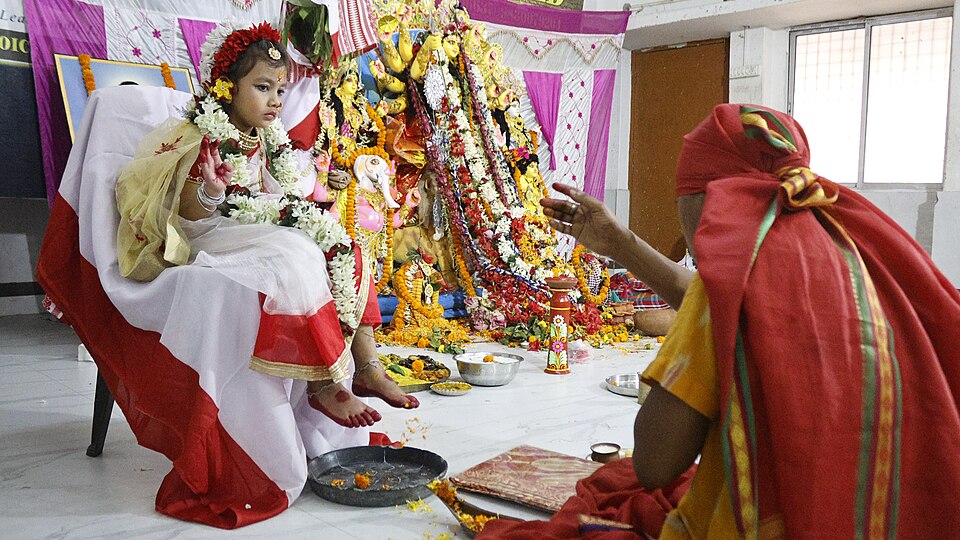
Saptapuri Yatra: Complete Guide to the Pilgrimage of Seven Holy Cities of India

Next Janmashtami

Friday, 4 September 2026· in 17 days

Set a reminder so you never miss Janmashtami.

Introduction

The Saptapuri Yatra, or pilgrimage to the seven holy cities of India, stands as one of the most revered and spiritually transformative journeys in Hindu tradition. Rooted deeply in the Puranas, particularly the Garuda Purana and the Skanda Purana, these seven cities — Ayodhya, Mathura, Haridwar (Maya), Varanasi (Kashi), Kanchipuram, Ujjain (Avantika), and Dwarka — are collectively known as the Saptapuri, the seven sacred abodes where the divine has manifested in tangible, accessible forms. Each city is associated with a specific avatar of Lord Vishnu or a major divine event: Ayodhya with Lord Rama, Mathura with Lord Krishna, Haridwar as the gateway to the Himalayas and the descent of the Ganga, Varanasi as the city of Lord Shiva and liberation (moksha), Kanchipuram as the city of the Goddess Kamakshi and one of the seven Moksha-puris, Ujjain as the seat of Mahakaleshwar Jyotirlinga and the prime meridian of Hindu astronomy, and Dwarka as the kingdom of Lord Krishna in his later years. The concept of Saptapuri is not merely geographical but deeply metaphysical — these cities are considered spiritual vortices where the veil between the material and the divine is thinnest, allowing pilgrims to accelerate their sadhana, burn karmic debts, and attain moksha.

Significance

The spiritual significance of the Saptapuri Yatra transcends mere temple visits; it is a deliberate, scripturally sanctioned path to purification and liberation. The Garuda Purana (1.14.7) explicitly states: 'Ayodhya, Mathura, Maya, Kashi, Kanchi, Avantika, and Dwarka — these seven are the givers of moksha.' This verse establishes the yatra as a direct means to moksha, the ultimate goal of human life in Hindu philosophy. Each city corresponds to one of the seven chakras in the subtle body, according to Tantric and Yogic traditions: Ayodhya to the Muladhara (root), Mathura to Svadhisthana (sacral), Haridwar to Manipura (solar plexus), Varanasi to Anahata (heart), Kanchipuram to Vishuddha (throat), Ujjain to Ajna (third eye), and Dwarka to Sahasrara (crown). Thus, undertaking the yatra in sequence is believed to awaken and balance the kundalini energy, leading to spiritual enlightenment. The Skanda Purana elaborates that bathing in the sacred rivers of these cities — Sarayu in Ayodhya, Yamuna in Mathura, Ganga in Haridwar and Kashi, Kaveri in Kanchipuram, Shipra in Ujjain, and Gomti in Dwarka — multiplies the merit (punya) exponentially. Furthermore, the yatra is considered especially potent during specific astrological alignments such as Kumbh Mela (held at Haridwar and Ujjain), solar and lunar eclipses, and the month of Kartika. Performing shraddha (ancestral rites) at these sites, particularly at Gaya (often included in extended circuits) and Varanasi, is believed to liberate ancestors. The cultural significance is equally profound — the Saptapuri Yatra has sustained ancient temple traditions, classical arts, Sanskrit learning, and regional economies for millennia, making it a living heritage of Sanatana Dharma.

Auspicious Time

The ideal time for Saptapuri Yatra is during the cooler months from October to March. Specific auspicious periods include: Kartika month (Oct-Nov) for Varanasi and Ayodhya; Chaitra Navaratri (Mar-Apr) for Kanchipuram and Dwarka; Kumbh Mela years (every 12 years) at Haridwar and Ujjain; Simhastha Kumbh at Ujjain (every 12 years when Jupiter is in Leo); Magh Mela at Prayagraj (often combined); and solar/lunar eclipses for enhanced merit. Avoid peak summer (April-June) and monsoon (July-Sept) due to extreme heat and travel disruptions.

Find your exact auspicious time Check the shubh muhurat and choghadiya for your city and date.

Required Samagri (Materials)

Clean cotton or silk dhoti/angavastram for men; saree or salwar-kameez for women
Rudraksha mala (108 beads) for japa
Gangajal or water from home in copper kalash
Panchamrit ingredients: milk, curd, ghee, honey, sugar
Fresh flowers (marigold, rose, lotus), tulsi leaves, bilva leaves
Fruits (banana, coconut, pomegranate), sweets (laddu, peda)
Incense sticks (agarbatti), camphor (karpoor), ghee lamps (diyas)
Sandalwood paste (chandan), kumkum, haldi, vibhuti
Betel leaves, supari, coins for dakshina
Pilgrimage journal, pen, and printed mantras/itinerary
Comfortable walking shoes, weather-appropriate clothing, medicines
ID proofs, train/flight tickets, hotel confirmations, emergency contacts

Preparation Steps

  1. 1Consult family priest or guru for personalized sankalpa (intention) and auspicious start date (muhurta)
  2. 2Observe a 3-day pre-yatra vrat: sattvic diet, celibacy, daily Gita reading, and 108 rounds of 'Om Namo Narayanaya'
  3. 3Perform Ganesha puja and Navagraha shanti at home before departure
  4. 4Take sankalpa at home altar: 'I undertake Saptapuri Yatra for moksha, ancestral liberation, and divine grace'
  5. 5Pack only essential items; travel light as per tradition of tapasya
  6. 6Inform family elders and seek blessings; arrange for home puja continuity in absence
  7. 7Book darshan slots online where available (e.g., Kashi Vishwanath, Mahakaleshwar, Dwarkadhish)
  8. 8Arrange for local guides/pandas at each city for authentic rituals
  9. 9Carry printed copies of city-specific mantras, stotras, and temple timings
  10. 10Mentally prepare for physical exertion, crowds, and spiritual intensity

Steps

  1. 1Begin at Ayodhya: Bathe in Sarayu at Ram Ghat, perform Rama tarpan, visit Ram Janmabhoomi, Hanuman Garhi, Kanak Bhavan; chant 'Shri Ram Jai Ram Jai Jai Ram' 108 times
  2. 2Proceed to Mathura-Vrindavan: Bathe in Yamuna at Vishram Ghat, perform Krishna abhishek at Krishna Janmabhoomi, visit Banke Bihari, ISKCON, Govardhan parikrama (21 km); chant 'Hare Krishna' mahamantra
  3. 3Travel to Haridwar: Bathe in Ganga at Har Ki Pauri during Brahma Muhurta, attend Ganga Aarti, visit Mansa Devi, Chandi Devi, Maya Devi temples; offer pinda daan at Brahma Kund
  4. 4Journey to Varanasi: Bathe in Ganga at Assi or Dashashwamedh Ghat, perform Kashi Vishwanath abhishek with Gangajal, visit Annapurna, Kaal Bhairav, Sankat Mochan; perform shraddha at Manikarnika
  5. 5Go to Kanchipuram: Visit Kamakshi Amman, Ekambareswarar, Varadaraja Perumal temples; perform kanchi kamakshi stotram parayanam; bathe in temple tank if accessible
  6. 6Proceed to Ujjain: Bathe in Shipra at Ram Ghat, perform Mahakaleshwar Bhasma Aarti (pre-dawn), visit Harsiddhi, Kal Bhairav, Mangalnath; perform pitru tarpan at Siddhavat
  7. 7Conclude at Dwarka: Bathe in Gomti at Gomti Ghat, visit Dwarkadhish Temple for morning darshan, perform Dwarka parikrama, visit Nageshwar Jyotirlinga, Bet Dwarka; offer final sankalpa completion
  8. 8At each city: Perform 3 pradakshinas, offer panchamrit, flowers, fruits; chant city-specific mantra 108 times; donate annadaan (food) and vastradaan (clothes) as per capacity
  9. 9Maintain daily sandhya vandana, japa, and Gita parayanam throughout the yatra
  10. 10Upon return: Perform homecoming puja, distribute prasad, share experiences with family, continue daily sadhana enhanced by yatra samskaras

Mantras

Saptapuri Moksha Mantra (Garuda Purana 1.14.7)

अयोध्या मथुरा माया काशी काञ्ची अवन्तिका। पुरा द्वारावती चैव सप्तैता मोक्षदायिकाः॥

Ayodhyā Mathurā Māyā Kāśī Kāñcī Avantikā. Purā Dwārāvatī Caiva Saptaitā Mokṣadāyikāḥ॥

Meaning: Ayodhya, Mathura, Maya (Haridwar), Kashi, Kanchi, Avantika (Ujjain), and Dwarka — these seven are the givers of liberation.

Ayodhya - Rama Raksha Stotra Opening

श्रीरामचन्द्रचरणौ मनसा स्मरामि श्रीरामचन्द्रचरणौ वचसा ग्रणामि। श्रीरामचन्द्रचरणौ शिरसा नमामि श्रीरामचन्द्रचरणौ शरणं प्रपद्ये॥

Śrīrāmacandracaraṇau manasā smarāmi Śrīrāmacandracaraṇau vacasā graṇāmi. Śrīrāmacandracaraṇau śirasā namāmi Śrīrāmacandracaraṇau śaraṇaṁ prapadye॥

Meaning: I remember the lotus feet of Shri Ramachandra in my mind, chant them with my speech, bow to them with my head, and surrender to them completely.

Mathura - Krishna Mahamantra

हरे कृष्ण हरे कृष्ण कृष्ण कृष्ण हरे हरे। हरे राम हरे राम राम राम हरे हरे॥

Hare Kṛṣṇa Hare Kṛṣṇa Kṛṣṇa Kṛṣṇa Hare Hare. Hare Rāma Hare Rāma Rāma Rāma Hare Hare॥

Meaning: O Lord Krishna, O energy of the Lord (Radha), please engage me in Your loving service. O Lord Rama, O energy of the Lord (Sita), please engage me in Your service.

Haridwar - Ganga Stotram (Adi Shankara)

जय जय हे भगवति सुरभि सिन्धु तरङ्गिणि। जय जय हे भगवति भवभय हरिणि गङ्गे॥

Jaya Jaya He Bhagavati Surabhi Sindhu Taraṅgiṇi. Jaya Jaya He Bhagavati Bhavabhaya Hariṇi Gaṅge॥

Meaning: Victory, victory to You, O Goddess, ocean of nectar, wave-bedecked. Victory, victory to You, O Goddess, remover of the fear of worldly existence, O Ganga.

Varanasi - Kashi Vishwanath Ashtakam (Verse 1)

काशिकापुरनाथं कालजितं जगन्नाथं दुःखदावानलं प्रभुं प्रेमसुधाम्बुधिं शम्भुम्। वन्दे विश्वनाथं विश्वगुरुं विश्वमूर्तिं सर्वव्यापिनं शान्तं शिवं शङ्करं शम्भुम्॥

Kāśikāpuranāthaṁ Kāla-jitaṁ Jagannāthaṁ Duḥkhadāvānalaṁ Prabhuṁ Premasudhāmbu-dhiṁ Śambhum. Vande Viśvanāthaṁ Viśvaguruṁ Viśvamūrtiṁ Sarvavyāpinaṁ Śāntaṁ Śivaṁ Śaṅkaraṁ Śambhum॥

Meaning: I worship Vishwanath, Lord of Kashi, conqueror of time, Lord of the universe, fire that burns the forest of sorrow, ocean of nectar of love, Shambhu — the universal guru, cosmic form, all-pervading, peaceful, auspicious, Shankara, Shambhu.

Kanchipuram - Kamakshi Stotram (Verse 1)

काञ्चीपुरवासिनीं काञ्चीदेवीं काञ्चनप्रभाम्। कमलासनं कमलाक्षीं कमलानां कमलप्रियाम्॥

Kāñcīpuravāsinīṁ Kāñcīdevīṁ Kāñcanaprabhām. Kamalāsanaṁ Kamalākṣīṁ Kamalānāṁ Kamalapriyām॥

Meaning: Residing in Kanchipuram, Goddess Kanchi, golden-hued, seated on lotus, lotus-eyed, beloved of the lotus-born (Lakshmi).

Ujjain - Mahakaleshwar Shiva Panchakshara

ॐ नमः शिवाय

Oṁ Namaḥ Śivāya

Meaning: Salutations to Lord Shiva, the auspicious one. The five-syllable mantra representing the five elements and Shiva's five faces.

Dwarka - Dwarkadhish Pranama Mantra

द्वारकानाथं चतुर्भुजं शङ्खचक्रगदाधरम्। पीताम्बरधरं देवं प्रणमामि जगत्प्रभुम्॥

Dvārakānāthaṁ Caturbhujaṁ Śaṅkhacakragadādaram. Pītāmbaradharaṁ Devaṁ Praṇamāmi Jagatprabhum॥

Meaning: I bow to the Lord of Dwarka, four-armed, holding conch, discus, and mace, clad in yellow silk, the Lord of the universe.

Universal Pilgrimage Sankalpa Mantra

ॐ तत्सत्। श्रीपरमेश्वरप्रीत्यर्थं सप्तपुरीयात्रां करिष्ये। मोक्षार्थं पितृमोक्षार्थं कुलमोक्षार्थं च। श्रीगुरुप्रसादाद् सिद्धिर्भवतु।

Oṁ Tat Sat. Śrīparameśvaraprītyarthaṁ Saptapurīyātrāṁ Kariṣye. Mokṣārthaṁ Pitṛmokṣārthaṁ Kulamokṣārthaṁ Ca. Śrīguruprasādād Siddhir Bhavatu.

Meaning: Om Tat Sat. For the pleasure of the Supreme Lord, I undertake the Saptapuri Yatra. For liberation, for liberation of ancestors, for liberation of lineage. By the grace of the Guru, may success be attained.

Guidelines

  • Maintain strict sattvic diet throughout: no onion, garlic, meat, alcohol, tobacco, or processed foods
  • Observe celibacy (brahmacharya) in thought, word, and deed during the entire yatra
  • Sleep on floor or simple bedding; avoid luxury accommodations as tapasya
  • Bathe daily in sacred rivers/tanks before sunrise; wear wet clothes for puja if tradition demands
  • Perform sandhya vandana (morning/evening prayers) without fail at each location
  • Chant minimum 16 rounds (1728) of Hare Krishna or chosen mantra daily on rudraksha mala
  • Observe mauna (silence) for at least 2 hours daily, preferably during travel between cities
  • Donate daily: annadaan (food), jaladaan (water), vastradaan (clothes), or dakshina as per capacity
  • Avoid criticizing others, complaining, or engaging in worldly talk; maintain divine consciousness
  • Complete the yatra in sequence (Ayodhya to Dwarka) unless health/safety requires adjustment

Do's

  • Carry a small Gita and read one chapter daily
  • Respect local customs, dress codes, and temple protocols at each city
  • Engage authorized pandas/priests for rituals; verify credentials
  • Keep a spiritual journal documenting experiences, dreams, insights
  • Practice gratitude for every darshan, even brief ones in crowds
  • Help elderly/disabled pilgrims; seva is part of yatra sadhana
  • Stay hydrated, eat light, rest adequately to maintain health
  • Learn basic Sanskrit mantras for each deity beforehand
  • Participate in temple seva (cleaning, cooking, flower service) if possible
  • Share prasad and experiences with fellow pilgrims

Don'ts

  • Do not rush darshan; quality of bhava matters over quantity of temples
  • Do not take photos inside garbhagriha (sanctum) where prohibited
  • Do not bargain aggressively with priests, vendors, or boatmen
  • Do not litter in rivers, ghats, or temple premises
  • Do not consume food offered to deities outside temple (unless as prasad)
  • Do not argue with security or temple staff; follow queues patiently
  • Do not carry leather items (belts, bags) into temple sanctums
  • Do not skip daily sadhana due to fatigue; shorten but don't omit
  • Do not criticize other sampradayas, rituals, or regional practices
  • Do not treat yatra as tourism; maintain pilgrim mindset throughout

Common Mistakes to Avoid

  • Attempting all seven cities in one rushed trip (minimum 21 days recommended)
  • Ignoring health preparation: walking 10-15 km daily on uneven surfaces
  • Booking non-refundable travel without checking temple closure days
  • Carrying excessive luggage; porters may not be available at all ghats
  • Not carrying enough cash (UPI may fail in remote temple areas)
  • Skipping ancestral rites (shraddha/tarpan) at designated spots
  • Wearing inappropriate clothing (shorts, sleeveless) at temples
  • Not learning basic local language phrases (Hindi/Tamil/Telugu/Gujarati)
  • Assuming all temples allow mobile phones; many require deposit
  • Not purchasing travel insurance covering medical evacuation

Regional Variations

  • North Indian tradition: Starts at Ayodhya, ends at Dwarka; emphasizes Rama/Krishna bhakti
  • South Indian tradition: Often starts at Kanchipuram or Rameswaram; includes Shaiva/Shakta focus
  • Gujarati tradition: Prioritizes Dwarka and Somnath; includes Girnar parikrama
  • Bengali tradition: Adds Ganga Sagar and Tarapith; emphasizes Kali/Shakti worship
  • Maharashtrian tradition: Includes Pandharpur (Vithoba) and Trimbakeshwar; Warkari sampradaya influence
  • Tamil tradition: Refers to 'Sapta Moksha Puris' with slight variation in list (sometimes includes Chidambaram)
  • Kashmiri tradition: Adds Sharada Peeth (now inaccessible) and Amarnath; Shaiva emphasis
  • Nepali tradition: Includes Muktinath and Pashupatinath; combined Himalayan circuit
  • Jain tradition: Parallel 'Saptapuri' for Jain tirthankaras (e.g., Shikharji, Palitana)
  • Sikh tradition: Visits Hemkund Sahib, Patna Sahib, Nanded; distinct but geographically overlapping

Frequently Asked Questions

What is the minimum time required for a complete Saptapuri Yatra?
A minimum of 21 days is recommended to perform proper rituals at each city without rushing. Ideally, 30-40 days allows for deeper sadhana, parikramas, and rest. Many pilgrims split it into two phases: North circuit (Ayodhya, Mathura, Haridwar, Varanasi, Ujjain) and South/West circuit (Kanchipuram, Dwarka).
Can women undertake Saptapuri Yatra during menstruation?
Traditional texts advise women to avoid temple entry and ritual bathing during menstruation. However, they can continue mental japa, Gita reading, and seva. Many families plan the yatra around the woman's cycle. Modern practice varies — some temples allow entry with restrictions. Consult your family priest for your sampradaya's guidance.
Is it mandatory to visit the cities in a specific order?
The traditional sequence (Ayodhya → Mathura → Haridwar → Varanasi → Kanchipuram → Ujjain → Dwarka) follows the chakra awakening path and geographic logic. However, scriptures do not explicitly mandate order. Practical constraints (flights, health, family) may require adjustment. The sankalpa and bhava matter more than sequence.
What if I cannot physically visit all seven cities?
The Garuda Purana states that even remembering the seven cities with devotion grants merit. You can perform a 'Manasika Yatra' (mental pilgrimage) by daily meditating on each city, chanting its mantra, and offering mental worship. Many elderly/disabled devotees do this. Virtual darshan via temple live streams is also accepted in modern practice.
Are there specific dietary restrictions beyond vegetarianism?
Yes. Traditional yatra vrat excludes onion, garlic, hing (asafoetida), mushrooms, stale food, and food cooked by non-devotees. Many observe 'eka-bhukta' (one meal a day) or 'nakta-vrat' (night-only meal). Water should be from sacred rivers or filtered. Consult your guru for personalized niyama.
How much does a typical Saptapuri Yatra cost?
Cost varies widely: budget (₹50,000-80,000) using trains, dharamshalas, self-cooking; mid-range (₹1.5-3 lakhs) with flights, 3-star hotels, guided tours; luxury (₹5+ lakhs) with private transport, 5-star stays, VIP darshans. Group tours reduce cost. Many temples offer free annadaan and subsidized accommodation for pilgrims.
Can non-Hindus participate in Saptapuri Yatra?
Most temples welcome all visitors regardless of faith, but some (e.g., Jagannath Puri, Guruvayur, Kashi Vishwanath) restrict non-Hindus from inner sanctum. Non-Hindus can participate in outer rituals, attend aartis, bathe in rivers, and receive prasad. Respect for dress codes, decorum, and local sentiments is essential.
What is the significance of performing shraddha at these cities?
Performing shraddha (ancestral rites) at Saptapuri cities, especially Varanasi (Manikarnika), Gaya, Ujjain (Siddhavat), and Haridwar (Brahma Kund), is believed to grant immediate liberation to ancestors. The Garuda Purana states that pinda daan at these sites frees seven generations. Many pilgrims combine yatra with pitru karma.

References & Traditional Notes

  • Garuda Purana 1.14.7 — Primary scriptural source for Saptapuri as moksha-givers
  • Skanda Purana, Ayodhya Mahatmya, Mathura Mahatmya, Kashi Khanda, Avantika Khanda, Dwaraka Mahatmya — City-specific glorifications
  • Adi Shankaracharya's Kanchi Kamakshi Stotram, Kashi Vishwanath Ashtakam, Ganga Stotram
  • Narada Purana — Describes chakra-city correspondence in subtle body
  • Brihat Samhita of Varahamihira — Ujjain as prime meridian (Yamakoti) for Hindu astronomy
  • Tamil Tevaram and Divya Prabandham — Glorify Kanchipuram as Moksha-puri
  • Valmiki Ramayana (Ayodhya Kanda) and Mahabharata (Vana Parva) — Pilgrimage references
  • Living traditions: Ramanuja's Sri Vaishnava circuit, Madhva's Dvaita circuit, Vallabha's Pushtimarg circuit
  • Kumbh Mela cycles at Haridwar and Ujjain — Astronomically determined every 12 years
  • Archaeological Survey of India records — Continuous habitation and worship at all seven sites for 2500+ years

Related Audio & Bhajans

Rama Raksha Stotra

stotraTraditional6:10
View Lyrics

Indian mythology

otherYouTube
Open on YouTube →
Lyrics

Allahabad Prayagraj Triveni Sangam Kumbh Lord Shiva, Lord Krishna, Goddess Saraswati pilgrimage

otherYouTube
Open on YouTube →
Lyrics

Indian Culture

otherRaven Crew
View Lyrics

Indian culture

otherYouTube
Open on YouTube →
Lyrics

pilgrimage

otherKRGKGM
View Lyrics

Hindu Pilgrimage Sites

otherYouTube
Open on YouTube →
Lyrics

Indian Christmas Celebrations

otherVandemataram Srinivas
View Lyrics

Indians gather for Holi celebrations as virus cases surge - NO CAPTION

other
View Lyrics

Hindu Pilgrimage Sites in the Himalayas

otherYouTube
Open on YouTube →
Lyrics

Affiliate disclosure: Sanatan Hindu participates in the Amazon Associates Programme and the CueLinks affiliate network (Myntra & Flipkart). This page contains affiliate links, if you click and buy, we earn a small commission at no extra cost to you. As an Amazon Associate we earn from qualifying purchases. Full disclosure.

Amazon Associates tag: geekydevelope-21

Shop Pooja & Festive Essentials on Flipkart

Clicking opens Flipkart via our affiliate link. Prices and availability may vary.

Shop on Flipkart

CueLinks Publisher: 300371

Shop Festive Wear on Myntra

Clicking opens Myntra via our affiliate link. Prices and availability may vary.

CueLinks Publisher: 300371

Share:

Get the daily panchang & festival updates

Join our free newsletter, no spam, unsubscribe anytime.