
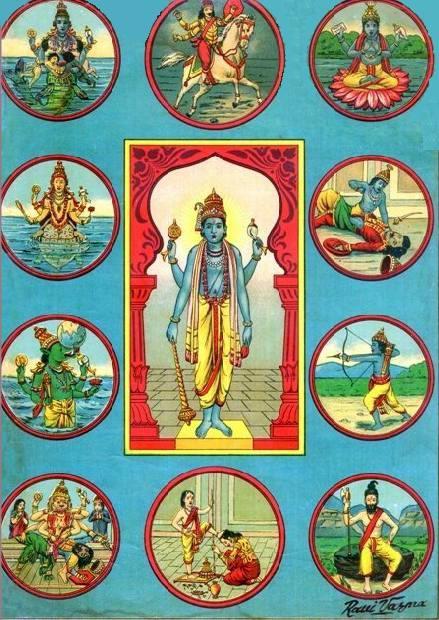
Dashavatar: The 10 Avatars of Lord Vishnu with Stories
Explore the 10 avatars of Lord Vishnu, their stories, and significance in Hindu mythology.
Affiliate disclosure: Sanatan Hindu participates in the Amazon Associates Programme and the CueLinks affiliate network (Myntra & Flipkart). This page contains affiliate links, if you click and buy, we earn a small commission at no extra cost to you. As an Amazon Associate we earn from qualifying purchases. Full disclosure.
Introduction
Significance
Best Time to Perform
Find your exact auspicious time Check the shubh muhurat and choghadiya for your city and date.
Required Samagri (Materials)
Preparation Steps
- 1Create a sacred space for worship and reflection
- 2Light incense sticks and camphor to purify the atmosphere
- 3Offer fruits and flowers to Lord Vishnu
- 4Sit comfortably and close your eyes, focusing on your breath
Step-by-Step Vidhi
- 1Begin by reciting the mantra 'Om Namo Narayanaya' to invoke the presence of Lord Vishnu
- 2Reflect on the stories of each avatar, contemplating their significance and moral principles
- 3Offer prayers and gratitude to Lord Vishnu for his divine intervention in human affairs
- 4Conclude by reciting the mantra 'Om Shanti Shanti Shanti' to invoke peace and tranquility
Mantras
Om Namo Narayanaya
ॐ नमो नारायणाय
Om Namo Narayanaya
Meaning: Salutations to Lord Narayana, the ultimate reality
Om Vishnu Om
ॐ विष्णु ॐ
Om Vishnu Om
Meaning: Salutations to Lord Vishnu, the preserver of the universe
Vrat Rules
- •Recite the stories of the Dashavatar with devotion and faith
- •Offer prayers and gratitude to Lord Vishnu
- •Follow a vegetarian diet and avoid non-vegetarian food
- •Engage in charitable activities and help those in need
Do's
- ✓Recite the stories of the Dashavatar regularly
- ✓Offer prayers and gratitude to Lord Vishnu
- ✓Follow the moral principles and life lessons conveyed by each avatar
- ✓Cultivate devotion and faith in Lord Vishnu
Don'ts
- ✗Do not recite the stories of the Dashavatar with a lack of devotion or faith
- ✗Do not engage in non-vegetarian activities or consume non-vegetarian food
- ✗Do not ignore the moral principles and life lessons conveyed by each avatar
- ✗Do not neglect the worship and reverence of Lord Vishnu
Common Mistakes to Avoid
- •Ignoring the significance of each avatar and their stories
- •Neglecting the worship and reverence of Lord Vishnu
- •Failing to follow the moral principles and life lessons conveyed by each avatar
- •Reciting the stories of the Dashavatar without devotion or faith
Regional Variations
- •The stories of the Dashavatar are celebrated and revered in different regions of India, each with their unique traditions and customs
- •The festival of Ram Navami is celebrated with great fervor in the northern regions of India, while the festival of Janmashtami is celebrated in the southern regions
- •The worship and reverence of Lord Vishnu vary across different regions and communities, reflecting the diversity and richness of Hindu culture
Frequently Asked Questions
What is the significance of the Dashavatar in Hindu mythology?▾
How can I recite the stories of the Dashavatar with devotion and faith?▾
Popular Tools
References & Traditional Notes
- •The Bhagavata Purana is a primary source of information on the Dashavatar
- •The Mahabharata and the Ramayana also contain stories and references to the Dashavatar
- •The worship and reverence of Lord Vishnu are mentioned in various Hindu scriptures and texts
Related Audio & Bhajans
Ishq de Fanniyar - Female
Affiliate disclosure: Sanatan Hindu participates in the Amazon Associates Programme and the CueLinks affiliate network (Myntra & Flipkart). This page contains affiliate links, if you click and buy, we earn a small commission at no extra cost to you. As an Amazon Associate we earn from qualifying purchases. Full disclosure.
Shop Samagri on Amazon.in
Clicking opens Amazon.in. Prices and availability may vary.
Browse all pooja itemsAmazon Associates tag: geekydevelope-21
Shop Pooja & Festive Essentials on Flipkart
Clicking opens Flipkart via our affiliate link. Prices and availability may vary.
Shop on FlipkartCueLinks Publisher: 300371
Shop Festive Wear on Myntra
Clicking opens Myntra via our affiliate link. Prices and availability may vary.
CueLinks Publisher: 300371
Need a website? Describe it, and AI builds it.
Perfect for a temple, pooja service, astrology practice or small shop. Tell the AI what you want — or drag and drop the classic way — and go live on your own web address in minutes with Sitova. Hosting, SEO, forms and analytics are all included.
- Build with AI or drag & drop
- Your domain + SEO built in
- Free forever plan
Opens sitova.site