
The Sacred Elephant in Hinduism: Ganesha, Airavata, and the Legend of Gajendra
Explore the profound spiritual symbolism of the elephant in Hinduism, from Lord Ganesha's wisdom to Airavata's divinity and the devotion of Gajendra.
Affiliate disclosure: Sanatan Hindu participates in the Amazon Associates Programme and the CueLinks affiliate network (Myntra & Flipkart). This page contains affiliate links, if you click and buy, we earn a small commission at no extra cost to you. As an Amazon Associate we earn from qualifying purchases. Full disclosure.
Next Ganesh Chaturthi
Saturday, 4 September 2027· in 285 days
Set a reminder so you never miss Ganesh Chaturthi.
Introduction
Central to this veneration is Lord Ganesha, the elephant-headed deity who stands as the 'Vighnaharta' or the Remover of Obstacles. His elephant head signifies supreme intellect (Buddhi) and the ability to discern between the real and the unreal. The large ears represent the importance of listening more and speaking less, a key trait of a wise seeker. The trunk, capable of both uprooting trees and picking up tiny needles, symbolizes the duality of human existence—the ability to handle great challenges and minute details with equal grace. Ganesha's presence at the beginning of any ritual or new endeavor ensures that the path is cleared of both physical and spiritual impediments.
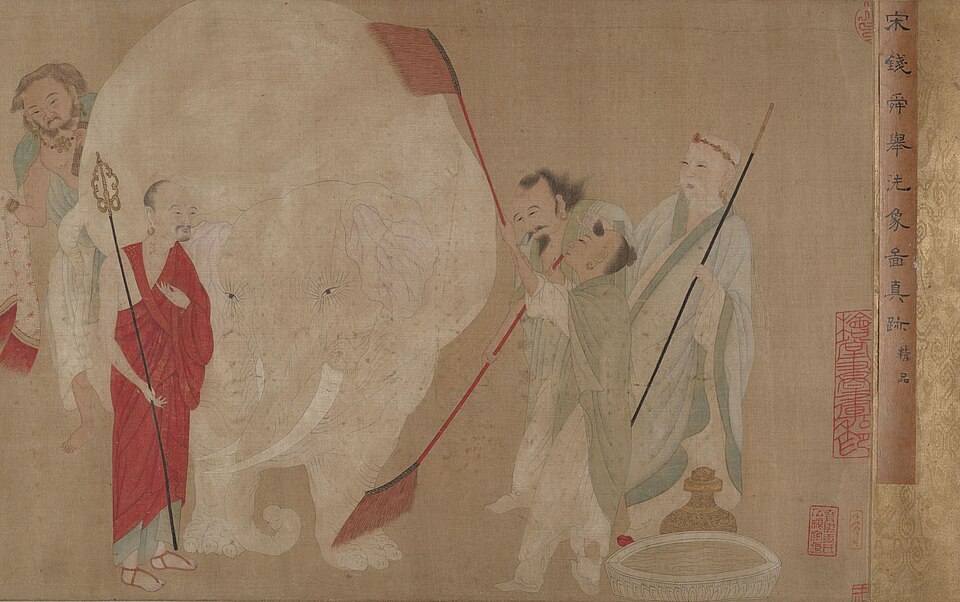
Beyond the individual deity, the elephant holds a position of celestial grandeur through Airavata, the king of elephants. In Vedic cosmology, Airavata is the white elephant who serves as the vahana (vehicle) of Lord Indra, the king of the Devas. Airavata is often described as having multiple tusks and being born from the churning of the cosmic ocean, the Samudra Manthan. He represents the clouds and rain, linking the terrestrial world to the life-giving forces of the sky. His presence in Indra's court signifies the majesty, abundance, and sovereign power required to maintain cosmic order (Dharma).
Finally, the spiritual depth of the elephant is epitomized in the poignant legend of Gajendra, the elephant king. His story, found in the Bhagavata Purana, is one of the most profound allegories for 'Sharanagati' or total surrender to the Divine. When Gajendra was caught in the jaws of a crocodile, his physical strength failed him, leading him to realize that only the Supreme Lord could grant him liberation. This narrative teaches the soul that when the ego-driven struggles of the material world become overwhelming, the only path to salvation is through heartfelt, unalloyed devotion to the Divine.
Significance
In the context of Ganesha, the elephant head is a symbol of 'Mahat' (the great cosmic intellect). It teaches the devotee to cultivate a broad perspective, much like the wide field of vision provided by the elephant. The mastery over the senses is also symbolized by the elephant's control over its trunk, which must be directed with precision to achieve success. Worshiping Ganesha is not just about asking for material success, but about seeking the cognitive clarity and emotional stability required to navigate the complexities of Samsara (the cycle of birth and death).
Astrologically and cosmologically, elephants are often associated with the direction North and the planet Rahu or sometimes associated with the stability of the Earth. In many traditions, the 'Diggajas' or the eight elephants guarding the eight directions are crucial for maintaining the balance of the universe. This reflects the idea that stability is not accidental but is maintained through divine order and the watchful presence of sacred energies. The presence of elephant motifs in temples and homes is intended to invite prosperity (Lakshmi) and to safeguard the space against negative influences.
Culturally, the elephant is a symbol of royalty and auspiciousness (Mangala). From the grand processions of temple festivals to the intricate carvings on ancient stone pillars, the elephant signifies a state of abundance and dignity. For the common practitioner, observing the qualities of the elephant—patience, memory, and strength—becomes a way of life. The legend of Gajendra specifically highlights the 'Bhakti' (devotional) aspect, reminding us that even the strongest being must eventually surrender to the grace of the Divine to find true liberation (Moksha).
Auspicious Time
Find your exact auspicious time Check the shubh muhurat and choghadiya for your city and date.
Required Samagri (Materials)
Preparation Steps
- 1Clean the puja space and ensure it is free from clutter.
- 2Take a ritual bath and wear clean, preferably traditional, clothing.
- 3Place a clean cloth (Asana) on a wooden platform (Chowki).
- 4Position the deity or elephant symbol facing East or North.
- 5Prepare the offerings like Modaks and fresh flowers beforehand.
Steps
- 1Perform Achamana (sipping water for purification) and Sankalpa (setting an intention).
- 2Light the Ghee lamp and incense to create a sacred atmosphere.
- 3Offer Sandalwood paste (Chandan) and Kumkum to the deity/symbol.
- 4Offer fresh flowers, specifically prioritizing red flowers and Durva grass for Ganesha.
- 5Chant the prescribed Mantras with focus and devotion.
- 6Perform Naivedya (offering food/sweets) and offer water (Arghya).
- 7Conclude with Aarti, circling the light before the deity while singing hymns.
- 8Perform Pradakshina (circumambulation) and seek blessings for the removal of obstacles.
Mantras
Ganesha Moola Mantra
ॐ गं गणपतये नमः
Om Gam Ganapataye Namaha
Meaning: Salutations to the Lord of all Ganas (multitudes/divine forces).
Vakratunda Mahakaya Mantra
वक्रतुण्ड महाकाय सूर्यकोटि समप्रभ। निर्विघ्नं कुरु मे देव सर्वकार्येषु सर्वदा॥
Vakratunda Mahakaya Suryakoti Samaprabha | Nirvighnam Kuru Me Deva Sarva-Karyeshu Sarvada ||
Meaning: O Lord with the curved trunk and massive body, whose splendor is equal to millions of suns; please make all my works free of obstacles, always.
Guidelines
- •Maintain celibacy (Brahmacharya) during specific fasts.
- •Follow a Sattvic diet (avoiding onion, garlic, and non-vegetarian food).
- •Perform daily morning prayers to maintain spiritual discipline.
- •Practice silence (Mauna) if performing a deep meditative retreat.
Do's
- ✓Offer Durva grass to Ganesha.
- ✓Keep the puja area clean and fragrant.
- ✓Approach the deity with a sense of humility and surrender.
- ✓Use natural elements like sandalwood and fresh flowers.
Don'ts
- ✗Do not offer non-vegetarian food or intoxicants in a sacred space.
- ✗Avoid performing rituals with a distracted or disrespectful mind.
- ✗Do not use broken or damaged idols for worship.
- ✗Avoid loud or chaotic behavior near the altar.
Common Mistakes to Avoid
- •Neglecting the importance of intention (Sankalpa) over ritual perfection.
- •Incorrect pronunciation of Sanskrit mantras.
- •Using artificial or plastic flowers instead of real ones when possible.
- •Performing rituals in an unclean or cluttered environment.
Regional Variations
- •In South India, Ganesha is often worshipped with a focus on Kolu (doll displays) during Navaratri.
- •In Maharashtra, Ganesh Chaturthi is celebrated with massive public processions (Sarvajanik Ganeshotsav).
- •In various temple traditions, Airavata is honored through specific elephant-themed rituals during Indra Puja.
Frequently Asked Questions
Why is Ganesha's trunk important?▾
What is the significance of the Gajendra Moksha story?▾
Can I keep an elephant statue at home?▾
Popular Tools
References & Traditional Notes
- •The concept of Airavata is deeply rooted in the Rig Veda and later Puranic literature.
- •The Gajendra Moksha is a central teaching in the Bhagavata Purana regarding Bhakti Yoga.
- •Customs regarding Ganesha worship can vary significantly between Shaiva and Vaishnava traditions.
Related Audio & Bhajans
Affiliate disclosure: Sanatan Hindu participates in the Amazon Associates Programme and the CueLinks affiliate network (Myntra & Flipkart). This page contains affiliate links, if you click and buy, we earn a small commission at no extra cost to you. As an Amazon Associate we earn from qualifying purchases. Full disclosure.
Shop Samagri on Amazon.in
Clicking opens Amazon.in. Prices and availability may vary.
Browse all pooja itemsAmazon Associates tag: geekydevelope-21
Shop Pooja & Festive Essentials on Flipkart
Clicking opens Flipkart via our affiliate link. Prices and availability may vary.
Shop on FlipkartCueLinks Publisher: 300371
Shop Festive Wear on Myntra
Clicking opens Myntra via our affiliate link. Prices and availability may vary.
CueLinks Publisher: 300371
Need a website? Describe it, and AI builds it.
Perfect for a temple, pooja service, astrology practice or small shop. Tell the AI what you want — or drag and drop the classic way — and go live on your own web address in minutes with Sitova. Hosting, SEO, forms and analytics are all included.
- Build with AI or drag & drop
- Your domain + SEO built in
- Free forever plan
Opens sitova.site