
Ganpatipule Temple: The Divine Swayambhu Ganesh of the Konkan Coast
Discover the spiritual essence of Ganpatipule, home to the sacred Swayambhu Ganesh idol on the Konkan coast. Learn about its legends, rituals, and significance.
Affiliate disclosure: Sanatan Hindu participates in the Amazon Associates Programme and the CueLinks affiliate network (Myntra & Flipkart). This page contains affiliate links, if you click and buy, we earn a small commission at no extra cost to you. As an Amazon Associate we earn from qualifying purchases. Full disclosure.
Next Ganesh Chaturthi
Saturday, 4 September 2027· in 354 days
Set a reminder so you never miss Ganesh Chaturthi.
Introduction
According to local folklore and spiritual traditions, the presence of Lord Ganesha in this specific coastal location is no accident. Legend tells of how the deity manifested Himself to bless the coastal inhabitants, providing protection against the turbulent sea and ensuring the prosperity of the region. The idol itself is unique; it is a natural stone formation that bears the unmistakable features of Ganesha, seated in a posture that radiates stability and grace. For the devotee, visiting Ganpatipule is not merely a pilgrimage to a site of architectural beauty, but a journey to touch the very fabric of the divine as it surfaced directly from the elements.
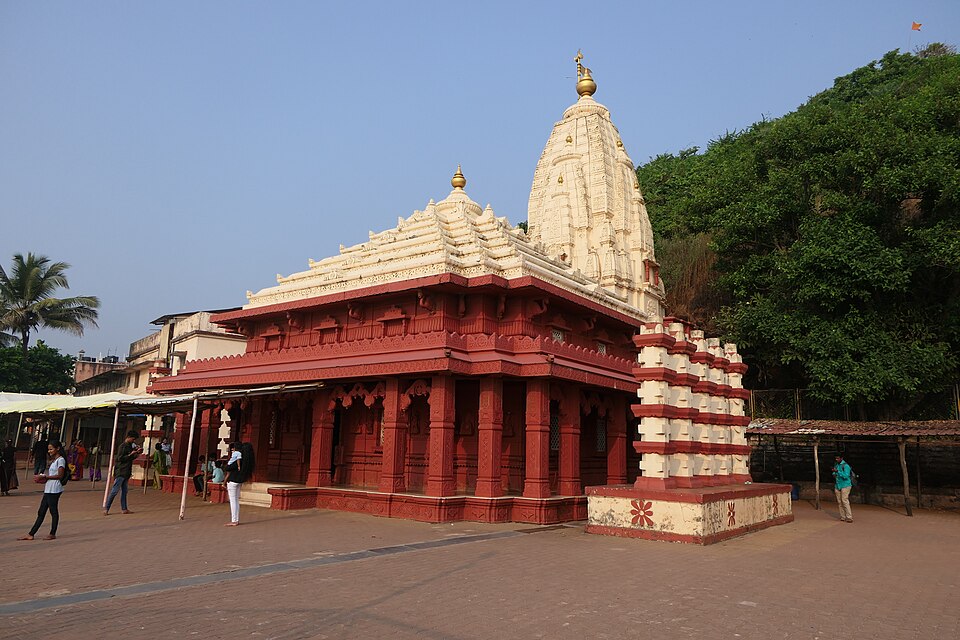
The cultural tapestry of Ganpatipule is deeply intertwined with the Konkan lifestyle. The temple serves as the spiritual heartbeat for the local fishing communities and agrarian families, who have for centuries sought the blessings of the 'Vighnaharta' (Remover of Obstacles) before embarking on sea voyages or starting new agricultural cycles. The temple architecture, though undergoing various renovations over the centuries, maintains a traditional aesthetic that honors the simplicity and strength of the deity.
To a newcomer, Ganpatipule represents the perfect confluence of 'Prakriti' (Nature) and 'Purusha' (Divine Consciousness). The roar of the ocean waves acts as a continuous, natural chant, while the temple's sanctum provides a focused point of meditation. Understanding Ganpatipule requires an appreciation for the concept of Swayambhu—the idea that the Divine does not always need a human medium to manifest, but can choose to reveal itself through the natural world, inviting humanity to reconnect with the sacredness inherent in the earth itself.
Significance
Astrologically and cosmically, Ganesha is the Lord of the 'Muladhara Chakra' (the root chakra), which governs our sense of stability, survival, and grounding. Visiting a Swayambhu shrine like Ganpatipule is believed to help stabilize one's earthly existence, providing the mental and spiritual fortitude needed to navigate the 'Samsara' (the ocean of worldly existence), much like a sturdy vessel navigating the Konkan waves. This is why many pilgrims visit during auspicious periods like Ganesh Chaturthi or during the transition of planetary cycles to seek stability.
Culturally, the temple acts as a guardian of the Konkan coast. The deity is viewed not just as a distant god, but as a local protector. The 'Phala' (fruits) of visiting this shrine are multifaceted: it is said to remove 'Vighna' (obstacles) in both physical and metaphysical realms. Whether it is a business venture, a marriage proposal, or a spiritual quest, the blessings of the Ganpatipule Ganesh are sought to clear the path of unforeseen hurdles. The tradition of offering 'Modaks' and coconut at this shrine is a symbolic way of offering the 'fruits' of one's labor back to the source of all creation.
Furthermore, the temple holds deep significance in the 'Ganapatya' Sampradaya, one of the major traditions of Hinduism that holds Ganesha as the Supreme Brahman. While many temples follow standardized Vedic rituals, the coastal traditions here blend classical Sanskrit liturgy with local Konkani customs, creating a unique spiritual ecosystem that emphasizes the deity's accessibility and his connection to the natural elements of water and earth.
Auspicious Time
Find your exact auspicious time Check the shubh muhurat and choghadiya for your city and date.
Required Samagri (Materials)
Preparation Steps
- 1Take a bath and wear clean, traditional clothing (preferably yellow or red).
- 2Ensure a calm and focused mental state, centering your thoughts on Lord Ganesha.
- 3If performing a home puja in honor of the pilgrimage, clean the puja space thoroughly.
- 4Prepare the offerings, ensuring the fruits and flowers are fresh and untainted.
Steps
- 1Arghyam: Begin by offering water to the deity as a mark of respect.
- 2Deepa Prajvalan: Light the ghee lamp to symbolize the removal of darkness/ignorance.
- 3Gandha Lepanam: Apply sandalwood paste and kumkum to the idol (or the mental image if at a distance).
- 4Pushpa Arpan: Offer red flowers and the sacred Durva grass, which is dear to Ganesha.
- 5Naivedya: Offer the Modaks and coconuts, signifying the surrender of the ego.
- 6Aarti: Perform the Aarti with a camphor lamp while singing devotional hymns.
- 7Pradakshina: Circumambulate the sanctum (if permitted) to absorb the temple's energy.
- 8Shanti Path: Conclude with a prayer for universal peace and the removal of obstacles.
Mantras
Ganesh Moola Mantra
ॐ गं गणपतये नमः
Om Gam Ganapataye Namaha
Meaning: Salutations to the Lord of all Ganas (multitudes/forces).
Vakratunda Mahakaya Mantra
वक्रतुण्ड महाकाय सूर्यकोटि समप्रभ। निर्विघ्नं कुरु मे देव सर्वकार्येषु सर्वदा॥
Vakratunda Mahakaya Suryakoti Samaprabha | Nirvighnam Kuru Me Deva Sarva-Karyeshu Sarvada ||
Meaning: O Lord with a curved trunk and a massive body, whose brilliance is equal to a million suns, please make all my work free of obstacles, always.
Guidelines
- •Maintain celibacy (Brahmacharya) during the period of intense devotion.
- •Follow a Sattvic diet (avoid onion, garlic, and non-vegetarian food).
- •Practice mindfulness and limit speech to avoid negative vibrations.
- •Dedicate specific hours to meditation or chanting.
Do's
- ✓Offer Durva grass whenever possible.
- ✓Maintain silence during the Darshan to absorb the energy.
- ✓Perform charity (Dana) to the needy after the puja.
- ✓Respect the local customs and the sanctity of the coastline.
Don'ts
- ✗Do not carry footwear into the inner sanctum.
- ✗Avoid expressing anger or loud, disruptive speech near the temple.
- ✗Do not offer stale or impure food/flowers.
- ✗Avoid taking photos in restricted areas of the sanctum.
Common Mistakes to Avoid
- •Rushing the Darshan without mental preparation.
- •Focusing only on material gains rather than spiritual growth.
- •Ignoring the importance of the 'Swayambhu' aspect (treating it like any other idol).
Regional Variations
- •Konkani local traditions emphasize offerings from the sea (offerings of shells or specific local fruits).
- •In some households, the Ganesha worship follows strict Panchayatana Puja style, while in others, it is purely Ganapatya.
Frequently Asked Questions
What does 'Swayambhu' mean?▾
Is there a specific dress code for Ganpatipule?▾
Can anyone visit the temple?▾
Popular Tools
References & Traditional Notes
- •The temple is mentioned in various local Konkan folklore traditions passed down through oral history.
- •Note: Always follow the instructions of the temple priests (Pandits) regarding specific ritual timings.
Affiliate disclosure: Sanatan Hindu participates in the Amazon Associates Programme and the CueLinks affiliate network (Myntra & Flipkart). This page contains affiliate links, if you click and buy, we earn a small commission at no extra cost to you. As an Amazon Associate we earn from qualifying purchases. Full disclosure.
Shop Samagri on Amazon.in
Clicking opens Amazon.in. Prices and availability may vary.
Browse all pooja itemsAmazon Associates tag: geekydevelope-21
Shop Pooja & Festive Essentials on Flipkart
Clicking opens Flipkart via our affiliate link. Prices and availability may vary.
Shop on FlipkartCueLinks Publisher: 300371
Shop Festive Wear on Myntra
Clicking opens Myntra via our affiliate link. Prices and availability may vary.
CueLinks Publisher: 300371