
Kartikeya (Skanda Murugan) — Commander of the Divine Army
Comprehensive guide to Lord Kartikeya (Skanda/Murugan), the divine commander, his legends, symbolism, worship methods, mantras, and spiritual significance.
Affiliate disclosure: Sanatan Hindu participates in the Amazon Associates Programme and the CueLinks affiliate network (Myntra & Flipkart). This page contains affiliate links, if you click and buy, we earn a small commission at no extra cost to you. As an Amazon Associate we earn from qualifying purchases. Full disclosure.
Introduction
Significance
Best Time to Perform
Find your exact auspicious time Check the shubh muhurat and choghadiya for your city and date.
Required Samagri (Materials)
Preparation Steps
- 1Take a purificatory bath and wear clean, traditional attire (dhoti/veshti for men, saree/salwar for women).
- 2Clean the puja altar and surrounding area thoroughly; sprinkle Ganga jal or plain water.
- 3Place a clean cloth on the altar and arrange the deity's idol or framed picture facing east or north.
- 4Set up the kalasha with water, mango leaves, and coconut to the right of the deity (your left).
- 5Arrange all samagri items neatly in small bowls or plates within easy reach.
- 6Light the ghee lamp and incense sticks before beginning the invocation.
- 7Sit on your asana facing the deity, calm the mind with a few deep breaths, and set a clear sankalpa (intention) for the puja.
- 8If observing a vrat (fast), maintain purity of thought, speech, and action throughout the day.
Step-by-Step Vidhi
- 1Begin with Achamana: sip water from the panchapatra three times while chanting 'Om Achyutaya Namaha', 'Om Anantaya Namaha', 'Om Govindaya Namaha' to purify body and mind.
- 2Perform Pranayama: inhale deeply, hold briefly, exhale slowly, mentally offering the breath to the Divine.
- 3Invoke Lord Ganesha first (Vighneshvara) with 'Om Gam Ganapataye Namaha' to remove obstacles from the puja.
- 4Invoke the Guru parampara and your Ishta Devata with reverence.
- 5Perform Sankalpa: state your name, gotra, location, date, tithi, nakshatra, and the purpose of the puja (e.g., 'For victory over obstacles, wisdom, and protection').
- 6Invoke Lord Kartikeya into the idol/picture (Prana Pratishthana) by chanting the Moola Mantra and visualizing his divine presence entering the form.
- 7Offer Asana (seat): mentally offer a golden throne, chanting 'Om Skandaya Namaha Asanam Samarpayami'.
- 8Offer Padya (water for washing feet), Arghya (water for washing hands), Achamana (water for sipping), and Snana (bathing the deity with water, milk, honey, yogurt, ghee, sugar — Panchamrita Snana), followed by pure water.
- 9Offer Vastra (cloth), Yajnopavita (sacred thread), Chandan (sandalwood paste), Kumkum, Haldi, and Vibhuti on the deity's forehead and body.
- 10Offer Pushpa (flowers) and Bilva/Tulsi leaves while chanting the 108 names (Ashtottara Shatanamavali) or the Dvadasha Nama (12 names) of Kartikeya.
- 11Offer Dhoopa (incense) and Deepa (lamp) with circular clockwise movements, chanting the appropriate mantras.
- 12Offer Naivedya (food offering) with devotion, placing a tulsi leaf on each item. Sprinkle water around the offering.
- 13Offer Tambula (betel leaves, nuts, and optionally camphor, cardamom, cloves).
- 14Perform Mangala Aarti with camphor or ghee lamp, singing or reciting the Kartikeya Aarti.
- 15Do Pradakshina (circumambulation) three times clockwise around the altar (or mentally if space is limited).
- 16Offer Namaskara (prostration) — Sashtanga for men, Panchanga for women — surrendering completely.
- 17Distribute Prasadam to all present, partaking with gratitude and sharing with family, neighbors, and the needy.
- 18Conclude with Shanti Mantra: 'Om Shanti Shanti Shantih' and a prayer for universal welfare.
Mantras
Kartikeya Moola Mantra (Seed Mantra)
ॐ शरवणभवाय नमः
Om Sharavanabhavaya Namaha
Meaning: Salutations to Lord Kartikeya, the son of Shiva (Sharava) and the embodiment of divine grace. This six-syllable mantra (Shadakshari) invokes his core energy.
Kartikeya Gayatri Mantra
ॐ तत्पुरुषाय विद्महे महासेनाय धीमहि तन्नः स्कन्दः प्रचोदयात्
Om Tatpurushaya Vidmahe Mahasenaya Dhimahi Tannah Skandah Prachodayat
Meaning: We meditate upon the Supreme Being (Tatpurusha), the great commander Mahasena; may Lord Skanda inspire and illumine our intellect.
Skanda Shashti Kavacham (Opening Verse — Tamil Tradition)
ஐம்பெரும்கப்பு அநுசரித்து அருள் முருகா
Aimperum kappu anusarithu arul Muruga
Meaning: Following the five great protections, bestow your grace, O Muruga. This is the opening invocation of the famous Skanda Shashti Kavacham, a protective hymn composed by Devaraya Swamigal.
Subrahmanya Bhujangam (Adi Shankaracharya — First Verse)
समस्तजगद्दारिणीं शरणं प्रपद्ये शंकरार्धाङ्गसंभूतं शशिशेखरात्मजम्। सदाननं सुसम्पन्नं सुरगुरुगुहं भजे भवभयापहं भवत्पदाम्बुजं भवम्॥
Samasta-jagad-darinim sharanam prapadye Shankarardhanga-sambhutam Shashi-shekharatmajam। Sadananam su-sampannam sura-guru-guham bhaje bhava-bhaya-apaham bhavat-padambujam bhavam॥
Meaning: I take refuge in the one who upholds the entire universe, born from half of Shiva's body, the son of the moon-crested Lord (Shiva). I worship the six-faced, fully endowed, guru of the gods (Guha), who removes the fear of worldly existence; his lotus feet are the refuge from samsara.
Kartikeya Aarti (Popular Hindi/Sanskrit Version)
जय स्कन्द देवा, जय स्कन्द देवा। शिव-पार्वती सुत, सुरवर देवा॥ जय स्कन्द देवा। षडानन रूप, वाहन मयूर। शक्ति-धर वीर, दुष्ट-दल-शूर॥ जय स्कन्द देवा। तारकासुर मर्दन, सुर-नायक। भक्त-हितकारी, दुःख-निवारक॥ जय स्कन्द देवा। कृपा-सिन्धु प्रभु, ज्ञान-वर-दाता। सब-संकट हरो, भगवन् दाता॥ जय स्कन्द देवा।
Jai Skanda Deva, Jai Skanda Deva। Shiva-Parvati suta, suravara Deva॥ Jai Skanda Deva। Shadanana rupa, vahana mayura। Shakti-dhara vira, dushta-dala-shura॥ Jai Skanda Deva। Taraka-asura mardana, sura-nayaka। Bhakta-hitakari, duhkha-nivaraka॥ Jai Skanda Deva। Kripa-sindhu prabhu, jnana-vara-data। Sab-sankata haro, Bhagavan data॥ Jai Skanda Deva।
Meaning: Victory to Lord Skanda, son of Shiva and Parvati, chief of the gods. Six-faced, riding the peacock, wielder of the Vel (Shakti), heroic destroyer of the wicked. Vanquisher of Tarakasura, leader of the devas, benefactor of devotees, remover of sorrows. Ocean of compassion, bestower of wisdom — O Lord, remove all our troubles.
Kanda Shashti Kavasam (Tamil Protective Hymn — Key Verse)
கந்த சஷ்டி கவசம் — இமைஇழித் தூதர் ஏறி வந்து அருள் புரிவாய் அருட்பெருமான்
Kanda Shashti Kavasam — Imaizhith thudhar eri vandu Arul purivai arul peruman
Meaning: From the Kanda Shashti Kavasam: The celestial messengers descend from the heavens to witness your grace, O Lord of infinite compassion. This hymn is recited for protection, victory, and removal of planetary afflictions.
Do's
- ✓Approach worship with shraddha (faith), bhakti (devotion), and purity of heart.
- ✓Learn correct pronunciation of mantras from a qualified guru or reliable source.
- ✓Use a rudraksha mala (preferably 6-mukhi or 12-mukhi) for japa.
- ✓Offer red flowers (hibiscus, rose) and kumkum, as they are dear to Kartikeya.
- ✓Light a ghee lamp daily in the puja room, especially on Tuesdays and Shashti.
- ✓Read or listen to the Skanda Purana, Kanda Puranam (Tamil), or Subrahmanya Bhujangam regularly.
- ✓Visit Kartikeya temples (e.g., Palani, Tiruchendur, Swamimalai, Thiruparankundram, Pazhamudircholai, Kataragama) when possible.
- ✓Practice charity (dana) — feed the poor, support education, or donate to temple maintenance.
- ✓Cultivate the qualities Kartikeya represents: courage, discipline, discrimination, and leadership in righteousness.
Don'ts
- ✗Do not perform puja in a hurried, mechanical, or distracted manner.
- ✗Do not offer stale, impure, or non-vegetarian items as naivedya.
- ✗Do not disrespect the Vel (spear) or peacock imagery — they are sacred symbols.
- ✗Do not chant mantras incorrectly without proper guidance; seek a guru for initiation if possible.
- ✗Do not mix different deity worship protocols haphazardly; follow your sampradaya's sequence.
- ✗Do not use the puja space for storage or mundane activities.
- ✗Do not criticize other deities, traditions, or paths — Kartikeya is the guru of unity.
- ✗Do not observe vratas beyond your physical capacity without medical advice; health is dharma.
Common Mistakes to Avoid
- •Confusing Kartikeya's two primary consorts: Devasena (celestial army commander's daughter, representing kriya-shakti) and Valli (tribal princess, representing iccha-shakti) — both are essential aspects of his complete form.
- •Neglecting the Guru aspect: Kartikeya as 'Guru Guha' (the indwelling guru) is central in Tamil Siddha and Shaiva traditions; ignoring this reduces worship to mere ritual.
- •Performing Skanda Shashti vratam only as a dietary restriction without the accompanying japa, parayana (recitation), and meditation.
- •Using only North Indian or only South Indian practices exclusively without understanding the underlying unity — both traditions worship the same Tattva.
- •Offering alcohol or meat in folk rituals (e.g., some village traditions) and considering it standard Vedic/agamic practice — this is a regional folk custom, not scriptural injunction.
- •Assuming Tuesday worship is only for Mangal (Mars) graha shanti; it is primarily for Kartikeya as the deity governing Mars.
- •Overlooking the importance of the Vel as a symbol of jnana; treating it as a mere decorative weapon.
Regional Variations
- •Tamil Nadu / South India: Murugan is the primary deity (Tamil Kadavul); six major abodes (Arupadai Veedu) are pilgrimage centers. Worship includes Tamil hymns (Tiruppugazh, Kanda Shashti Kavasam, Subrahmanya Bhujangam), Kavadi Attam, and elaborate festivals like Thai Poosam, Panguni Uthiram, and Vaikasi Visakam.
- •North India: Kartikeya as Skanda/Kumara, commander of devas; worship focused on Tuesdays, Skanda Shashti, and Kumar Purnima (in Odisha/Bengal). Less temple-centric, more home-based with Sanskrit mantras from Skanda Purana.
- •Kerala: Subrahmanya worship prominent (e.g., Haripad, Payyanur); rituals follow Tantric/Kerala Agama traditions with specific offerings like 'Unni Appam' and 'Pal Payasam'.
- •Karnataka: Kukke Subrahmanya (Naga/serpent worship connection) and Ghati Subrahmanya are major centers; Sarpa Samskara and Ashlesha Bali are unique rituals.
- •Sri Lanka: Kataragama (Kathirkamam) is a major pilgrimage site for Hindus, Buddhists, and Muslims; fire-walking and Kavadi are prominent.
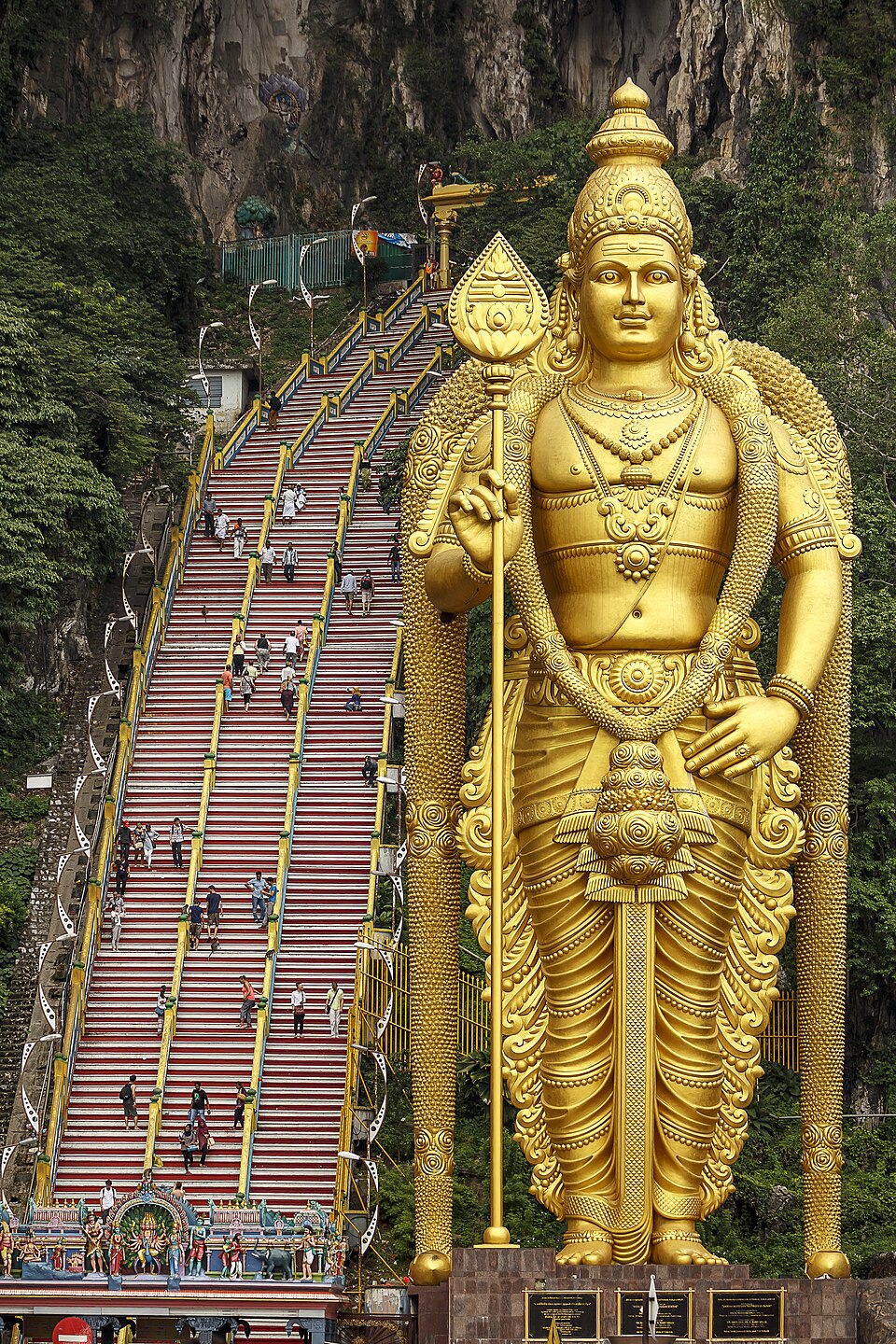
- •Malaysia / Singapore / Diaspora: Thaipusam with massive Kavadi processions, body piercings, and 48-day preparatory vrata; Batu Caves is iconic.
- •Mauritius / Fiji / Trinidad / South Africa: Murugan temples serve as cultural anchors; festivals blend Tamil, Hindi, and local traditions.
Frequently Asked Questions
Why does Kartikeya have six faces (Shanmukha)?▾
What is the difference between Devasena and Valli?▾
Is Kartikeya the same as Murugan?▾
Why is the Vel (spear) so important in Murugan worship?▾
Can women observe Skanda Shashti vratam?▾
What is the significance of Kavadi Attam?▾
Popular Tools
References & Traditional Notes
- •Skanda Purana (Maheshvara Khanda, Kumarika Khanda) — largest Purana, dedicated to Kartikeya's legends.
- •Mahabharata (Vana Parva, Shalya Parva) — detailed account of Skanda's birth and generalship.
- •Ramayana (Balakanda) — reference to Kartikeya's birth for Tarakasura-vadha.
- •Kanda Puranam (Tamil) by Kachiappa Sivachariyar — classic Tamil version of Skanda Purana.
- •Tiruppugazh by Arunagirinathar (15th century) — 1,300+ Tamil hymns praising Murugan.
- •Kanda Shashti Kavasam by Devaraya Swamigal — protective hymn recited during Skanda Shashti.
- •Subrahmanya Bhujangam by Adi Shankaracharya — Sanskrit stotra in bhujanga meter.
- •Tirumurukarruppatai (Sangam literature, ~3rd century CE) — ancient Tamil guide to Murugan's shrines.
- •Kumara Tantra and Skanda Yoga texts — esoteric practices of the Kaumara tradition.
- •Agama texts: Kumara Tantra, Shanmukha Agama — ritual protocols for temple and home worship.
Related Audio & Bhajans
Affiliate disclosure: Sanatan Hindu participates in the Amazon Associates Programme and the CueLinks affiliate network (Myntra & Flipkart). This page contains affiliate links, if you click and buy, we earn a small commission at no extra cost to you. As an Amazon Associate we earn from qualifying purchases. Full disclosure.
Shop Samagri on Amazon.in
Clicking opens Amazon.in. Prices and availability may vary.
Browse all pooja itemsAmazon Associates tag: geekydevelope-21
Shop Pooja & Festive Essentials on Flipkart
Clicking opens Flipkart via our affiliate link. Prices and availability may vary.
Shop on FlipkartCueLinks Publisher: 300371
Shop Festive Wear on Myntra
Clicking opens Myntra via our affiliate link. Prices and availability may vary.
CueLinks Publisher: 300371
Need a website? Describe it, and AI builds it.
Perfect for a temple, pooja service, astrology practice or small shop. Tell the AI what you want — or drag and drop the classic way — and go live on your own web address in minutes with Sitova. Hosting, SEO, forms and analytics are all included.
- Build with AI or drag & drop
- Your domain + SEO built in
- Free forever plan
Opens sitova.site