
Matsya Avatar — The Fish Incarnation That Saved the Vedas
Discover the profound story of Matsya Avatar, Lord Vishnu's first incarnation as a fish who rescued the Vedas and saved creation from the great deluge.
Affiliate disclosure: Sanatan Hindu participates in the Amazon Associates Programme and the CueLinks affiliate network (Myntra & Flipkart). This page contains affiliate links, if you click and buy, we earn a small commission at no extra cost to you. As an Amazon Associate we earn from qualifying purchases. Full disclosure.
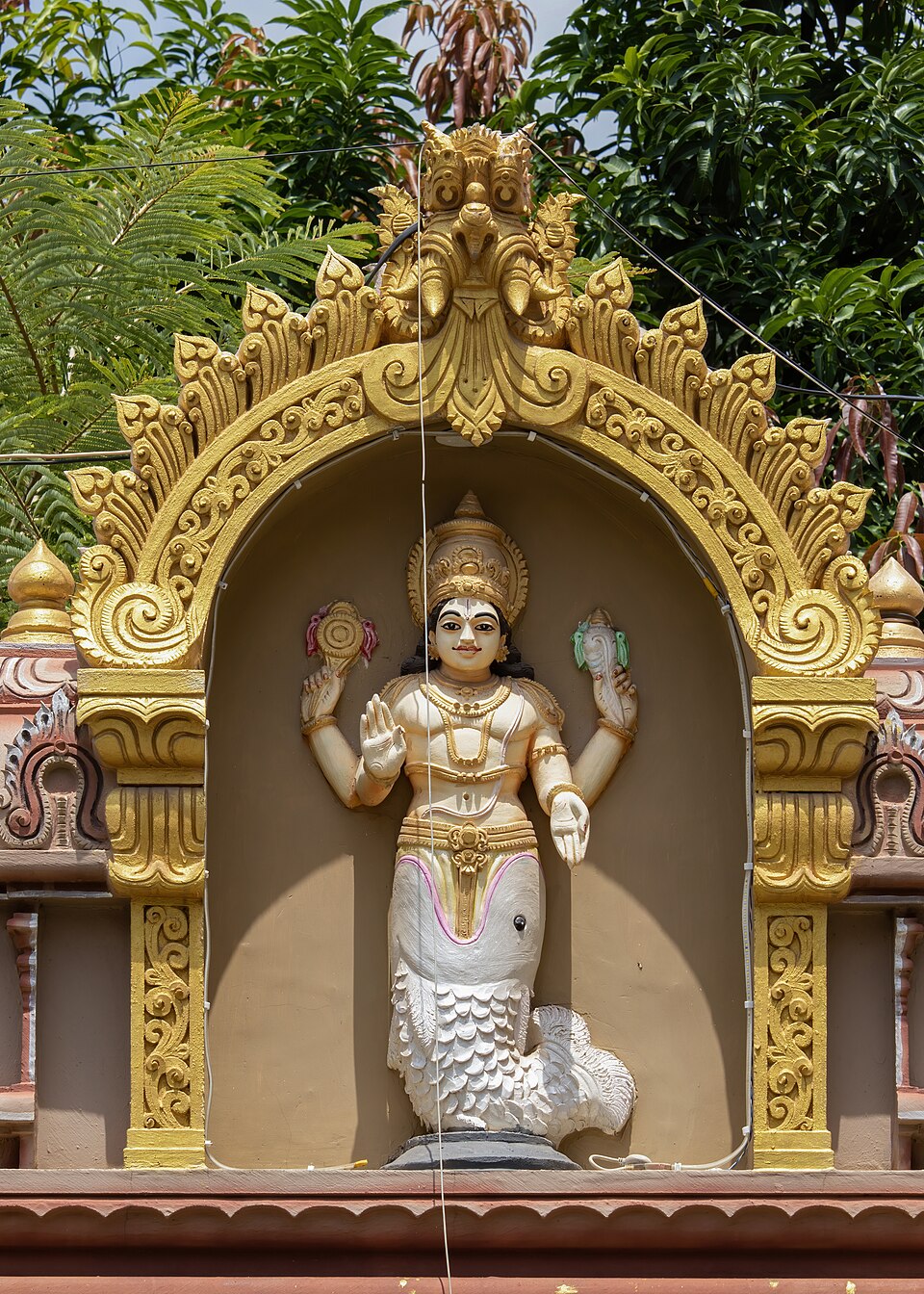
Introduction
Significance
Best Time to Perform
Find your exact auspicious time Check the shubh muhurat and choghadiya for your city and date.
Required Samagri (Materials)
Preparation Steps
- 1Clean the puja area thoroughly and sprinkle with Ganga jal or purified water
- 2Set up a clean altar with a red or yellow cloth
- 3Place the Matsya Avatar image or idol on the altar facing east or north
- 4Prepare the kalasha with water, mango leaves, and coconut on top
- 5Arrange all samagri items neatly on a thali or plates
- 6Light the ghee lamp and incense before beginning
- 7Sit facing east or north in a comfortable asana
- 8Invoke Lord Ganesha first to remove obstacles
- 9Take sankalpa (resolve) stating your name, gotra, and purpose of worship
- 10Purify yourself with achamana (sipping water thrice while chanting mantras)
Step-by-Step Vidhi
- 1Begin with Ganapati Puja: Offer durva grass, modak, and flowers to Lord Ganesha while chanting 'Om Gam Ganapataye Namaha'
- 2Perform Kalasha Sthapana: Invoke the presence of all deities in the kalasha with 'Om Kalashaya Namaha' and offer flowers, sandalwood, and akshata
- 3Invoke Lord Vishnu in Matsya form: Chant 'Om Matsya Rupaya Vishnave Namaha' while offering panchamrita abhisheka to the idol/image
- 4Offer sandalwood paste (chandana) to the deity's forehead and body
- 5Offer fresh flowers and tulsi leaves while reciting the Matsya Avatar mantras
- 6Perform archana with 108 names of Vishnu or specific Matsya Avatar names
- 7Offer naivedya: Place fruits, sweets, and panchamrita before the deity
- 8Offer betel leaves and nuts (tambula) as a sign of completion
- 9Perform aarti with camphor, ringing the bell and blowing the conch
- 10Circumambulate (pradakshina) the altar three times clockwise
- 11Offer pushpanjali (handful of flowers) with prayers for protection of dharma and knowledge
- 12Distribute prasadam to all present and seek blessings of elders
Mantras
Matsya Avatar Moola Mantra
ॐ मत्स्यरूपाय विष्णवे नमः
Om Matsya Rupaya Vishnave Namaha
Meaning: Salutations to Lord Vishnu in the form of the Fish (Matsya)
Matsya Avatar Gayatri Mantra
ॐ मत्स्याय विद्महे महामीनाय धीमहि तन्नो मत्स्यः प्रचोदयात्
Om Matsyaya Vidmahe Mahaminaya Dhimahi Tanno Matsyah Prachodayat
Meaning: We meditate on the great Fish (Matsya); may the Fish inspire and illuminate our intellect
Matsya Purana Prarthana
मत्स्यं कूर्मं वराहं च नृसिंहं वामनं तथा। रामं रामं च रामं च कृष्णं बुद्धं कल्किं च। मत्स्यावतारं प्रणमामि विष्णोस्तु प्रथमं क्रमम्॥
Matsyam Kurmam Varaham Cha Narasimham Vamanam Tatha Ramam Ramam Cha Ramam Cha Krishnam Buddham Kalkim Cha Matsyavataram Pranamami Vishnoh Prathamam Kramam
Meaning: I bow to the Matsya Avatar, the first among Vishnu's incarnations — Matsya, Kurma, Varaha, Narasimha, Vamana, Rama, Rama, Rama, Krishna, Buddha, and Kalki
Veda Rakshana Mantra (For Protection of Knowledge)
ॐ वेदरक्षक मत्स्याय नमः हयग्रीववधे देव मत्स्यरूपधरे हरि। वेदान् उद्धृत्य दानवीन् हत्वा त्रैलोक्यरक्षक॥
Om Veda Rakshaka Matsyaya Namaha Hayagrivavadhe Deva Matsyarupadhare Hari Vedan Uddhritva Danavin Hatva Trailokyarakshaka
Meaning: Salutations to Matsya, the protector of the Vedas. O Lord Hari in fish form, slayer of Hayagriva, retriever of the Vedas, destroyer of demons, protector of the three worlds
Matsya Aarti (Verse 1)
जय मत्स्य देव दयानिधे, वेद उद्धारक प्रभु मेरे। हयग्रीव दैत्य संहारे, त्रैलोक्य रक्षक सुखदाता॥
Jaya Matsya Deva Dayanidhe, Veda Uddharaka Prabhu Mere Hayagriva Daitya Samhare, Trailokya Rakshaka Sukhadaata
Meaning: Victory to Lord Matsya, ocean of compassion, rescuer of the Vedas. Slayer of the demon Hayagriva, protector of the three worlds, giver of happiness
Matsya Aarti (Verse 2)
मनु सत्यव्रत नाव चढ़ाय, प्रलय जल तरायो पार। बीज सर्व जीव संरक्षी, जगत आधार जगत पालनहार॥
Manu Satyavrata Nava Chadhay, Pralaya Jala Tarayo Paar Beej Sarva Jiva Sanrakshi, Jagat Adhara Jagat Palanhar
Meaning: You placed King Satyavrata Manu on the boat and ferried him across the deluge waters. Preserver of all seeds of life, support of the universe, sustainer of the world
Do's
- ✓Perform the puja with devotion (shraddha) and concentration (ekagrata)
- ✓Use clean, preferably new or freshly washed vessels for offerings
- ✓Chant mantras with correct pronunciation; learn from a guru if possible
- ✓Include children in the katha narration to transmit tradition
- ✓Offer the first portion of cooked food to the deity as naivedya
- ✓Meditate on the form of Matsya after puja for inner purification
- ✓Share prasadam with family, neighbors, and the less fortunate
Don'ts
- ✗Do not offer stale, leftover, or impure items to the deity
- ✗Avoid performing puja in a distracted or angry state of mind
- ✗Do not touch the deity or samagri without washing hands and feet
- ✗Never criticize other deities or traditions during the worship
- ✗Do not use plastic or synthetic items for traditional offerings
- ✗Avoid excessive show or ostentation; simplicity pleases the Divine
- ✗Do not skip the sankalpa — it defines the purpose and recipient of merit
Common Mistakes to Avoid
- •Confusing Matsya Jayanti with other Vishnu avatar days like Varaha Jayanti or Narasimha Jayanti
- •Using non-vegetarian offerings or alcohol in the puja — strictly prohibited
- •Rushing through mantras without understanding their meaning
- •Neglecting the kalasha sthapana, which represents the cosmos and the waters of creation
- •Forgetting to offer tulsi leaves, which are especially dear to Vishnu in all forms
- •Performing the puja at inauspicious times (like during Rahu Kala) without proper guidance
- •Omitting the Veda Rakshana prayer, which is central to Matsya Avatar's purpose
Regional Variations
- •In South India (Tamil Nadu, Kerala), Matsya Jayanti is celebrated with special abhisheka at Vishnu temples like Srirangam and Tirupati
- •In Bengal and Odisha, the Matsya Purana is recited in community gatherings (katha) over several days
- •In Gujarat and Maharashtra, devotees observe a strict fast and offer khichdi as naivedya
- •In the Himalayan regions, Matsya is worshipped as a protector of water bodies and fisheries
- •Some Vaishnava sampradayas (like Sri Vaishnavism) emphasize the Hayagriva-Veda retrieval aspect with elaborate Vedic chanting
- •In folk traditions, fishermen communities offer first catch prayers to Matsya for protection at sea
Frequently Asked Questions
Why did Vishnu take the form of a fish specifically?▾
Who was Hayagriva and why did he steal the Vedas?▾
What is the connection between Matsya Avatar and Manu?▾
Can Matsya Avatar be worshipped daily?▾
Is there a specific temple for Matsya Avatar?▾
Popular Tools
References & Traditional Notes
- •Matsya Purana (chapters 1-12) — primary text narrating the Matsya Avatar in detail
- •Bhagavata Purana (Canto 8, Chapters 24-26) — Shrimad Bhagavatam's account with philosophical commentary
- •Agni Purana (Chapter 3) — concise version with ritual instructions
- •Vishnu Purana (Book 1, Chapter 11) — cosmological context of the deluge
- •Mahabharata (Shanti Parva, Chapter 186) — Matsya as first avatar in the Dashavatara list
- •Padma Purana (Uttara Khanda) — additional details on Hayagriva and Veda retrieval
- •Dashavatara Stotram by Jayadeva (Gita Govinda) — poetic hymn to the ten avatars
- •Sri Vaishnava tradition: Vedanta Desika's Hayagriva Stotram — focuses on Hayagriva as the form that restores Vedas after Matsya retrieves them
Related Audio & Bhajans
Affiliate disclosure: Sanatan Hindu participates in the Amazon Associates Programme and the CueLinks affiliate network (Myntra & Flipkart). This page contains affiliate links, if you click and buy, we earn a small commission at no extra cost to you. As an Amazon Associate we earn from qualifying purchases. Full disclosure.
Shop Samagri on Amazon.in
Clicking opens Amazon.in. Prices and availability may vary.
Browse all pooja itemsAmazon Associates tag: geekydevelope-21
Shop Pooja & Festive Essentials on Flipkart
Clicking opens Flipkart via our affiliate link. Prices and availability may vary.
Shop on FlipkartCueLinks Publisher: 300371
Shop Festive Wear on Myntra
Clicking opens Myntra via our affiliate link. Prices and availability may vary.
CueLinks Publisher: 300371
Need a website? Describe it, and AI builds it.
Perfect for a temple, pooja service, astrology practice or small shop. Tell the AI what you want — or drag and drop the classic way — and go live on your own web address in minutes with Sitova. Hosting, SEO, forms and analytics are all included.
- Build with AI or drag & drop
- Your domain + SEO built in
- Free forever plan
Opens sitova.site