
Nitya Karma: A Comprehensive Guide to Obligatory Daily Rituals in Hindu Dharma
Discover the profound significance and practical steps of Nitya Karma, the essential daily rituals in Hindu Dharma that cultivate discipline and spiritual growth.
Affiliate disclosure: Sanatan Hindu participates in the Amazon Associates Programme and the CueLinks affiliate network (Myntra & Flipkart). This page contains affiliate links, if you click and buy, we earn a small commission at no extra cost to you. As an Amazon Associate we earn from qualifying purchases. Full disclosure.
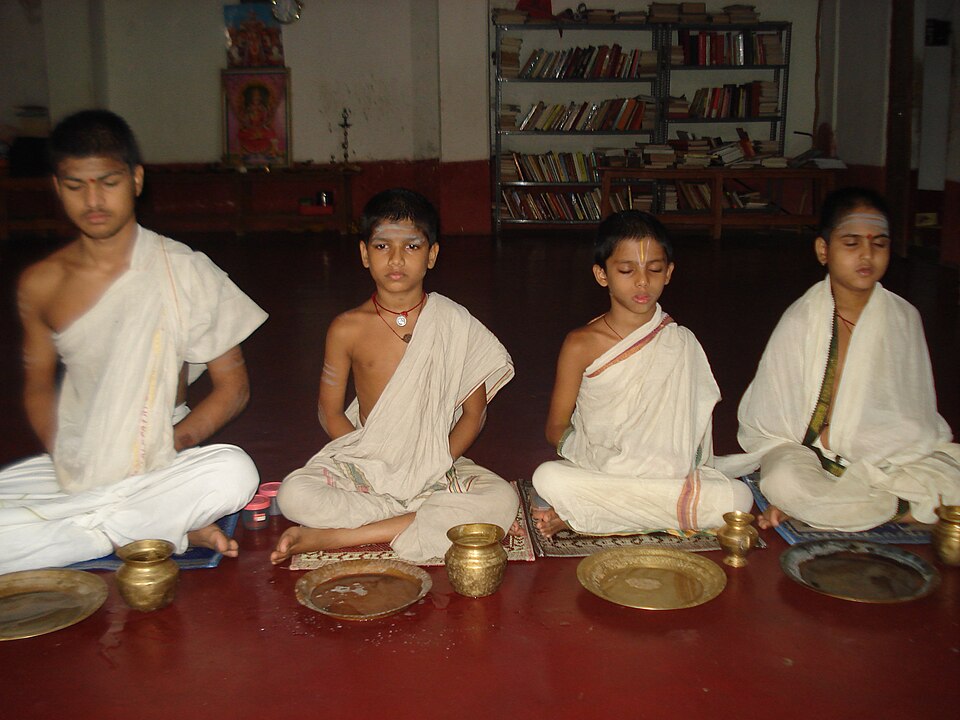
Introduction
The origins of Nitya Karma are deeply rooted in the Vedas and are expanded upon in the Puranas and the various Dharma Sutras. From the dawn of creation, the concept of performing duties according to one's stage of life (Ashrama) and inherent nature (Varna/Guna) has been central to Hindu living. Whether it is the simple act of Sandhyavandanam or the more elaborate Shodashopachara Puja, these practices serve as a bridge between the material world and the divine. The Vedic tradition emphasizes that through regular observance of these duties, an individual purifies their 'Antahkarana' (inner instrument/mind), making it a fit vessel for higher knowledge and liberation (Moksha).
Historically, the performance of Nitya Karma was seen as a way to uphold the 'Dharma' of the household. For a Grihastha, these rituals include serving the deities, caring for ancestors (Pitru), and maintaining the sanctity of the home. The practice is deeply tied to the concept of 'Sadhana'—disciplined spiritual practice. By establishing a routine, a person cultivates 'Samyama' (self-control) and 'Ekagrata' (one-pointedness). Even for those living in modern, fast-paced environments, the essence of Nitya Karma remains a vital anchor, preventing the practitioner from being swept away by the 'Maya' (illusion) of worldly distractions.
It is important to understand that Nitya Karma is not a one-size-fits-all methodology. While the core principles of purification and remembrance of the Divine are universal, the specific procedures vary significantly. A practitioner following the Smarta tradition might focus on Panchayatana Puja, while a Vaishnava might center their entire daily routine around Vishnu or Krishna, and a Shaiva around Shiva. Despite these sectarian differences, the underlying purpose remains identical: to acknowledge that every breath, every meal, and every moment is a gift from the Divine, and thus should be lived with mindfulness and devotion.
Significance
Religiously, Nitya Karma is seen as a way to pay one's 'Rina' (karmic debts). According to Hindu cosmology, every human is born with several debts: to the Devas (gods), to the Rishis (sages), to the Pitrus (ancestors), to humans, and to all living beings. Daily rituals, such as offering water to the sun (Arghya) or performing prayers, act as a continuous repayment of the debt to the Devas and ancestors, ensuring the harmony of the cosmic and familial lineages. This keeps the individual in a state of gratitude rather than entitlement.
Culturally and psychologically, these rituals provide a sense of structure and continuity. In a world that is constantly changing, the repetitive nature of daily puja and mantras offers a sense of stability and 'Sthirata' (steadiness). It creates a sacred space within the home, transforming a mere physical structure into a temple. This sanctification of the domestic sphere allows the householder to find divinity amidst the responsibilities of child-rearing, career, and social duties.
Furthermore, the 'Phala' (fruits) of observing Nitya Karma are manifold. Scriptural texts suggest that consistent practice leads to 'Punya' (merit), which cleanses the subtle body of accumulated 'Samskaras' (latent impressions). On a practical level, it fosters mindfulness and reduces stress by centering the individual. Astrologically, certain daily rituals are believed to mitigate the malefic effects of planetary transits (Graha Doshas) by aligning the individual's energy with the rhythmic vibrations of the universe through sacred sound (Mantra) and fire (Agni).
Auspicious Time
Find your exact auspicious time Check the shubh muhurat and choghadiya for your city and date.
Required Samagri (Materials)
Preparation Steps
- 1Wake up during Brahmamuhurta to ensure mental stillness.
- 2Perform Shaucha (personal purification) including bathing and wearing clean clothes.
- 3Clean the puja room or altar thoroughly.
- 4Prepare the offerings (fruits, flowers, and sweets) with a sense of devotion.
- 5Light the lamp (Deepam) to signify the presence of the Divine light.
Steps
- 1Achamana: Sip a small amount of water three times while chanting names of Vishnu to purify the inner self.
- 2Sankalpa: Take water and rice in the palm and state your intention (to perform this puja for spiritual growth or specific well-being).
- 3Deepa Prajvalana: Light the oil/ghee lamp to invite the presence of the deity.
- 4Dhyana: Meditate on the form of the deity you are worshipping.
- 5Avahana: Inviting the deity into the idol or the sacred space.
- 6Asana and Padya: Offering a seat and washing the feet of the deity (symbolically).
- 7Abhisheka: Bathing the deity with water, milk, or Panchamrita (if using a metal idol).
- 8Vastra and Alankara: Offering fresh clothes (or sacred thread) and decorating with sandalwood and flowers.
- 9Dhupa and Deepa: Offering incense and showing the light of the lamp.
- 10Naivedya: Offering the prepared food/fruits to the deity.
- 11Aarti: Performing the ritual of waving the camphor flame in a circular motion while singing hymns.
- 12Pradakshina and Namaskara: Walking in a circle (if space permits) and offering full prostrations.
- 13Shanti Patha: Concluding with prayers for universal peace.
Mantras
Gayatri Mantra
ॐ भूर्भुवः स्वः तत्सवितुर्वरेण्यं भर्गो देवस्य धीमहि धियो यो नः प्रचोदयात् ॥
Om Bhūr Bhuvaḥ Svaḥ Tat Savitur Vareṇyaṃ Bhargo Devasya Dhīmahi Dhiyo Yo Naḥ Pracodayāt
Meaning: We meditate on the glory of that Being who has produced this universe; may He enlighten our minds.
Shanti Mantra
ॐ असतो मा सद्गमय । तमसो मा ज्योतिर्गमय । मृत्योर्मा अमृतं गमय ॥
Om Asato Mā Sadgamaya, Tamaso Mā Jyotirgamaya, Mṛtyormā Amṛtaṃ Gamaya
Meaning: Lead me from the unreal to the real. Lead me from darkness to light. Lead me from death to immortality.
Guidelines
- •Maintain physical cleanliness (Shaucha) throughout the ritual.
- •Observe silence (Mauna) or chant mantras during the process.
- •Ensure the offerings are Satvik (pure, vegetarian, and freshly prepared).
- •Perform rituals with a focused and steady mind (Ekagrata).
Do's
- ✓Maintain a consistent time for daily rituals.
- ✓Use fresh flowers and clean water.
- ✓Approach the ritual with humility and surrender (Sharanagati).
- ✓Focus on the meaning of the mantras being chanted.
Don'ts
- ✗Do not perform rituals while angry, agitated, or in a state of grief.
- ✗Avoid using stale or impure food as Naivedya.
- ✗Do not interrupt the ritual once it has begun.
- ✗Avoid performing rituals in a dirty or cluttered environment.
Common Mistakes to Avoid
- •Focusing only on the outward mechanics without internal devotion (Bhakti).
- •Rushing through the steps to 'finish' the task.
- •Using incorrect pronunciation of sacred mantras.
- •Neglecting the purification of the self before attempting to purify the altar.
Regional Variations
- •South Indian traditions often place heavy emphasis on elaborate Abhisheka (ritual bathing) and use of specific flower types.
- •Bengali traditions may focus heavily on Shakta (Goddess) oriented daily puja with specific offerings like hibiscus.
- •North Indian traditions often feature more prominent use of Aarti and Bhajans during the evening Sandhya.
- •Vaishnava Sampradayas (like ISKCON or Sri Vaishnavism) have specific sequences centered around Vishnu/Krishna/Rama names.
Frequently Asked Questions
Can I perform Nitya Karma if I live in a small apartment?▾
What if I miss a day due to travel or illness?▾
Is it necessary to know Sanskrit to perform these rituals?▾
Popular Tools
References & Traditional Notes
- •The importance of Sandhyavandanam is emphasized in the Upanishads.
- •The concept of 'Panchamrita' is derived from various Puranas as a way to nourish the divine form.
- •Daily discipline is a core tenet of the Bhagavad Gita's teaching on Karma Yoga.
Related Audio & Bhajans
Affiliate disclosure: Sanatan Hindu participates in the Amazon Associates Programme and the CueLinks affiliate network (Myntra & Flipkart). This page contains affiliate links, if you click and buy, we earn a small commission at no extra cost to you. As an Amazon Associate we earn from qualifying purchases. Full disclosure.
Shop Samagri on Amazon.in
Clicking opens Amazon.in. Prices and availability may vary.
Browse all pooja itemsAmazon Associates tag: geekydevelope-21
Shop Pooja & Festive Essentials on Flipkart
Clicking opens Flipkart via our affiliate link. Prices and availability may vary.
Shop on FlipkartCueLinks Publisher: 300371
Shop Festive Wear on Myntra
Clicking opens Myntra via our affiliate link. Prices and availability may vary.
CueLinks Publisher: 300371
Need a website? Describe it, and AI builds it.
Perfect for a temple, pooja service, astrology practice or small shop. Tell the AI what you want — or drag and drop the classic way — and go live on your own web address in minutes with Sitova. Hosting, SEO, forms and analytics are all included.
- Build with AI or drag & drop
- Your domain + SEO built in
- Free forever plan
Opens sitova.site