
Parvati — The Divine Mother and Consort of Shiva
Explore the mythology, symbolism, worship practices, and spiritual significance of Goddess Parvati, the divine mother and consort of Lord Shiva.
Affiliate disclosure: Sanatan Hindu participates in the Amazon Associates Programme and the CueLinks affiliate network (Myntra & Flipkart). This page contains affiliate links, if you click and buy, we earn a small commission at no extra cost to you. As an Amazon Associate we earn from qualifying purchases. Full disclosure.
Introduction
In the Puranic corpus, especially the *Shiva Purana*, *Skanda Purana*, and *Devi Bhagavata Purana*, Parvati’s narrative unfolds as a profound allegory of devotion, penance, and divine union. Her intense tapas (austerities) to win Shiva’s hand, the subsequent marriage (Vivaha) celebrated as the cosmic *Kalyanotsava*, and her role as the mother of Ganesha and Kartikeya underscore themes of perseverance, maternal love, and the harmonious balance of masculine and feminine principles. These stories are not merely mythic entertainment; they serve as spiritual templates for seekers aspiring to transform ordinary consciousness into divine awareness.
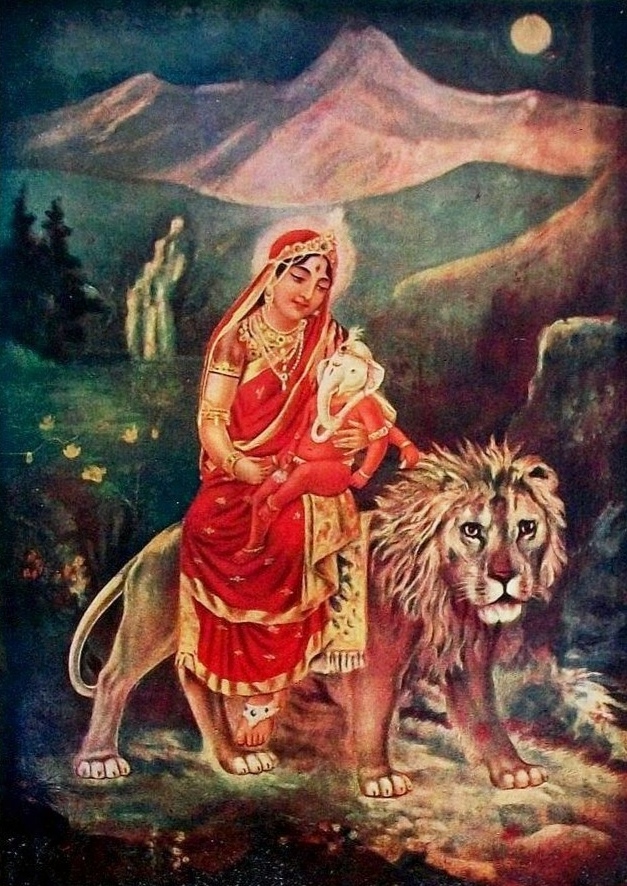
Parvati’s iconography is rich with symbolism. She is often depicted seated beside Shiva on Mount Kailash, holding a lotus (purity), a trident (the three gunas), a rosary (meditation), and a bell (the sound of creation). In her form as *Ardhanarishvara*, the half‑male, half‑female deity, she visually embodies the non‑dual truth that Shiva (consciousness) and Shakti (energy) are inseparable. The *Shakti Peethas* scattered across the Indian subcontinent mark the sites where parts of her body fell, turning geography into a living map of the Goddess’s presence and power.
Devotional practices dedicated to Parvati range from elaborate temple rituals during Navaratri and the *Gauri Vrat* to simple daily *puja* at home altars. Chanting the *Parvati Gayatri*, reciting the *Lalita Sahasranama*, and offering *bilva* leaves, *kumkum*, and *sandalwood* paste are common ways to invoke her blessings for marital harmony, fertility, wisdom, and spiritual strength. In many households, the *Gauri Puja* performed by women on the fourth day of the bright fortnight (Shukla Chaturthi) is a cherished tradition that reinforces the ideals of devotion, patience, and inner purity.
Beyond ritual, Parvati’s teachings resonate in the philosophical schools of *Shaktism*, *Shaivism*, and *Advaita Vedanta*. She represents the *Kundalini* energy coiled at the base of the spine, which, when awakened through disciplined sadhana, rises to unite with Shiva at the crown chakra, granting liberation (moksha). Thus, understanding Parvati is not only an exploration of a beloved deity but also an invitation to experience the transformative power of the Divine Feminine within one’s own heart.
Significance
Culturally, Parvati’s festivals — most notably Navaratri, *Gauri Vrat*, *Teej*, and *Hartalika* — structure the ritual calendar for millions of households. During Navaratri, the nine nights are dedicated to her nine forms (*Navadurga*), each night offering a specific *upasana* that purifies a particular *chakra* and removes a corresponding *dosha*. The *Gauri Vrat* observed on Shukla Chaturthi of the month of *Bhadrapada* is especially popular among married women who seek marital bliss, progeny, and the long life of their husbands, reflecting the Goddess’s role as the guardian of *saubhagya* (auspiciousness).
Astrologically, Parvati is associated with the planet *Venus* (Shukra), which governs love, beauty, art, and material comforts. Propitiating her through *Shukra Puja* or wearing a *diamond* (the gemstone of Venus) is believed to mitigate malefic Venus influences, enhance relationships, and attract prosperity. The *Parvati Mantra* “Om Hreem Shreem Kleem Parvatyai Namah” is often prescribed by jyotishis for strengthening the *Shukra* placement in a natal chart, illustrating the interplay between devotional practice and Vedic astrology.
On the philosophical plane, Parvati’s union with Shiva symbolizes the non‑dual realization that *Purusha* (pure consciousness) and *Prakriti* (manifest nature) are not separate. The *Ardhanarishvara* form, described in the *Shiva Purana* and celebrated in the *Kailash Temple* sculptures, serves as a visual mantra reminding seekers that the path to moksha integrates both knowledge (jnana) and devotion (bhakti). Her role as the mother of Ganesha (remover of obstacles) and Kartikeya (commander of divine armies) further illustrates how the Goddess nurtures both wisdom and valor in her devotees.
The *phala* (fruit) of sincere Parvati worship, as enumerated in the *Devi Bhagavata Purana*, includes *sarva siddhi* (all accomplishments), *ayu* (longevity), *arogya* (health), *vijaya* (victory over enemies), and ultimately *moksha*. Householders who perform the *Gauri Puja* with faith report harmonious family life, while renunciates who meditate on her *Kundalini* form experience accelerated spiritual awakening. Thus, whether approached through ritual, mantra, meditation, or selfless service, Parvati’s grace addresses the full spectrum of human aspiration.
Best Time to Perform
Find your exact auspicious time Check the shubh muhurat and choghadiya for your city and date.
Required Samagri (Materials)
Preparation Steps
- 1Clean the puja space and sprinkle Ganga jal.
- 2Place a clean cloth on the altar and set the deity’s image.
- 3Arrange the samagri in an orderly manner.
- 4Light the ghee lamp and incense.
- 5Fill the kalash with water, add a few drops of Ganga jal, place a coconut on top, and decorate with mango leaves.
- 6Offer a seat (asana) to the deity with a few rice grains.
- 7Invoke the presence of the Goddess through pranayama and sankalpa (resolve).
Step-by-Step Vidhi
- 1Begin with *Achamanam* (sipping water) and *Pranayama* to purify body and mind.
- 2Perform *Ganapati Puja* briefly to remove obstacles.
- 3Invoke Goddess Parvati with *Avahana* mantra: "Om Parvatyai Namah".
- 4Offer *Padya* (water for washing feet), *Arghya* (water for washing hands), *Achamaniya* (water for sipping).
- 5Bathe the deity with *Panchamrita* (milk, curd, ghee, honey, sugar) followed by pure water.
- 6Apply *Chandan* (sandalwood paste) and *Kumkum* on the forehead of the idol.
- 7Offer *Pushpa* (flowers), *Bilva* leaves, *Akshata* (rice), *Naivedya* (fruits and sweets).
- 8Light the *Deepa* (ghee lamp) and wave *Arati* with camphor while chanting the *Parvati Aarti*.
- 9Recite the *Parvati Gayatri* and *Lalita Sahasranama* (or selected verses).
- 10Conclude with *Pradakshina* (circumambulation), *Namaskara*, and distribution of *Prasad*.
Mantras
Parvati Gayatri Mantra
ॐ पार्वत्यै विद्महे शिवप्रियायै धीमहि तन्नो देवी प्रचोदयात्
Om Parvatyai Vidmahe Shivapriyayai Dhimahi Tanno Devi Prachodayat
Meaning: We meditate upon Goddess Parvati, the beloved of Shiva; may she inspire and illumine our intellect.
Om Parvatyai Namah
ॐ पार्वत्यै नमः
Om Parvatyai Namah
Meaning: Salutations to Goddess Parvati.
Parvati Stotram (Opening Verse)
जय जय हे पार्वति माते, शिवप्रिया जगजननी। कृपा करोति भक्तानां, सर्वसिद्धि प्रदायिनी॥
Jaya Jaya He Parvati Mate, Shivapriya Jagajjanani. Kripa Karoti Bhaktanam, Sarvasiddhi Pradayini.
Meaning: Victory to Mother Parvati, beloved of Shiva, mother of the universe; she bestows grace on devotees and grants all accomplishments.
Lalita Sahasranama – First Verse
श्रीमाता श्रीमहाराज्ञी श्रीमत्सिंहासनेश्वरी। चिद्रूपा चिदाकराकारा चिदानन्दरूपिणी॥
Shri Mata Shri Maharajni Shri Matsimhasaneshvari. Chidrupa Chidakarakara Chidanandarupini.
Meaning: The Divine Mother, the Great Queen, seated on the lion throne; she is the embodiment of consciousness, the form of pure awareness and bliss.
Shukra Parvati Mantra
ॐ ह्रीं श्रीं क्लीं पार्वत्यै नमः
Om Hreem Shreem Kleem Parvatyai Namah
Meaning: Om, invoking the seed syllables Hreem, Shreem, Kleem; salutations to Parvati, the deity of Venus, for love, prosperity, and harmony.
Do's
- ✓Keep the puja area clean and sanctified.
- ✓Use fresh, seasonal flowers and fruits.
- ✓Recite mantras with correct pronunciation and devotion.
- ✓Observe the vrat with sincerity and a compassionate attitude.
- ✓Share prasad with family and neighbors.
Don'ts
- ✗Do not use stale or wilted offerings.
- ✗Avoid speaking harsh words or engaging in arguments during the vrat.
- ✗Do not skip the prescribed number of mantra repetitions.
- ✗Refrain from consuming prohibited foods even inadvertently.
- ✗Do not perform the puja in a distracted or hurried manner.
Common Mistakes to Avoid
- •Confusing Parvati’s various forms and offering inappropriate items (e.g., offering meat to a gentle form).
- •Neglecting the *sankalpa* (resolve) before starting the puja.
- •Using incorrect mantra pronunciation which reduces efficacy.
- •Overlooking the importance of *Ganapati Puja* before the main worship.
- •Failing to distribute prasad, which is considered essential for completing the ritual.
Regional Variations
- •In North India, Gauri Vrat includes *Kanya Puja* (worship of young girls) on the final day.
- •In South India, *Varalakshmi Vratam* is observed with elaborate *kalasha* decoration and *thaligai* offerings.
- •In Bengal, *Durga Puja* celebrates Parvati as Mahishasuramardini with massive pandals and cultural programs.
- •In Maharashtra, *Hartalika Teej* involves women fasting and singing folk songs dedicated to Parvati.
- •In Gujarat, *Navaratri Garba* dances are performed each night honoring the nine forms of the Goddess.
Frequently Asked Questions
Can men observe Gauri Vrat?▾
What is the difference between Parvati and Durga?▾
Is it necessary to have a physical idol for Parvati puja?▾
Which day of Navaratri is dedicated to Parvati?▾
Popular Tools
References & Traditional Notes
- •Shiva Purana, Rudra Samhita – Parvati’s birth and marriage.
- •Devi Bhagavata Purana, Book 7 – Glories of the Goddess.
- •Lalita Sahasranama (from Brahmanda Purana) – 1000 names of the Divine Mother.
- •Devi Mahatmya (Durga Saptashati) – Chapters on the Goddess’s victories.
- •Tantra texts (e.g., Kularnava Tantra) – Kundalini and Shakti philosophy.
Related Audio & Bhajans
Affiliate disclosure: Sanatan Hindu participates in the Amazon Associates Programme and the CueLinks affiliate network (Myntra & Flipkart). This page contains affiliate links, if you click and buy, we earn a small commission at no extra cost to you. As an Amazon Associate we earn from qualifying purchases. Full disclosure.
Shop Samagri on Amazon.in
Clicking opens Amazon.in. Prices and availability may vary.
Browse all pooja itemsAmazon Associates tag: geekydevelope-21
Shop Pooja & Festive Essentials on Flipkart
Clicking opens Flipkart via our affiliate link. Prices and availability may vary.
Shop on FlipkartCueLinks Publisher: 300371
Shop Festive Wear on Myntra
Clicking opens Myntra via our affiliate link. Prices and availability may vary.
CueLinks Publisher: 300371
Need a website? Describe it, and AI builds it.
Perfect for a temple, pooja service, astrology practice or small shop. Tell the AI what you want — or drag and drop the classic way — and go live on your own web address in minutes with Sitova. Hosting, SEO, forms and analytics are all included.
- Build with AI or drag & drop
- Your domain + SEO built in
- Free forever plan
Opens sitova.site