
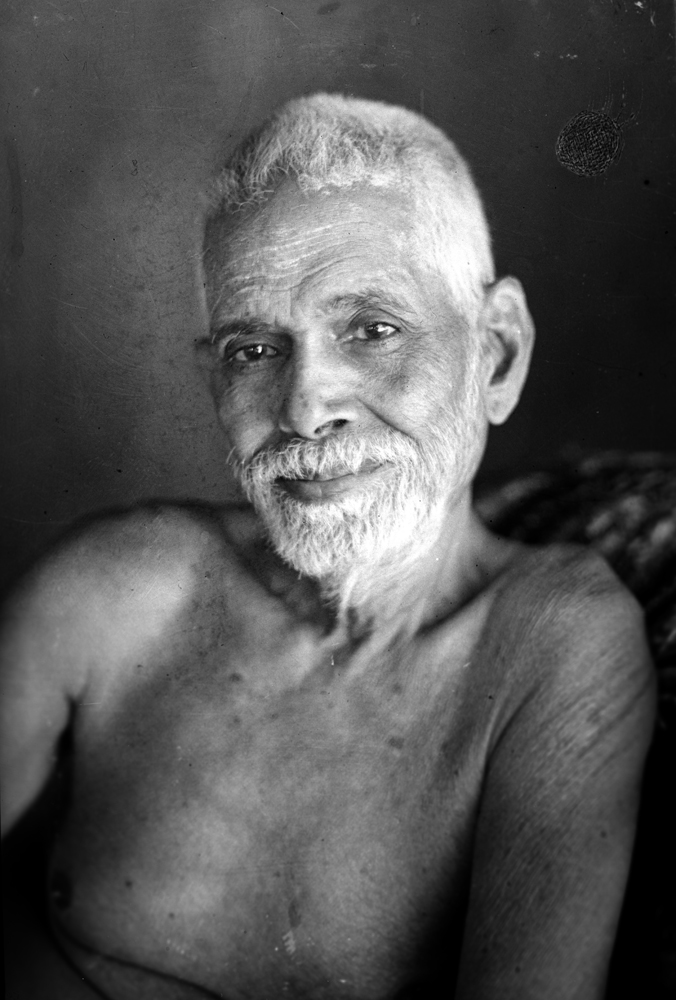
Ramana Maharshi — Self-Enquiry and Teachings of the Arunachala Sage
Comprehensive guide to Ramana Maharshi's life, Self-Enquiry (Atma Vichara) method, Arunachala's significance, and core Advaita teachings for spiritual liberation.
Affiliate disclosure: Sanatan Hindu participates in the Amazon Associates Programme and the CueLinks affiliate network (Myntra & Flipkart). This page contains affiliate links, if you click and buy, we earn a small commission at no extra cost to you. As an Amazon Associate we earn from qualifying purchases. Full disclosure.
Next Maha Shivaratri
Saturday, 6 March 2027· in 121 days
Set a reminder so you never miss Maha Shivaratri.
Introduction
Arunachala, the 'Hill of Fire' (Tejas), is revered in the Skanda Purana and other scriptures as the embodiment of Lord Shiva himself — the formless Absolute manifest as a mountain. Ramana Maharshi declared Arunachala to be the spiritual heart of the world, the magnetic center that draws ripe souls to Self-realization. He composed the celebrated 'Arunachala Ashtakam', 'Arunachala Pancharatnam', and 'Arunachala Navamanimalai', hymns that express the intimate, non-dual love between the devotee and the Self in the form of the Hill. For Ramana, Arunachala was not merely a geographical location but the very Self in manifestation, the silent guru that teaches without words.
The core of Ramana's teaching is Atma Vichara — Self-Enquiry — the direct path (Mukti Marga) to liberation. Unlike gradual practices that purify the mind over lifetimes, Self-Enquiry cuts through the root of ignorance (avidya) by turning the attention inward to its source. The method is deceptively simple: whenever a thought arises, one asks 'To whom does this thought arise?' The answer: 'To me.' Then one asks 'Who am I?' and traces the 'I'-thought back to its origin in the Heart (Hridaya), the spiritual center on the right side of the chest. This is not an intellectual exercise but a vigilant, subtle attention that dissolves the false ego (ahamkara) and reveals the ever-present, unchanging Self.
Ramana Maharshi's teaching is rooted in the Advaita Vedanta tradition of Adi Shankaracharya, yet he stripped away all ritual, deity worship (for advanced seekers), and scriptural study as unnecessary for the ripe soul. He emphasized that the Self is already realized — 'You are the Self; there is nothing to attain, only to realize.' His silence (Mauna) was his highest teaching, transmitting the truth of non-duality (Advaita) more powerfully than words. Yet he answered questions with compassionate clarity, addressing every level of seeker — from householders to renunciates — and never claimed guruhood in the formal sense, saying 'The Guru is the Self.'
The ashram that grew around him at the foot of Arunachala, Sri Ramanasramam, became a global spiritual center where people of all backgrounds — Hindus, Christians, Muslims, atheists — sat in his presence. His direct disciples, including Ganapati Muni, Muruganar, and later H.W.L. Poonja (Papaji), carried his message worldwide. Today, Ramana's teachings continue to inspire the Neo-Advaita movement and countless independent seekers. His legacy is not a religion or organization but a living pointer to the immediate, direct knowledge of one's true nature — the Self that is pure Being-Consciousness-Bliss (Sat-Chit-Ananda).
Significance
Scripturally, Ramana's teaching finds its authority in the Upanishads, particularly the Katha Upanishad (1.2.12): 'The Self is hidden in all beings; it does not shine forth, but it is realized by subtle seers through one-pointed intellect.' The Ribhu Gita, a text he highly recommended, declares: 'I am Brahman, the pure Consciousness — this is the final truth.' Ramana himself often cited the Mahavakya 'Aham Brahmasmi' (I am Brahman) not as a mantra to repeat but as the immediate recognition of one's true nature. The Ribhu Gita's chapter on 'Nirvikalpa Samadhi' and the Yoga Vasistha's exposition on 'Self-enquiry' (Vichara) are the closest textual parallels. In the Tamil tradition, the Tiruvachakam of Manikkavachakar and the Tiruppugazh of Arunagirinathar echo the same non-dual devotion to Arunachala-Shiva.
The phala (fruit) of sincere Self-Enquiry is Jivanmukti — liberation while living. The practitioner no longer identifies with the body-mind complex, remains as the witness (Sakshi) of all phenomena, and abides in unbroken peace (Shanti) and bliss (Ananda). Sorrow, fear, and duality cease because their substratum — the ego — has been uprooted. Ramana emphasized that this is not a state to be achieved in the future but the ever-present reality: 'The Self is here and now; you are never not the Self.' The benefits ripple outward: spontaneous compassion, absence of conflict, clarity in action, and the natural expression of Dharma. For householders, he taught that Self-Enquiry can be practiced amidst duties — 'The world is not an obstacle; attachment to the world is.'
Culturally, Ramana Maharshi revitalized the ancient guru-shishya parampara in a form suited to the modern age: no initiation rituals, no organizational hierarchy, no fees, no dogma. He restored the dignity of the Tamil language in spiritual discourse, composing profound poetry in Tamil (Arunachala Aksharamanamalai) and speaking in simple Tamil to local devotees. Arunachala became a global pilgrimage site (Girivalam — circumambulation of the hill is considered equivalent to worshipping Shiva everywhere). The annual festivals at Ramanasramam — Jayanti (birthday), Aradhana (Mahasamadhi day), and Karthigai Deepam — draw thousands. His influence extends beyond Hinduism: Paul Brunton's 'A Search in Secret India' (1934) introduced him to the West; Carl Jung wrote a foreword to a book on him; and contemporary teachers like Eckhart Tolle, Adyashanti, and Mooji trace their lineage to his direct pointing.
Astrologically and symbolically, Arunachala is associated with the Agni (fire) element and the Manipura chakra (transmuted into the Heart center in Ramana's teaching). The hill's magnetic pull is said to accelerate the ripening of karma and the dissolution of vasanas (latent tendencies). Ramana's Mahasamadhi in 1950 occurred on the evening of Maha Shivaratri, the night of Shiva, reinforcing his identity with the auspicious, transformative power of Shiva as the destroyer of ignorance. His life demonstrates that the highest truth is not esoteric but immediate — available to anyone willing to turn attention inward and ask 'Who am I?' with sincere intensity.
Auspicious Time
Find your exact auspicious time Check the shubh muhurat and choghadiya for your city and date.
Required Samagri (Materials)
Preparation Steps
- 1Sit in a comfortable, steady posture (Sukhasana, Padmasana, or on a chair) with spine erect
- 2Close the eyes gently and take a few slow, deep breaths to settle the nervous system
- 3Relax the body completely — release tension from the face, shoulders, hands, abdomen, legs
- 4Set a clear intention (Sankalpa): 'I wish to know my true nature — the Self'
- 5Invoke the grace of the Guru (Ramana) and Arunachala silently in the heart
- 6Let go of all expectations, goals, and concepts about enlightenment
- 7Establish a subtle, alert awareness — not concentration on an object, but attention itself
Steps
- 1STEP 1 — Establish the 'I'-sense: Notice the primary feeling 'I am' or 'I exist' — this is the root thought (Moola Vritti) from which all other thoughts arise. Do not visualize; simply be aware of the sense of being.
- 2STEP 2 — When a thought arises (about past, future, body, world, practice itself), immediately ask: 'To whom has this thought arisen?' The answer will be: 'To me.'
- 3STEP 3 — Then ask: 'Who am I?' or 'Whence does this "I" arise?' Do not answer intellectually. Instead, turn the attention sharply inward, toward the source of the 'I'-thought.
- 4STEP 4 — Trace the 'I'-thought back to its origin in the Heart (Hridaya), the spiritual center on the right side of the chest. This is not a physical location but the point where Consciousness touches the body-mind.
- 5STEP 5 — As you trace, the false 'I' (ego/ahamkara) dissolves. What remains is the true 'I' — pure Self-awareness (Atma Sphurana), a silent, luminous 'I-I' (Aham-Aham) that is not a thought but the light of Consciousness itself.
- 6STEP 6 — Abide in that Self-awareness. If attention wanders, gently repeat the enquiry. The practice is not to eliminate thoughts but to see their source. Over time, the gaps between thoughts widen and the Self shines uninterrupted.
- 7STEP 7 — Carry this enquiry into daily life: while walking, eating, working, speaking — repeatedly ask 'Who is walking? Who is eating? Who is speaking?' The doer is seen to be a phantom; action happens spontaneously.
- 8STEP 8 — Surrender (Saranagati) as complementary path: If enquiry feels dry, surrender the 'I' to the Self/Arunachala/Guru with the attitude 'Not I, but You.' This is Bhakti as Self-surrender, equally direct.
Mantras
Arunachala Ashtakam (Verse 1)
அருணாசலம் எந்தை யாருணாசலம் தாயாருணாசலம் சகலமும் தானே
Aruṇācalam eṉṟai yāruṇācalam tāyāruṇācalam sakalamum tāṉē
Meaning: Arunachala is my father, Arunachala is my mother, Arunachala is everything — He alone is all.
Arunachala Pancharatnam (Verse 1)
அருணாசலம் என்னும் அரிவிலி தீபமேதியினுள் ஒளிரும் அஹம் ஸ்புரணம்
Aruṇācalam eṉṉum aravili tīpamētiyiṉuḷ oḷirum aham sphuraṇam
Meaning: The self-luminous 'I-I' (Aham Sphurana) shines in the heart as the light called Arunachala, without the need for any external lamp.
Mahavakya — Aham Brahmasmi
अहं ब्रह्मास्मि
Ahaṁ Brahmāsmi
Meaning: I am Brahman — the ultimate truth of non-dual identity, not as affirmation but as direct recognition.
Self-Enquiry Seed Question
नान् यार्?
Nān Yār?
Meaning: Who am I? — The core question of Atma Vichara, turning attention to the source of the 'I'-thought.
Upadesa Saram (Verse 1) — Essence of Instruction
காரியம் ஆச்சி கதவுந் தீர்த்து காரியம் ஆகாது காரியம் ஆகும்
Kāriyam ācci kaḍavun tīrttu kāriyam ākādu kāriyam ākum
Meaning: Having finished the task (of Self-enquiry), the task is no task; the non-task becomes the task — the natural state.
Arunachala Navamanimalai (Verse 1)
அருணாசலா அருள் வினை தீர்த்து அன்பு உளம் ஆக்கியு மருள் தீர்த்து இன்பம் தந்து
Aruṇācalā aruḷ vinai tīrttu aṉbu uḷam ākkiyu maruḷ tīrttu iṉpam tantu
Meaning: O Arunachala, by Your grace remove my karma, melt my heart with love, dispel my delusion, and grant supreme bliss.
Guidelines
- •Practice Self-Enquiry with sincerity, not mechanically — intensity (Teekshnatva) matters more than duration
- •Maintain ethical purity (Yamas/Niyamas): non-violence, truthfulness, non-stealing, continence, non-possessiveness
- •Reduce unnecessary speech (Mauna) — silence conserves energy for inward attention
- •Avoid intoxicants, excessive entertainment, and company that distracts from Self-attention
- •Eat sattvic food in moderation; overeating dulls the mind
- •Sleep only as much as needed; early rising supports practice
- •Do not seek psychic powers (Siddhis) or visions — they are obstacles (Pratibandha)
- •Offer all actions to the Self/Arunachala — Karma Yoga as support for Jnana
- •Read Ramana's core texts ('Who Am I?', 'Self-Enquiry', 'Upadesa Saram') repeatedly for clarity
- •Visit Arunachala physically if possible; otherwise, mentally circumambulate the Hill daily
Do's
- ✓Do practice Self-Enquiry with gentle persistence — like holding a thread to find the end of a tangled ball
- ✓Do remain as the witness (Sakshi) of thoughts, emotions, sensations — not identifying, not suppressing
- ✓Do use the 'Who am I?' question as a razor to cut each rising thought at its root
- ✓Do abide in the natural state (Sahaja) — effortless being — whenever the mind settles
- ✓Do cultivate love for Arunachala/Self/Guru — Bhakti and Jnana are one in Ramana's path
- ✓Do serve others selflessly (Seva) as worship of the Self in all beings
- ✓Do keep company with sincere seekers (Satsang) — it strengthens the current of grace
- ✓Do read 'Talks with Sri Ramana Maharshi' and 'Day by Day with Bhagavan' for practical guidance
Don'ts
- ✗Don't treat 'Who am I?' as a mantra to repeat mechanically — it is a tool of attention, not sound
- ✗Don't expect flashes, lights, visions, or bliss — these are mental phenomena, not the Self
- ✗Don't force the mind to be blank — that is suppression, not enquiry
- ✗Don't intellectualize the teaching — 'I am not the body' is a realization, not a concept
- ✗Don't compare your progress with others — the path is internal and non-linear
- ✗Don't seek confirmation from external authorities — the Self is the only guru
- ✗Don't neglect worldly duties — Ramana said: 'The world is not an obstacle; attachment is.'
- ✗Don't create a spiritual ego ('I am practicing, I am advanced') — this is the subtlest trap
Common Mistakes to Avoid
- •Mistaking concentration (Dharana) on an object for Self-Enquiry — Atma Vichara is attention on the subject, not an object
- •Believing the 'I'-thought is the Self — the 'I'-thought (Aham Vritti) is the ego; the Self is its source
- •Thinking Self-Enquiry requires a quiet mind to begin — enquiry itself quiets the mind
- •Practicing only during meditation sessions and forgetting it in daily life — it must become continuous
- •Reading many books but not practicing — Ramana said: 'Reading about food doesn't satisfy hunger.'
- •Seeking the Self as an experience — the Self is the experiencer, never an experience
- •Confusing the Heart (Hridaya) with the physical heart or Anahata chakra — it is the spiritual center of Consciousness
- •Expecting a dramatic 'event' of realization — for many, it is a gradual, subtle clarification
Regional Variations
- •Tamil Nadu (Arunachala/Ramanasramam): Direct lineage, Tamil hymns, Girivalam, daily Vedic chanting at samadhi
- •North India / Himalayas: Emphasis on Jnana Yoga, integration with Advaita Vedanta monastic orders (Sringeri, Kanchi)
- •Western Neo-Advaita (Papaji lineage, Gangaji, Adyashanti, Mooji): Immediate pointing, minimal practice, satsang format
- •Traditional Advaita Vedanta (Swami Dayananda, Swami Paramarthananda): Structured study of Upanishads/Bhagavad Gita with Ramana as exemplar
- •Kerala / Karnataka: Integration with Bhakti traditions (Namasankeertanam) and temple culture around Arunachala
- •Sri Lankan Tamil diaspora: Strong devotion to Ramana as Jnani, regular parayanam of Tamil works
- •Online global communities: Digital satsangs, Zoom self-enquiry groups, translated texts in 50+ languages
Frequently Asked Questions
Is Self-Enquiry only for renunciates (sannyasis)? Can householders practice it?▾
How long does Self-Enquiry take to yield results?▾
Do I need a living guru to practice Self-Enquiry?▾
What is the difference between 'Who am I?' and Neti-Neti (Not this, not this)?▾
Can I combine Self-Enquiry with other practices (mantra, yoga, deity worship)?▾
What is the significance of Girivalam (circumambulation of Arunachala)?▾
How do I deal with strong emotions (fear, grief, anger) during Self-Enquiry?▾
What happens after Self-realization? Does the body die?▾
Popular Tools
References & Traditional Notes
- •Primary texts by Ramana: 'Who Am I?' (Nan Yar?), 'Self-Enquiry' (Vichara Sangraham), 'Upadesa Saram' (Upadesa Undiyar), 'Forty Verses on Reality' (Ulladu Narpadu), 'Arunachala Ashtakam', 'Arunachala Pancharatnam', 'Arunachala Navamanimalai', 'Arunachala Aksharamanamalai' (108 verses).
- •Key biographies: 'Self-Realisation' by B.V. Narasimha Swami, 'Ramana Maharshi and the Path of Self-Knowledge' by Arthur Osborne, 'The Power of the Presence' by S.S. Cohen, 'Talks with Sri Ramana Maharshi' (recorded by Munagala Venkataramaiah), 'Day by Day with Bhagavan' (Devaraja Mudaliar).
- •Scriptural parallels: Ribhu Gita (Chapter 26, 42), Yoga Vasistha (Moksha Upaya), Katha Upanishad (1.2.12), Mundaka Upanishad (3.1.1-3), Kaivalya Upanishad, Adi Shankara's 'Vivekachudamani' (verses on Vichara), 'Aparokshanubhuti'.
- •Tamil devotional corpus: Tiruvachakam (Manikkavachakar), Tiruppugazh (Arunagirinathar), Tevaram (Appar, Sambandar, Sundarar) — all sing of Arunachala as Shiva-Self.
- •Ramana's direct disciples who taught: Ganapati Muni (Kavyakantha), Muruganar (composer of Guru Vachaka Kovai), Lakshmana Swamy, Saradamma, Annamalai Swami, Sadhu Om, Nome, H.W.L. Poonja (Papaji), Gangaji, Adyashanti, Mooji, Eckhart Tolle (influenced).
- •Ramanasramam archives: Official website (sriramanamaharshi.org), YouTube channel, printed books in 30+ languages, quarterly journal 'The Mountain Path'.
Related Audio & Bhajans
Exploring Sant Mat Teachings Found in the Hindu Scriptures Plus Several Other Sant Mat Related Topics
Rites of Passage (2025 Reprise)
DJ DEVIOUS - RITES OF PASSAGE MIX
Track 1 - Vidwan Madurai S. Somasundaram ‘Madurai Somuʼ and Party Track 2 - Prof. M. D. Ramanathan and Party Track 3 and 4 - Vidwan Kunnakudi Vaidyanathan and Party
Affiliate disclosure: Sanatan Hindu participates in the Amazon Associates Programme and the CueLinks affiliate network (Myntra & Flipkart). This page contains affiliate links, if you click and buy, we earn a small commission at no extra cost to you. As an Amazon Associate we earn from qualifying purchases. Full disclosure.
Shop Samagri on Amazon.in
Clicking opens Amazon.in. Prices and availability may vary.
Browse all pooja itemsAmazon Associates tag: geekydevelope-21
Shop Pooja & Festive Essentials on Flipkart
Clicking opens Flipkart via our affiliate link. Prices and availability may vary.
Shop on FlipkartCueLinks Publisher: 300371
Shop Festive Wear on Myntra
Clicking opens Myntra via our affiliate link. Prices and availability may vary.
CueLinks Publisher: 300371
Need a website? Describe it, and AI builds it.
Perfect for a temple, pooja service, astrology practice or small shop. Tell the AI what you want — or drag and drop the classic way — and go live on your own web address in minutes with Sitova. Hosting, SEO, forms and analytics are all included.
- Build with AI or drag & drop
- Your domain + SEO built in
- Free forever plan
Opens sitova.site