Sacred Texts & ScripturesVarious (AgniIndraVaruṇaMitraSūryaUṣasViśvedevasetc.)Veda Jayantī (varies by tradition), Guru Pūrṇimā (honoring Vedic lineage)

Rigveda — Oldest Sacred Text of Hinduism: Summary, Key Hymns & Spiritual Significance

Comprehensive guide to the Rigveda: origin, structure, major hymns, spiritual significance, and how to study this foundational Hindu scripture.
By Sanatan Hindu2 min readUpdated 18 August 2026Audio available
Share:
Rigveda — Oldest Sacred Text of Hinduism: Summary, Key Hymns & Spiritual Significance

Introduction

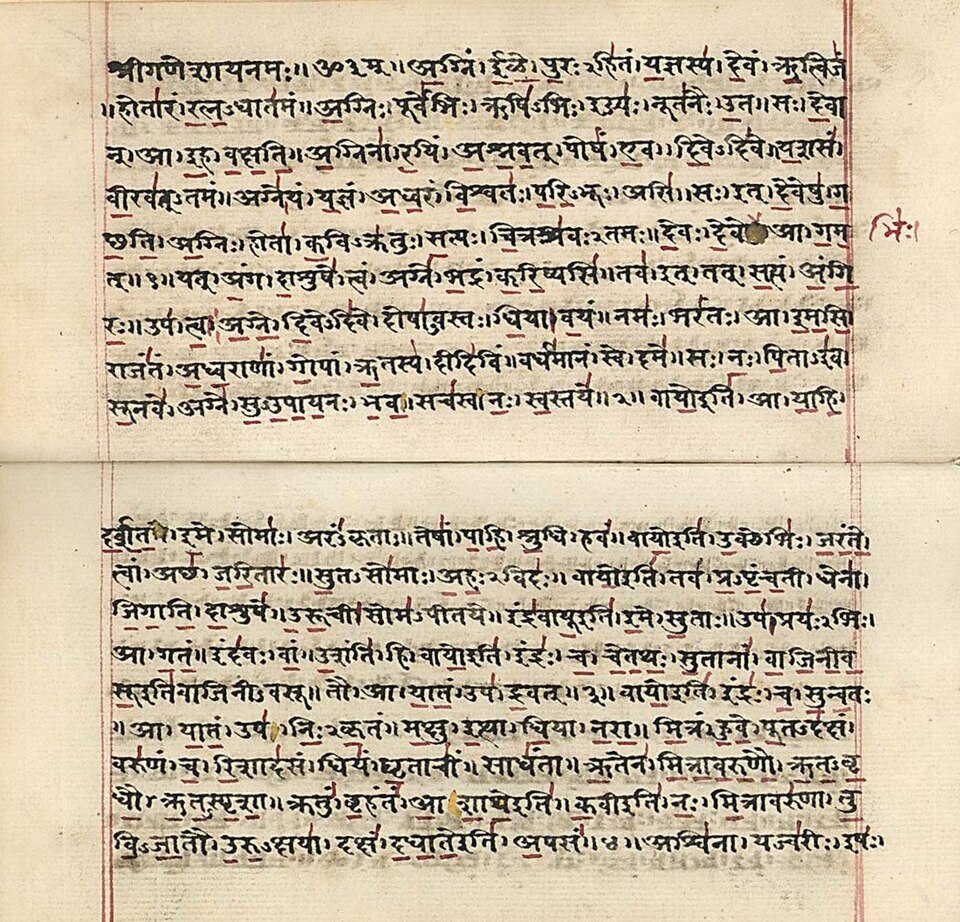
The Rigveda stands as the oldest and most revered of the four Vedas, forming the bedrock of Hindu spiritual literature and the earliest extant text in any Indo-European language. Composed in Vedic Sanskrit between approximately 1500 and 1200 BCE, though traditional accounts place its origin far earlier in the mists of antiquity, the Rigveda is not merely a historical document but a living scripture whose mantras continue to be chanted in temples, homes, and Vedic schools across India and the diaspora. The word 'Rigveda' derives from two Sanskrit roots: ṛc (ऋच्), meaning 'praise,' 'verse,' or 'hymn,' and veda (वेद), meaning 'knowledge' or 'wisdom' — thus, the Rigveda is the 'Knowledge of the Hymns of Praise.' It consists of 1,028 sūktas (hymns) organized into ten maṇḍalas (books), containing over 10,600 verses addressed to various devas (shining ones) who personify cosmic forces and natural phenomena.

Significance

The spiritual significance of the Rigveda transcends its status as an ancient text; it is regarded as śruti (that which is heard), revealed knowledge directly perceived by the ṛṣis (seers) in states of deep meditation and yogic insight. Unlike smṛti texts which are remembered and composed by human authors, the Vedas are considered apauruṣeya — not of human origin — and thus carry supreme authority in Hindu epistemology. The Rigveda's hymns are not merely prayers for material boons but profound explorations of ṛta (cosmic order), the relationship between the microcosm and macrocosm, and the nature of the ultimate reality that later Upaniṣads would call Brahman. The famous Nāsadīya Sūkta (10.129), the 'Hymn of Creation,' exemplifies this philosophical depth, questioning the very origin of existence with a skepticism that resonates with modern cosmology.

Best Time to Recite

Brahma Muhurta (approximately 4:00–6:00 AM) is considered most auspicious for Vedic study and recitation; alternatively, sandhyā times (dawn and dusk) during daily worship

Find your exact auspicious time Check the shubh muhurat and choghadiya for your city and date.

How to Recite

  1. 1Begin with the Gāyatrī Mantra or appropriate maṅgalācaraṇa (invocation)
  2. 2Recite the ṛṣi, chandas, devatā, and viniyoga for the chosen sūkta
  3. 3Chant the hymn with correct svara (Vedic accentuation: udātta, anudātta, svarita) under guidance of a qualified guru
  4. 4Contemplate the meaning (artha) and deeper significance (tattva) of each verse
  5. 5Offer the fruits of recitation (phala) to the Supreme (Īśvara) with the phrase 'Kṛṣṇārpaṇam astu'
  6. 6Conclude with śānti pāṭha (peace invocation) such as 'Oṃ śāntiḥ śāntiḥ śāntiḥ'

Mantras

Gāyatrī Mantra (Ṛgveda 3.62.10)

ॐ भूर्भुवः स्वः तत्सवितुर्वरेण्यं भर्गो देवस्य धीमहि धियो यो नः प्रचोदयात्

Oṃ bhūr bhuvaḥ svaḥ tat savitur vareṇyaṃ bhargo devasya dhīmahi dhiyo yo naḥ pracodayāt

Meaning: We meditate upon the glorious radiance of the divine Savitṛ (Sun), who illuminates the three worlds (bhūr, bhuvaḥ, svaḥ); may He inspire and enlighten our intellects.

Puruṣa Sūkta (Ṛgveda 10.90.1–3)

सहस्रशीर्षा पुरुषः सहस्राक्षः सहस्रपात् । स भूमिं विश्वतो वृत्वा अऽत्यतिष्ठद्दशाङ्गुलम् ॥ पुरुष एवेदं सर्वं यद्भूतं यच्च भव्यम् । उतामृतत्वस्येशानो यदन्नेनातिरोहति ॥

Sahasraśīrṣā puruṣaḥ sahasrākṣaḥ sahasrapāt | sa bhūmiṃ viśvato vṛtvā'tyatiṣṭhaddaśāṅgulam || Puruṣa evedaṃ sarvaṃ yadbhūtaṃ yacca bhavyam | utāmṛtatvasyeśāno yadannenaatirohati ||

Meaning: The Cosmic Person (Puruṣa) has a thousand heads, a thousand eyes, a thousand feet; He pervades the universe and extends ten fingers beyond. The Puruṣa alone is all this — what was, what is, and what will be; He is the lord of immortality, which He transcends through sacrificial offering.

Nāsadīya Sūkta — Hymn of Creation (Ṛgveda 10.129.1–2)

नासदासीन्नो सदासीत्तदानीं नासीद्रजो नो व्योमा परो यत् । किमावरीवः कुह कस्य शर्मन्नम्भः किमासीद्गहनं गभीरम् ॥ न मृत्युरासीदमृतं न तर्हि न रात्र्या अह्न आसीत्प्रकेतः । आनीदवातं स्वधया तदेकं तस्माद्धान्यन्न परः किञ्चनास ॥

Nāsad āsīn no sad āsīt tadānīṃ nāsid rajo no vyomā paro yat | kim āvarīvaḥ kuha kasya śarmann ambhaḥ kim āsīd gahanaṃ gabhīram || Na mṛtyur āsīd amṛtaṃ na tarhi na rātryā ahna āsīt praketaḥ | ānīd avātaṃ svadhayā tad ekaṃ tasmād dhānyan na paraḥ kiṃ canāsa ||

Meaning: Then neither non-existence nor existence was; there was no realm of air, no sky beyond. What covered it? Where? In whose protection? Was there water, unfathomable and deep? There was neither death nor immortality then; no sign of night or day. That One breathed windlessly by its own power; apart from it, nothing whatsoever existed.

Agni Sūkta — First Hymn to Agni (Ṛgveda 1.1.1)

अग्निमीळे पुरोहितं यज्ञस्य देवमृत्विजम् । होतारं रत्नधातमम् ॥

Agniṃ īḷe purohitaṃ yajñasya devam ṛtvijam | hotāraṃ ratnadhātamam ||

Meaning: I invoke Agni, the domestic priest (purohita), the divine minister (ṛtvij) of the sacrifice, the invoker (hotṛ), the bestower of highest treasure.

Vāk Sūkta — Hymn to the Goddess of Speech (Ṛgveda 10.125.1–2)

अहं राष्ट्री संगमनी वसूनाम् चिकितुषी प्रथमा यज्ञियानाम् । तां मा देवा व्यदधुः पुरुत्रा भूरिदा भूर्यावी भूर्यहं ददामि ॥

Ahaṃ rāṣṭrī saṅgamanī vasūnāṃ cikituṣī prathamā yajñiyānām | Tāṃ mā devā vyadadhuḥ purutrā bhūridā bhūryāvī bhūryahaṃ dadāmi ||

Meaning: I am the Queen, the gatherer of treasures, the first among those worthy of sacrifice. The gods placed me in many places; I enter and dwell in many forms. I bestow abundance on the giver, I am the abundant one, I give abundantly.

Śraddhā Sūkta — Hymn to Faith (Ṛgveda 10.151.1–2)

श्रद्धाया देवा श्रद्धां तपन्ति सूर्यं चन्द्रमसम् । श्रद्धां वा वयं मनुष्याः काङ्क्षमहे काङ्क्षितं वरम् ॥ श्रद्धां प्रातरनुव्रज श्रद्धां सायं परि व्रज । श्रद्धामिन्द्रं बृहस्पतिं श्रद्धां वा वयं वयम् ॥

Śraddhayā devā śraddhāṃ tapanti sūryaṃ candramasam | Śraddhāṃ vā vayaṃ manuṣyāḥ kāṅkṣimahe kāṅkṣitaṃ varam || Śraddhāṃ prātaranuvraja śraddhāṃ sāyaṃ pari vraja | Śraddhām indraṃ bṛhaspatiṃ śraddhāṃ vā vayaṃ vayam ||

Meaning: Through faith (śraddhā) the gods kindle the sun and moon. We humans, through faith, desire the desired boon. Follow faith in the morning, follow faith in the evening. Faith is Indra, faith is Bṛhaspati; we are faith itself.

Do's

  • Learn svara (accent) from a qualified Vedic teacher (adhyāpaka) before independent recitation
  • Maintain regular daily practice (nitya-abhyāsa) even if brief
  • Study the meaning through authoritative commentaries (Sāyaṇa, Bhāskara, modern scholars)
  • Honor the ṛṣis by reciting their names before each sūkta
  • Share the knowledge respectfully with sincere seekers

Don'ts

  • Do not chant with incorrect svara — this is considered a fault (doṣa) that alters the mantra's potency
  • Do not recite in impure states (aśauca) such as after attending a funeral without purification
  • Do not teach Vedic mantras to those who have not received upanayana (where tradition requires it) or lack śraddhā
  • Do not use Vedic mantras for material gain or manipulative purposes
  • Do not rush through recitation; each syllable must be clearly enunciated

Common Mistakes to Avoid

  • Ignoring the Vedic accents (svara) and chanting in a monotone
  • Reciting without understanding the devatā, ṛṣi, and chandas of the hymn
  • Skipping the invocatory and concluding rites (maṅgalācaraṇa, śānti pāṭha)
  • Using printed texts without verifying against oral tradition
  • Treating the Rigveda as mere literature rather than living revelation

Frequently Asked Questions

Can women study and recite the Rigveda?
Yes. While some traditional gurukulas historically restricted formal Vedic study to males after upanayana, the Rigveda itself contains hymns revealed by female ṛṣikās (e.g., Vāk Āmbhṛṇī, Lopāmudrā, Ghoṣā). Many modern traditions and institutions (e.g., Śṛṅgerī Maṭha, Chinmaya Mission, Arya Samaj) actively teach Vedic chanting to women. Consult your guru or lineage for specific guidance.
What is the difference between the Rigveda and the other three Vedas?
The Rigveda is the oldest and consists primarily of hymns (ṛc) for recitation. The Sāmaveda sets Rigvedic verses to musical melodies (sāman) for liturgical singing. The Yajurveda contains prose formulas (yajus) for ritual action. The Atharvaveda includes spells, charms, and practical hymns for daily life. Together they form the 'trayī vidyā' (threefold knowledge) plus the Atharvaveda.
How many śākhās (recensions) of the Rigveda exist?
Tradition mentions 21 śākhās, but only two survive in living oral tradition: the Śākala (predominant across India) and the Bāṣkala (preserved in parts of South India and Kashmir). Fragments of others exist in manuscripts.
Is it necessary to know Sanskrit to benefit from the Rigveda?
Ideally, yes — the mantras' power is tied to their precise sound (śabda) and meaning (artha). However, listening to authentic recitation with śraddhā, studying translations, and meditating on the concepts also confer spiritual benefit. Many begin with translations and gradually learn Sanskrit.
What is the best way to start studying the Rigveda?
Begin with the Gāyatrī Mantra and the first sūkta (Agni Sūkta) under a qualified teacher. Use a reliable translation (e.g., Jamison & Brereton, Wilson, or Griffith) alongside the Sanskrit text. Join a Vedic study group or online course from a reputable institution. Consistency and reverence matter more than speed.

References & Traditional Notes

  • The Śākala Saṃhitā is the standard recension used in most of India today
  • Sāyaṇa's 14th-century bhāṣya (commentary) remains the most influential traditional exposition
  • The Rigveda Prātiśākhya and Śikṣā texts preserve the phonetic rules for correct recitation
  • The Aitareya and Kauṣītaki Brāhmaṇas, and Aitareya Upaniṣad, are associated with the Rigveda
  • Modern critical editions: Aufrecht (1877), van Nooten & Holland (1994), Jamison & Brereton translation (2014)

Related Audio & Bhajans

Spiritual Journey

otherChrome Dreams Audio Series
View Lyrics

Karva Chauth Vrat Sacred Fast Lord Shiva

otherYouTube
Open on YouTube →
Lyrics

Beej

mantraSonia Gill
View Lyrics

Beej Mantra All Deities Various Hindu Deities

mantraYouTube
Open on YouTube →
Lyrics

Hindu devotional hymns

otherYouTube
Open on YouTube →
Lyrics

The Stages of Spiritual Growth

other
View Lyrics

Spiritual growth

otherYouTube
Open on YouTube →
Lyrics

Diwali Festival & Spirituality

other
View Lyrics

Hindu Spiritual Practices

otherYouTube
Open on YouTube →
Lyrics

Hindu spirituality

otherYouTube
Open on YouTube →
Lyrics

Shop Pooja & Festive Essentials on Flipkart

Clicking opens Flipkart via our affiliate link. Prices and availability may vary.

Shop on Flipkart

CueLinks Publisher: 300371

Shop Festive Wear on Myntra

Clicking opens Myntra via our affiliate link. Prices and availability may vary.

CueLinks Publisher: 300371

Share:

Get the daily panchang & festival updates

Join our free newsletter, no spam, unsubscribe anytime.