
Ritucharya: The Ayurvedic Seasonal Routine for Holistic Health
Comprehensive guide to Ritucharya, the Ayurvedic seasonal regimen for balancing doshas, preventing disease, and aligning with nature's rhythms year-round.
Affiliate disclosure: Sanatan Hindu participates in the Amazon Associates Programme and the CueLinks affiliate network (Myntra & Flipkart). This page contains affiliate links, if you click and buy, we earn a small commission at no extra cost to you. As an Amazon Associate we earn from qualifying purchases. Full disclosure.
Next Vasant Panchami
Thursday, 11 February 2027· in 116 days
Set a reminder so you never miss Vasant Panchami.
Introduction
Significance
Auspicious Time
Find your exact auspicious time Check the shubh muhurat and choghadiya for your city and date.
Required Samagri (Materials)
Preparation Steps
- 1Consult a qualified Ayurvedic practitioner (Vaidya) to determine your Prakriti (constitution) and Vikriti (current imbalance) before designing a personalized Ritucharya plan.
- 2Obtain a reliable Ayurvedic calendar (Panchang) that marks the exact dates of Ritu transitions for your geographic location, as seasons vary by latitude.
- 3Gradually transition diet and lifestyle over the 14-day Ritu Sandhi period rather than making abrupt changes.
- 4Stock seasonal produce, herbs, and oils in advance of each season.
- 5Prepare the kitchen by removing off-season and incompatible foods (Viruddha Ahara).
- 6Establish a consistent daily routine (Dinacharya) as the foundation upon which seasonal modifications are built.
- 7Set intentions for the season through a simple prayer or meditation honoring the changing nature.
- 8Schedule seasonal Panchakarma therapies (if indicated) with a trained therapist well in advance.
- 9Adjust sleep-wake times gradually to align with changing daylight hours.
- 10Prepare herbal formulations (e.g., seasonal churnas, kwathas) fresh or source from reputable GMP-certified Ayurvedic pharmacies.
Steps
- 11. Identify the current Ritu (season) and its dominant qualities (Gunas) — e.g., Vasanta is warm, moist, heavy, and Kapha-aggravating.
- 22. Assess your current doshic state (Vikriti) through pulse diagnosis (Nadi Pariksha) or symptom observation.
- 33. Follow the prescribed Ahara (diet) for the season: favor tastes (Rasa) that pacify the accumulating dosha — e.g., bitter, astringent, pungent in Vasanta to reduce Kapha; sweet, bitter, astringent in Grishma to cool Pitta; sour, salty, sweet in Varsha to ground Vata; sweet, bitter, astringent in Sharad to pacify Pitta; sweet, sour, salty in Hemanta/Shishira to nourish Vata.
- 44. Adopt the seasonal Vihara (lifestyle): adjust exercise intensity (mild in Grishma/Sharad, moderate in Vasanta/Varsha, vigorous in Hemanta/Shishira), sleep patterns (avoid day sleep except in Grishma), bathing (cool water in Pitta seasons, warm in Vata/Kapha seasons), and clothing.
- 55. Perform daily Dinacharya with seasonal modifications: Abhyanga with season-appropriate oil, Nasya (especially in Varsha and Hemanta), Gandusha (oil pulling), and Vyayama (exercise) to half capacity (Ardha Shakti).
- 66. During Ritu Sandhi (transition), follow a tapered protocol: gradually reduce outgoing season's practices while introducing incoming season's regimen over 14 days.
- 77. Observe seasonal fasting or light diet (Langhana) as appropriate — e.g., weekly fasting in Vasanta, Ekadashi fasting in Varsha/Sharad.
- 88. Take seasonal Rasayanas (rejuvenatives): Chyawanprash in Hemanta/Shishira, Amalaki Rasayana in Vasanta, Shatavari in Grishma, Haritaki in Varsha/Sharad.
- 99. Undergo seasonal Panchakarma if recommended: Vamana in Vasanta, Virechana in Sharad, Basti in Varsha, under expert supervision.
- 1010. Cultivate seasonal Bhava (mental attitude): detoxification and renewal in Vasanta, conservation and cooling in Grishma, grounding and warmth in Varsha, purification and calm in Sharad, nourishment and building in Hemanta/Shishira.
- 1111. Maintain a seasonal journal to track diet, symptoms, energy, and emotional patterns for refinement in subsequent years.
Mantras
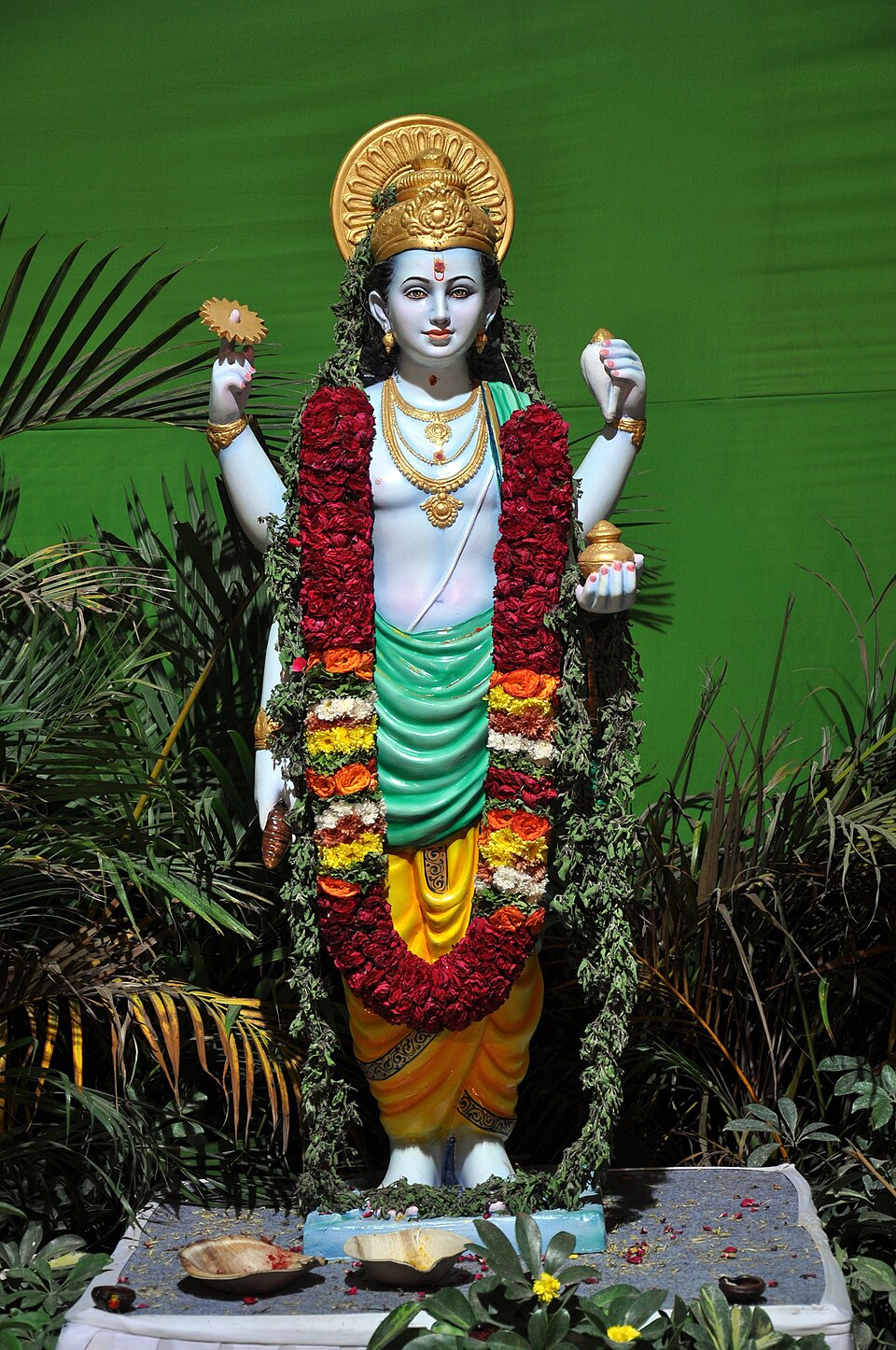
Dhanvantari Mantra for Health and Healing
ॐ नमो भगवते वासुदेवाय धन्वंतरये अमृतकलशहस्ताय सर्वामयविनाशाय त्रिलोकनाथाय श्रीमहाविष्णवे नमः
Om Namo Bhagavate Vasudevaya Dhanvantaraye Amritakalashahastaya Sarvamayavinashaya Trilokanathaya Shri Mahavishnave Namah
Meaning: I bow to Lord Dhanvantari, the holder of the nectar pot, destroyer of all diseases, lord of the three worlds, the supreme Vishnu.
Charaka Samhita Verse on Ritucharya (Sutrasthana 6.3)
तस्य शितादियं हिताहितं च तस्य च तत्। ऋतुचर्यां विद्धि यथोक्तं स्वस्थ्यसिद्धये॥
Tasya shitadiyam hitahitam cha tasya cha tat. Ritucharyam viddhi yathoktam swasthyasiddhaye.
Meaning: Know the seasonal regimen as described — what is beneficial and harmful in each season — for the attainment of perfect health.
Prayer for Seasonal Transition (Ritu Sandhi)
ॐ ऋतुषु संधिषु रक्ष मां प्रभो दोषप्रकोपात्। बलं देहि च मे नित्यं स्वस्थ्यं च परमं कुरु॥
Om Ritusu sandhishu raksha mam prabho doshaprakopat. Balam dehi cha me nityam swasthyam cha paramam kuru.
Meaning: O Lord, protect me during seasonal transitions from doshic aggravation. Grant me constant strength and establish supreme health in me.
Gayatri Mantra for Solar Alignment (Relevant to Uttarayana/Dakshinayana)
ॐ भूर्भुवः स्वः तत्सवितुर्वरेण्यं भर्गो देवस्य धीमहि धियो यो नः प्रचोदयात्
Om Bhur Bhuvah Svah Tat Savitur Varenyam Bhargo Devasya Dhimahi Dhiyo Yo Nah Prachodayat
Meaning: We meditate on the glorious radiance of the divine Sun; may He inspire our intellects.
Guidelines
- •Observe seasonal fasting (Upavasa) as per capacity: weekly light fasting in Vasanta (spring), Ekadashi fasting in Varsha (monsoon) and Sharad (autumn), and moderate fasting in Grishma (summer) if digestion is strong.
- •Avoid heavy, oily, cold, and processed foods during Ritu Sandhi (seasonal transitions).
- •Consume only freshly prepared, warm meals during Varsha and Hemanta; include more raw and cooling foods in Grishma and Sharad.
- •Abstain from day-sleeping (Divasvapna) except in Grishma Ritu when nights are short and heat is intense.
- •Practice Brahmacharya (celibacy/moderation) more strictly during Varsha and Vasanta when vitality is naturally lower.
- •Observe silence (Mauna) for at least 30 minutes daily during seasonal junctions to calm the nervous system.
- •Perform acts of charity (Dana) and selfless service (Seva) during each season to cultivate Sattva.
Do's
- ✓Eat seasonally available, locally grown, organic produce.
- ✓Adjust meal times with the sun: earlier lighter dinners in summer, warmer substantial meals in winter.
- ✓Drink warm water throughout the day in Vata and Kapha seasons; room-temperature or cool (not ice-cold) water in Pitta seasons.
- ✓Perform daily Abhyanga (self-massage) with season-appropriate oil before bathing.
- ✓Practice Nasya (nasal oiling) daily in dry seasons (Varsha, Hemanta, Shishira).
- ✓Exercise to half your capacity (Ardha Shakti) — never to exhaustion.
- ✓Wake up before sunrise (Brahma Muhurta) year-round; adjust bedtime with seasonal daylight changes.
- ✓Include all six tastes (Shad Rasa) in each meal, but emphasize the tastes that pacify the seasonal dosha.
- ✓Use spices intelligently: heating spices in cold seasons, cooling spices in hot seasons.
- ✓Undergo seasonal Panchakarma under qualified guidance.
- ✓Spend time in nature daily, exposing yourself to natural light and fresh air.
- ✓Cultivate gratitude for the season's unique gifts and lessons.
Don'ts
- ✗Do not eat the same foods year-round; ignore seasonal availability.
- ✗Do not suppress natural urges (Vega) like urination, defecation, sneezing, tears, etc.
- ✗Do not overeat (Adhyashana) or eat before the previous meal is digested (Ajirna Bhojana).
- ✗Do not consume incompatible food combinations (Viruddha Ahara) — e.g., fruit with milk, fish with dairy, hot and cold foods together.
- ✗Do not exercise excessively in Grishma (summer) or Sharad (autumn) when Pitta is high.
- ✗Do not sleep during the day in Vasanta, Varsha, Sharad, or Hemanta — only permitted in Grishma.
- ✗Do not expose yourself to extreme temperatures (excessive AC in summer, overheating in winter).
- ✗Do not consume refrigerated, stale, or processed foods.
- ✗Do not ignore the Ritu Sandhi transition period — abrupt changes shock the system.
- ✗Do not self-prescribe strong herbs or Panchakarma without expert guidance.
- ✗Do not neglect mental and emotional seasonal rhythms — honor the need for introspection in winter, activity in spring.
Common Mistakes to Avoid
- •Following a rigid, one-size-fits-all 'Ayurvedic diet' without seasonal or constitutional adjustment.
- •Confusing the Gregorian calendar seasons with Ayurvedic Ritus (e.g., treating January as 'winter' when it may be Shishira or late Hemanta depending on location).
- •Overemphasizing diet while neglecting lifestyle (Vihara) modifications like sleep, exercise, and stress management.
- •Using ice-cold drinks and smoothies year-round, especially in Varsha and Hemanta when Agni is weak.
- •Skipping the Ritu Sandhi transition protocol and switching regimens overnight.
- •Taking Triphala or other herbs daily without seasonal breaks or constitutional consideration.
- •Performing intense detoxes (juice fasts, colonics) in Vata seasons (Varsha, Hemanta) when the body needs nourishment.
- •Ignoring geographic and microclimatic variations — Ritucharya in Kerala differs from Rajasthan or the Himalayas.
- •Treating Ritucharya as a temporary 'cleanse' rather than a lifelong lifestyle.
- •Neglecting the mental/emotional component — each season has a Bhava (mood) that should be honored.
Regional Variations
- •In South India (Kerala, Tamil Nadu), the six-season model is often simplified to three major seasons (hot, rainy, cool) with Ritucharya adapted to tropical climate and double monsoon patterns.
- •In North India and the Himalayas, Hemanta and Shishira are more distinct and severe, requiring heavier nourishing diets, more oil, and warmer regimens.
- •In Western India (Gujarat, Rajasthan), Grishma is extreme; regimens emphasize extreme cooling, hydration, and midday rest.
- •In Eastern India (Bengal, Odisha), Varsha is prolonged and humid; diets focus on light, dry, digestive spices and avoidance of leafy greens during monsoon.
- •Traditional calendars vary: some follow the Solar calendar (Nirayana), others the Lunar calendar (Chandramana), shifting Ritu dates by weeks.
- •Family traditions (Kula Achara) may preserve unique seasonal recipes, fasting days, and herbal preparations passed through generations.
- •Sampradaya differences: Vaishnava traditions may align seasonal observances with deity festivals (e.g., Jhulan Yatra in Varsha), while Shaiva traditions may emphasize Maha Shivaratri in Shishira.
- •Urban vs. rural: City dwellers often need modified Ritucharya due to artificial environments, shift work, and food supply chains.
Frequently Asked Questions
How do I know which Ritu we are in if I live outside India?▾
Can I follow Ritucharya if I have a chronic disease or take allopathic medication?▾
Is Ritucharya only about food?▾
What if my constitution (Prakriti) contradicts the seasonal regimen? For example, I am Vata-predominant but it's Varsha (Vata season).▾
Are there any modern scientific studies supporting Ritucharya?▾
How strictly must I follow Ritucharya to benefit?▾
Popular Tools
References & Traditional Notes
- •Charaka Samhita, Sutrasthana Chapter 6 (Tasyashitiya Adhyaya) — primary source for Ritucharya.
- •Sushruta Samhita, Sutrasthana Chapter 6 (Ritucharya Adhyaya) — surgical perspective on seasonal regimens.
- •Ashtanga Hridaya, Sutrasthana Chapter 3 (Ritucharya Adhyaya) — concise synthesis by Vagbhata.
- •Ashtanga Sangraha, Sutrasthana Chapter 4 — parallel text with additional details.
- •Bhavaprakasha, Purva Khanda Chapter 5 — later text with seasonal recipes and Rasayanas.
- •Ritu Kaumudi (seasonal festival text) — cultural practices aligned with Ritucharya.
- •Traditional Panchang calculations for Ritu dates vary by Sampradaya (e.g., Sayana vs. Nirayana).
- •Kerala Ayurveda tradition (Ashtavaidya) has unique seasonal protocols like Karkidaka Chikitsa (monsoon rejuvenation).
- •The concept of Ritu Sandhi (14-day transition) is critical and often overlooked in modern practice.
- •Ritucharya is inseparable from Dinacharya (daily routine) and Sadvritta (ethical conduct) — the three pillars of Swasthavritta (health preservation).
Related Audio & Bhajans
Routine
Affiliate disclosure: Sanatan Hindu participates in the Amazon Associates Programme and the CueLinks affiliate network (Myntra & Flipkart). This page contains affiliate links, if you click and buy, we earn a small commission at no extra cost to you. As an Amazon Associate we earn from qualifying purchases. Full disclosure.
Shop Samagri on Amazon.in
Clicking opens Amazon.in. Prices and availability may vary.
Browse all pooja itemsAmazon Associates tag: geekydevelope-21
Shop Pooja & Festive Essentials on Flipkart
Clicking opens Flipkart via our affiliate link. Prices and availability may vary.
Shop on FlipkartCueLinks Publisher: 300371
Shop Festive Wear on Myntra
Clicking opens Myntra via our affiliate link. Prices and availability may vary.
CueLinks Publisher: 300371
Need a website? Describe it, and AI builds it.
Perfect for a temple, pooja service, astrology practice or small shop. Tell the AI what you want — or drag and drop the classic way — and go live on your own web address in minutes with Sitova. Hosting, SEO, forms and analytics are all included.
- Build with AI or drag & drop
- Your domain + SEO built in
- Free forever plan
Opens sitova.site