
Rudranath Temple: A Divine Guide to the Most Mystical Panch Kedar Trek
Discover the spiritual secrets and trekking guide for Rudranath Temple, one of the Panch Kedar, dedicated to Lord Shiva's nasal form.
Affiliate disclosure: Sanatan Hindu participates in the Amazon Associates Programme and the CueLinks affiliate network (Myntra & Flipkart). This page contains affiliate links, if you click and buy, we earn a small commission at no extra cost to you. As an Amazon Associate we earn from qualifying purchases. Full disclosure.
Introduction
The legend of Rudranath is deeply rooted in the Mahabharata. Following the Great War, the Pandavas sought atonement for the sins of fratricide and the killing of warriors through the 'Go-hatya' (killing of cows). They pursued Lord Shiva to seek his blessings and forgiveness. However, Shiva, wishing to avoid them, took the form of a bull and hid among the herd. When the Pandavas recognized him, Shiva disappeared into the earth, leaving behind different parts of his body at five different locations. At Rudranath, the divine presence is manifested through the 'Nath' (nose) of the deity. This specific form of Shiva is believed to be the most meditative and tranquil, representing the subtle breath of the universe.
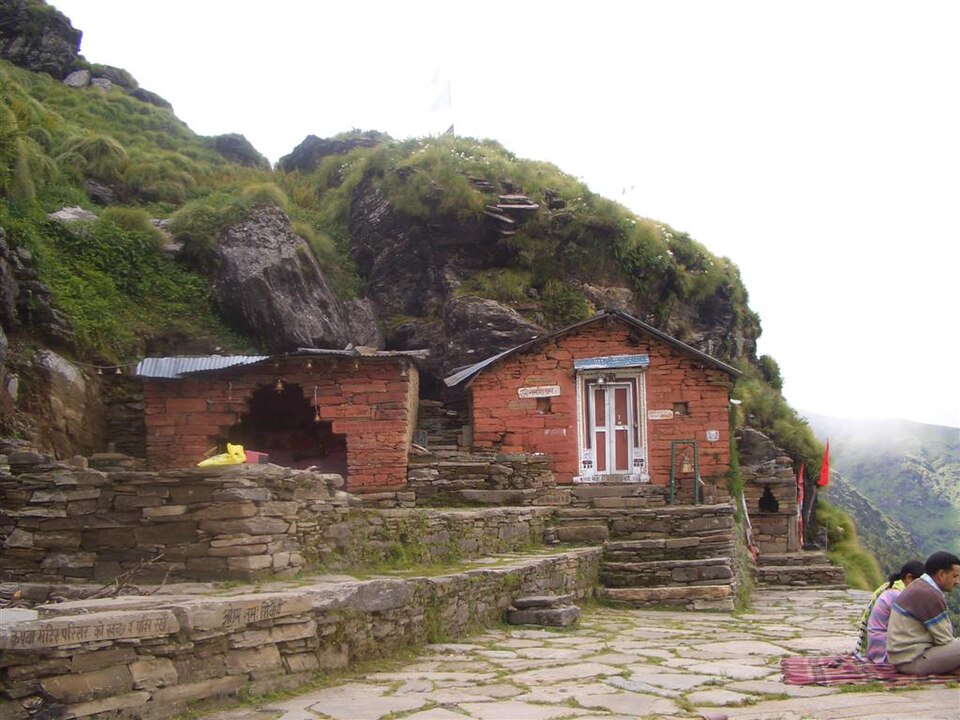
Spiritually, Rudranath is associated with the 'Madhyama' (middle) aspect of the Panch Kedar, acting as a bridge between the earthly and the divine. The temple is situated in a high-altitude meadow known as 'Trishul Kund' and is surrounded by the majestic peaks of the Nanda Devi massif. The atmosphere here is thick with 'Shanti' (peace) and 'Vairagya' (detachment). For a newcomer, understanding Rudranath means understanding the concept of Shiva as the ultimate yogi who resides in the stillness of the mountains, teaching us that the highest truth is found in silence and solitude.
Culturally, the temple is a cornerstone of the local Himalayan lifestyle. The seasonal opening and closing of the temple dictate the rhythm of life for the local villagers. The trek itself is a passage through ancient forests, alpine meadows, and rugged terrain, mirroring the soul's journey through the complexities of material existence toward the simplicity of spiritual realization. To visit Rudranath is to step into a realm where the boundary between the human and the divine becomes incredibly thin.
Significance
Mythologically, the temple serves as a testament to the Pandavas' devotion and the transformative power of penance. It reinforces the idea that even the greatest warriors must seek spiritual purification. The 'Phala' (fruit) of visiting Rudranath is believed to be the attainment of mental clarity, the removal of egoistic tendencies, and the blessing of profound peace. Devotees believe that by witnessing the divine nose, they are being granted the 'Prana-Shakti' (life force) necessary to navigate the difficulties of their earthly lives.
From an astrological and cosmic perspective, the high altitude and the isolation of the temple allow for a closer connection to the celestial energies. The temple's location amidst the Himalayas, which are considered the 'Devbhumi' (Land of the Gods), makes it a natural conduit for cosmic energy. Many sages and ascetics throughout history have chosen the vicinity of Rudranath for their 'Sadhana' (spiritual practice), seeking the silence required to hear the 'Anahata Nada' (the unstruck sound of the universe).
Furthermore, the temple holds immense cultural significance for the Garhwali community. It is a symbol of their resilience and their deep-rooted connection to the mountains. The pilgrimage is not just a religious duty but a collective act of faith that binds the community together. Whether it is the local festivals or the seasonal treks, the reverence for Rudranath shapes the identity and the spiritual fabric of the entire region, reminding all who visit that the divine is not found in the clamor of cities, but in the sacred silence of the heights.
Auspicious Time
Find your exact auspicious time Check the shubh muhurat and choghadiya for your city and date.
Required Samagri (Materials)
Preparation Steps
- 1Physical conditioning: Due to the high altitude and steep trek, engage in cardiovascular exercises weeks before your journey.
- 2Acclimatization: Spend at least a day or two in a lower altitude town like Chopta or Ukhimath to adjust to the thin air.
- 3Check weather forecasts: Ensure the trekking season is active and no heavy monsoon rains are predicted.
- 4Pack essential gear: Include warm layers, sturdy trekking boots, raincoats, and basic medical supplies.
- 5Mental preparation: Approach the trek with a sense of 'Dhyana' (meditation) rather than just physical exertion.
Steps
- 1Begin the trek from Sagar village, maintaining a steady pace and practicing deep breathing.
- 2Upon reaching the temple, perform a simple cleansing of the hands and face.
- 3Offer Bilva leaves and flowers to the deity, reciting the Shiva Panchakshara Mantra.
- 4Light a lamp with Ghee and offer camphor to witness the divine aura.
- 5Sit in silence for a period of meditation, soaking in the spiritual vibrations of the surroundings.
- 6Perform a mental 'Pradakshina' (circumambulation) around the sacred site.
Mantras
Shiva Panchakshara Mantra
ॐ नमः शिवाय
Om Namah Shivaya
Meaning: I bow to Lord Shiva.
Mahamrityunjaya Mantra
ॐ त्र्यम्बकं यजामहे सुगन्धिं पुष्टिवर्धनम् । उर्वारुकमिव बन्धनान्मृत्योर्मुक्षीय माऽमृतात् ॥
Om Tryambakam Yajamahe Sugandhim Pushti-Vardhanam | Urvarukamiva Bandhanan Mrityor Mukshiya Maamritat ||
Meaning: We worship the Three-eyed One (Lord Shiva), who is fragrant and nourishes all beings. As the cucumber is freed from its bondage to the vine, may He liberate us from death for the sake of immortality.
Guidelines
- •Maintain celibacy (Brahmacharya) during the entire pilgrimage.
- •Eat simple, Sattvic food (no onion, garlic, or heavy spices).
- •Practice silence (Mauna) where possible to conserve energy and focus on the divine.
- •Avoid negative speech or criticism of others during the trek.
Do's
- ✓Respect the local mountain culture and customs.
- ✓Carry all your trash back with you to preserve the sanctity of the Himalayas.
- ✓Stay hydrated and monitor your oxygen levels.
- ✓Maintain a meditative mindset throughout the trek.
Don'ts
- ✗Do not attempt the trek alone if you are not an experienced trekker.
- ✗Do not litter or disturb the local flora and fauna.
- ✗Do not ignore signs of Acute Mountain Sickness (AMS).
- ✗Do not use loud music or cause noise pollution in the sacred area.
Common Mistakes to Avoid
- •Underestimating the difficulty of the terrain and physical exertion required.
- •Inadequate acclimatization leading to altitude sickness.
- •Viewing the trek purely as a tourist adventure rather than a spiritual pilgrimage.
- •Carrying excessive or unnecessary heavy weight.
Regional Variations
- •Local Garhwali traditions may involve specific folk songs (Jagar) dedicated to local deities during the ascent.
- •Some families may follow specific lineage-based (Sampradaya) offerings that differ from standard Puranic rituals.
Frequently Asked Questions
How difficult is the Rudranath trek?▾
Is there a base camp near Rudranath?▾
Can I visit Rudranath during the monsoon?▾
Popular Tools
References & Traditional Notes
- •The sanctity of the site is emphasized in the Skanda Purana.
- •Local oral traditions passed down through generations of Garhwali priests provide additional local legends.
Related Audio & Bhajans
Shiv Tandav Stotram - Breathless - Very Powerfull.
Shiv Tandav Stotram
Introduction
Basant Panchami
Allahabad Prayagraj Triveni Sangam Kumbh Lord Shiva, Lord Krishna, Goddess Saraswati pilgrimage
Panchakarma
Affiliate disclosure: Sanatan Hindu participates in the Amazon Associates Programme and the CueLinks affiliate network (Myntra & Flipkart). This page contains affiliate links, if you click and buy, we earn a small commission at no extra cost to you. As an Amazon Associate we earn from qualifying purchases. Full disclosure.
Shop Samagri on Amazon.in
Clicking opens Amazon.in. Prices and availability may vary.
Browse all pooja itemsAmazon Associates tag: geekydevelope-21
Shop Pooja & Festive Essentials on Flipkart
Clicking opens Flipkart via our affiliate link. Prices and availability may vary.
Shop on FlipkartCueLinks Publisher: 300371
Shop Festive Wear on Myntra
Clicking opens Myntra via our affiliate link. Prices and availability may vary.
CueLinks Publisher: 300371