
Sage Valmiki — Author of Ramayana and His Transformation
Comprehensive biography of Sage Valmiki, the Adi Kavi who composed the Ramayana, detailing his transformation from highway robber to supreme poet-saint.
Affiliate disclosure: Sanatan Hindu participates in the Amazon Associates Programme and the CueLinks affiliate network (Myntra & Flipkart). This page contains affiliate links, if you click and buy, we earn a small commission at no extra cost to you. As an Amazon Associate we earn from qualifying purchases. Full disclosure.
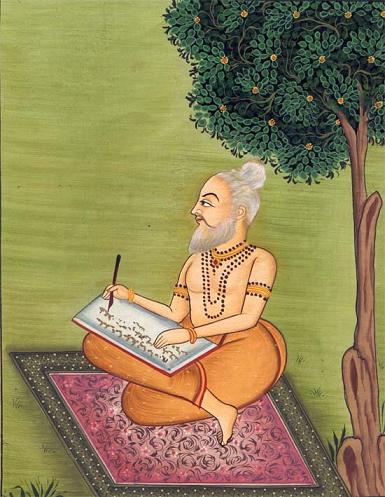
Introduction
Significance
Auspicious Time
Find your exact auspicious time Check the shubh muhurat and choghadiya for your city and date.
Required Samagri (Materials)
Preparation Steps
- 1Clean the puja area thoroughly and decorate with rangoli
- 2Place a clean white cloth on a raised platform
- 3Install the portrait/murti of Sage Valmiki facing east or north
- 4Arrange the Ramayana text prominently beside the sage's image
- 5Prepare the kalash with water, mango leaves, and coconut
- 6Light the ghee lamp and incense before beginning
- 7Offer flowers, chandan, and kumkum to the sage's image
- 8Place fruits and sweets as naivedya
- 9Sit in a comfortable posture facing the deity
- 10Invoke the presence of Sage Valmiki through dhyana
Steps
- 1Begin with achamana (sipping water thrice while chanting Om) and pranayama
- 2Perform Ganesh puja to remove obstacles
- 3Invoke Sage Valmiki with the dhyana shloka: 'Valmikim munipungavam vande...'
- 4Offer panchopachara puja: gandha (sandalwood), pushpa (flowers), dhoop (incense), deep (lamp), naivedya (food)
- 5Chant the Valmiki Gayatri mantra 108 times
- 6Recite selected verses from the Ramayana, especially the first shloka 'Ma nishada...'
- 7Perform arati with camphor or ghee lamp
- 8Offer pushpanjali (handful of flowers) with prayers for wisdom and devotion
- 9Distribute prasad to all present
- 10Conclude with shanti mantra and seek blessings for spiritual growth
Mantras
Valmiki Dhyana Shloka
वाल्मीकिं मुनिपुङ्गवम् वन्दे रामायणकर्तारम्। यस्य काव्यामृतं पीत्वा मुक्ता भवन्ति मानवाः॥
Valmikim munipungavam vande Ramayanakartaram. Yasya kavyamritam pitva muktah bhavanti manavah.
Meaning: I bow to Sage Valmiki, the foremost among sages and the composer of the Ramayana. By drinking the nectar of his poetry, human beings attain liberation.
Valmiki Gayatri Mantra
ॐ वाल्मीकिाय विद्महे महाकवये धीमहि। तन्नो वाल्मीकि: प्रचोदयात्॥
Om Valmikaya vidmahe Mahakavaye dhimahi. Tanno Valmikih prachodayat.
Meaning: Om, we meditate on Valmiki, the great poet. May Valmiki inspire and illumine our intellect.
First Shloka of Ramayana (Ma Nishada)
मा निषाद प्रतिष्ठां त्वमगमः शाश्वतीः समाः। यत्क्रौञ्चमिथुनादेकम् अवधीः काममोहितम्॥
Ma nishada pratishtham tvamagamaḥ shashvatiḥ samah. Yat kraunchamithunadekam avadhih kamamohitam.
Meaning: O hunter, you shall not find rest for eternity, for you have killed one of a pair of krauncha birds, blinded by lust. (This spontaneous verse emerged from Valmiki's compassion upon witnessing a hunter kill a bird, marking the birth of Sanskrit poetry and the Ramayana.)
Rama Nama Mantra (as given by Narada to Ratnakara)
राम राम रामेति रमे रामे मनोरमे। सहस्रनाम तत्तुल्यं रामनाम वरानने॥
Rama Rama Rameti Rame Rame Manorame. Sahasranama tattulyam Rama nama varanane.
Meaning: The name 'Rama' repeated three times is equivalent to the thousand names of Vishnu. O beautiful-faced one (Parvati), the name Rama is the essence of all divine names. (This verse from Vishnu Sahasranama highlights the power of Rama nama that transformed Valmiki.)
Guidelines
- •Observe a sattvic diet on Valmiki Jayanti — avoid onion, garlic, meat, alcohol
- •Maintain celibacy and purity of thought on the day of observance
- •Read or listen to at least one chapter (sarga) of the Ramayana daily
- •Chant Rama nama (at least 108 times) with focus and devotion
- •Offer dana (charity) to brahmins, students, or the needy — especially books or educational materials
- •Avoid gossip, anger, and harsh speech on the observance day
- •Perform puja during brahma muhurta (pre-dawn) for maximum benefit
Do's
- ✓Study the Valmiki Ramayana regularly with reverence and understanding
- ✓Chant Rama nama daily as a transformative sadhana
- ✓Honor teachers and gurus, remembering Narada's role in Valmiki's transformation
- ✓Practice compassion toward all beings, as Valmiki's poetry was born from karuna
- ✓Support education and preservation of Sanskrit and regional literature
- ✓Visit Valmiki temples or ashrams if possible, especially on Valmiki Jayanti
- ✓Teach the values of the Ramayana to children and youth
Don'ts
- ✗Do not treat the Ramayana as mere mythology or entertainment — it is a sacred text
- ✗Do not disrespect the name of Valmiki or any sage
- ✗Do not engage in violence, theft, or dishonesty — the very vices Valmiki renounced
- ✗Do not neglect daily spiritual practice, using 'busy life' as an excuse
- ✗Do not discriminate based on caste, birth, or past — Valmiki himself was born in a lower varna and transformed through sadhana
- ✗Do not recite the Ramayana mechanically without bhava (feeling) and understanding
Common Mistakes to Avoid
- •Confusing Valmiki Ramayana with later retellings (Tulsidas's Ramcharitmanas, Kamba Ramayanam, etc.) — each has its own glory but Valmiki's is the original
- •Believing Valmiki was born a brahmin — he was born in a hunter family (some traditions say Bhil or Kirata) and became a brahmarishi through tapasya
- •Thinking the transformation was instantaneous — it took years of intense tapasya with anthills covering his body
- •Assuming Rama nama japa alone without ethical living suffices — Valmiki's transformation included complete renunciation of harming others
- •Overlooking the role of Guru Narada — guru-kripa is essential in the tradition
Regional Variations
- •In North India, Valmiki Jayanti (Pargat Diwas) is celebrated with processions, kirtans, and community feasts (langar)
- •In South India, especially Tamil Nadu and Kerala, Valmiki is honored during the month of Aippasi (Ashwin) with Ramayana parayana in temples
- •In Maharashtra, the Valmiki community organizes special events and readings of the Ramayana in Marathi (Dnyaneshwari style)
- •In Odisha, the Valmiki Ramayana is recited in Odia (Balarama Dasa's version) during the festival
- •In Karnataka, the sage is worshipped as 'Valmiki Rishi' with special pujas in ashrams
- •Some tribal communities (Bhil, Gond) revere Valmiki as their ancestral guru and celebrate with folk dances and songs
Frequently Asked Questions
Was Valmiki a brahmin by birth?▾
How did Valmiki compose the Ramayana if he lived before Rama?▾
What is the significance of the 'Ma Nishada' verse?▾
Why is Valmiki called 'Adi Kavi'?▾
Can anyone chant the Rama nama like Valmiki did?▾
Popular Tools
References & Traditional Notes
- •Valmiki Ramayana, Uttara Kanda, Sargas 1-3 (account of Valmiki's transformation)
- •Vishnudharmottara Purana (details on Valmiki's previous birth as Brahmin named Sumati)
- •Skanda Purana, Prabhasa Khanda (glories of Valmiki and Valmiki Tirtha)
- •Bhagavata Purana 11.14 (reference to Valmiki as exemplar of transformation)
- •Ananda Ramayana (elaborate narrative of Valmiki's life)
- •Tulsidas's Ramcharitmanas, Balkand (invocation to Valmiki)
- •Kamba Ramayanam (Tamil) — opening verses honor Valmiki as 'first among poets'
- •Yoga Vasistha (attributed to Valmiki) — profound Advaita text in dialogue form
Related Audio & Bhajans
Ramayana
Ramayana Masake Amara Kibhabe Abhyarthana Janabo Islam Translation Bengali Language Mp 3
Rites of Passage (2025 Reprise)
DJ DEVIOUS - RITES OF PASSAGE MIX
Nam Myoho Renge Kyo Mantra for Inner Transformation and Enlightenment
Bharatanatyam Ballet on Ramayana (Vol. IV)
Affiliate disclosure: Sanatan Hindu participates in the Amazon Associates Programme and the CueLinks affiliate network (Myntra & Flipkart). This page contains affiliate links, if you click and buy, we earn a small commission at no extra cost to you. As an Amazon Associate we earn from qualifying purchases. Full disclosure.
Shop Samagri on Amazon.in
Clicking opens Amazon.in. Prices and availability may vary.
Browse all pooja itemsAmazon Associates tag: geekydevelope-21
Shop Pooja & Festive Essentials on Flipkart
Clicking opens Flipkart via our affiliate link. Prices and availability may vary.
Shop on FlipkartCueLinks Publisher: 300371
Shop Festive Wear on Myntra
Clicking opens Myntra via our affiliate link. Prices and availability may vary.
CueLinks Publisher: 300371
Need a website? Describe it, and AI builds it.
Perfect for a temple, pooja service, astrology practice or small shop. Tell the AI what you want — or drag and drop the classic way — and go live on your own web address in minutes with Sitova. Hosting, SEO, forms and analytics are all included.
- Build with AI or drag & drop
- Your domain + SEO built in
- Free forever plan
Opens sitova.site