
Sant Eknath: The Architect of Bhagavata Dharma and the Bridge of Bhakti
Explore the life, teachings, and profound impact of Sant Eknath, the great Maharashtra saint who democratized Bhakti through Bhagavata Dharma.
Affiliate disclosure: Sanatan Hindu participates in the Amazon Associates Programme and the CueLinks affiliate network (Myntra & Flipkart). This page contains affiliate links, if you click and buy, we earn a small commission at no extra cost to you. As an Amazon Associate we earn from qualifying purchases. Full disclosure.
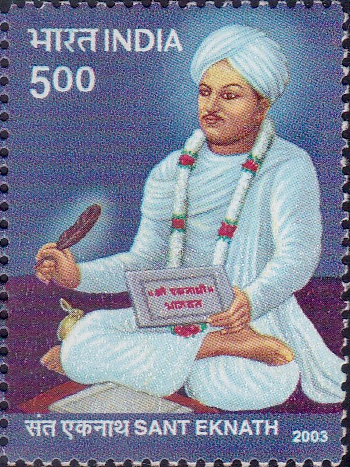
Introduction
His life was a living embodiment of 'Sahaja Bhakti'—a natural, spontaneous devotion that does not require renouncing the world but rather sanctifying it. Eknath did not retreat to the forests; he lived amidst the people, treating every living being as a manifestation of the Divine. His legendary compassion is often recounted in various 'katha' (stories), such as the instance where he provided water to a thirsty donkey or how he treated even the most marginalized with the same reverence as a deity. These acts were not merely social service but deep spiritual practices rooted in the realization of Advaita (non-duality) through Bhakti.
The spiritual context of Eknath's era was one of rigid social structures and complex ritualism. Eknath's intervention through his literature—specifically his commentaries on the Bhagavad Gita and his vernacular poetic works—demystified complex metaphysical truths. By translating the essence of the Shastras into the local Marathi language, he empowered the 'Varkari' tradition, making the path of Vitthal (Lord Vishnu/Krishna) a movement of the heart rather than just a ritual of the intellect.
Eknath's legacy is intricately tied to the concept of 'Lokasangraha'—the welfare of the world. He taught that true spirituality is found in fulfilling one's worldly duties (Dharma) while maintaining a constant internal connection with God. Through his works like the Eknathi Bhagavata, he provided a spiritual roadmap that combined rigorous Vedantic philosophy with the emotional depth of the Bhakti movement, creating a synthesis that continues to guide millions of devotees in Maharashtra and beyond.
Significance
Culturally, Eknath is credited with elevating the Marathi language to a status of high literary and spiritual prestige. Before him, Sanskrit was the primary vehicle for religious discourse. By composing profound spiritual works in the vernacular, he ensured that the wisdom of the Puranas reached the ears of the farmer, the weaver, and the laborer. This linguistic revolution was essential for the sustenance of the Varkari Sampradaya, allowing the tradition to flourish as a mass movement.
Spiritually, Eknath's life illustrates the integration of 'Jnana' (knowledge) and 'Bhakti' (devotion). He was a 'Jnani' who understood the non-dual nature of the soul and God, but he chose to express this through the lens of 'Bhakti' to make it experiential for the devotee. This synthesis prevents spiritual stagnation; knowledge without devotion can become dry and egoistic, while devotion without knowledge can lead to blind fanaticism. Eknath provided the balance.
In the ritual calendar of Maharashtra, the remembrance of Eknath is woven into the fabric of many local traditions, particularly during the pilgrimage to Pandharpur. His teachings on 'Namashakha' (the power of the Name) continue to underpin the daily practice of chanting in households. The fruits (phala) of following his path are described as 'Shanti' (inner peace), 'Samata' (equanimity), and 'Sarva-bhuta-hita' (the desire for the well-being of all living creatures).
Auspicious Time
Find your exact auspicious time Check the shubh muhurat and choghadiya for your city and date.
Required Samagri (Materials)
Preparation Steps
- 1Clean the space dedicated to meditation or pooja.
- 2Bathe and wear clean, preferably white, clothing to represent purity.
- 3Set aside distractions such as mobile phones or loud noises.
- 4Keep a copy of his writings or a picture of Lord Vitthal nearby.
Steps
- 1Light the Deepak and incense to create a sacred atmosphere.
- 2Offer flowers to the portrait of Sant Eknath and Lord Vitthal.
- 3Recite or listen to a chapter from the Eknathi Bhagavata or a Vitthal Bhajan.
- 4Perform 'Nama-Smarana' (chanting the name of Vitthal) with focus on the breath.
- 5Reflect on one of Eknath's teachings, such as the importance of compassion for all beings.
- 6Conclude with a moment of silent meditation (Dhyana), visualizing the light of devotion in your heart.
- 7Distribute the Prasad among family members.
Mantras
Vitthal Nama Japa
॥ विठ्ठल विठ्ठल ॥
Vitthal Vitthal
Meaning: The holy name of Lord Vitthal, the central deity of the Bhakti movement.
Prayer for Compassion (Inspired by Eknath)
सर्वभूतहिते रताः
Sarva-bhuta-hite ratah
Meaning: Engaged in the welfare of all living beings.
Guidelines
- •Maintain a sense of equality toward all people during the period of reflection.
- •Practice 'Mauna' (silence) for a specified period to foster internal connection.
- •Avoid harsh speech or criticism of others, following Eknath's path of kindness.
Do's
- ✓Perform acts of charity (Dana) to the needy.
- ✓Read or listen to devotional literature (Satsang).
- ✓Treat animals and nature with respect and care.
Don'ts
- ✗Do not engage in caste-based discrimination or social hierarchy.
- ✗Do not perform rituals merely for show without internal devotion.
- ✗Avoid ego-driven scholarly debates.
Common Mistakes to Avoid
- •Focusing only on the intellectual complexity of the texts rather than the emotional devotion.
- •Neglecting the practical application of compassion in daily life.
- •Thinking that spiritual practice requires complete social withdrawal.
Regional Variations
- •In Paithan, local traditions emphasize his scholarly roots and Vedic mastery.
- •In the Varkari tradition, the focus is heavily on his role in the Vitthal Bhakti movement.
- •Different families may include specific local saints in their daily prayers alongside Eknath.
Frequently Asked Questions
What is Bhagavata Dharma?▾
How did Eknath change the Marathi language?▾
What is the significance of 'Eknathi Bhagavata'?▾
Popular Tools
References & Traditional Notes
- •Eknath's teachings are primarily preserved in his various 'Abhangas' and the 'Eknathi Bhagavata'.
- •His life is considered a template for 'Grihastha Dharma' (the duty of a householder) performed with spiritual awareness.
- •The Varkari Sampradaya holds him in equal regard to Sant Dnyaneshwar.
Related Audio & Bhajans
Jai Santoshi Mata Aarti
Basant Panchami
Exploring Sant Mat Teachings Found in the Hindu Scriptures Plus Several Other Sant Mat Related Topics
Dharma
Raghavendra Swamy Stutis -Carnatic Vocal M L Vasantha Kumari
Affiliate disclosure: Sanatan Hindu participates in the Amazon Associates Programme and the CueLinks affiliate network (Myntra & Flipkart). This page contains affiliate links, if you click and buy, we earn a small commission at no extra cost to you. As an Amazon Associate we earn from qualifying purchases. Full disclosure.
Shop Samagri on Amazon.in
Clicking opens Amazon.in. Prices and availability may vary.
Browse all pooja itemsAmazon Associates tag: geekydevelope-21
Shop Pooja & Festive Essentials on Flipkart
Clicking opens Flipkart via our affiliate link. Prices and availability may vary.
Shop on FlipkartCueLinks Publisher: 300371
Shop Festive Wear on Myntra
Clicking opens Myntra via our affiliate link. Prices and availability may vary.
CueLinks Publisher: 300371