
Shilpa Shastra: The Divine Science of Hindu Temple Architecture and Iconography
Explore Shilpa Shastra, the ancient Vedic science governing Hindu temple architecture, sacred geometry, and the divine art of deity iconography.
Affiliate disclosure: Sanatan Hindu participates in the Amazon Associates Programme and the CueLinks affiliate network (Myntra & Flipkart). This page contains affiliate links, if you click and buy, we earn a small commission at no extra cost to you. As an Amazon Associate we earn from qualifying purchases. Full disclosure.
Introduction
The origins of Shilpa Shastra are steeped in Puranic tradition, often attributed to the creative intelligence of Brahma and further codified by Vishwakarma, the divine architect of the Devas. According to legend, when the cosmic order needed to be manifested in physical form, Vishwakarma utilized the principles of sacred geometry to construct the celestial realms. This divine lineage ensures that every temple built according to these rules is not just a building, but a 'Prasada'—a palace of the Lord that resonates with the rhythms of the universe. The texts often trace the lineage of architectural knowledge through sages like Maya (the architect of the Asuras) and various Rishis who meditated upon the geometry of the cosmos.
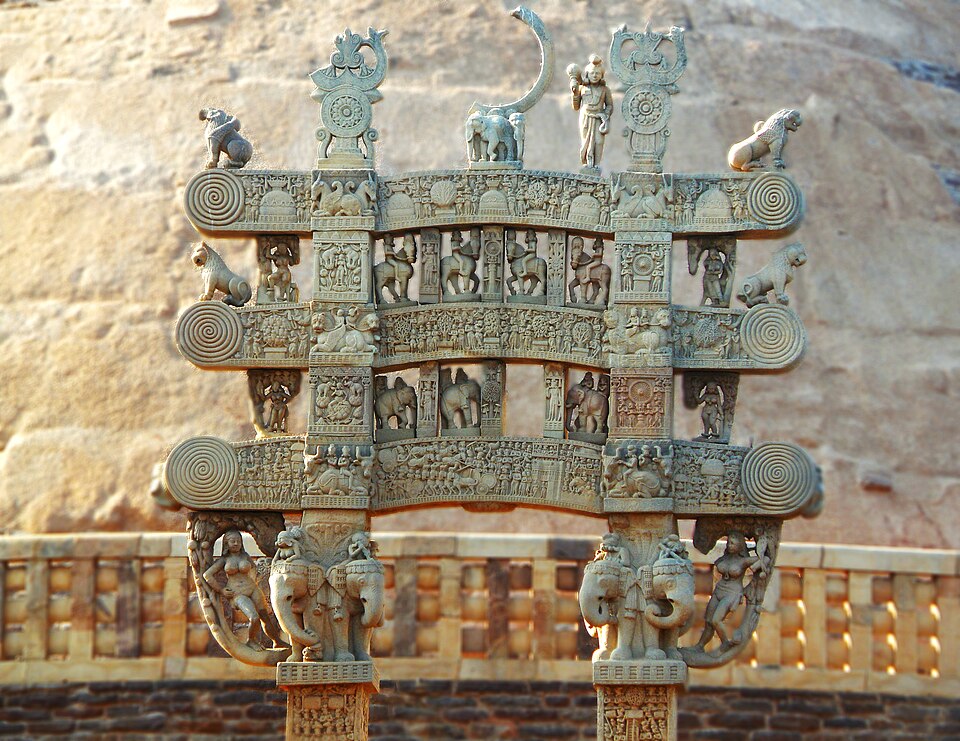
In the broader cultural context, Shilpa Shastra governs 'Vastu Shastra' (the science of space) and 'Murti Shilpa' (the science of iconography). While Vastu deals with the placement and orientation of structures to harmonize with natural elements, Murti Shilpa focuses on the precise anatomical and symbolic proportions of deities. Every curve of a deity's limb, every gesture of a hand (Mudra), and every attribute held in a hand is calculated to evoke a specific 'Rasa' (aesthetic emotion) and to facilitate the practitioner's connection with the Divine. This ensures that the idol acts as a conduit for spiritual energy rather than a mere representation.
For a newcomer, understanding Shilpa Shastra requires recognizing that in the Hindu tradition, art is a form of Sadhana (spiritual practice). The artisan, known as a Shilpin, undergoes rigorous purification, mental preparation, and ritual observance before beginning a work. The creation of a temple is thus a collective Yajna (sacrifice), where the labor of the sculptor, the vision of the architect, and the devotion of the community converge to manifest a sacred portal between the human and the divine realms.
Significance
Spiritually, the science utilizes the concept of the 'Vastu Purusha Mandala,' a sacred grid that maps the cosmos onto a physical site. This grid acts as a blueprint for the flow of energy, ensuring that the temple is in sync with the cardinal directions and the celestial movements. By following these mathematical proportions (Tala mana), the architect ensures that the structure reflects the 'Rta'—the cosmic order. When a devotee enters such a space, their subconscious mind responds to the sacred geometry, leading to a state of mental stillness and spiritual receptivity.
From a cultural and sociological perspective, Shilpa Shastra has preserved the aesthetic identity of India for millennia. It has allowed different regional styles, such as the Nagara in the North and the Dravida in the South, to flourish while remaining tethered to the same fundamental Vedic principles. This consistency ensures that a devotee from any part of the world can enter a temple and immediately feel the presence of the sacred, recognizing the universal language of divine proportion and symbolism.
Furthermore, the 'Phala' (fruits) of adhering to Shilpa Shastra extend to the community. A well-constructed temple is believed to bring prosperity, peace, and spiritual upliftment to the entire region. It serves as a center for education, arts, and community gathering, acting as a cultural anchor. The meticulous documentation of these sciences in texts like the Mayamata, Manasara, and Shilpa Ratna ensures that the wisdom of the ancestors is passed down, maintaining the continuity of the Sanatana Dharma through the physical manifestation of its highest ideals.
Auspicious Time
Find your exact auspicious time Check the shubh muhurat and choghadiya for your city and date.
Required Samagri (Materials)
Preparation Steps
- 1Selection of an auspicious Muhurta (time) through astrological calculation.
- 2Purification of the site and the artisans through Vedic mantras.
- 3Study of the specific Shilpa Shastra text relevant to the regional style.
- 4Selection of high-quality, 'Shuddha' (pure) materials such as granite, marble, or specific woods.
Steps
- 1Site Selection (Bhumi Pariksha): Testing the soil quality, fertility, and spiritual vibration of the land.
- 2Vastu Purusha Mandala Layout: Drawing the sacred grid on the ground to define the placement of all structures.
- 3Foundation Laything (Shila Sthapana): Placing the foundation stones with Vedic invocations.
- 4Construction of the Garbhagriha: Building the most sacred center first, ensuring perfect alignment with cosmic axes.
- 5Iconographic Carving (Murti Nirmana): The sculptor follows strict 'Tala Mana' (proportional measurements) to carve the deity.
- 6Prana Pratishtha: The most critical ritual where life force is infused into the idol through intense mantra recitation and ritualistic transfer of energy.
Mantras
Vastu Purusha Invocation
ॐ वास्तुपुरुषाय नमः
Om Vastu Purushaya Namaha
Meaning: Salutations to the Cosmic Being of the Space (Vastu Purusha).
Shilpi Prarthana
नमोऽस्तु विश्वकर्मणे सिद्धिं मे देहि च सर्वदा
Namo'stu Vishwakarmane siddhiṃ me dehi ca sarvadā
Meaning: Salutations to Vishwakarma; grant me success and perfection in my creations always.
Guidelines
- •Artisans must observe celibacy (Brahmacharya) during the creation of a deity.
- •Purity of thought and speech is mandatory for those involved in construction.
- •Avoidance of impure foods (Tamasic) during the sacred building process.
Do's
- ✓Use mathematically precise measurements as prescribed by the Shastras.
- ✓Ensure the deity's eyes are the last to be carved (Netra Unmeelanam).
- ✓Consult an experienced Sthapati (Master Architect) and a Vedic scholar.
Don'ts
- ✗Do not use materials that are cracked, impure, or structurally unsound.
- ✗Do not deviate from the proportions (Tala Mana) for aesthetic reasons alone.
- ✗Do not begin construction during inauspicious astrological periods.
Common Mistakes to Avoid
- •Prioritizing modern architectural trends over sacred geometry.
- •Neglecting the spiritual purification of the craftsmen.
- •Improperly aligning the sanctum sanctorum with the cardinal directions.
Regional Variations
- •Nagara Style: Characterized by beehive-shaped towers (Shikharas) common in North India.
- •Dravida Style: Characterized by pyramid-like towers (Vimanas) and massive gateways (Gopurams) in South India.
- •Vesara Style: A hybrid of Nagara and Dravida styles found in the Deccan region.
- •Kalinga Style: A sub-style of Nagara prominent in Odisha.
Frequently Asked Questions
What is the difference between Vastu Shastra and Shilpa Shastra?▾
Can anyone build a temple using these rules?▾
Popular Tools
References & Traditional Notes
- •Consult the Manasara for detailed rules on sculpture and construction.
- •The Mayamata is essential for understanding South Indian architectural traditions.
- •Regional customs regarding the specific type of stone (Shila) used may vary by Sampradaya.
Related Audio & Bhajans
Sanatan Hindu Ekta Padyatra Song
Hindu Mythology Vedic and Puranic
Affiliate disclosure: Sanatan Hindu participates in the Amazon Associates Programme and the CueLinks affiliate network (Myntra & Flipkart). This page contains affiliate links, if you click and buy, we earn a small commission at no extra cost to you. As an Amazon Associate we earn from qualifying purchases. Full disclosure.
Shop Samagri on Amazon.in
Clicking opens Amazon.in. Prices and availability may vary.
Browse all pooja itemsAmazon Associates tag: geekydevelope-21
Shop Pooja & Festive Essentials on Flipkart
Clicking opens Flipkart via our affiliate link. Prices and availability may vary.
Shop on FlipkartCueLinks Publisher: 300371
Shop Festive Wear on Myntra
Clicking opens Myntra via our affiliate link. Prices and availability may vary.
CueLinks Publisher: 300371