
Vanaprastha Ashrama: The Sacred Transition to Forest Dwelling and Spiritual Detachment
Explore Vanaprastha Ashrama, the second stage of the Hindu life cycle, focusing on spiritual detachment, forest dwelling, and the path to liberation.
Affiliate disclosure: Sanatan Hindu participates in the Amazon Associates Programme and the CueLinks affiliate network (Myntra & Flipkart). This page contains affiliate links, if you click and buy, we earn a small commission at no extra cost to you. As an Amazon Associate we earn from qualifying purchases. Full disclosure.
Introduction
Scripturally, the Ashrama system is detailed in various Dharmashastras and Upanishads, emphasizing a balanced approach to human existence. After a person has fulfilled their duties toward family, society, and the state during the Grihastha stage, they enter Vanaprastha. This is not merely a physical retirement but a psychological and spiritual shift. It is the stage of gradual withdrawal, where the individual begins to shift their focus from 'Preya' (that which is pleasant) to 'Shreya' (that which is spiritually beneficial). The transition is meant to be a slow, meditative descent from the noise of social interaction into the silence of contemplation.
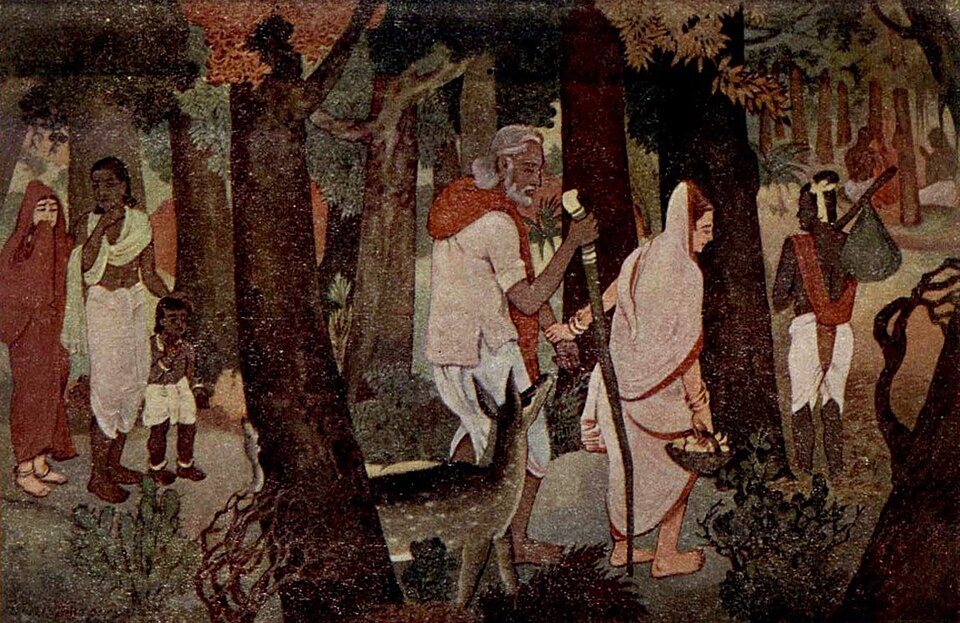
In the Puranic tradition, the forests (Aranyas) are often depicted as the natural laboratories for spiritual transformation. The forest represents a space away from the distractions of commerce, ego, and domestic strife, providing the solitude necessary for deep introspection. While the ancient ideal involved moving to a literal forest to live a minimalist life, in the modern context, it symbolizes the process of mental de-cluttering and the gradual relinquishing of control over worldly affairs. It is a time when the individual acts as a mentor or guide for the younger generation while preparing their own soul for the final stage of Sannyasa (renunciation).
Historically, this stage allowed for the preservation of wisdom. The Vanaprasthas were often the keepers of oral traditions, teaching the younger householders the nuances of Dharma while they themselves meditated on the Eternal Truth. This stage ensures that the cycle of life remains holistic, preventing the stagnation of resources and power within a single generation and ensuring that wisdom flows from the old to the young in a structured, respectful manner.
Significance
Psychologically, Vanaprastha provides a healthy framework for aging. In many cultures, aging is seen as a period of decline; however, in the Vedic tradition, it is seen as a period of ascending spiritual authority. This stage prevents the 'identity crisis' often associated with retirement by providing a predefined spiritual purpose. The individual is not just 'stopping work,' but 'starting the work of the soul.' This gives the elderly a sense of dignity, purpose, and profound peace, as they are encouraged to view their life's experiences as lessons to be shared rather than possessions to be guarded.
Socially and culturally, the Vanaprastha stage ensures the continuity of Dharma. It facilitates a natural succession of leadership and responsibility within families and communities. As the elders move into the Vanaprastha stage, they relinquish the 'burden of command' to the Grihasthas, preventing the corruption of power and ensuring that the next generation learns to lead. The Vanaprasthas become the 'spiritual elders' or 'consultants' of society—offering wisdom without the desire to control, which is the highest form of guidance.
Astrologically and philosophically, this stage is often associated with the ripening of Prarabdha Karma (the portion of past karma to be experienced in this life). As the physical body begins to slow down, the intellect (Buddhi) is meant to sharpen. The fruits (phala) of observing this Ashrama include increased mental clarity, the development of equanimity (Samata), and a deep-seated peace that is not dependent on external circumstances. It is the cultivation of an inner sanctuary that can withstand the changes of time and the body.
Auspicious Time
Find your exact auspicious time Check the shubh muhurat and choghadiya for your city and date.
Required Samagri (Materials)
Preparation Steps
- 1Evaluate the completion of worldly responsibilities (financial, familial, and social).
- 2Begin the process of 'psychological weaning' from material attachments.
- 3Consult with family members to ensure a smooth transition of responsibilities.
- 4Seek guidance from a Guru or a spiritual mentor.
- 5Choose a location—either a quiet part of the home or a natural setting like a forest or ashram—conducive to meditation.
Steps
- 1Sankalpa: Take a formal vow or intention to begin the life of detachment and spiritual pursuit.
- 2Tyaga (Renunciation): Gradually hand over property, wealth, and decision-making authority to the next generation.
- 3Simplicity: Adopt a simplified diet (Sattvic food) and a simplified lifestyle.
- 4Daily Sadhana: Establish a rigorous routine of early rising (Brahmamuhurta), meditation, and study of scriptures.
- 5Seva (Service): Engage in selfless service that does not feed the ego, such as teaching or community support.
- 6Vairagya Practice: Regularly reflect on the impermanence of the body and the world to strengthen detachment.
Mantras
Om Shanti Mantra
ॐ शान्तिः शान्तिः शान्तिः
Om Shantihi Shantih Shantih
Meaning: Om, Peace, Peace, Peace (Invoking peace in the body, mind, and spirit).
Gayatri Mantra
ॐ भूर्भुवः स्वः तत्सवितुर्वरेण्यं भर्गो देवस्य धीमहि धियो यो नः प्रचोदयात्
Om Bhur Bhuvah Svah Tat Savitur Varenyam Bhargo Devasya Dhimahi Dhiyo Yo Nah Prachodayat
Meaning: We meditate on the glory of that Being who has produced this universe; may He enlighten our minds.
Guidelines
- •Adherence to Sattvic lifestyle (avoiding Rajasic and Tamasic foods).
- •Maintaining silence (Mauna) for certain periods of the day.
- •Limiting speech to necessary and truthful communication.
- •Daily observance of Sandhyavandanam or equivalent spiritual disciplines.
Do's
- ✓Engage in regular meditation and Pranayama.
- ✓Study the sacred scriptures (Shastras).
- ✓Share wisdom with the younger generation without being overbearing.
- ✓Practice detachment from the results of any actions.
- ✓Maintain a clean and simple living environment.
Don'ts
- ✗Do not cling to material possessions or wealth.
- ✗Do not engage in intense political or social conflicts.
- ✗Do not allow the ego to dictate your spiritual practice.
- ✗Do not become overly attached to family drama or domestic issues.
- ✗Avoid luxury and excessive sensory stimulation.
Common Mistakes to Avoid
- •Mistaking Vanaprastha for mere 'laziness' or 'avoidance of duty' rather than spiritual discipline.
- •Abruptly cutting off family ties in a way that causes harm, rather than a gradual transition.
- •Attempting renunciation without first fulfilling the responsibilities of the Grihastha stage.
- •Focusing only on the physical forest dwelling while neglecting the internal mental forest of solitude.
Regional Variations
- •In South Indian traditions, the focus may be more on specific temple-based lifestyle shifts.
- •In certain monastic traditions, Vanaprastha is a very short, formal stage before immediate Sannyasa.
- •In modern urban settings, it is often practiced as 'Spiritual Retirement' within one's own home.
Frequently Asked Questions
Is Vanaprastha mandatory for everyone?▾
What is the difference between Vanaprastha and Sannyasa?▾
Can I practice Vanaprastha while living in a city?▾
Popular Tools
References & Traditional Notes
- •The concept is deeply rooted in the Manusmriti and the various Upanishads.
- •The transition is meant to be smooth to prevent social instability.
- •In many lineages, the guru provides specific instructions on how to transition based on the student's temperament.
Related Audio & Bhajans
Transition
Affiliate disclosure: Sanatan Hindu participates in the Amazon Associates Programme and the CueLinks affiliate network (Myntra & Flipkart). This page contains affiliate links, if you click and buy, we earn a small commission at no extra cost to you. As an Amazon Associate we earn from qualifying purchases. Full disclosure.
Shop Samagri on Amazon.in
Clicking opens Amazon.in. Prices and availability may vary.
Browse all pooja itemsAmazon Associates tag: geekydevelope-21
Shop Pooja & Festive Essentials on Flipkart
Clicking opens Flipkart via our affiliate link. Prices and availability may vary.
Shop on FlipkartCueLinks Publisher: 300371
Shop Festive Wear on Myntra
Clicking opens Myntra via our affiliate link. Prices and availability may vary.
CueLinks Publisher: 300371
Need a website? Describe it, and AI builds it.
Perfect for a temple, pooja service, astrology practice or small shop. Tell the AI what you want — or drag and drop the classic way — and go live on your own web address in minutes with Sitova. Hosting, SEO, forms and analytics are all included.
- Build with AI or drag & drop
- Your domain + SEO built in
- Free forever plan
Opens sitova.site