Sacred Texts & ScripturesVishnuVaikuntha Ekadashi, Chaturmasya

Vishnu Purana — Summary, Key Stories, and Spiritual Significance

Comprehensive guide to Vishnu Purana: summary, major stories, spiritual significance, mantras, and study guidelines for devotees.

By Sanatan Hindu5 min readUpdated 19 August 2026Audio available
Share:

Affiliate disclosure: Sanatan Hindu participates in the Amazon Associates Programme and the CueLinks affiliate network (Myntra & Flipkart). This page contains affiliate links, if you click and buy, we earn a small commission at no extra cost to you. As an Amazon Associate we earn from qualifying purchases. Full disclosure.
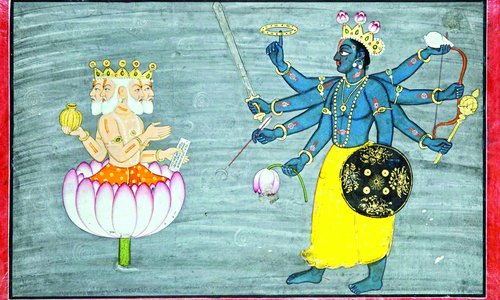
Vishnu Purana — Summary, Key Stories, and Spiritual Significance

Introduction

The Vishnu Purana stands as one of the eighteen Mahapuranas, the great ancient scriptures that form the bedrock of Hindu Puranic literature. Traditionally attributed to the sage Parashara — the grandson of Vasishtha and father of Vyasa — this text is presented as a dialogue between Parashara and his disciple Maitreya. It occupies a unique place among the Puranas because of its systematic and philosophical exposition of Vaishnava theology, cosmology, and the doctrine of avataras (divine descents). Unlike some Puranas that focus heavily on genealogies or ritualistic details, the Vishnu Purana weaves together metaphysics, devotion (bhakti), dharma, and history into a coherent narrative that centers on Vishnu as the Supreme Being (Parabrahman) who pervades and sustains the universe. The text is structured into six major sections known as amshas, comprising approximately 23,000 shlokas (verses), though extant manuscripts vary in length. The first amsha deals with creation (sarga) and the cosmic order, the second with the geography of the earth and the dynasties of kings, the third with the manvantaras (epochs of Manus) and the science of time, the fourth with the lineages of the solar and lunar dynasties culminating in the life of Krishna, the fifth with the glorious pastimes of Krishna — especially his childhood in Vrindavan — and the sixth with the characteristics of the Kali Yuga, the path of liberation (moksha), and the glories of hearing the Purana itself. The Vishnu Purana is not merely a collection of myths; it is a theological treatise that establishes Vishnu (Narayana) as the source of all deities, including Brahma and Shiva, and articulates the concept of the four vyuhas (emanations) — Vasudeva, Sankarshana, Pradyumna, and Aniruddha — which later became central to Pancharatra Agama theology. Its influence extends far beyond its own verses: it served as a primary source for later devotional works like the Bhagavata Purana, the Harivamsa, and the works of the Alvars and acharyas such as Ramanuja, Madhva, and Vallabha. For centuries, devout Hindus have undertaken the parayana (complete recitation) of the Vishnu Purana during the sacred four-month period of Chaturmasya, on Ekadashi days, or during festivals like Vaikuntha Ekadashi, believing that even hearing its narratives bestows purification, devotion, and ultimate liberation. As a living scripture, it continues to be studied, recited, and expounded in temples, mathas, and homes across the Indian subcontinent and the global Hindu diaspora, making it a timeless beacon of Vaishnava spirituality.

Significance

The spiritual significance of the Vishnu Purana is manifold, rooted in its declaration that Vishnu is the sole refuge for all beings seeking liberation from the cycle of birth and death (samsara). The text explicitly states in its phala-shruti (fruit of hearing) verses that one who reads or hears the Vishnu Purana with faith and devotion attains the same merit as performing a thousand ashvamedha yajnas or a hundred rajasuya sacrifices — the highest Vedic rituals — and ultimately reaches Vaikuntha, the eternal abode of Vishnu. This promise elevates the Purana from mere storytelling to a potent sadhana (spiritual practice) in itself. Culturally, the Vishnu Purana has shaped the Hindu worldview by providing the definitive narratives of the ten principal avataras (Dashavatara) — Matsya, Kurma, Varaha, Narasimha, Vamana, Parashurama, Rama, Krishna, Buddha, and Kalki — each illustrating the divine intervention to uphold dharma when it declines. These stories have permeated every layer of Indian art, dance, theater, literature, and folk tradition, from the temple sculptures of Khajuraho and Ellora to the Ramlila performances of North India and the Krishnattam of Kerala. The Purana also codifies the concept of the four yugas (Satya, Treta, Dvapara, Kali) and the cyclical nature of time (kalachakra), offering a framework for understanding history and human destiny that remains integral to Hindu cosmology. Astrologically, the text's detailed description of the planetary deities (grahas), their positions, and their influence on human life has informed Jyotisha (Vedic astrology) traditions. Moreover, the Vishnu Purana emphasizes the path of bhakti (loving devotion) as the supreme means to God-realization in the Kali Yuga, declaring that chanting the names of Vishnu (nama-sankirtana) — especially the mantra 'Om Namo Bhagavate Vasudevaya' — destroys all sins and grants liberation. This teaching directly anticipates and validates the later Bhakti movement. The text also prescribes ethical duties (varnashrama dharma), the importance of guru-seva, the sanctity of tulsi, the observance of Ekadashi vrata, and the glories of tirthas (pilgrimage sites) like Mathura, Dvaraka, and Badrinath. For the householder, it offers a blueprint for righteous living; for the renunciate, a map to detachment; for the devotee, a treasury of divine lilas to meditate upon. In the words of the Purana itself (6.8.42): 'This Purana, which is the essence of all Vedas, bestows dharma, artha, kama, and moksha upon those who hear it with a pure heart.' Thus, the Vishnu Purana is not only a scripture to be studied but a living current of grace that continues to nourish the spiritual lives of millions.

Auspicious Time

Traditionally studied during Chaturmasya (four monsoon months), on Ekadashi days, or during Vishnu-related festivals like Vaikuntha Ekadashi. Can be read daily as part of svadhyaya (self-study) after morning sandhyavandana.

Find your exact auspicious time Check the shubh muhurat and choghadiya for your city and date.

Required Samagri (Materials)

Clean seat (asana) made of kusha grass or wool
Lamp (diya) with ghee or sesame oil
Incense sticks (agarbatti)
Fresh flowers (preferably tulsi, lotus, or jasmine)
Tulsi leaves (Ocimum sanctum) for offering
Water in a copper or silver kalash with mango leaves and coconut
Copy of Vishnu Purana (Sanskrit text or trusted translation)
Sandalwood paste (chandan) for tilaka
Bell (ghanta) for offering
Clean cloth to cover the text when not in use

Preparation Steps

  1. 1Take a bath and wear clean, preferably white or yellow, clothing.
  2. 2Clean the study/puja area and sprinkle with Ganga-jala (Ganges water) or plain water.
  3. 3Set up a small altar with a picture or deity of Vishnu (or Krishna/Narayana) on a raised platform.
  4. 4Place the Vishnu Purana text on a wooden stand (pitha) or clean cloth, never directly on the floor.
  5. 5Light the lamp and incense, and offer flowers and tulsi leaves to the deity and the text.
  6. 6Apply chandan tilaka on your forehead and on the cover of the book.
  7. 7Invoke the guru parampara (lineage of teachers), starting with your own guru, then Vyasa, Parashara, and Narayana.
  8. 8Recite the opening mangalacharana (invocation) verses of the Vishnu Purana.
  9. 9Sit in a comfortable posture (sukhasana or padmasana) facing east or north.
  10. 10Begin reading with a prayer for understanding and devotion.

Steps

  1. 1Sit in a purified space facing east or north after completing morning ablutions and sandhyavandana.
  2. 2Place the Vishnu Purana on a clean stand, offer namaskara (prostration) to the text and the deity.
  3. 3Recite the invocation mantra: 'Om Namo Bhagavate Vasudevaya' three times.
  4. 4Read one adhyaya (chapter) or a fixed number of shlokas daily, maintaining continuity.
  5. 5Read aloud with clear pronunciation, or silently with full attention; avoid distractions.
  6. 6After each chapter, offer a flower or tulsi leaf to the deity and the book.
  7. 7Reflect on the meaning (artha) of the verses, using a commentary (tika) if needed — such as Sridhara Swami's or the translation by H.H. Wilson.
  8. 8Conclude each session with the phala-shruti verses (e.g., Vishnu Purana 6.8.42-44) and a prayer for the welfare of all beings.
  9. 9Close the book respectfully, cover it with clean cloth, and place it in a clean, elevated spot.
  10. 10Distribute the offered flowers/tulsi as prasada to family members.

Mantras

Vishnu Moola Mantra

ॐ नमो भगवते वासुदेवाय

Om Namo Bhagavate Vasudevaya

Meaning: Salutations to Lord Vasudeva (Vishnu), the Supreme Being who dwells in all hearts.

Vishnu Purana Opening Invocation (Mangalacharana)

पराशरोवाच ॐ नमो भगवते वासुदेवाय विश्वरूपाय विश्वप्रभवेऽव्ययाय । विश्वेशाय विश्वात्मने विश्वमूर्तये विश्वकर्त्रे विश्वभर्त्रे विश्वं विश्वाय विश्वस्य कारणाय च ॥

Parasharovacha: Om Namo Bhagavate Vasudevaya Vishvarupaya Vishvaprabhave'vyayaya. Vishveshaya Vishvatmane Vishvamurtaye Vishvakartre Vishvabharte Vishvam Vishvaya Vishvasya Karanaya Cha.

Meaning: Parashara said: Salutations to Bhagavan Vasudeva, who has the universe as His form, who is the origin of the universe, who is imperishable, who is the Lord of the universe, the Self of the universe, the form of the universe, the creator, the sustainer, the universe itself, the refuge of the universe, and the cause of the universe.

Phala Shruti (Fruit of Hearing) — Vishnu Purana 6.8.42

एतत् सर्ववेदार्थसारं पुराणं परमं मतम् । श्रुत्वा भक्त्या यथाविधि गच्छेन्नारायणं पदम् ॥

Etat sarvavedarthasaram puranam paramam matam. Shrutva bhaktya yathavidhi gacchen Narayanam padam.

Meaning: This Purana, which is the essence of the meaning of all Vedas, is considered the supreme. Hearing it with devotion according to the prescribed method, one attains the abode of Narayana.

Dashavatara Stotra (From Vishnu Purana)

मत्स्यः कूर्मो वराहश्च नृसिंहो वामनो भवेत् । रामो रामश्च रामश्च कृष्णो बुद्धः कल्किरेव च ॥

Matsyah Kurmo Varahashcha Narasimho Vamano Bhavet. Ramah Ramashcha Ramashcha Krishno Buddhah Kalkireva Cha.

Meaning: The ten avataras are: Matsya (Fish), Kurma (Tortoise), Varaha (Boar), Narasimha (Man-Lion), Vamana (Dwarf), Parashurama (Rama with axe), Rama (son of Dasharatha), Balarama (or Rama of Bhrigu lineage), Krishna, Buddha, and Kalki.

Guidelines

  • Maintain physical and mental purity (shaucha) throughout the period of study.
  • Observe celibacy (brahmacharya) during the days of intensive parayana.
  • Eat only sattvic food; avoid onion, garlic, meat, alcohol, and stale food.
  • Sleep on the floor or a simple mat; avoid luxurious bedding.
  • Speak truth, avoid gossip, and practice silence (mauna) as much as possible.
  • Complete the reading in a fixed number of days (e.g., 7, 14, or 30) without long gaps.
  • Offer the merit (punya) of the reading to one's ancestors (pitrs) and all beings.

Do's

  • Read with shraddha (faith) and bhakti (devotion), not merely as intellectual exercise.
  • Keep the text in a clean, respected place — never on the floor or near impure items.
  • Wash hands and feet before touching the book.
  • Use a bookmark; do not fold page corners or write in the text.
  • Recite the phala-shruti at the end of each session to seal the merit.
  • Share the stories with family, especially children, to transmit tradition.

Don'ts

  • Do not read in a state of impurity (after attending a funeral, during menstruation, without bathing).
  • Do not place the book upside down or under other objects.
  • Do not eat, drink, or talk while reading.
  • Do not skip chapters or read out of order without guidance.
  • Do not interpret verses contrary to the guru-parampara or accepted commentaries.
  • Do not lend the text to those who will not treat it with reverence.

Common Mistakes to Avoid

  • Reading only the popular Krishna-lila sections (5th amsha) and neglecting the philosophical first three amshas.
  • Using poorly translated editions that distort the meaning.
  • Treating the Purana as mythology rather than revealed truth (apaurusheya).
  • Reciting mechanically without contemplation (manana).
  • Ignoring the prescribed phala-shruti and concluding prayers.

Regional Variations

  • In South India, the Vishnu Purana is often studied alongside the Tamil Divya Prabandham of the Alvars, with emphasis on the 108 Divya Desams.
  • In Bengal, the text is recited during the month of Bhadra (August-September) as part of the 'Purana Parayana' tradition in Vaishnava households.
  • In Gujarat and Maharashtra, the 'Vishnu Purana Katha' is performed as a 7-day discourse (saptah) by professional kathakaras.
  • The Gaudiya Vaishnava tradition prioritizes the Bhagavata Purana but respects Vishnu Purana as a foundational text; they often cite its Krishna-lila chapters.
  • In the Sri Vaishnava tradition (Ramanuja), the commentary of Sridhara Swami is considered authoritative, and the text is studied in Sanskrit pathashalas.

Frequently Asked Questions

Is the Vishnu Purana the same as the Bhagavata Purana?
No. The Vishnu Purana and the Bhagavata Purana (Srimad Bhagavatam) are two distinct Mahapuranas. The Vishnu Purana is older and more systematic in its theology; the Bhagavata Purana, composed later, focuses intensely on Krishna-bhakti and rasa-lila. The Bhagavata draws heavily from the Vishnu Purana, especially for the Krishna narrative, but expands it with greater emotional and aesthetic depth.
Can women read the Vishnu Purana?
Yes. The Puranas themselves declare that they are for all varnas and both genders — 'stri-shudra-dvijbandhunam trayi na shruti-gocara' (the Vedas are not accessible to women, shudras, and dvija-bandhus, but the Puranas are). Many traditional households have women leading the parayana during Chaturmasya.
What is the best translation for a beginner?
For English readers, the translation by H.H. Wilson (edited by Fitzedward Hall) is scholarly but dated. The Gita Press (Gorakhpur) edition with Hindi translation is widely used and reliable. For a modern, readable English version with notes, the Bibek Debroy translation (Penguin) is excellent. Always choose an edition that includes the Sanskrit text.
How long does it take to read the entire Vishnu Purana?
At a moderate pace of 2-3 chapters per day (about 30-45 minutes), the full text of ~23,000 shlokas can be completed in 30-45 days. Traditional saptah (7-day) recitations involve multiple readers covering several hours daily.
Are there any specific rituals required before starting?
While not mandatory, it is customary to perform a small puja (as described in preparationSteps), invoke Ganesha and the guru, and take a sankalpa (vow) stating the purpose (e.g., 'for the pleasure of Vishnu,' 'for ancestors' peace,' 'for moksha'). This sanctifies the undertaking.

References & Traditional Notes

  • The critical edition of the Vishnu Purana was published by the Bhandarkar Oriental Research Institute (Pune), based on multiple manuscripts.
  • Sridhara Swami's 'Vishnu Purana Bhavartha Dipika' (15th century) is the most respected commentary, used by both Advaita and Vishishtadvaita traditions.
  • The text is quoted extensively in Ramanuja's 'Sri Bhashya' and Madhva's 'Mahabharata Tatparya Nirnaya'.
  • The 'Vishnu Dharmottara Purana' is considered an upa-purana (supplement) to the Vishnu Purana, dealing with iconography, architecture, and arts.
  • Verse 3.18.33 of Vishnu Purana defines the Kali Yuga duration as 432,000 years, a key reference in Hindu chronology.

Related Audio & Bhajans

Om Jai Jagdish Hare

aartiTraditional5:20
View Lyrics

Spiritual Journey

otherChrome Dreams Audio Series
View Lyrics

Ov Moi Omm - Kāvya Puranas

other
View Lyrics

Puranas

otherYouTube
Open on YouTube →
Lyrics

The Stages of Spiritual Growth

other
View Lyrics

Spiritual growth

otherYouTube
Open on YouTube →
Lyrics

Diwali Festival & Spirituality

other
View Lyrics

Hindu Spiritual Practices

otherYouTube
Open on YouTube →
Lyrics

Story Prahlad Holika Symbol Victory Lord Vishnu story|mythology|festival

otherYouTube
Open on YouTube →
Lyrics

Hindu spirituality

otherYouTube
Open on YouTube →
Lyrics

Affiliate disclosure: Sanatan Hindu participates in the Amazon Associates Programme and the CueLinks affiliate network (Myntra & Flipkart). This page contains affiliate links, if you click and buy, we earn a small commission at no extra cost to you. As an Amazon Associate we earn from qualifying purchases. Full disclosure.

Amazon Associates tag: geekydevelope-21

Shop Pooja & Festive Essentials on Flipkart

Clicking opens Flipkart via our affiliate link. Prices and availability may vary.

Shop on Flipkart

CueLinks Publisher: 300371

Shop Festive Wear on Myntra

Clicking opens Myntra via our affiliate link. Prices and availability may vary.

CueLinks Publisher: 300371

Share:

Get the daily panchang & festival updates

Join our free newsletter, no spam, unsubscribe anytime.