
Yamuna — Krishna's River and Her Divine Story
Explore the sacred Yamuna River's divine origin, her eternal bond with Lord Krishna, pilgrimage sites, rituals, mantras, and spiritual significance in Hindu tradition.
Affiliate disclosure: Sanatan Hindu participates in the Amazon Associates Programme and the CueLinks affiliate network (Myntra & Flipkart). This page contains affiliate links, if you click and buy, we earn a small commission at no extra cost to you. As an Amazon Associate we earn from qualifying purchases. Full disclosure.
Next Kartik Purnima
Tuesday, 24 November 2026· in 5 days
Set a reminder so you never miss Kartik Purnima.
Introduction
Significance
Best Time to Perform
Find your exact auspicious time Check the shubh muhurat and choghadiya for your city and date.
Required Samagri (Materials)
Preparation Steps
- 1Bathe and wear clean, preferably white or yellow clothes.
- 2Clean the puja area and draw a rangoli or alpana with rice flour.
- 3Place a clean chowki (wooden seat) and spread a red or yellow cloth.
- 4Install a murti or photo of Yamunaji (often depicted as a dark-complexioned goddess standing on a tortoise, holding a water pot and lotus) or a shaligram shila.
- 5Arrange all samagri neatly on a thali.
- 6Light the ghee lamp and incense before beginning.
- 7Invoke Ganesha and Guru parampara with short prayers.
- 8Mentally offer the puja to Shri Krishna and Yamunaji with bhava.
Step-by-Step Vidhi
- 1Begin with achaman (sipping water thrice while chanting Om Keshavaya Namah, Om Narayanaya Namah, Om Madhavaya Namah).
- 2Perform sankalpa: state your name, gotra, date, tithi, location, and purpose (e.g., 'I perform Yamuna Puja for the pleasure of Shri Krishna and liberation from Yamaraja's noose').
- 3Invoke Yamunaji into the kalash: fill kalash with water, add gangajal, tulsi, flowers, coin, and cover with mango leaves and coconut. Chant 'Om Yamunayai Namah' while invoking.
- 4Offer panchamrit snan to the murti/kalash while chanting Yamuna's names: 'Om Yamunayai Namah, Om Kalindyai Namah, Om Yama-sahodarayai Namah, Om Surya-putryai Namah'.
- 5Offer shuddha jal snan (pure water bath).
- 6Apply chandan, kumkum, haldi to the murti/kalash.
- 7Offer vastra (cloth) or moli (sacred thread).
- 8Offer flowers, tulsi leaves, and garlands while chanting Yamunashtakam or 'Om Yamunayai Namah'.
- 9Offer dhoop, deep, and naivedyam (fruits, sweets, makhan-mishri).
- 10Perform aarti with camphor or ghee lamp, singing Yamuna Aarti ('Jaya Yamuna Mata, Jaya Yamuna Mata...') or Shri Vallabhacharya's Yamunashtakam.
- 11Do pradakshina (circumambulation) 3 or 7 times.
- 12Offer pushpanjali (handful of flowers) with heartfelt prayers.
- 13Distribute prasadam to all present.
- 14Conclude with shanti mantra: 'Om Shanti Shanti Shantih'.
Mantras
Yamunashtakam (by Shri Vallabhacharya) - Verse 1
नमामि यमुनां देवीं सुरासुरनमस्कृताम्। पापहारिणीं भक्तानां मुक्तिदां भवबन्धनात्॥
Namāmi Yamunāṁ Devīṁ Surāsuranamaskṛtām। Pāpahāriṇīṁ Bhaktānāṁ Muktidāṁ Bhavabandhanāt॥
Meaning: I bow to Goddess Yamuna, worshipped by both devas and asuras, who removes the sins of devotees and grants liberation from the bondage of worldly existence.
Yamunashtakam - Verse 2
कृष्णप्रियकरीं नित्यं वृन्दावनविलासिनीम्। गोपीनां प्राणवल्लभां राधिकाप्रियसखीम्॥
Kṛṣṇapriyakariṁ Nityaṁ Vṛndāvanavilāsinīm। Gopīnāṁ Prāṇavallabhāṁ Rādhikāpriyasakhīm॥
Meaning: She eternally pleases Krishna, sports in Vrindavan, is the very life of the gopis, and is the beloved friend of Shri Radhika.
Yamunashtakam - Verse 3
कालिन्दीं यमुनां वन्दे यमभागिनीं शुभाम्। सूर्यपुत्रीं महाभागां पापनाशीं परां गतिम्॥
Kālinīṁ Yamunāṁ Vande Yamabhāginīṁ Śubhām। Sūryaputrīṁ Mahābhāgāṁ Pāpanāśīṁ Parāṁ Gatim॥
Meaning: I worship Kalindi Yamuna, auspicious sister of Yama, glorious daughter of Surya, destroyer of sins, and the supreme destination.
Yamuna Aarti (Traditional Braj)
जय यमुना माता, जय यमुना माता। जय यमुना माता, जय यमुना माता॥ कृष्ण बलराम की प्यारी, यमुना माता। गोकुल वृन्दावन की, शोभा यमुना माता॥
Jaya Yamunā Mātā, Jaya Yamunā Mātā। Jaya Yamunā Mātā, Jaya Yamunā Mātā॥ Kṛṣṇa Balarāma kī Pyārī, Yamunā Mātā। Gokula Vṛndāvana kī Śobhā, Yamunā Mātā॥
Meaning: Victory to Mother Yamuna! Victory to Mother Yamuna! Beloved of Krishna and Balaram, the glory of Gokul and Vrindavan, Mother Yamuna.
Yamuna Gayatri Mantra
ॐ यमुनायै विद्महे कालिन्द्यै धीमहि। तन्नो यमुना प्रचोदयात्॥
Om Yamunāyai Vidmahe Kālinyai Dhīmahi। Tanno Yamunā Prachodayāt॥
Meaning: Om, let us meditate on Yamuna, let us contemplate on Kalindi; may Yamuna inspire and enlighten us.
Yamuna Moola Mantra
ॐ ह्रीं यमुनायै नमः॥
Om Hrīṁ Yamunāyai Namaḥ॥
Meaning: Om, salutations to Yamuna with the bija mantra Hreem (representing divine grace and purification).
Do's
- ✓Approach Yamunaji with humility, love, and surrender (sharanagati).
- ✓Offer tulsi leaves — they are most dear to her as Krishna's beloved.
- ✓Perform parikrama of Yamuna (especially at Vrindavan) barefoot if possible.
- ✓Feed fish, turtles, and cows near the river as seva.
- ✓Participate in Yamuna cleanup seva (safai abhiyan) as practical worship.
- ✓Chant Hare Krishna Mahamantra on her banks for amplified benefit.
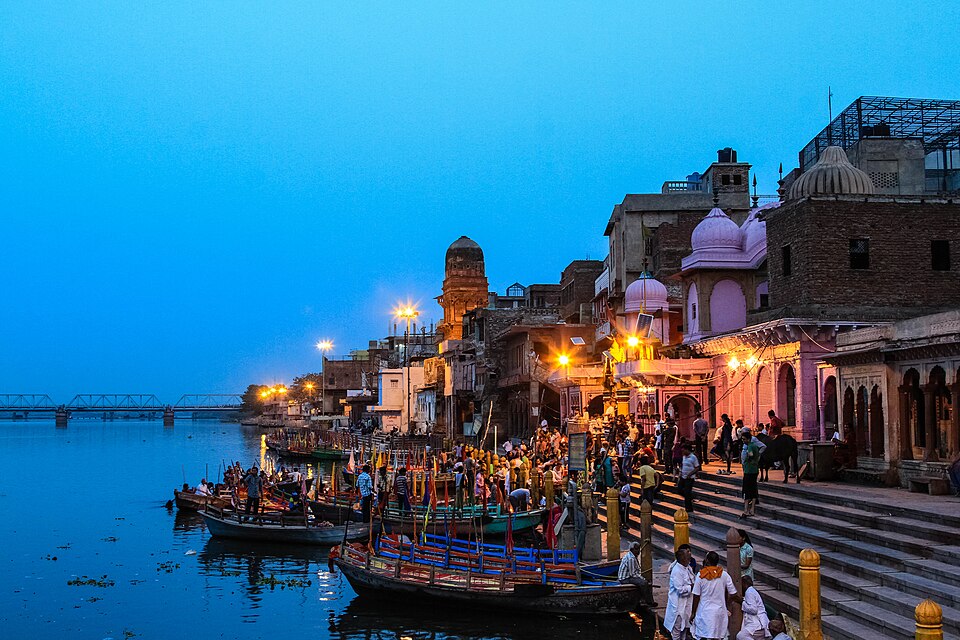
- ✓Offer deepdaan (floating lamps) on Kartik Purnima and Yamuna Jayanti.
Don'ts
- ✗Do not throw plastic, chemicals, soap, or non-biodegradable waste into Yamuna.
- ✗Do not use synthetic detergents or shampoos while bathing in the river.
- ✗Do not immerse idols made of plaster of paris or painted with toxic colors.
- ✗Do not relieve yourself on the banks or in the water.
- ✗Do not argue, gossip, or speak harshly on the ghats — maintain sanctity.
- ✗Do not wear leather items (belt, shoes) during puja or parikrama.
- ✗Do not consume prasadam without first offering to Yamunaji and Krishna.
Common Mistakes to Avoid
- •Confusing Yamuna with Ganga in mantras or offerings — each has distinct identity and mantras.
- •Neglecting tulsi in Yamuna puja — it is essential in Vaishnava tradition.
- •Performing puja mechanically without bhava (devotional feeling).
- •Skipping achaman and sankalpa, which sanctify the ritual.
- •Offering stale or unoffered food as naivedyam.
- •Ignoring environmental duty — polluting the river while worshipping her.
- •Not consulting family guru/pandit for specific sampradaya variations (e.g., Pushtimarg vs. Gaudiya vs. Nimbarka).
Regional Variations
- •In Pushtimarg (Vallabh sampradaya), Yamuna is worshipped as 'Shri Yamunaji' with elaborate seva including shringar, raag, bhog at specific hours (ashtayam seva).
- •In Gaudiya Vaishnavism, emphasis is on Yamuna as Radha's expansion; Yamunashtakam of Rupa Goswami is recited; parikrama of 12 forests (vana) of Vrindavan includes Yamuna darshan.
- •In Nimbarka sampradaya, Yamuna is served as part of Radha-Krishna's nitya-lila; special festivals at Nimbarka Peeth, Salemabad.
- •In Braj folk tradition, women sing 'Yamuna ke ghat pe' folk songs during Kartik snan; deepdaan with earthen lamps in leaf bowls (dona).
- •In South India, Yamuna is invoked in Kaveri puja as one of the Sapta Nadi (seven sacred rivers); Yamuna water kept in puja kalash.
- •At Yamunotri (source), the puja is to the black stone murti of Yamunaji near the hot springs (Surya Kund); rice and potatoes cooked in hot spring water offered as prasad.
Frequently Asked Questions
Why is Yamuna considered more sacred than Ganga for Krishna devotees?▾
Can I worship Yamuna at home if I live far from the river?▾
What is the significance of Bhai Dooj for Yamuna?▾
Is Yamuna water still pure enough for achaman and drinking?▾
What is the Yamunashtakam and who composed it?▾
Popular Tools
References & Traditional Notes
- •Srimad Bhagavatam (10th Canto) — primary scriptural source for Krishna's Yamuna lilas.
- •Padma Purana, Uttara Khanda — describes Yamuna's origin, glories, and Yamuna Jayanti vrata.
- •Yamunashtakam by Shri Vallabhacharya — foundational text for Pushtimargiya Yamuna seva.
- •Bhakti-ratnakara by Narahari Chakravarti — details Braj parikrama and Yamuna ghats.
- •Varaha Purana — mentions Yamuna as Kalindi, daughter of Surya.
- •Skanda Purana — describes Yamuna's descent and the Kaliya daman lila.
- •Garga Samhita — elaborate narration of Yamuna's marriage to Krishna in spiritual realm.
- •Environmental note: The 'Namami Yamuna' and 'Yamuna Action Plan' are government initiatives; devotees are encouraged to support ecological restoration as seva.
Related Audio & Bhajans
Aarti Kunj Bihari Ki - Krishna Aarti
Krishna Chalisa
Hare Krishna Mahamantra
Affiliate disclosure: Sanatan Hindu participates in the Amazon Associates Programme and the CueLinks affiliate network (Myntra & Flipkart). This page contains affiliate links, if you click and buy, we earn a small commission at no extra cost to you. As an Amazon Associate we earn from qualifying purchases. Full disclosure.
Shop Samagri on Amazon.in
Clicking opens Amazon.in. Prices and availability may vary.
Browse all pooja itemsAmazon Associates tag: geekydevelope-21
Shop Pooja & Festive Essentials on Flipkart
Clicking opens Flipkart via our affiliate link. Prices and availability may vary.
Shop on FlipkartCueLinks Publisher: 300371
Shop Festive Wear on Myntra
Clicking opens Myntra via our affiliate link. Prices and availability may vary.
CueLinks Publisher: 300371
Need a website? Describe it, and AI builds it.
Perfect for a temple, pooja service, astrology practice or small shop. Tell the AI what you want — or drag and drop the classic way — and go live on your own web address in minutes with Sitova. Hosting, SEO, forms and analytics are all included.
- Build with AI or drag & drop
- Your domain + SEO built in
- Free forever plan
Opens sitova.site