
Adi Shankaracharya — Life, Philosophy and Four Mathas
Comprehensive guide to Adi Shankaracharya's life, Advaita Vedanta philosophy, and the four mathas he established across India.
Affiliate disclosure: Sanatan Hindu participates in the Amazon Associates Programme and the CueLinks affiliate network (Myntra & Flipkart). This page contains affiliate links, if you click and buy, we earn a small commission at no extra cost to you. As an Amazon Associate we earn from qualifying purchases. Full disclosure.
Introduction
Significance
Best Time to Perform
Find your exact auspicious time Check the shubh muhurat and choghadiya for your city and date.
Required Samagri (Materials)
Preparation Steps
- 1Clean the puja area thoroughly and sprinkle with gangajal or clean water
- 2Set up a clean altar facing east or north, covered with white cloth
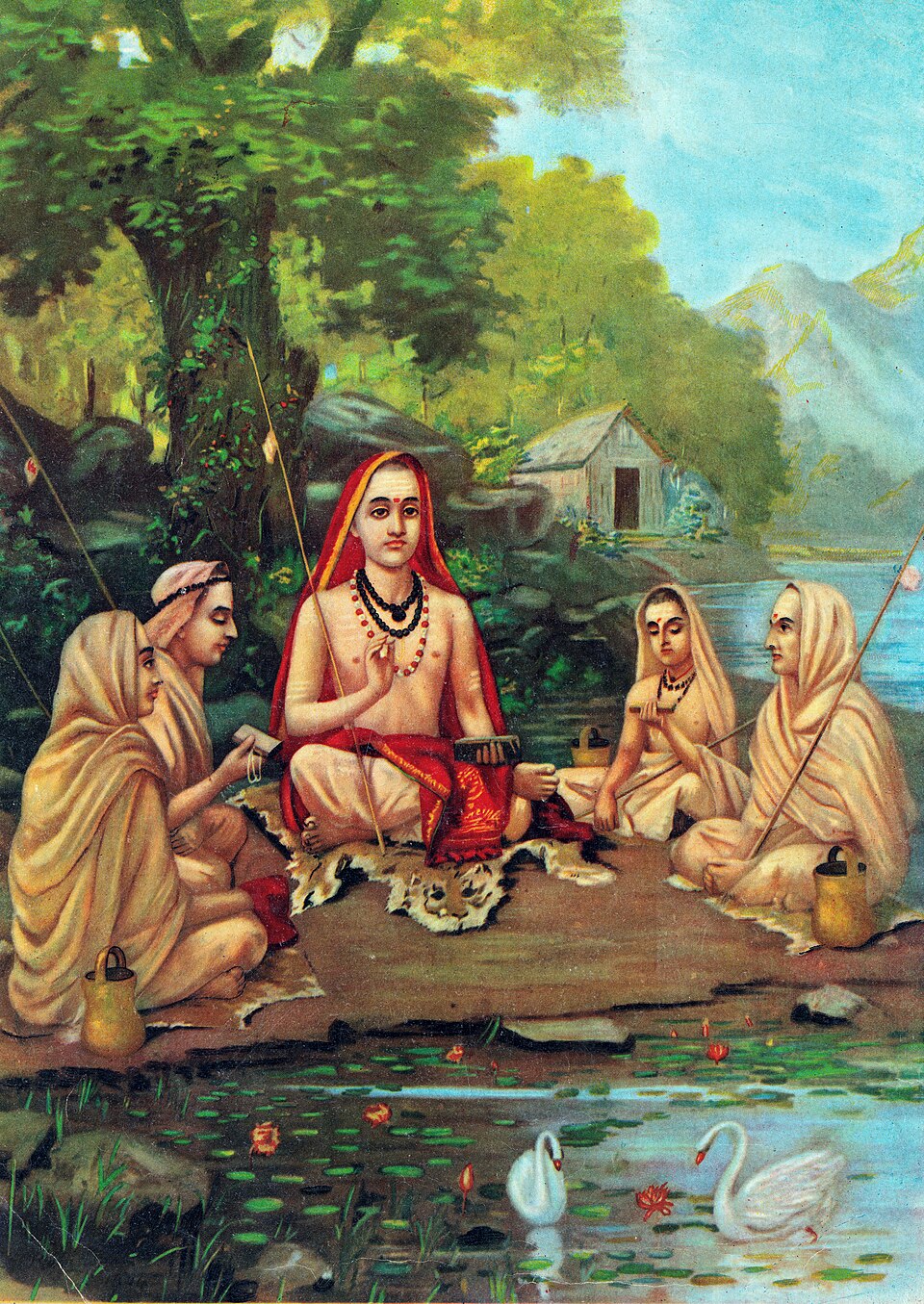
- 3Place the picture/murti of Adi Shankaracharya on a raised platform
- 4Arrange guru paduka at the feet of the image
- 5Prepare panchamrita (milk, curd, ghee, honey, sugar) for abhisheka if performing elaborate puja
- 6Light the ghee lamp and incense before beginning
- 7Sit on a clean asana (wool or cotton mat) facing the altar
- 8Invoke the guru parampara by mentally offering respects to the lineage of acharyas
- 9Keep a notebook for writing down insights or prayers after puja
- 10Observe silence (mauna) for at least 15 minutes before starting
Step-by-Step Vidhi
- 1Begin with achamana: sip water from the right hand three times while chanting 'Om Achyutaya Namaha, Om Anantaya Namaha, Om Govindaya Namaha'
- 2Perform pranayama: inhale through left nostril, retain, exhale through right; repeat 3 times with 'Om'
- 3Invoke Lord Ganesha with 'Om Gam Ganapataye Namaha' for obstacle removal
- 4Invoke the guru parampara: 'Om Paramaguru Devatabhyo Namaha, Om Parameshti Guru Devatabhyo Namaha, Om Parapara Guru Devatabhyo Namaha'
- 5Offer panchopachara puja (five offerings): gandha (sandalwood), pushpa (flowers), dhoopa (incense), deepa (lamp), naivedya (food)
- 6Chant the Shankaracharya Ashtakam or Guru Stotram with devotion
- 7Perform abhisheka on guru paduka with water, milk, honey, ghee, curd, then wipe clean and apply sandalwood
- 8Offer tulsi leaves at the feet of the acharya while chanting his name
- 9Wave camphor arati in clockwise circles while ringing the bell
- 10Offer naivedya and distribute as prasada
- 11Prostrate (shashtanga namaskara) and pray for wisdom, discrimination, and guru kripa
- 12Conclude with shanti mantra: 'Om Sahana Vavatu Sahanau Bhunaktu... Om Shanti Shanti Shanti'
- 13Sit in meditation for 10-15 minutes, contemplating 'Aham Brahmasmi' or 'Tat Tvam Asi'
Mantras
Shankaracharya Ashtakam (Verse 1)
न गुरोरधिकं न गुरोरधिकं न गुरोरधिकं न गुरोरधिकम् । शिवशासनतश्शिवशासनतश्शिवशासनतश्शिव एव गुरुः ॥
Na guroradhikam na guroradhikam na guroradhikam na guroradhikam | Shivashasanas tash shivashasanas tash shivashasanas tash shiva eva guruh ||
Meaning: There is nothing higher than the guru, nothing higher than the guru, nothing higher than the guru. By the command of Shiva, by the command of Shiva, by the command of Shiva — Shiva alone is the guru.
Guru Brahma Guru Vishnu (Guru Stotram)
गुरुर्ब्रह्मा गुरुर्विष्णुः गुरुर्देवो महेश्वरः । गुरुः साक्षात् परब्रह्म तस्मै श्रीगुरवे नमः ॥
Gurur brahma gurur vishnuh gurur devo maheshvarah | Guruh sakshat parabrahma tasmai shri gurave namah ||
Meaning: The guru is Brahma, the guru is Vishnu, the guru is Maheshwara (Shiva). The guru is verily the supreme Brahman. To that guru I offer my salutations.
Nirvana Shatakam (Atma Shatakam) - Verse 1
मनो बुद्ध्यहङ्कार चित्तानि नाहं न च श्रोत्रजिह्वे घ्राण नेत्रे । न च व्योम भूमिर्न तेजो न वायुः चिदानन्दरूपः शिवोऽहम् शिवोऽहम् ॥
Mano buddhy ahamkara chittani naham na cha shrotra jihve ghrana netre | Na cha vyoma bhumir na tejo na vayuh chidananda rupah shivo'ham shivo'ham ||
Meaning: I am not the mind, intellect, ego, or memory; not the ears, tongue, nose, or eyes; not space, earth, fire, or air. I am the form of consciousness-bliss, I am Shiva, I am Shiva.
Bhaja Govindam - Verse 1
भज गोविन्दं भज गोविन्दं गोविन्दं भज मूढमते । सम्प्राप्ते सन्निहिते काले नहि नहि रक्षति डुकृङ्करणे ॥
Bhaja govindam bhaja govindam govindam bhaja mudhamate | Samprapte sannihite kale nahi nahi rakshati dukrinkarane ||
Meaning: Worship Govinda, worship Govinda, worship Govinda, O deluded mind! At the moment of death, your grammatical rules (dukrinkarane) will not save you.
Adi Shankaracharya Moola Mantra
ॐ श्रीमच्छङ्कराचार्याय नमः
Om shrimach chankaracharyaya namah
Meaning: Salutations to the illustrious Shankaracharya.
Do's
- ✓Approach the puja with shraddha (faith) and humility
- ✓Learn correct pronunciation of mantras from a qualified teacher
- ✓Study his works systematically under guidance, not randomly
- ✓Respect all sampradayas and mathas in his lineage
- ✓Offer seva (service) to the guru's mission — teaching, preserving texts, helping students
- ✓Meditate daily on the mahavakyas (Tat Tvam Asi, Aham Brahmasmi, etc.)
- ✓Visit one of the four mathas if possible for darshan and blessings
- ✓Support Vedic education and cow protection as he emphasized
Don'ts
- ✗Do not treat his image as a mere idol; recognize the guru-tattva within
- ✗Do not mix his teachings with non-Vedantic philosophies without discernment
- ✗Do not commercialize his name or stotras for personal gain
- ✗Do not criticize other acharyas or sampradayas in his name
- ✗Do not perform puja in a distracted or impure state of mind
- ✗Do not neglect the study of Sanskrit, which is key to his bhashyas
- ✗Do not claim self-realization without the grace of a living guru
- ✗Do not use his photo for decorative purposes without reverence
Common Mistakes to Avoid
- •Confusing Advaita with mere intellectual monism without sadhana
- •Reciting stotras mechanically without understanding the meaning
- •Ignoring the guru parampara and claiming direct access to his teachings
- •Focusing only on his philosophy while neglecting bhakti and karma yoga
- •Assuming all four mathas follow identical practices — each has unique traditions
- •Overlooking the role of the living Shankaracharya as the current authority
- •Reading translations without consulting traditional commentaries (tikas)
- •Treating Jayanti as a cultural festival rather than a spiritual observance
Regional Variations
- •In Kerala (Kalady), Jayanti includes grand processions, Vedic chanting, and feeding thousands
- •Sringeri Sharada Peetham emphasizes elaborate Veda parayanam and guru puja over 3 days
- •Dwaraka Matha focuses on Gita recitation and cow worship (go-puja)
- •Puri Govardhan Matha integrates Jagannath culture with Shankara Jayanti rites
- •Joshimath/Badrinath region observes with special pujas at Narasimha temple and trek to Tapovan
- •Tamil Nadu Smarta households perform elaborate homas with Rudra and Durga suktas
- •Maharashtra and Gujarat emphasize Bhaja Govindam recitation in groups
- •North Indian Dashanami akharas hold debates (shastrartha) and initiate new sannyasis
Frequently Asked Questions
When is Adi Shankaracharya Jayanti celebrated?▾
What are the four mathas established by Adi Shankaracharya?▾
What is Advaita Vedanta in simple terms?▾
Can householders follow Adi Shankaracharya's teachings?▾
What is the significance of the Guru Parampara in his tradition?▾
How can one connect with Adi Shankaracharya today?▾
Popular Tools
References & Traditional Notes
- •Shankara Digvijaya (Madhava Vidyaranya) — traditional hagiography
- •Prasthanatrayi Bhashyas — his commentaries on Upanishads, Gita, Brahma Sutras
- •Vivekachudamani — prakarana grantha on discrimination
- •Upadesha Sahasri — thousand teachings on self-knowledge
- •Soundarya Lahari — tantric hymn to the Divine Mother (authorship debated but traditionally attributed)
- •Guru Parampara Stotram — chanted daily in mathas
- •Kanchi Paramacharya's discourses on Shankara's life and mission
- •Sringeri Sharada Peetham archives and publications
- •Adi Shankara's Jayanti celebrations documented by all four mathas
Related Audio & Bhajans
YAAKO DIGEST- KWAME AND NANA TUFFOUR JOINT FUNERAL RITES ZZA
Stephen Hicks On Philosophy, Business, and Ethics
Making Yoga Philosophy Accessible with Jivana Heyman Ep. 25
Philosophy
Vāṇī Of The Day 2018 11 03 ( Odia And Eng) Story Of Ajāmila Previous Life, Turned Into Ice In The Month Of Magha, Atama Tattva Vit Is Not Disturbed By Happiness And Distress Coming From Prarabdha Karma He Never Indulges In Karma
Affiliate disclosure: Sanatan Hindu participates in the Amazon Associates Programme and the CueLinks affiliate network (Myntra & Flipkart). This page contains affiliate links, if you click and buy, we earn a small commission at no extra cost to you. As an Amazon Associate we earn from qualifying purchases. Full disclosure.
Shop Samagri on Amazon.in
Clicking opens Amazon.in. Prices and availability may vary.
Browse all pooja itemsAmazon Associates tag: geekydevelope-21
Shop Pooja & Festive Essentials on Flipkart
Clicking opens Flipkart via our affiliate link. Prices and availability may vary.
Shop on FlipkartCueLinks Publisher: 300371
Shop Festive Wear on Myntra
Clicking opens Myntra via our affiliate link. Prices and availability may vary.
CueLinks Publisher: 300371