
Agnihotra: The Sacred Vedic Fire Ritual for Health, Purification and Peace
Discover Agnihotra, the ancient Vedic fire ritual designed for environmental purification, spiritual growth, and mental peace. Learn the vidhi, mantras, and benefits.
Affiliate disclosure: Sanatan Hindu participates in the Amazon Associates Programme and the CueLinks affiliate network (Myntra & Flipkart). This page contains affiliate links, if you click and buy, we earn a small commission at no extra cost to you. As an Amazon Associate we earn from qualifying purchases. Full disclosure.
Introduction
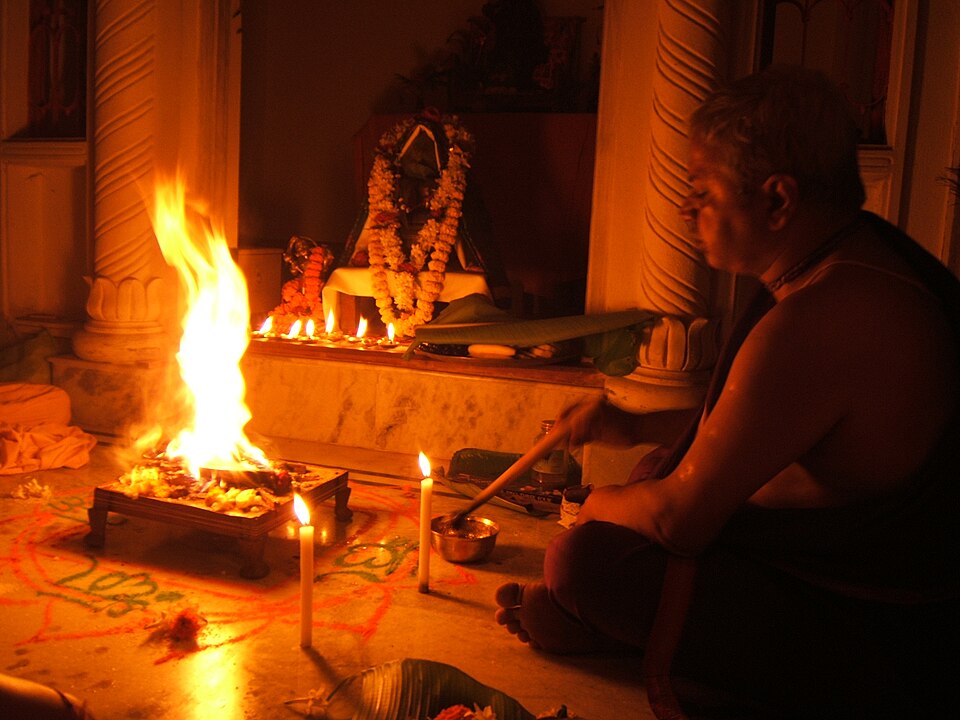
Historically, Agnihotra is rooted in the Vedas, particularly the Rigveda, where the concept of the sacrificial fire is central to maintaining 'Rta'—the cosmic order. It is believed that the universe operates on a series of rhythmic cycles, and by performing this ritual at precise transitional moments of the day, one synchronizes their internal biological clock with the external celestial cycles. This is not just a religious act but a sophisticated spiritual technology designed to cleanse the atmosphere, purify the mind, and nourish the soul. The practice is deeply intertwined with the concept of 'Yajna,' which implies a selfless offering to the divine, helping the practitioner transcend the ego and connect with the higher Self.
While many modern interpretations focus on the environmental and health benefits, the spiritual core of Agnihotra remains its ability to transmute negative energies into positive vibrations. The fire acts as a catalyst for purification, burning away the mental impurities of greed, anger, and attachment. Through the rhythmic chanting of sacred mantras and the offering of specific materials like cow dung and ghee, the ritual creates a localized field of high-frequency energy. This energy is said to impact the very air we breathe and the thoughts we harbor, fostering a state of 'Sattva' or purity.
For a newcomer, it is important to understand that Agnihotra is more than a simple ritual; it is a way of life. It requires discipline, mindfulness, and a sense of reverence. Whether practiced as part of a larger Vedic household tradition or as a personal spiritual discipline, it serves as a constant reminder of our interconnectedness with the divine elements. As the flames rise, they represent the ascending consciousness of the practitioner, seeking light in the darkness and order in the chaos of mundane existence.
Significance
From an environmental perspective, Agnihotra is often lauded for its ability to purify the atmosphere. The specific combination of materials used in the ritual, when consumed by the fire at sunrise and sunset, produces a smoke that is thought to have restorative properties for the air and the soil. In many traditional contexts, Agnihotra is seen as a way to balance the local ecology, neutralizing toxins and promoting the growth of healthy flora and fauna. This ecological dimension aligns with the Vedic principle that humans are not masters of nature, but integral parts of a delicate cosmic web.
Psychologically, the ritual provides a meditative anchor. The precision of the timing—occurring exactly at sunrise and sunset—forces the practitioner to pause and reflect, breaking the frantic cycle of daily chores and modern stressors. The rhythmic chanting of mantras has a profound effect on the nervous system, inducing a state of calm and reducing anxiety. This daily cadence of peace helps in cultivating a temperament of patience and equanimity, which is essential for navigating the complexities of human life.
Astrologically, Agni is the force that mediates between the planetary influences and the human psyche. By performing the ritual at the junctions of day and night (Sandhya periods), practitioners are engaging with the most potent times of cosmic transition. It is believed that Agnihotra can mitigate the malefic effects of certain planetary alignments by strengthening the individual's spiritual resilience. The ritual acts as a shield, creating a protective aura (Kavacha) around the practitioner and their household, ensuring that the energy flowing through the home is aligned with higher virtues.
Best Time to Perform
Find your exact auspicious time Check the shubh muhurat and choghadiya for your city and date.
Required Samagri (Materials)
Preparation Steps
- 1Clean the Agnihotra Kund thoroughly with water to ensure it is free from any residue.
- 2Ensure the ritual area is clean, quiet, and free from distractions.
- 3Prepare the cow dung cakes or pieces so they are ready for easy placement.
- 4Sit in a comfortable, steady posture (like Sukhasana or Padmasana) facing East during sunrise and West during sunset.
- 5Gather all the samagri (materials) within easy reach to avoid breaking the flow of the ritual.
Step-by-Step Vidhi
- 11. Sit facing the direction indicated by the sun (East at sunrise, West at sunset).
- 22. Light the fire in the copper Kund using the prepared cow dung and a small amount of ghee.
- 33. Once the fire is steady, take a small amount of the prepared offering (mixture of rice and ghee/cow dung) in your right hand.
- 44. Recite the Agnihotra mantra with deep concentration and devotion.
- 55. Gently drop the offering into the center of the flames.
- 66. Allow the fire to burn calmly for a few moments after the offering.
- 77. Perform a brief silent meditation or prayer, expressing gratitude to Agni Dev.
- 88. Ensure the Kund is safely extinguished or allowed to burn down to embers according to your specific family tradition.
Mantras
The Agnihotra Mantra
आहुतिं देहि |
Aahutim Dehi
Meaning: I offer this offering (to the Divine Fire).
The Core Agnihotra Mantra
ॐ अग्नये स्वाहा |
Om Agnaye Swaha
Meaning: Om, I offer this to the God of Fire.
Do's
- ✓Do perform the ritual at the exact moment of sunrise and sunset.
- ✓Do maintain a calm and steady breath during the chanting.
- ✓Do use high-quality, pure materials like organic ghee and unpolished rice.
- ✓Do keep the ritual space clean and sacred.
Don'ts
- ✗Do not perform the ritual while experiencing intense anger or agitation.
- ✗Do not use artificial or chemically treated materials in the fire.
- ✗Do not interrupt the ritual once the mantra recitation has begun.
- ✗Do not perform the ritual in a cluttered or unhygienic environment.
Common Mistakes to Avoid
- •Performing the ritual at the wrong time (not at the exact transition of sun).
- •Using impure or contaminated materials in the Kund.
- •Reciting mantras mechanically without understanding their meaning or feeling the vibration.
- •Neglecting the cleanliness of the ritual vessel (Kund).
Regional Variations
- •In some South Indian traditions, specific Vedic chants are added before the main mantra.
- •Certain lineages may include additional offerings like dried herbs or flowers based on their Sampradaya.
- •In some North Indian households, the Agnihotra is part of a larger Homa or Havana involving multiple deities.
Frequently Asked Questions
Can anyone perform Agnihotra?▾
Is it necessary to have a copper Kund?▾
What happens if I miss a day?▾
Popular Tools
References & Traditional Notes
- •The practice is closely linked to the concept of 'Sandhyavandanam'.
- •Different Sampradayas (lineages) may have slight variations in the specific mantras used.
- •Always prioritize the guidance of your family Guru or local Priest regarding specific household customs.
Related Audio & Bhajans
Hindu Mythology Vedic and Puranic
Jenna Wortham on Finding Peace Beneath the Skin
HPI 28 - Who Wants to Live Forever? - Early Ayurvedic Medicine
Padham Vedichi
40 Aspects Of Veda And Vedic Literature In The Human Physiology 01
Vedic Shukra Mantra
Affiliate disclosure: Sanatan Hindu participates in the Amazon Associates Programme and the CueLinks affiliate network (Myntra & Flipkart). This page contains affiliate links, if you click and buy, we earn a small commission at no extra cost to you. As an Amazon Associate we earn from qualifying purchases. Full disclosure.
Shop Samagri on Amazon.in
Clicking opens Amazon.in. Prices and availability may vary.
Browse all pooja itemsAmazon Associates tag: geekydevelope-21
Shop Pooja & Festive Essentials on Flipkart
Clicking opens Flipkart via our affiliate link. Prices and availability may vary.
Shop on FlipkartCueLinks Publisher: 300371
Shop Festive Wear on Myntra
Clicking opens Myntra via our affiliate link. Prices and availability may vary.
CueLinks Publisher: 300371
Need a website? Describe it, and AI builds it.
Perfect for a temple, pooja service, astrology practice or small shop. Tell the AI what you want — or drag and drop the classic way — and go live on your own web address in minutes with Sitova. Hosting, SEO, forms and analytics are all included.
- Build with AI or drag & drop
- Your domain + SEO built in
- Free forever plan
Opens sitova.site