
Annapurna Temple Varanasi: The Divine Source of Universal Nourishment
Explore the spiritual significance of the Annapurna Temple in Varanasi, dedicated to Goddess Annapurna, the embodiment of nourishment and cosmic abundance.
Affiliate disclosure: Sanatan Hindu participates in the Amazon Associates Programme and the CueLinks affiliate network (Myntra & Flipkart). This page contains affiliate links, if you click and buy, we earn a small commission at no extra cost to you. As an Amazon Associate we earn from qualifying purchases. Full disclosure.
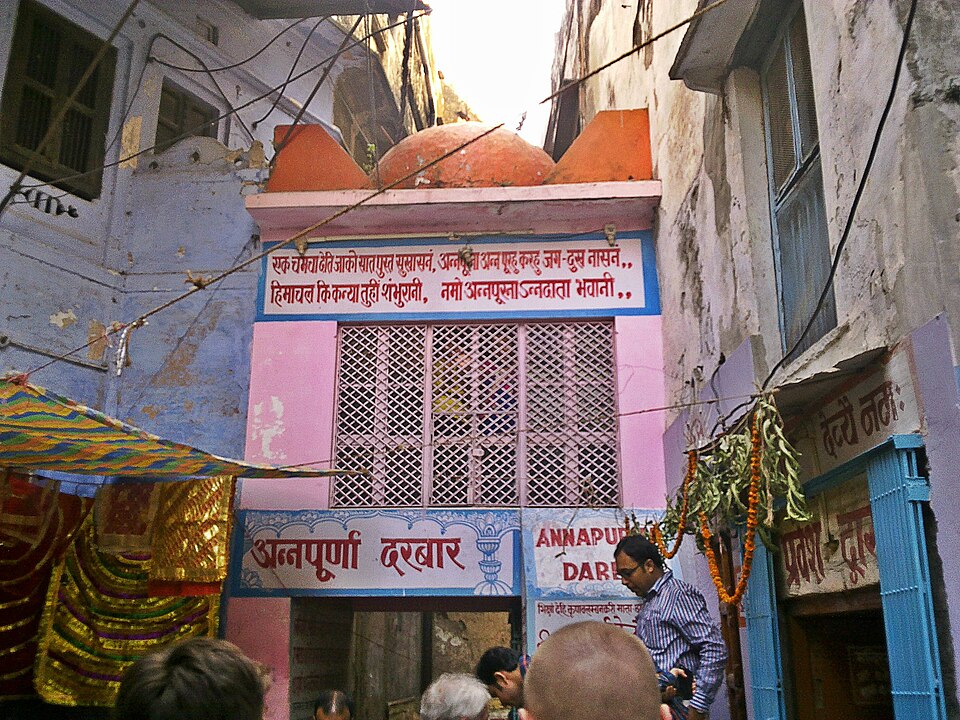
Introduction
The Puranic origins of Goddess Annapurna are deeply intertwined with the legend of Lord Shiva himself. According to the Shiva Purana, there arose a time when a cosmic illusion (Maya) led Shiva to believe that the entire universe was non-existent. In this state of profound detachment, he began to withhold food from the universe, leading to widespread starvation. To restore cosmic balance, Goddess Parvati manifested in her form as Annapurna. She descended to the banks of the Ganges in Kashi to distribute food, reminding even the Supreme Mahadeva that the physical sustenance provided by the Mother is essential for the continuation of the cosmic cycle. It is said that Shiva, recognizing the necessity of this nourishment, approached her with a begging bowl (bhiksha patra) to receive food, signifying that even the highest consciousness must respect the sustenance provided by the material energy (Shakti).
Culturally, the temple is more than just a place of worship; it is a symbol of the interconnectedness of life. In the philosophy of Hinduism, food is seen as 'Prasad'—a divine gift. The Annapurna Temple in Varanasi stands as a testament to the belief that the act of feeding others is one of the highest forms of Dharma. The temple's architecture and the atmosphere of devotion reflect the abundance of the Mother, offering a sense of security to the devotee that their physical and spiritual needs will be met.
For a newcomer, understanding the Annapurna Temple requires grasping the concept of 'Annadata' (the provider of food). The Goddess is not merely a provider of grain, but the provider of all 'Anna'—which in a broader sense includes knowledge, wisdom, and life force. By visiting this temple, devotees seek the grace to live a life of abundance, not out of greed, but to ensure they have enough to sustain themselves and share with the needy, thereby honoring the cycle of giving and receiving that sustains the universe.
Significance
Religiously, the temple holds a central place in the Shakta tradition, where the Goddess is worshipped as the ultimate reality. The practice of seeking her blessings is believed to alleviate 'Alakshmi'—the energy of poverty, scarcity, and chaos. By offering prayers to Annapurna, devotees aim to invite 'Shri' (prosperity and auspiciousness) into their homes. This prosperity is viewed holistically, encompassing health, wealth, and mental peace, ensuring that the household remains a place of stability and abundance.
Culturally and socially, the temple reinforces the Vedic principle of 'Atithi Devo Bhava' (the guest is God) and the duty of charity. In Varanasi, the tradition of 'Bhandara' (community kitchens) and feeding the poor is deeply influenced by the presence of the Annapurna deity. The temple serves as a constant reminder that wealth and food are not personal possessions to be hoarded, but resources to be circulated to maintain the cosmic equilibrium. To hold food is to hold a piece of the Divine, and to share it is to perform a sacred ritual.
Astrologically and philosophically, Annapurna is often associated with the stabilization of the Moon and Venus, influencing aspects of domestic peace and material comfort. Her grace is sought to overcome the 'Rina' (debts) of life, particularly the debt we owe to the elements and the ancestors for the food that sustains us. The fruits (phala) of her worship include the removal of anxieties regarding livelihood, the strengthening of the digestive and vital energies, and the cultivation of a spirit of gratitude, which is essential for spiritual evolution.
Best Time to Perform
Find your exact auspicious time Check the shubh muhurat and choghadiya for your city and date.
Required Samagri (Materials)
Preparation Steps
- 1Perform personal purification (Snana) before visiting the temple or starting home rituals.
- 2Clean the area where the deity will be placed if performing at home.
- 3Prepare the offerings (Prasad) with a sense of devotion and cleanliness.
- 4Ensure you are wearing clean, traditional attire (Dhoti/Sari/Salwar Kameez).
Step-by-Step Vidhi
- 1Aachaman: Sip a small amount of water three times to purify the inner self.
- 2Sankalpa: Take a handful of water and rice, stating your name and your intention for the prayer.
- 3Deepa Prajvalan: Light the lamp to invoke the presence of the Divine Light.
- 4Dhyana: Meditate on the form of Goddess Annapurna, visualizing her holding a golden bowl and a ladle.
- 5Abhishekam: If performing at home, gently bathe the deity/idol with milk, honey, or water.
- 6Naivedya: Offer the prepared food (Rice, fruits, sweets) to the Goddess.
- 7Arati: Perform the rhythmic waving of the camphor or ghee lamp while chanting hymns.
- 8Pradakshina: Walk clockwise around the deity or the temple sanctum to show respect and absorb the energy.
- 9Kshama Prarthana: Request forgiveness for any mistakes made during the ritual.
Mantras
Annapurna Moola Mantra
ॐ अन्नपूर्णायै नमः
Om Annapurnayai Namah
Meaning: Salutations to the Goddess who is full of food and nourishment.
Annapurna Stotram (Key Verse)
अन्नपूर्णे सदापूर्णे शङ्करप्राणवल्लभे । शृङ्गीरारुणपूर्णे शङ्करप्रिया ॥
Annapūrṇe sadāpūrṇe śaṅkara-prāṇa-vallabhe | śṛṅgī-rāruṇa-pūrṇe śaṅkara-priyā ||
Meaning: O Annapurna, who is ever-full, the beloved life-force of Lord Shiva, the one who is radiant and dear to Shankara.
Do's
- ✓Express gratitude before every meal.
- ✓Offer the first portion of your meal to the Divine/Deity.
- ✓Maintain cleanliness in the kitchen and dining area.
- ✓Share your abundance with those less fortunate.
Don'ts
- ✗Do not disrespect food or throw it away carelessly.
- ✗Do not consume food prepared in a state of anger or agitation.
- ✗Do not perform rituals with unclean hands or mind.
- ✗Avoid excessive greed or hoarding during periods of special devotion.
Common Mistakes to Avoid
- •Treating food as a mere commodity rather than a divine blessing.
- •Performing rituals mechanically without internal devotion (Bhava).
- •Neglecting the importance of cleanliness (Shaucha) in food preparation.
- •Assuming that material abundance is separate from spiritual discipline.
Regional Variations
- •In South India, Annapurna is often worshipped with specific South Indian grain offerings like Pongal.
- •In Bengal, the Goddess is often integrated into the broader Shakta traditions with specific tantric nuances.
- •In many households, the tradition of 'Annapurna Puja' is performed during housewarming or when setting up a new kitchen.
Frequently Asked Questions
What is the best way to seek blessings for prosperity?▾
Can I worship Annapurna Devi at home?▾
Is there a specific day for her worship?▾
Popular Tools
References & Traditional Notes
- •The Annapurna Stotram is traditionally attributed to Adi Shankaracharya.
- •Note: Always follow the specific customs of your family lineage (Kulachara) regarding offerings.
- •In Varanasi, the temple is located near the Kashi Vishwanath temple, signifying the union of Shiva and Shakti.
Related Audio & Bhajans
Om Hreem Shreem Kleem Bhagavati Maheshwari Annapurne Swaha 108 Times _ Goddess Annapurna Devi Mantra
Temple
Affiliate disclosure: Sanatan Hindu participates in the Amazon Associates Programme and the CueLinks affiliate network (Myntra & Flipkart). This page contains affiliate links, if you click and buy, we earn a small commission at no extra cost to you. As an Amazon Associate we earn from qualifying purchases. Full disclosure.
Shop Samagri on Amazon.in
Clicking opens Amazon.in. Prices and availability may vary.
Browse all pooja itemsAmazon Associates tag: geekydevelope-21
Shop Pooja & Festive Essentials on Flipkart
Clicking opens Flipkart via our affiliate link. Prices and availability may vary.
Shop on FlipkartCueLinks Publisher: 300371
Shop Festive Wear on Myntra
Clicking opens Myntra via our affiliate link. Prices and availability may vary.
CueLinks Publisher: 300371