
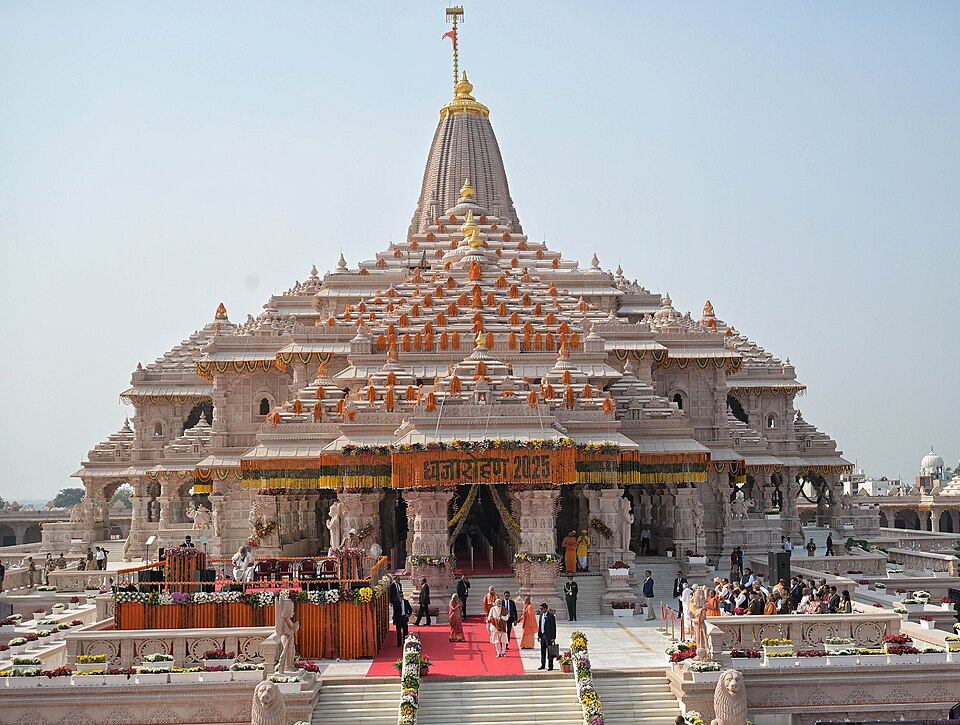
Ayodhya Ram Mandir — History, Significance and Darshan Guide
Discover the history and significance of Ayodhya Ram Mandir, a sacred Hindu site.
Affiliate disclosure: Sanatan Hindu participates in the Amazon Associates Programme and the CueLinks affiliate network (Myntra & Flipkart). This page contains affiliate links, if you click and buy, we earn a small commission at no extra cost to you. As an Amazon Associate we earn from qualifying purchases. Full disclosure.
Next Ram Navami
Thursday, 15 April 2027· in 179 days
Set a reminder so you never miss Ram Navami.
Introduction
Significance
Best Time to Perform
Find your exact auspicious time Check the shubh muhurat and choghadiya for your city and date.
Required Samagri (Materials)
Preparation Steps
- 1Reach the temple early in the morning
- 2Take a bath and wear clean clothes
- 3Bring prasad and offerings for Lord Rama
Step-by-Step Vidhi
- 1Enter the temple and take a darshan of Lord Rama
- 2Offer prasad and flowers to the deity
- 3Perform aarti and take the blessings of Lord Rama
Mantras
Ram Stuti
श्री रामचंद्र कृपालु भजमनहरन
Shri Ramachandra Kripalu Bhajamaan Haran
Meaning: Oh Lord Rama, you are the embodiment of compassion and kindness. I bow down to you and seek your blessings.
Ram Aarti
आरती कीजै हनुमान लला की
Aarti Keejai Hanuman Lala Ki
Meaning: Let us perform the aarti of Lord Hanuman, who is the devotee of Lord Rama and the embodiment of strength and courage.
Do's
- ✓Offer prasad and flowers to the deity
- ✓Perform aarti and take the blessings of Lord Rama
- ✓Respect the temple premises and follow the rules
Don'ts
- ✗Do not enter the temple with shoes on
- ✗Do not touch the deity or the temple premises with dirty hands
- ✗Do not litter or create disturbance in the temple premises
Common Mistakes to Avoid
- •Not following the temple rules and regulations
- •Not respecting the deity and the temple premises
- •Not performing the puja and aarti with devotion and sincerity
Regional Variations
- •The temple is also known as the Ram Janmabhoomi in some regions
- •The temple is celebrated during the Ram Navami festival in some regions
- •The temple has different customs and traditions in different regions
Frequently Asked Questions
What is the best time to visit the Ayodhya Ram Mandir?▾
What are the required samagri for visiting the Ayodhya Ram Mandir?▾
Popular Tools
References & Traditional Notes
- •The Ayodhya Ram Mandir is mentioned in the Ramayana and the Mahabharata
- •The temple is also mentioned in the Puranas and the Upanishads
- •The temple has a rich history and cultural significance, with its construction dating back to the 10th century
Related Audio & Bhajans
Ayodhya Nagari Nache Ramanku Pai
Affiliate disclosure: Sanatan Hindu participates in the Amazon Associates Programme and the CueLinks affiliate network (Myntra & Flipkart). This page contains affiliate links, if you click and buy, we earn a small commission at no extra cost to you. As an Amazon Associate we earn from qualifying purchases. Full disclosure.
Shop Samagri on Amazon.in
Clicking opens Amazon.in. Prices and availability may vary.
Browse all pooja itemsAmazon Associates tag: geekydevelope-21
Shop Pooja & Festive Essentials on Flipkart
Clicking opens Flipkart via our affiliate link. Prices and availability may vary.
Shop on FlipkartCueLinks Publisher: 300371
Shop Festive Wear on Myntra
Clicking opens Myntra via our affiliate link. Prices and availability may vary.
CueLinks Publisher: 300371
Need a website? Describe it, and AI builds it.
Perfect for a temple, pooja service, astrology practice or small shop. Tell the AI what you want — or drag and drop the classic way — and go live on your own web address in minutes with Sitova. Hosting, SEO, forms and analytics are all included.
- Build with AI or drag & drop
- Your domain + SEO built in
- Free forever plan
Opens sitova.site