
Charan Sparsh: The Sacred Tradition of Touching Feet and Its Spiritual Science
Explore the deep spiritual significance, scientific reasoning, and sacred traditions behind Charan Sparsh (touching feet) in Hindu culture and Vedic science.
Affiliate disclosure: Sanatan Hindu participates in the Amazon Associates Programme and the CueLinks affiliate network (Myntra & Flipkart). This page contains affiliate links, if you click and buy, we earn a small commission at no extra cost to you. As an Amazon Associate we earn from qualifying purchases. Full disclosure.
Next Guru Purnima
Sunday, 18 July 2027· in 240 days
Set a reminder so you never miss Guru Purnima.
Introduction
Historically, this practice finds its roots in the Vedic age and is echoed in various Puranic legends where disciples would seek the blessings of their gurus by prostrating at their feet. The act represents the concept of 'Sharanagati' or complete surrender to a higher authority, whether that be a parent, a teacher, or a spiritual master. In the context of family, it reinforces the hierarchy of wisdom and experience, acknowledging that those who have walked the path before us possess a reservoir of knowledge and grace that can guide our own journey.
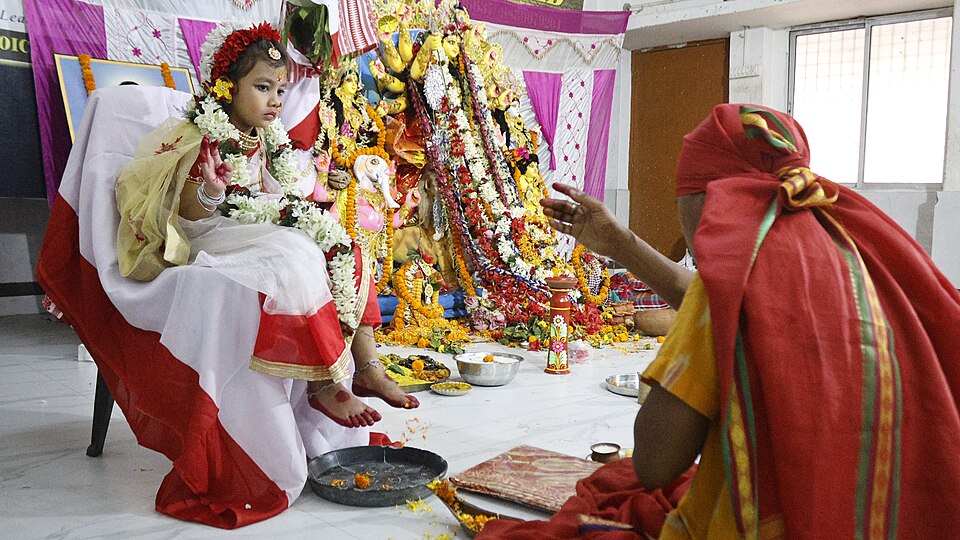
Beyond the family unit, Charan Sparsh extends to the divine. In temples, devotees bow before the 'Charan-Kamal' (lotus feet) of the deity. This practice is rooted in the belief that the divine energy (Shakti) flows through the entire body of the deity, and the feet are a sacred gateway to receiving that grace. By touching the feet, a devotee is symbolically asking for the removal of obstacles and the infusion of divine qualities into their own life.
Culturally, this tradition serves as a social glue, maintaining the sanctity of relationships and fostering a sense of continuity across generations. It is a silent acknowledgment of the 'Atman' (soul) within the other person. Whether it is done during festivals like Diwali, upon returning from a journey, or as a daily morning ritual, Charan Sparsh remains a cornerstone of Sanatana Dharma, blending physical action with profound psychological and spiritual intent.
Significance
From a psychological perspective, the practice of Charan Sparsh helps in curbing the 'Ahankara' (ego). In a modern world that often promotes individualism and self-centeredness, the ritual of bowing forces an individual to recognize that they are part of a larger lineage and a greater cosmic order. It cultivates a sense of gratitude and respect, which are essential for emotional maturity and social harmony. It teaches the practitioner the value of listening and receiving before acting or speaking.
Scientifically and energetically, the tradition is grounded in the concept of the human bio-magnetic field. Every living being is surrounded by an aura or an electromagnetic field. The feet are the points through which much of this energy is grounded into the Earth. When a person touches the feet of an enlightened or respected elder, a circuit is completed between the two individuals. This contact allows for the transfer of subtle energy (Prana). The warmth and the bio-magnetic field of the elder's feet can influence the nervous system of the person bowing, inducing a state of calm and receptivity.
Furthermore, in the context of Marma points (vital energy points) in Ayurveda, the feet contain several critical points that respond to touch. The physical act of bowing and touching the feet can stimulate certain energy centers, promoting a sense of physiological grounding. Thus, what looks like a simple gesture is actually a sophisticated method of energetic exchange intended to harmonize the seeker's energy with the wisdom of the elder.
Auspicious Time
Find your exact auspicious time Check the shubh muhurat and choghadiya for your city and date.
Required Samagri (Materials)
Preparation Steps
- 1Ensure your mind is free from arrogance or anger.
- 2Approach the elder with a calm and steady gait.
- 3Ensure the space is appropriate for the gesture.
Steps
- 1Approach the elder or guru with a slight bow of the head.
- 2Bend forward from the waist to show respect.
- 3Reach down with both hands to touch the feet of the person.
- 4If the person is a Guru or a deity, one might perform 'Sashtang Pranam' (prostrating fully on the ground).
- 5While touching the feet, mentally seek their blessings and guidance.
- 6Wait for the elder to place their hand on your head, which signifies the giving of Ashirvad (blessings).
Mantras
Guru Mantra
गुरुर्ब्रह्मा गुरुर्विष्णुः गुरुर्देवो महेश्वरः। गुरुः साक्षात् परब्रह्म तस्मै श्रीगुरवे नमः॥
Gurur Brahma Gurur Vishnuh Gurur Devo Maheshvarah | Guruh Sakshat Parabrahma Tasmai Shri Gurave Namah ||
Meaning: The Guru is Brahma, the Guru is Vishnu, the Guru is Maheshwara (Shiva). The Guru is the Supreme Brahman itself. Salutations to that glorious Guru.
General Blessing Request
ॐ शान्तिः शान्तिः शान्तिः
Om Shantihi Shantihi Shantih
Meaning: Om, Peace, Peace, Peace.
Guidelines
- •Perform with a pure heart and intention.
- •Maintain silence or chant a mantra while performing the act.
- •Ensure the person being greeted is in a state of mental composure if possible.
Do's
- ✓Use both hands to touch the feet.
- ✓Maintain eye contact (looking down respectfully) until the gesture is complete.
- ✓Stay in the bowed position until the elder acknowledges you or places a hand on your head.
- ✓Show genuine gratitude through your expression.
Don'ts
- ✗Do not touch feet with only one hand; it is considered incomplete and disrespectful.
- ✗Do not perform Charan Sparsh while feeling intense anger or resentment.
- ✗Do not rush the process; it is a ritual, not a checklist item.
- ✗Do not touch the feet of someone while they are performing a sacred task or in a state of deep meditation unless permitted.
Common Mistakes to Avoid
- •Treating it as a mechanical habit without spiritual awareness.
- •Touching only the toes instead of the full foot area.
- •Looking up too quickly before the elder has finished the blessing.
- •Performing the act with a sense of obligation rather than devotion.
Regional Variations
- •In many South Indian traditions, the person may perform a full prostration (Sashtang Pranam) more frequently.
- •In some North Indian households, touching the feet is a standard daily greeting for parents and grandparents.
- •In some Sampradayas, specific hand gestures or mantras are used when touching the feet of a Guru.
Frequently Asked Questions
Why should we touch feet instead of just bowing the head?▾
Is it necessary to touch the feet of everyone older than me?▾
What if I cannot physically bend down to touch feet?▾
Popular Tools
References & Traditional Notes
- •The practice is supported by the concept of 'Pranam' in various Vedic texts.
- •Different lineages (Sampradayas) may have specific nuances regarding who is eligible for Charan Sparsh.
- •The concept of 'Charan-Kamal' (Lotus Feet) is a recurring theme in Bhakti literature.
Related Audio & Bhajans
Affiliate disclosure: Sanatan Hindu participates in the Amazon Associates Programme and the CueLinks affiliate network (Myntra & Flipkart). This page contains affiliate links, if you click and buy, we earn a small commission at no extra cost to you. As an Amazon Associate we earn from qualifying purchases. Full disclosure.
Shop Samagri on Amazon.in
Clicking opens Amazon.in. Prices and availability may vary.
Browse all pooja itemsAmazon Associates tag: geekydevelope-21
Shop Pooja & Festive Essentials on Flipkart
Clicking opens Flipkart via our affiliate link. Prices and availability may vary.
Shop on FlipkartCueLinks Publisher: 300371
Shop Festive Wear on Myntra
Clicking opens Myntra via our affiliate link. Prices and availability may vary.
CueLinks Publisher: 300371
Need a website? Describe it, and AI builds it.
Perfect for a temple, pooja service, astrology practice or small shop. Tell the AI what you want — or drag and drop the classic way — and go live on your own web address in minutes with Sitova. Hosting, SEO, forms and analytics are all included.
- Build with AI or drag & drop
- Your domain + SEO built in
- Free forever plan
Opens sitova.site