
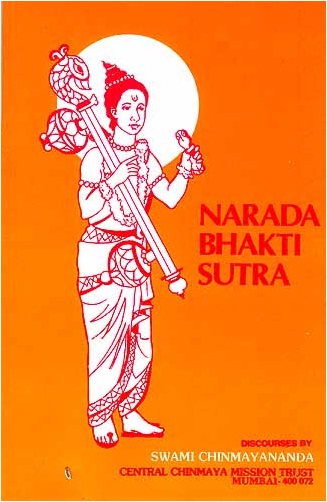
Narada Bhakti Sutra: 84 Aphorisms on Divine Love
Comprehensive guide to Narada Bhakti Sutra — 84 sacred aphorisms on supreme devotion, philosophy, practice, and liberation through divine love.
Affiliate disclosure: Sanatan Hindu participates in the Amazon Associates Programme and the CueLinks affiliate network (Myntra & Flipkart). This page contains affiliate links, if you click and buy, we earn a small commission at no extra cost to you. As an Amazon Associate we earn from qualifying purchases. Full disclosure.
Next Guru Purnima
Sunday, 18 July 2027· in 285 days
Set a reminder so you never miss Guru Purnima.
Introduction
Significance
Auspicious Time
Find your exact auspicious time Check the shubh muhurat and choghadiya for your city and date.
Required Samagri (Materials)
Preparation Steps
- 1Take a purificatory bath and wear clean, preferably white or yellow, clothing
- 2Clean the study/altar area thoroughly; sprinkle Ganga jal if available
- 3Set up an altar with a deity image or murti of Vishnu, Krishna, Rama, or your Ishta Devata
- 4Place the Narada Bhakti Sutra text on a raised wooden stand (peetha) covered with silk cloth
- 5Light the ghee lamp and incense; offer flowers and tulsi leaves to the deity and the text
- 6Invoke the Guru parampara, Narada Muni, and the deity with folded hands (anjali mudra)
- 7Sit in a comfortable meditative posture (sukhasana, padmasana, or on a chair) facing east or north
- 8Calm the mind with a few rounds of deep breathing or pranayama
Steps
- 1Begin with the invocation mantra: 'Om Naradaya Namah' and 'Om Gurubhyo Namah' chanted three times each
- 2Recite the opening sutra 'atha bhaktim vyakhyasyamah' slowly, with correct Sanskrit pronunciation and full attention
- 3Read one sutra at a time, pausing after each to reflect on its meaning, implication, and application in your life
- 4If using a commentary (bhashya) — such as those by Shankara, Ramanuja, Madhva, or modern acharyas — study it alongside the sutra
- 5Chant key sutras repeatedly as mantra-japa (e.g., sutras 1, 2, 3, 54, 84) to internalize their vibration
- 6After completing a chapter or the entire text, sit in silent meditation (dhyana) for 10–15 minutes, absorbing the teachings
- 7Offer the merit of study to the Supreme Lord with the prayer: 'Sarvam Sri Krishnarpanamastu'
- 8Distribute prasadam to family, guests, or offer to cows/birds
Mantras
Invocation to Narada Muni
ॐ नारदाय नमः
Om Naradaya Namah
Meaning: Salutations to Sage Narada, the divine embodiment of bhakti and the revealer of this sutra.
Invocation to the Guru Parampara
ॐ गुरुभ्यो नमः
Om Gurubhyo Namah
Meaning: Salutations to the lineage of spiritual masters who preserve and transmit the knowledge of bhakti.
Opening Sutra (Sutra 1)
अथ भक्तिं व्याख्यास्यामः
Atha bhaktim vyakhyasyamah
Meaning: Now, therefore, we shall expound the nature of bhakti (supreme devotion).
Definition of Bhakti (Sutra 2)
सा परानुरक्तिरीश्वरे
Sa paranuraktir Ishvare
Meaning: That (bhakti) is supreme, continuous, selfless attachment/love directed solely toward the Supreme Lord.
Renunciation for Bhakti (Sutra 3)
Tasmin pranapriyadau tyage bhaktir bhavati
Meaning: Bhakti arises when one renounces even life-breath and dearest possessions for the sake of the Lord.
Exclusivity of Bhakti (Sutra 4)
व्यावृत्तिरन्यत्र च
Vyavrittir anyatra cha
Meaning: And (bhakti implies) turning away completely from all else — total exclusivity of heart toward God.
Fruit of Bhakti: Grace for the World (Sutra 84)
लोकानां तदनुग्रहाय
Lokanam tad-anugrahaya
Meaning: For the purpose of bestowing grace upon the worlds — the perfected devotee becomes an instrument of divine compassion.
Concluding Offering Mantra
श्रीकृष्णार्पणमस्तु
Shri Krishnarpanamastu
Meaning: Let all this be offered unto Sri Krishna (the Supreme Lord).
Guidelines
- •Maintain physical and mental purity (shaucha) throughout the study period
- •Observe celibacy (brahmacharya) or marital fidelity as per your ashrama during intensive study
- •Eat only sattvic, vegetarian food; avoid onion, garlic, intoxicants, and stale food
- •Speak truthfully and minimally (mauna preferred during study hours)
- •Sleep on a simple bed or floor; avoid luxury and sensory indulgence
- •Dedicate the fruit of study to the Lord — never for fame, debate, or material gain
Do's
- ✓Study under the guidance of a qualified guru or within a recognized sampradaya
- ✓Approach each sutra with shraddha (faith), not mere intellectual curiosity
- ✓Apply at least one teaching practically each day — e.g., see God in all beings (sutra 54)
- ✓Chant the sutras melodically to engage the heart (bhava) not just the intellect
- ✓Keep a spiritual journal to record insights, obstacles, and progress
- ✓Share the teachings humbly with sincere seekers when appropriate
Don'ts
- ✗Do not treat the sutras as academic philosophy or literary poetry — they are living mantras
- ✗Do not skip reflection (manana) after reading; the sutra format demands unpacking
- ✗Do not argue about interpretations without direct experience or guru's sanction
- ✗Do not mix bhakti with desire for siddhis (powers), wealth, or heavenly realms
- ✗Do not criticize other paths or deities; Narada honors all genuine devotion
- ✗Do not study in a distracted, impure, or arrogant state of mind
Common Mistakes to Avoid
- •Reading mechanically without pausing for contemplation — the 'parrot approach'
- •Confusing emotional excitement (bhava) with mature, steady devotion (prema)
- •Ignoring the prerequisite of ethical purity (yama-niyama) as foundation for bhakti
- •Using the text to justify neglect of worldly duties (dharma) — Narada upholds varnashrama
- •Assuming bhakti is only for the 'emotional' temperament; it is a rigorous yoga for all
- •Neglecting the role of Guru — Narada himself received knowledge from his gurus
Regional Variations
- •In South Indian Sri Vaishnavism (Ramanuja sampradaya), studied with Tamil commentaries like 'Naradiya Bhakti Sutram' by Pillai Lokacharya, emphasizing prapatti (surrender)
- •In Gaudiya Vaishnavism (Chaitanya Mahaprabhu's line), sutras are interpreted through the lens of rasa-bhakti and gopi-prema, with focus on sutras 54–60 on madhurya-rasa
- •In Madhva's Dvaita tradition, the sutras are taught with emphasis on Vishnu's supremacy and the eternal distinction between jiva and Ishvara
- •In North Indian Ramanandi and Nimbarka sampradayas, recited during Chaturmasya with Hindi/Gujarati commentaries and kirtan
- •In contemporary yoga centers worldwide, often taught as a 'bhakti yoga' text detached from deity-specific theology — a modern adaptation
Frequently Asked Questions
Who was Narada Muni and why is he the authority on bhakti?▾
Is the Narada Bhakti Sutra only for Vaishnavas?▾
How many chapters and sutras are there, and what do they cover?▾
Can a beginner study this text without a guru?▾
What is the relationship between Narada Bhakti Sutra and Shandilya Bhakti Sutra?▾
Are there specific days or festivals to honor this text?▾
Popular Tools
References & Traditional Notes
- •The Narada Bhakti Sutra is cited in the Padma Purana (Uttara Khanda), Skanda Purana, and Narada Purana as the essence of bhakti shastra.
- •Major classical commentaries: Adi Shankara (attributed, though debated), Ramanuja's school (via Pillai Lokacharya), Madhvacharya (via Jayatirtha), Vallabhacharya, and Baladeva Vidyabhushana (Gaudiya).
- •Quoted extensively by medieval saints: Tulsidas (Ramcharitmanas), Mirabai, Surdas, Namdev, Eknath, Chaitanya Mahaprabhu (via his followers).
- •Sutra 54 ('Yatha gopikanam...') is the locus classicus for madhurya-rasa (conjugal love) in Gaudiya theology.
- •The number 84 symbolizes completeness — 84 lakh yonis (species), 84 siddhas, 84 asanas — indicating bhakti transcends all embodied existence.
Related Audio & Bhajans
Vara Narada
Affiliate disclosure: Sanatan Hindu participates in the Amazon Associates Programme and the CueLinks affiliate network (Myntra & Flipkart). This page contains affiliate links, if you click and buy, we earn a small commission at no extra cost to you. As an Amazon Associate we earn from qualifying purchases. Full disclosure.
Shop Samagri on Amazon.in
Clicking opens Amazon.in. Prices and availability may vary.
Browse all pooja itemsAmazon Associates tag: geekydevelope-21
Shop Pooja & Festive Essentials on Flipkart
Clicking opens Flipkart via our affiliate link. Prices and availability may vary.
Shop on FlipkartCueLinks Publisher: 300371
Shop Festive Wear on Myntra
Clicking opens Myntra via our affiliate link. Prices and availability may vary.
CueLinks Publisher: 300371
Need a website? Describe it, and AI builds it.
Perfect for a temple, pooja service, astrology practice or small shop. Tell the AI what you want — or drag and drop the classic way — and go live on your own web address in minutes with Sitova. Hosting, SEO, forms and analytics are all included.
- Build with AI or drag & drop
- Your domain + SEO built in
- Free forever plan
Opens sitova.site