
Natya Shastra: The Divine Science of Dance, Drama, and Aesthetics by Bharata Muni
Explore the Natya Shastra, the foundational treatise on Indian performing arts, exploring its divine origins, Rasa theory, and spiritual significance.
एफ़िलिएट प्रकटीकरण: सनातन हिंदू अमेज़न एसोसिएट्स प्रोग्राम और CueLinks एफ़िलिएट नेटवर्क (मिंत्रा और फ्लिपकार्ट) में भाग लेता है। इस पृष्ठ पर एफ़िलिएट लिंक हैं: यदि आप क्लिक करके खरीदते हैं तो हमें एक छोटा कमीशन मिलता है, आप पर बिना किसी अतिरिक्त लागत के। अमेज़न एसोसिएट के रूप में हम पात्र खरीद से कमाते हैं। पूरा प्रकटीकरण।
यह लेख अभी अंग्रेज़ी में उपलब्ध है। हिंदी अनुवाद के लिए नीचे बटन दबाएँ।
Next Maha Shivaratri
Saturday, 6 March 2027· in 179 days
Set a reminder so you never miss Maha Shivaratri.
Introduction
According to the Puranic legends, the origin of Natya Shastra is divine. During a period when the world was descending into chaos and moral decay, the gods approached Lord Brahma, seeking a means to provide spiritual instruction, entertainment, and relief from suffering to all beings—regardless of their social standing. Brahma, in his infinite wisdom, synthesized the essence of the four Vedas: the Pathya (text/words) from the Rigveda, the Geya (music/melody) from the Samaveda, the Abhinaya (expression/gestures) from the Yajurveda, and the Rasa (aesthetic emotion/essence) from the Atharvaveda. This 'Fifth Veda' was then handed down to Bharata Muni, who codified these divine principles into the structured system we study today.
The Natya Shastra introduces a holistic worldview where the performer is a medium for the divine. It posits that through the perfect alignment of rhythm (Tala), melody (Raga), and movement (Nritya), the artist can evoke specific emotional states in the audience. This is not intended for mere hedonism but as a form of 'Sadhana' (spiritual practice). The text provides meticulous instructions on everything from stage construction and costume design to the intricate nuances of hand gestures (Mudras), facial expressions (Mukhabhinaya), and the psychological depths of human emotion. It treats the stage as a sacred space, a microcosm of the universe where the cosmic play (Lila) of the deities is reenacted.
In the broader cultural context, the Natya Shastra has shaped the identity of the Indian subcontinent for millennia. It provides a common grammar for the diverse dance forms that emerged across various regions, ensuring that while the styles may differ, the underlying spiritual and aesthetic principles remain unified. To study the Natya Shastra is to study the soul of Indian aesthetics, understanding how sound, sight, and feeling converge to create a transcendental experience that bridges the gap between the mortal and the divine.
Significance
Spiritually, the practice of Natya (drama) and Nritya (dance) is considered a form of Yoga. Just as a yogi seeks union with the Divine through meditation, the performer seeks a state of total absorption (Samadhi) through the discipline of movement and expression. The mastery of the body is not an end in itself but a means to discipline the mind and spirit. When a performer executes a gesture with perfect precision and devotion, they are performing a ritual act that honors the cosmic order (Dharma). The stage becomes a temple, and the performance becomes an offering (Arpana) to the presiding deity.
Culturally, the Natya Shastra provides a structured framework that has allowed Indian classical arts to survive through centuries of political and social upheaval. By codifying the 'grammar' of art, it ensured that even as regional styles evolved, the core philosophical integrity remained intact. It serves as a bridge between the sacred Vedic rituals and the secular world of entertainment, demonstrating that there is no true divide between the holy and the beautiful. The arts, as prescribed by Bharata Muni, serve the purpose of 'Lokavritta'—the education and upliftment of the masses.
Furthermore, the text holds immense psychological significance. It provides a detailed map of the human psyche, categorizing emotions and their physical manifestations. By understanding the relationship between internal feeling and external expression, the Natya Shastra offers insights into the nature of human consciousness. The study of Rasa allows practitioners to navigate the complexities of human experience with grace and awareness, turning the spectacle of life into a meaningful and aesthetically coherent journey.
Auspicious Time
Find your exact auspicious time Check the shubh muhurat and choghadiya for your city and date.
Required Samagri (Materials)
Preparation Steps
- 1Purify the space by cleaning the stage or practice area thoroughly.
- 2Perform a ritual cleansing of the body (Snana) to enter a state of physical purity.
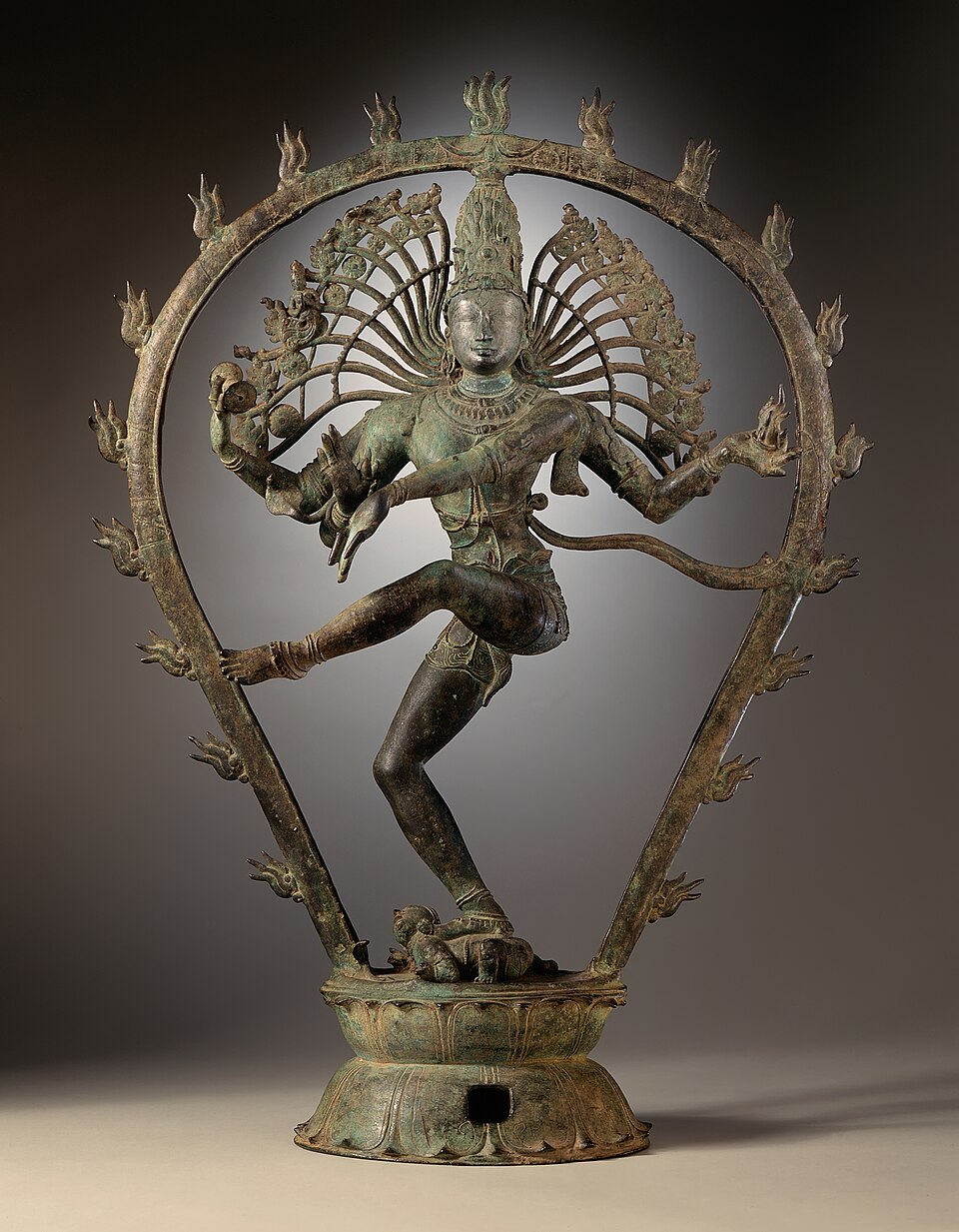
- 3Meditate on Lord Nataraja or the lineage of your Guru to establish mental focus.
- 4Arrange the sacred items (Samagri) on an altar or dedicated corner.
- 5Light the lamp (Deepam) to symbolize the removal of ignorance and the presence of the Divine.
Steps
- 1Sankalpa: State your intention to practice or perform as a form of worship and artistic excellence.
- 2Dhyana: Perform a period of silent meditation to connect with the rhythm of the universe.
- 3Guru Vandana: Offer salutations to the Guru, acknowledging the lineage (Parampara) that passed down this knowledge.
- 4Prarthana: Recite prayers or mantras to Lord Shiva (Nataraja) or Saraswati to seek blessings for creativity and expression.
- 5Angasuddhi: Perform physical warm-ups and ritualized movements to align the body, breath, and mind.
- 6Abhinaya/Nritya Practice: Begin the actual practice, focusing on the precision of Mudras (hand gestures) and Rasa (emotions).
- 7Arpanam: Conclude the session by offering the fruits of your practice to the Divine, acknowledging that the talent belongs to the Creator.
Mantras
Nataraja Dhyana Mantra
नटराजाय विद्महे, वक्रतुण्डाय धीमहि, तन्नो नन्दीश्वर प्रचोदयात्।
Natarajaya Vidmahe, Vakratundaya Dhimahi, Tanno Nandishvara Prachodayat.
Meaning: We meditate upon the Lord of Dance; May the Lord with the curved trunk (Ganesha/Nataraja context) inspire and illuminate our intellect.
Saraswati Vandana
या कुन्देन्दुतुषारहारधवला या शुभ्रवस्त्रावृता।
Ya Kundendu Tushara Hara Dhavala, Ya Shubhra Vastravrita.
Meaning: Salutations to the Goddess who is as white as the jasmine flower, the moon, and the frost, and who is draped in pure white garments.
Guidelines
- •Maintain physical purity (Shaucha) throughout the practice session.
- •Observe silence (Mauna) before and after intense practice to preserve energy.
- •Adhere to a Sattvic diet (pure, vegetarian, fresh) to maintain clarity of mind.
- •Respect the sacredness of the instruments and the performance space.
Do's
- ✓Always seek permission and blessings from your Guru before starting a new repertoire.
- ✓Maintain absolute focus on the 'Rasa' (emotion) being portrayed.
- ✓Ensure the synchronization of 'Tala' (rhythm) and 'Laya' (tempo).
- ✓Treat the stage as a sanctified space.
Don'ts
- ✗Do not perform without a sense of devotion (Bhakti) or purpose.
- ✗Avoid ego-driven performances; the artist is a vessel for the art.
- ✗Do not misuse sacred Mudras for trivial or disrespectful purposes.
- ✗Avoid disruptive or unrefined movements that break the aesthetic flow.
Common Mistakes to Avoid
- •Focusing solely on physical technique (Nritta) while neglecting emotional expression (Abhinaya).
- •Ignoring the spiritual connection and treating dance as mere gymnastics.
- •Lack of precision in hand gestures (Mudras), leading to ambiguity in meaning.
- •Performing without proper grounding or breath control (Pranayama).
Regional Variations
- •South Indian traditions (e.g., Bharatanatyam) place heavy emphasis on geometric lines and temple aesthetics.
- •North Indian traditions (e.g., Kathak) emphasize rapid footwork and rhythmic spins (Chakkars).
- •Eastern traditions (e.g., Odissi) focus on the Tribhangi (three-bend) posture and lyrical grace.
- •Guru-Shishya Parampara: Each lineage (Sampradaya) may have specific nuances in how Mudras or Rasas are interpreted.
Frequently Asked Questions
Is Natya Shastra only about dance?▾
Who is the primary deity associated with Natya Shastra?▾
What is the meaning of 'Rasa'?▾
लोकप्रिय टूल
References & Traditional Notes
- •Note: The interpretation of Mudras can vary slightly between different classical dance forms.
- •Note: The concept of 'Sahrdaya' implies that the audience must be spiritually and aesthetically prepared to receive the art.
- •Note: Always follow the specific instructions of your Guru regarding the application of Rasa.
Related Audio & Bhajans
Mahabharata (Epic Instrumental) (Instrumental)
Economic Prosperity in the Black Community
Divine
Bharatanatyam - Vaibhavi Kenkare (Live Performance)
Bharatanatyam Ballet on Ramayana (Vol. IV)
एफ़िलिएट प्रकटीकरण: सनातन हिंदू अमेज़न एसोसिएट्स प्रोग्राम और CueLinks एफ़िलिएट नेटवर्क (मिंत्रा और फ्लिपकार्ट) में भाग लेता है। इस पृष्ठ पर एफ़िलिएट लिंक हैं: यदि आप क्लिक करके खरीदते हैं तो हमें एक छोटा कमीशन मिलता है, आप पर बिना किसी अतिरिक्त लागत के। अमेज़न एसोसिएट के रूप में हम पात्र खरीद से कमाते हैं। पूरा प्रकटीकरण।
Amazon.in पर पूजा सामग्री खरीदें
क्लिक करने पर Amazon.in खुलता है। कीमत और उपलब्धता बदल सकती है।
सभी पूजा वस्तुएँ देखेंअमेज़न एसोसिएट्स टैग: geekydevelope-21
फ्लिपकार्ट पर पूजा और त्योहारी सामग्री खरीदें
क्लिक करने पर हमारे एफ़िलिएट लिंक से फ्लिपकार्ट खुलता है। कीमत और उपलब्धता बदल सकती है।
फ्लिपकार्ट पर खरीदेंCueLinks प्रकाशक: 300371
मिंत्रा पर त्योहारी परिधान खरीदें
क्लिक करने पर हमारे एफ़िलिएट लिंक से मिंत्रा खुलता है। कीमत और उपलब्धता बदल सकती है।
CueLinks प्रकाशक: 300371