
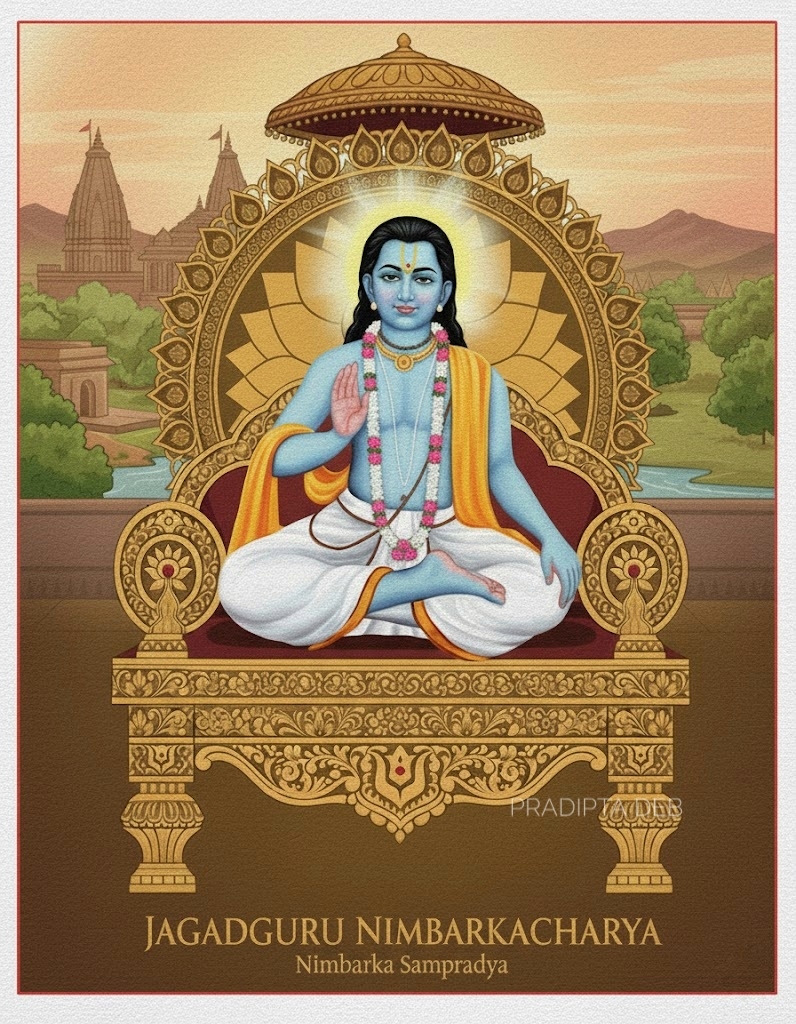
Nimbarkacharya: The Prophet of Dvaitadvaita and Divine Radha Krishna Devotion
Explore the profound Dvaitadvaita philosophy of Shri Nimbarkacharya, the eternal devotion to Radha Krishna, and the spiritual essence of the Kumara Sampradaya.
Affiliate disclosure: Sanatan Hindu participates in the Amazon Associates Programme and the CueLinks affiliate network (Myntra & Flipkart). This page contains affiliate links, if you click and buy, we earn a small commission at no extra cost to you. As an Amazon Associate we earn from qualifying purchases. Full disclosure.
Next Janmashtami
Tuesday, 24 August 2027· in 349 days
Set a reminder so you never miss Janmashtami.
Introduction
Central to his teachings and the entire Sampradaya is the ecstatic worship of the divine couple, Shri Radha and Shri Krishna. While many traditions focus on Krishna alone, Nimbarkacharya emphasized that Krishna's sweetness (Madhurya) is fully manifest only through His eternal consort, Radha. This 'Yugala Upasana' (worship of the divine pair) posits that Radha and Krishna are one essence manifested in two forms to facilitate the eternal play of divine love (Lila). This perspective shifted the spiritual focus from mere awe and reverence to a deeply personal, loving, and emotional connection with the Divine, known as Prema-bhakti.
The origins of Nimbarkacharya’s lineage are deeply rooted in the ancient Puranic traditions. He is believed to have received his spiritual wisdom through rigorous tapas (austerity) and divine revelation, establishing a lineage that traces its spiritual authority back to the direct transmission of knowledge from the Supreme Lord. His life was dedicated to the propagation of Vedic truths through literature, debate, and the establishment of many mathas (monasteries) that continue to serve as bastions of Sanatana Dharma.
Culturally, Nimbarkacharya's influence is felt most deeply in the Braj region of India, where his emphasis on Radha-Krishna worship has shaped the very soul of local festivities, temple rituals, and devotional music. His teachings provided a bridge for seekers to move from the intellectual complexities of the Upanishads to the heart-centered devotion of the Bhakti movement. By understanding Nimbarkacharya, one gains insight into a balanced spiritual path that respects both the majesty of God and the intimacy of divine love.
Significance
Spiritually, the emphasis on Radha-Krishna worship (Yugala Upasana) offers a profound psychological and emotional benefit. In the pursuit of Moksha (liberation), Nimbarkacharya suggests that the highest state is not merely a cessation of suffering, but the attainment of 'Nitya-Lila'—participating in the eternal, blissful play of the divine couple. This transforms the concept of salvation from a 'destination' to a 'relationship.' The practitioner learns to view the world not as an illusion (Maya) to be discarded, but as a manifestation of the Lord's energy to be experienced with detachment and love.
Culturally and socially, the Kumara Sampradaya has played a vital role in preserving the sanctity of the Braj culture. The rituals, the kirtans (devotional songs), and the specific way of offering worship in Nimbarkiya temples emphasize grace (Kripa) as the primary mover of spiritual progress. This fosters a community centered on humility and the recognition that divine grace is the ultimate catalyst for transformation. The tradition's adherence to the Vedas while embracing the emotional depth of the Puranas creates a holistic religious experience.
In daily life, following the path laid out by Nimbarkacharya encourages a lifestyle of 'Sadhana' (disciplined practice) combined with 'Bhava' (devotional emotion). It teaches that one's actions in the world should be an offering to the Divine Couple. This perspective helps mitigate the ego and directs all human endeavors toward a higher purpose, ensuring that even mundane tasks can become acts of worship when performed with the consciousness of the inseparable connection between the soul and the Creator.
Auspicious Time
Find your exact auspicious time Check the shubh muhurat and choghadiya for your city and date.
Required Samagri (Materials)
Preparation Steps
- 1Perform physical purification by bathing and wearing clean, preferably unstitched, traditional clothing.
- 2Cleanse the puja altar or the space where the deities will be placed.
- 3Prepare the offerings, ensuring fruits are washed and sweets are prepared without onion or garlic.
- 4Light the incense and the ghee lamp to create a sacred atmosphere.
- 5Sit in a comfortable meditative posture (Sukhasana or Padmasana) facing East or North.
Steps
- 1Achaman: Perform self-purification by sipping small amounts of water while chanting purifying mantras.
- 2Sankalpa: State your intention for the puja, dedicating the spiritual merit to Radha and Krishna.
- 3Dhyana: Meditate on the beautiful forms of Shri Radha and Shri Krishna, visualizing their divine attributes.
- 4Avahana: Formally invite the presence of the Divine Couple into the idols or pictures through prayer.
- 5Upachara: Offer the various items of worship: Snana (bathing with water/milk), Vastra (offering clothes), Chandan (sandalwood), and Pushpa (flowers).
- 6Dhupa and Deepa: Offer incense and the light of the lamp to represent the removal of darkness/ignorance.
- 7Naivedya: Offer the prepared food and fruits to the deities, accompanied by prayers.
- 8Arati: Perform the ceremonial waving of the lamp while singing devotional songs.
- 9Pradakshina and Namaskara: Perform a symbolic circumambulation and offer prostrations (Dandavat Pranam).
Mantras
Radha Krishna Maha-Mantra (Sampradaya Style)
श्री राधा कृष्णाय नमः
Shri Radha Krishnaya Namah
Meaning: I bow down to the divine couple, Shri Radha and Shri Krishna.
Dvaitadvaita Essence Mantra
ॐ नमो नारायणाय
Om Namo Narayanaya
Meaning: Om, I bow to the Supreme Lord Narayana (the source of all reality).
Guidelines
- •Observe vegetarianism strictly, avoiding onion, garlic, and non-vegetarian food.
- •Maintain celibacy (Brahmacharya) during periods of intense Vrat or Sadhana.
- •Speak truthful and kind words (Satya and Ahimsa).
- •Dedicate specific fast days (like Ekadashi) to the service of Radha Krishna.
Do's
Don'ts
- ✗Do not engage in gossip or harsh speech.
- ✗Avoid ego-driven spiritual competition.
- ✗Do not perform puja with impure thoughts or a distracted mind.
- ✗Do not disregard the importance of Guru's guidance.
Common Mistakes to Avoid
- •Treating the philosophy as mere intellectual debate rather than a lived experience.
- •Focusing solely on Krishna while ignoring the vital role of Radha in the Sampradaya.
- •Attempting advanced meditation without first establishing a foundation of simple devotion.
- •Neglecting the importance of physical and mental purity (Shaucha) before worship.
Regional Variations
- •In the Braj region, worship is highly emotive and involves elaborate seasonal decorations for the deities.
- •In some monastic traditions (Mathas), the focus is more heavily on the rigorous study of the Brahma Sutras.
- •Household practices may vary between those following strict Nimbarkiya customs and those who incorporate elements from broader Vaishnava traditions.
Frequently Asked Questions
What is the core idea of Dvaitadvaita?▾
Why is Radha so important in Nimbarkacharya's path?▾
How does one start following this path?▾
Popular Tools
References & Traditional Notes
- •The philosophy is deeply rooted in the interpretation of the Brahma Sutras and the Upanishads.
- •Nimbarkacharya's works like 'Vedanta Parijata Saurabha' are foundational texts.
- •The Kumara Sampradaya emphasizes the worship of the 'Yugala' (the pair) as the highest form of divinity.
Related Audio & Bhajans
Aarti Kunj Bihari Ki - Krishna Aarti
Radha Aarti
Allahabad Prayagraj Triveni Sangam Kumbh Lord Shiva, Lord Krishna, Goddess Saraswati pilgrimage
ఉపనిషత్ ఉద్యానవనం - 108 ఉపనిషత్తులు - వాల్యూమ్ – 4 of 6 by యేలేశ్వరపు హనుమ రామకృష్ణ Upanishad Udyanavanam – 108 Upanishads Volume – 4 of 6 by Yeleswarapu Hanuma RamaKrishna
Hare Ram Hare Krishna
Affiliate disclosure: Sanatan Hindu participates in the Amazon Associates Programme and the CueLinks affiliate network (Myntra & Flipkart). This page contains affiliate links, if you click and buy, we earn a small commission at no extra cost to you. As an Amazon Associate we earn from qualifying purchases. Full disclosure.
Shop Samagri on Amazon.in
Clicking opens Amazon.in. Prices and availability may vary.
Browse all pooja itemsAmazon Associates tag: geekydevelope-21
Shop Pooja & Festive Essentials on Flipkart
Clicking opens Flipkart via our affiliate link. Prices and availability may vary.
Shop on FlipkartCueLinks Publisher: 300371
Shop Festive Wear on Myntra
Clicking opens Myntra via our affiliate link. Prices and availability may vary.
CueLinks Publisher: 300371