
Panchang: A Deep Dive into the Five Elements of the Hindu Calendar
Discover the profound wisdom of the Panchang. Learn about Tithi, Vara, Nakshatra, Yoga, and Karana, and how they influence Hindu life and Vedic astrology.
Affiliate disclosure: Sanatan Hindu participates in the Amazon Associates Programme and the CueLinks affiliate network (Myntra & Flipkart). This page contains affiliate links, if you click and buy, we earn a small commission at no extra cost to you. As an Amazon Associate we earn from qualifying purchases. Full disclosure.
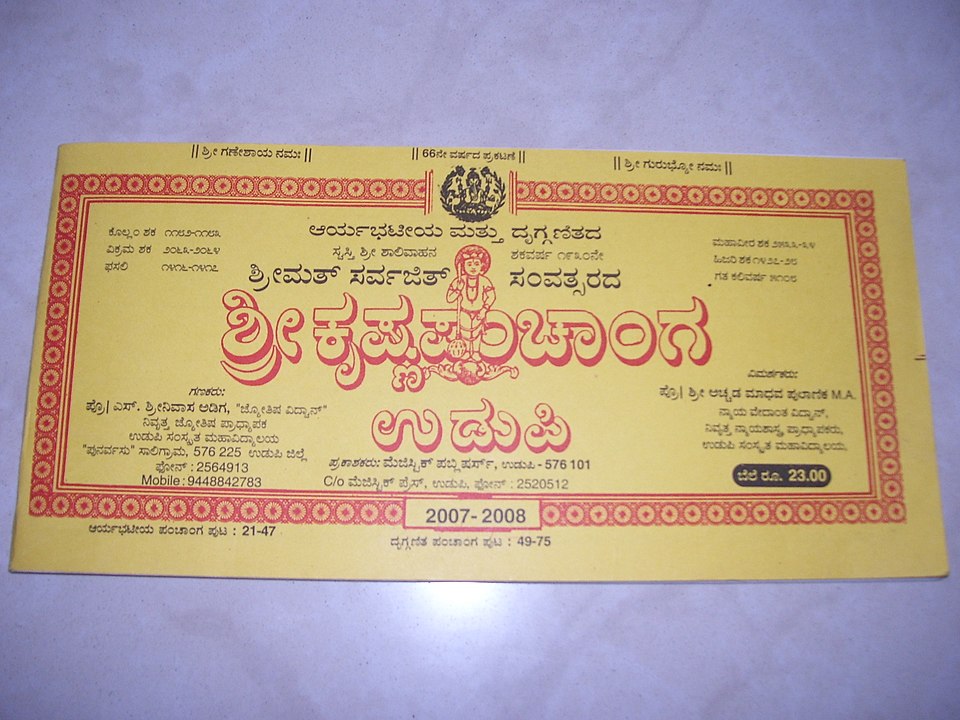
Introduction
At its core, the Panchang serves as a spiritual and practical guide for the Hindu way of life. It dictates the timing of auspicious events (Muhurtas), the scheduling of religious festivals (Utsavas), the performance of daily rituals (Nitya Karmas), and the observance of fasts (Vratas). The sanctity of the Panchang lies in its ability to align human action with 'Rta'—the cosmic order. By understanding the specific qualities of a given moment, a practitioner can navigate life's transitions with greater harmony, ensuring that their endeavors are supported by the prevailing celestial currents.
Historically, the development of the Panchang is linked to the great sages and astronomers like Aryabhata and Varahamihira, who formalized the mathematical models used to predict planetary positions. These scholars recognized that time is not a linear progression but a cyclic phenomenon, where every moment carries a unique 'signature' or vibration. This signature is what the Panchang deciphers. Whether one is a farmer looking at seasonal shifts, a householder planning a wedding, or a yogi seeking the optimal time for meditation, the Panchang provides the essential data required to harmonize personal life with the macrocosm.
To a newcomer, the Panchang might seem like a bewildering array of numbers and names. However, it is structured around five distinct limbs: Tithi (Lunar Day), Vara (Weekday), Nakshatra (Lunar Mansion), Yoga (Luni-solar period), and Karana (Half of a Tithi). Together, these five elements create a multidimensional matrix. Understanding these elements is the first step toward grasping the depth of Vedic astrology and the profound interconnectedness of the heavens and the Earth.
Significance
Astrologically, the Panchang provides the foundational data for 'Janma Kundali' (Birth Chart) and 'Muhurta' (Electional Astrology). The confluence of the five elements determines the 'quality' of a moment. For example, a wedding performed during a favorable Nakshatra and a strong Yoga is believed to bestow long-lasting stability and prosperity upon the couple. Conversely, performing significant life transitions during inauspicious periods is thought to invite unnecessary obstacles. This is not superstition, but rather a sophisticated application of the principle that like attracts like—the internal state of a person and the external state of the universe must be in equilibrium for success.
Culturally, the Panchang is the heartbeat of Hindu social life. It regulates the vast calendar of festivals, ensuring that celebrations like Diwali, Holi, or Maha Shivaratri occur when the celestial conditions are most potent. These festivals are not just social gatherings; they are periods of heightened spiritual energy. The Panchang ensures that these collective celebrations are synchronized with the lunar phases, maximizing their spiritual impact on the community. It provides a shared temporal framework that binds families, communities, and the global Hindu diaspora together.
On a deeper, more philosophical level, the Panchang reminds us of the cyclical nature of existence. The constant rotation of the five elements serves as a meditation on the impermanence of time and the eternal recurrence of patterns. It teaches us that life is a series of tides, and wisdom lies in knowing when to act and when to wait. By studying the Panchang, one develops a sense of patience and reverence for the natural cycles of growth, decay, and rebirth, fostering a lifestyle of mindfulness and cosmic respect.
Auspicious Time
Find your exact auspicious time Check the shubh muhurat and choghadiya for your city and date.
Required Samagri (Materials)
Preparation Steps
- 1Identify your specific lineage (Sampradaya) or regional tradition, as Panchang calculations may vary slightly (e.g., Amanta vs. Purnimanta systems).
- 2Determine your location (Latitude and Longitude) to ensure the sunrise/sunset and lunar timings are accurate for your specific geography.
- 3Acquire a reliable Panchang from a trusted source, such as the Drik Panchang or a local temple's official almanac.
Steps
- 1Step 1: Identify the Tithi (Lunar Day). This represents the relationship between the Sun and the Moon and dictates the 'mood' of the day.
- 2Step 2: Note the Vara (Weekday). This is ruled by specific Grahas (planets) and influences the general energy of the day.
- 3Step 3: Examine the Nakshatra (Lunar Mansion). The Moon's position in one of the 27 Nakshatras provides deep insight into the psychological and environmental energy.
- 4Step 4: Analyze the Yoga (Luni-solar connection). There are 27 Yogas, each providing a different flavor to the day's overall success or difficulty.
- 5Step 5: Check the Karana (Half Tithi). This adds a finer layer of detail to the timing, helping to refine the specific hour of an activity.
- 6Step 6: Synthesize all five elements. A truly auspicious moment (Muhurta) requires a favorable confluence of all these components.
Mantras
Ganesha Mantra for Removing Obstacles
ॐ गं गणपतये नमः
Om Gam Ganapataye Namaha
Meaning: Salutations to the Lord of Ganas (Ganesha), the remover of obstacles.
Gayatri Mantra for Cosmic Wisdom
ॐ भूर्भुवः स्वः तत्सवितुर्वरेण्यं भर्गो देवस्य धीमहि धियो यो नः प्रचोदयात्
Om Bhur Bhuvah Swah, Tat Savitur Varenyam, Bhargo Devasya Dhimahi, Dhiyo Yo Nah Prachodayat
Meaning: We meditate on the glory of that Being who has produced this universe; may He enlighten our minds.
Guidelines
- •Observe the specific Tithi mentioned for the Vrat.
- •Follow the dietary restrictions (Sattvic diet) prescribed for that particular lunar day.
- •Perform the Sankalpa (intention setting) at sunrise or during the specific Muhurta.
Do's
- ✓Consult a learned Pandit for complex Muhurta calculations.
- ✓Use the Panchang to plan significant life events for maximum harmony.
- ✓Observe the specific Nakshatra qualities to guide meditation and study.
Don'ts
- ✗Do not rely solely on a single element (e.g., only checking the Tithi) without considering the others.
- ✗Do not ignore the 'Rahu Kaal' (inauspicious time) identified in the Panchang for important tasks.
- ✗Do not use a Panchang intended for a different geographical region.
Common Mistakes to Avoid
- •Confusing the Amanta (New Moon start) and Purnimanta (Full Moon start) systems.
- •Ignoring the difference between local time and standard time in astronomical calculations.
- •Assuming an auspicious Tithi is sufficient without checking the Nakshatra or Yoga.
Regional Variations
- •Amanta System: Predominant in South India, where the lunar month begins after the New Moon.
- •Purnimanta System: Predominant in North India, where the lunar month begins after the Full Moon.
- •Regional variations in Nakshatra calculations and local festival dates based on regional traditions.
Frequently Asked Questions
What is the difference between a Tithi and a Day?▾
Can I use a Panchang for astrology if I am not an expert?▾
What is Rahu Kaal?▾
Popular Tools
References & Traditional Notes
- •Note: Always verify the Panchang according to your specific 'Gotra' and 'Kuldevta' traditions when planning family rituals.
- •Traditional Note: The accuracy of the Panchang depends on the mathematical precision of the astronomical calculations used (Siddhanta).
Related Audio & Bhajans
Affiliate disclosure: Sanatan Hindu participates in the Amazon Associates Programme and the CueLinks affiliate network (Myntra & Flipkart). This page contains affiliate links, if you click and buy, we earn a small commission at no extra cost to you. As an Amazon Associate we earn from qualifying purchases. Full disclosure.
Shop Samagri on Amazon.in
Clicking opens Amazon.in. Prices and availability may vary.
Browse all pooja itemsAmazon Associates tag: geekydevelope-21
Shop Pooja & Festive Essentials on Flipkart
Clicking opens Flipkart via our affiliate link. Prices and availability may vary.
Shop on FlipkartCueLinks Publisher: 300371
Shop Festive Wear on Myntra
Clicking opens Myntra via our affiliate link. Prices and availability may vary.
CueLinks Publisher: 300371
Need a website? Describe it, and AI builds it.
Perfect for a temple, pooja service, astrology practice or small shop. Tell the AI what you want — or drag and drop the classic way — and go live on your own web address in minutes with Sitova. Hosting, SEO, forms and analytics are all included.
- Build with AI or drag & drop
- Your domain + SEO built in
- Free forever plan
Opens sitova.site