
Sacred Symbols & NatureChakrathalvar)Sudarshana Jayanti (Ashadha Shukla Chaturdashi), Vaikuntha Ekadashi

Sudarshana Chakra — Vishnu's Divine Disc and Its Symbolism

Comprehensive guide to Sudarshana Chakra: origin, symbolism, mantras, worship vidhi, and spiritual significance of Vishnu's divine discus.
By Sanatan Hindu7 min readUpdated 4 November 2026Audio available
Share:
Getting married? Create your invitationBeautiful digital wedding invites & family RSVP tracking — free to build
Sudarshana Chakra — Vishnu's Divine Disc and Its Symbolism

Introduction

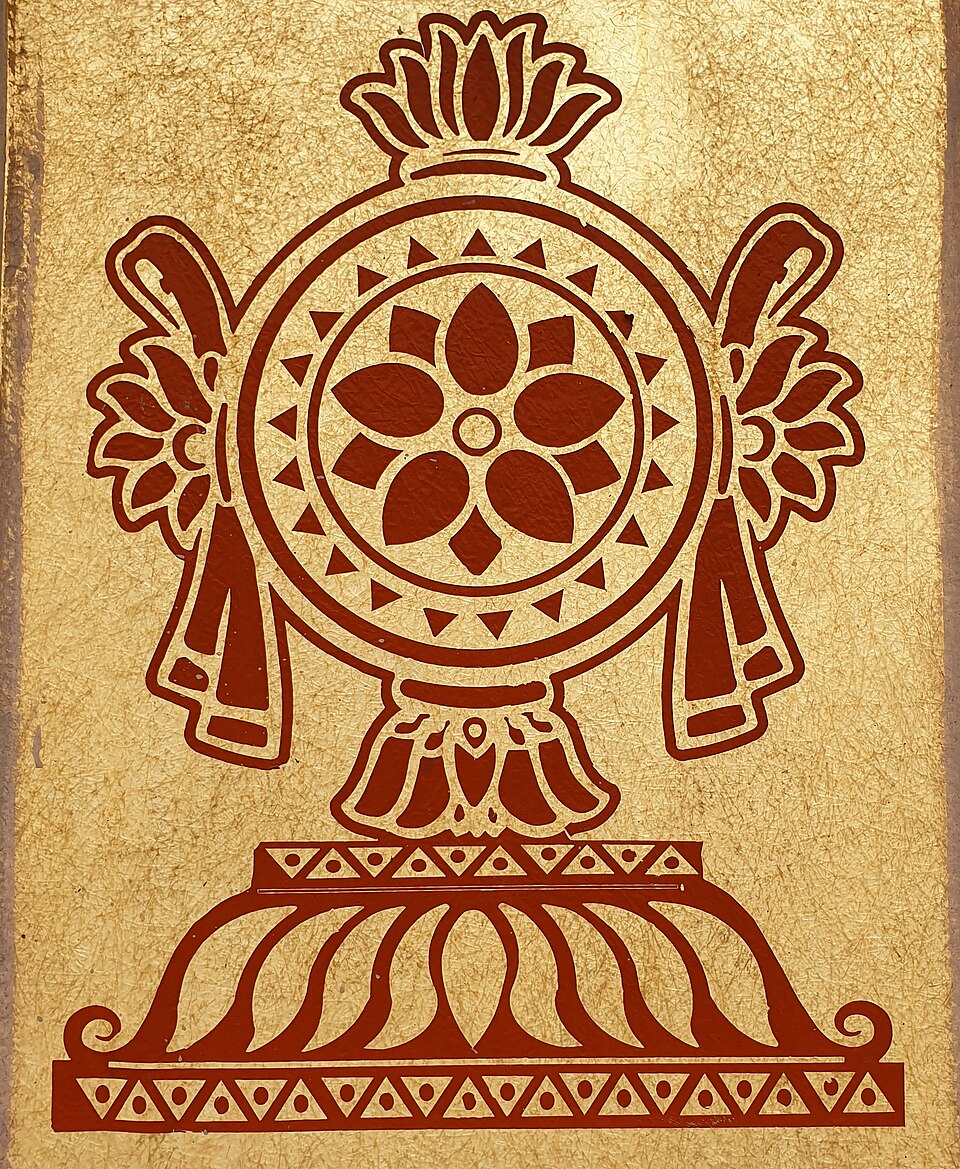
The Sudarshana Chakra stands as one of the most iconic and powerful divine weapons in Hindu cosmology, representing the very essence of Lord Vishnu's protective and preservative power. This celestial discus, whose name translates from Sanskrit as 'auspicious vision' or 'divine sight' (su = good/auspicious, darshana = vision/sight), is not merely a weapon of war but a profound spiritual symbol embodying the cosmic order (rita), the cyclical nature of time (kala), and the unwavering righteousness (dharma) that sustains the universe. In the Vaishnava tradition, the Sudarshana Chakra is revered as a manifestation of the Lord's own will — an extension of His divine consciousness that operates beyond the limitations of space and time to uphold dharma and destroy adharma wherever it arises. The Puranas describe its creation in various ways: some texts attribute its forging to the divine architect Vishvakarma from the leftover radiance of the sun god Surya, while others narrate that it emerged from the combined tapas of the gods or was gifted by Lord Shiva to Vishnu as a token of their eternal friendship and cosmic partnership. The Chakra finds mention across the major scriptures — the Rigveda alludes to a golden discus of Vishnu, the Mahabharata depicts Krishna wielding it with devastating precision in the Kurukshetra war, and the Bhagavata Purana glorifies it as the supreme instrument of divine grace that protects devotees and annihilates demons. In the Sri Vaishnava tradition, the Sudarshana Chakra is personified as a deity in its own right — Chakrathalvar or Sudarshana Azhvar — enshrined in temples alongside Vishnu, receiving independent worship, and celebrated in the hymns of the Alvars. Its iconography is rich and standardized: a blazing, serrated disc with 108 serrations (representing the 108 names of Vishnu or the 108 Upanishads), spinning effortlessly on the Lord's index finger, emitting rays of light that dispel darkness and ignorance. Beyond its martial aspect, the Sudarshana Chakra symbolizes the wheel of dharma, the cycle of birth and death (samsara), the power of discrimination (viveka) that cuts through illusion (maya), and the divine grace that liberates the soul. For centuries, devotees have invoked the Sudarshana Chakra through mantras, homas, and protective rituals (raksha) to ward off evil, overcome obstacles, cure diseases, and attain spiritual clarity. This article explores the multifaceted dimensions of the Sudarshana Chakra — its scriptural origins, theological significance, ritual worship, mantras, and enduring relevance in the lives of Hindus across traditions and geographies.

Significance

The spiritual significance of the Sudarshana Chakra operates on multiple interconnected planes — cosmic, theological, psychological, and soteriological — making it one of the most comprehensive symbols in Hindu spirituality. At the cosmic level, the Chakra represents the eternal wheel of time (kala-chakra) that governs the cycles of creation (srishti), preservation (sthiti), and dissolution (pralaya). Its ceaseless rotation mirrors the rhythm of the universe itself — the orbiting of planets, the turning of seasons, the cycle of yugas — all held in perfect balance by the divine will of Vishnu as the Preserver. The 108 serrations on its rim are traditionally correlated with the 108 names of Vishnu (Vishnu Ashtottara Shatanamavali), the 108 Upanishads, the 108 marma points in the subtle body, and the 108 beads of a japa mala, signifying that the Chakra encompasses the totality of sacred knowledge and the complete architecture of the cosmos. Theologically, the Sudarshana Chakra is the embodiment of Vishnu's sankalpa (divine resolve) to protect dharma. In the Bhagavad Gita (4.7-8), Krishna declares that He descends age after age to protect the righteous, destroy the wicked, and re-establish dharma — and the Chakra is the primary instrument through which this mission is executed. It is not a weapon of arbitrary destruction but of surgical precision: it discriminates between the atman and anatman, between truth and falsehood, between the devotee's surrender and the ego's resistance. The Chakra's association with the sun (Surya) — from whose excess tejas it was forged — links it to the principle of illumination (prakasha), the dispelling of ignorance (avidya), and the revelation of the true nature of reality. In the Pancaratra and Vaikhanasa Agamas, which govern temple worship, the Sudarshana Chakra is installed as a separate deity (Chakra Perumal) in the sanctum or in a dedicated shrine, receiving daily abhisheka, alankara, and naivedya. The Sudarshana Homa, a fire ritual invoking the Chakra through specific mantras and offerings, is performed for protection from enemies, removal of planetary afflictions (graha dosha), curing of chronic illnesses, and the neutralization of negative energies (drishti, abhichara). Psychologically, the Chakra symbolizes the power of viveka (discrimination) and vairagya (dispassion) that cuts through the knots of attachment, fear, and delusion. Just as the discus spins rapidly yet remains centered on the Lord's finger, the disciplined mind remains anchored in the Self while engaging dynamically with the world. The Chakra's return to the Lord's hand after completing its mission represents the soul's ultimate return to its source — the realization that all action, when offered to the Divine, culminates in liberation. For the devotee, wearing a Sudarshana kavacha (protective amulet), chanting the Sudarshana Ashtakam or Dvadasha Nama Stotram, or meditating on the Chakra's form is a means of invoking divine grace, cultivating fearlessness, and aligning one's will with the cosmic order. The Phala Shruti (benefit verses) of the Sudarshana stotras promise not only worldly protection but also the destruction of inner enemies — kama, krodha, lobha, moha, mada, matsarya — and the attainment of Vishnu's abode (Vaikuntha). Thus, the Sudarshana Chakra is far more than a mythological weapon; it is a living symbol of the transformative power of divine grace that operates both in the world and within the heart of the seeker.

Best Time to Recite

Sudarshana Chakra worship can be performed daily during sandhya kala (dawn and dusk), especially on Saturdays (associated with Shani and protection from malefic influences), Ekadashi days (sacred to Vishnu), during the month of Margashirsha (Dhanurmasa), on Vaikuntha Ekadashi, and during Sudarshana Jayanti (the appearance day of the Chakra, observed on Shukla Paksha Chaturdashi of Ashadha month). The Sudarshana Homa is ideally performed on Saturdays, during solar or lunar eclipses, or when facing severe obstacles, planetary afflictions, or health crises.

Find your exact auspicious time Check the shubh muhurat and choghadiya for your city and date.

How to Recite

  1. 1Begin with achamana (sipping water thrice while chanting Om Achyutaya Namaha, Om Anantaya Namaha, Om Govindaya Namaha) and pranayama.
  2. 2Perform sankalpa: state your name, gotra, location, date, tithi, and the purpose of the worship (e.g., protection, health, obstacle removal, spiritual progress).
  3. 3Invoke the presence of Sudarshana Chakra in the yantra/vigraha with the mantra: Om Sudarshanaya Vidmahe Mahajwalaya Dhimahi Tanno Chakrah Prachodayat.
  4. 4Offer padya (water for washing feet), arghya (water for washing hands), and achamana (water for sipping) to the deity.
  5. 5Perform abhisheka with panchamrita while chanting the Purusha Sukta or Vishnu Sahasranama, followed by abhisheka with pure water (shuddha jal).
  6. 6Wipe the yantra/vigraha gently with a clean cloth and apply sandalwood paste in a circular motion.
  7. 7Apply kumkum and turmeric at the center and four cardinal points of the yantra.
  8. 8Offer sacred thread (yajnopavita) to the yantra.
  9. 9Offer fresh flowers and tulsi leaves while chanting the 12 names of Sudarshana (Dvadasha Nama) or the 108 names (Ashtottara Shatanamavali).
  10. 10Offer incense (dhoop) and wave the ghee lamp (deepa) in a clockwise circular motion.
  11. 11Offer naivedya (fruits, sweets, pongal) and tambula (betel leaf with nut).
  12. 12Perform aarti with camphor, singing the Sudarshana Aarti or Vishnu Aarti.
  13. 13Circumambulate (pradakshina) the altar three times clockwise.
  14. 14Offer pushpanjali (handful of flowers) with the mantra: Om Sudarshanaya Namaha.
  15. 15Recite the Sudarshana Ashtakam, Sudarshana Kavacham, or Sudarshana Gayatri as per capacity.
  16. 16If performing homa: invoke Agni, offer ghee and samagri into the fire with each mantra repetition (typically 108 or 1008 times), concluding with purnahuti.
  17. 17Distribute prasadam to all present and partake yourself with reverence.
  18. 18Conclude with shanti mantra: Om Shanti Shanti Shantih.

Mantras

Sudarshana Gayatri Mantra

ॐ सुदर्शनाय विद्महे महाज्वालाय धीमहि तन्नो चक्रः प्रचोदयात्

Om Sudarshanaya Vidmahe Mahajwalaya Dhimahi Tanno Chakrah Prachodayat

Meaning: We meditate on the auspicious vision (Sudarshana), the great blazing one; may that Chakra inspire and illumine our intellect.

Sudarshana Moola Mantra

ॐ ह्रीं श्रीं सुदर्शनाय नमः

Om Hreem Shreem Sudarshanaya Namaha

Meaning: Salutations to Sudarshana, the embodiment of divine power (Hreem) and prosperity/grace (Shreem).

Sudarshana Dvadasha Nama Stotram (12 Names)

सुदर्शनं चक्रराजं सर्वशत्रुविनाशनम् सर्वरोगहरं देवम् विष्णोः परममायुधम् ज्वलन्तं सर्वतोमुखं विष्णुचक्रं नमाम्यहम् चक्रराज नमस्तुभ्यं सर्वशत्रुविनाशक सर्वरोगहरं देव विष्णुचक्रं नमोऽस्तु ते

Sudarshanam Chakrarajam Sarvashatruvinashanam Sarvarogaharam Devam Vishnoh Paramamayudham Jvalantam Sarvatomukham Vishnuchakram Namamyaham Chakraraja Namastubhyam Sarvashatruvinashaka Sarvarogaharam Deva Vishnuchakram Namostu Te

Meaning: I bow to Sudarshana, the king of discs, destroyer of all enemies, remover of all diseases, the supreme weapon of Vishnu. Blazing in all directions, O Vishnu's discus, I salute you. O King of Discs, salutations to you, destroyer of all enemies, remover of all diseases, O divine Vishnu Chakra, salutations to you.

Sudarshana Ashtakam (First Verse)

जय जय श्रीसुदर्शन जय जय श्रीसुदर्शन जय जय श्रीसुदर्शन जय जय श्रीसुदर्शन भक्तजनप्रियं देवं सर्वशत्रुविनाशनम् सर्वरोगहरं दिव्यं विष्णुचक्रं नमाम्यहम्

Jaya Jaya Shri Sudarshana Jaya Jaya Shri Sudarshana Jaya Jaya Shri Sudarshana Jaya Jaya Shri Sudarshana Bhaktajanapriyam Devam Sarvashatruvinashanam Sarvarogaharam Divyam Vishnuchakram Namamyaham

Meaning: Victory, victory to the glorious Sudarshana! Beloved of devotees, destroyer of all enemies, remover of all diseases, the divine discus of Vishnu — I bow to you.

Sudarshana Kavacham (Opening Verse)

ॐ नमो भगवते वासुदेवाय सुदर्शनाय हुं फट् स्वाहा सुदर्शनचक्रं मे शिरः पातु सर्वतः विष्णुचक्रं मे नेत्रे पातु सर्वदिशम्

Om Namo Bhagavate Vasudevaya Sudarshanaya Hum Phat Swaha Sudarshanachakram Me Shirah Patu Sarvatah Vishnuchakram Me Netre Patu Sarvadisham

Meaning: Salutations to Bhagavan Vasudeva as Sudarshana. Hum Phat Swaha (seed syllables for protection). May the Sudarshana Chakra protect my head from all directions; may Vishnu's Chakra protect my eyes in all directions.

Sudarshana Aarti (Traditional)

जय सुदर्शन चक्रराज जय सुदर्शन चक्रराज भक्तवत्सल दयालु प्रभु विष्णुप्रिय चक्रराज सर्वशत्रु विनाशक सर्वरोग हर प्रभु त्राहि मां त्राहि मां शरणागत वत्सल

Jaya Sudarshana Chakraraja Jaya Sudarshana Chakraraja Bhaktavatsala Dayalu Prabhu Vishnupriya Chakraraja Sarvashatru Vinashaka Sarvaroga Hara Prabhu Trahi Mam Trahi Mam Sharanagata Vatsala

Meaning: Victory to Sudarshana, King of Discs! O Lord beloved of devotees, compassionate one, Vishnu's beloved discus. Destroyer of all enemies, remover of all diseases, O Lord. Protect me, protect me, O protector of the surrendered.

Do's

  • ✓Perform the puja with a calm, focused mind and sincere devotion (shraddha).
  • ✓Use only fresh, clean, and sattvic items for offering.
  • ✓Chant mantras with correct pronunciation (seek guidance if unsure).
  • ✓Include tulsi leaves in every offering — they are most dear to Vishnu.
  • ✓Face east or north while performing the worship.
  • ✓Maintain cleanliness of body, mind, and surroundings.
  • ✓Offer the fruits of the worship to the Lord (ishvararpana buddhi).
  • ✓Regularly worship for sustained protection and spiritual growth.

Don'ts

  • ✗Do not touch the yantra/vigraha with unwashed hands or during menstruation (as per traditional practice).
  • ✗Do not offer stale, leftover, or non-vegetarian items.
  • ✗Do not interrupt the puja once started unless absolutely necessary.
  • ✗Do not blow out the lamp with your breath — use a flower or snuffer.
  • ✗Do not place the yantra on the floor directly; always use a clean plate or cloth.
  • ✗Do not chant mantras mechanically without understanding or feeling.
  • ✗Do not disrespect the prasadam — consume it reverently.
  • ✗Do not perform the homa without proper knowledge or guidance from a qualified priest.

Common Mistakes to Avoid

  • •Using a printed paper yantra instead of a properly energized metal yantra for serious sadhana.
  • •Skipping the sankalpa (statement of intent) which gives direction to the worship.
  • •Rushing through mantras without proper pronunciation or count.
  • •Neglecting the homa fire safety protocols (if performing homa at home).
  • •Confusing Sudarshana Chakra worship with black magic or harmful intent — it is purely protective and sattvic.
  • •Not offering tulsi leaves, which are essential in Vaishnava worship.
  • •Performing the puja while distracted, angry, or in an impure state.
  • •Expecting instant miraculous results without faith, consistency, and karma yoga.

Frequently Asked Questions

Can anyone worship Sudarshana Chakra, or is initiation required?▾
Anyone with faith and devotion can worship Sudarshana Chakra at home using the basic puja vidhi. However, for advanced practices like the Sudarshana Homa, wearing an energized yantra/kavacha, or receiving the Sudarshana Mantra diksha, initiation from a qualified guru in a recognized sampradaya is traditionally recommended for full efficacy and safety.
What is the difference between Sudarshana Chakra and other divine weapons like Trishula or Brahmastra?▾
The Sudarshana Chakra is unique as Vishnu's personal, ever-ready weapon that operates by His will alone — it does not require invocation each time. Unlike the Trishula (Shiva's trident, representing destruction of the three gunas) or Brahmastra (a mantra-charged missile requiring elaborate invocation), the Chakra is a perpetual, spinning disc of divine consciousness that protects devotees automatically. It is also the only weapon personified and worshipped as a deity (Chakrathalvar).
Is the Sudarshana Chakra effective against black magic, evil eye, and negative energies?▾
Yes, traditionally the Sudarshana Chakra is considered the supreme protective force against all forms of negative energy — drishti (evil eye), abhichara (black magic), bhuta/preta (spirit afflictions), and graha dosha (planetary afflictions). The Sudarshana Kavacham, Homa, and regular chanting of the Gayatri or Ashtakam are specifically prescribed for such protections. However, faith, purity, and righteous living enhance its efficacy.
Can women perform Sudarshana Chakra puja and homa?▾
Absolutely. In the Sri Vaishnava and many other traditions, women have full adhikara (eligibility) to worship Sudarshana Chakra, chant the stotras, and even perform homa if trained. The only traditional restriction in some orthodox circles is during menstruation, when they may mentally offer worship or have a family member perform it on their behalf. Modern practice increasingly emphasizes inclusivity.
How long does it take to see results from Sudarshana worship?▾
Results depend on the intensity of faith (shraddha), consistency of practice, purity of intent, and one's karma. Some experience immediate relief from fear or anxiety; others see gradual improvement in health, obstacles, or spiritual clarity over weeks or months. The scriptures emphasize that the Chakra's grace operates on the divine timeline — sincere, selfless worship never goes fruitless, even if the form of the fruit differs from expectation.
Can I keep a Sudarshana Yantra at home without daily elaborate puja?▾
Yes. A properly energized (prana pratishthita) Sudarshana Yantra can be kept in the home puja room. Simple daily worship — lighting a lamp, offering a flower, chanting the Gayatri 11 or 108 times — is sufficient. The yantra should be kept clean, facing east/north, and not touched by impure hands. Periodic abhisheka (monthly or on special days) is beneficial.

References & Traditional Notes

  • •The Rigveda (1.22.20) mentions Vishnu's three strides and His 'paramam padam' — later tradition identifies the Chakra with this supreme abode/weapon.
  • •Mahabharata, Bhishma Parva: Krishna uses the Sudarshana Chakra to behead Shishupala and to create the illusion of sunset to enable Arjuna to kill Jayadratha.
  • •Srimad Bhagavatam (9.4.56-58): Durvasa Muni chases King Ambarisha; the Sudarshana Chakra pursues Durvasa across the three worlds until he seeks refuge in Vishnu — demonstrating the Chakra's protection of pure devotees.
  • •Pancaratra Agamas (Paushkara, Jayakhya, Ahirbudhnya Samhitas): Detailed iconography, mantra, yantra, and homa procedures for Sudarshana.
  • •Vaikhanasa Agama: Prescribes daily worship of Sudarshana as a parivara devata in Vishnu temples.
  • •Alvars' Divya Prabandham: Nammalvar's Tiruvaymoli (2.7, 5.5) and Thirumangai Alvar's Periya Tirumadal glorify the Chakra as the Lord's fierce grace.
  • •Vedanta Desika's Sudarshana Ashtakam and Sudarshana Dandakam: Classical Sanskrit stotras composed by the 13th-century Sri Vaishnava acharya.
  • •Sri Ahirbudhnya Samhita: Contains the Sudarshana Kavacham, Mantra Raja Pada Stotram, and detailed homa vidhi.
  • •Garuda Purana and Vishnu Purana: Describe the Chakra's origin from Surya's tejas and its role in cosmic order.
  • •Traditional Note: The Chakra's 108 serrations also correspond to the 108 Divya Desams (sacred Vishnu temples) — worshipping the Chakra is thus equivalent to pilgrimaging to all 108.

Related Audio & Bhajans

Om Jai Jagdish Hare

aartiTraditional5:20
View Lyrics

Achyutam Keshavam Unveiling Divine Lord Krishna mantra

mantraYouTube
Open on YouTube →
Lyrics

Story Prahlad Holika Symbol Victory Lord Vishnu story|mythology|festival

otherYouTube
Open on YouTube →
Lyrics

Gajendra Moksha Stotram (Lord Vishnu Mantra)

otherHindu Pandit
View Lyrics

Samsara Cycle Rebirth Explained Brahma, Vishnu, Shiva other

otherYouTube
Open on YouTube →
Lyrics

Vishnu Gayatri Mantra 108 Upanishads Vishnu Mantra

otherNeha Rajpal
View Lyrics

Vishnu Self Realization Mantra Audio

other
View Lyrics

Vishnu Shatpadi Stotram

otherHinduism Now
View Lyrics

Chakras

otherRelaxamento Sons da Natureza Ruído Branco Musicas Clube
View Lyrics

Ross and Carrie Have 100 Chakras: Raven Shamballa and Billy Carson Edition

other
View Lyrics

Shop Pooja & Festive Essentials on Flipkart

Clicking opens Flipkart via our affiliate link. Prices and availability may vary.

Shop on Flipkart

CueLinks Publisher: 300371

Shop Festive Wear on Myntra

Clicking opens Myntra via our affiliate link. Prices and availability may vary.

CueLinks Publisher: 300371

AI website builder

Need a website? Describe it, and AI builds it.

Perfect for a temple, pooja service, astrology practice or small shop. Tell the AI what you want — or drag and drop the classic way — and go live on your own web address in minutes with Sitova. Hosting, SEO, forms and analytics are all included.

  • Build with AI or drag & drop
  • Your domain + SEO built in
  • Free forever plan
Build your website

Opens sitova.site

Share:

Get the daily panchang & festival updates

Join our free newsletter, no spam, unsubscribe anytime.