
Tukaram — Maharashtra's Great Sant and Abhangas
Explore the life, teachings, and abhangas of Sant Tukaram, the 17th-century Varkari saint whose devotional poetry transformed Maharashtra's spiritual landscape.
Affiliate disclosure: Sanatan Hindu participates in the Amazon Associates Programme and the CueLinks affiliate network (Myntra & Flipkart). This page contains affiliate links, if you click and buy, we earn a small commission at no extra cost to you. As an Amazon Associate we earn from qualifying purchases. Full disclosure.
Introduction
Significance
Auspicious Time
Find your exact auspicious time Check the shubh muhurat and choghadiya for your city and date.
Required Samagri (Materials)
Preparation Steps
- 1Bathe and wear clean, modest clothing
- 2Create a clean altar space facing east or north
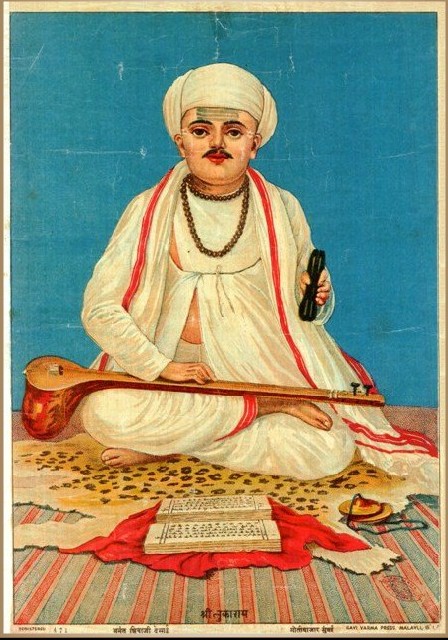
- 3Place the image of Sant Tukaram alongside Lord Vitthala-Rukmini
- 4Light the lamp and incense
- 5Offer water, flowers, and tulsi leaves
- 6Sit in a comfortable posture (sukhasana or padmasana)
- 7Invoke the guru-parampara: Jnanadev, Namdev, Eknath, Tukaram
Steps
- 1Begin with three deep breaths and chant 'Om Vitthalaya Namaha' three times
- 2Recite the invocation abhanga: 'Sundar te dhyan ube vithu chaya' to center the mind
- 3Chant selected abhangas from Tukaram's Gatha, focusing on the meaning and bhava
- 4Use the tulsi mala to repeat 'Vitthala Vitthala' or 'Jai Jai Ram Krishna Hari' for 108 rounds
- 5Meditate on the form of Vitthala standing on the brick (itthi) with hands on waist
- 6Offer the prepared prasad with the prayer: 'Tukaram bolu bhakti, Vitthala lavu mukti'
- 7Conclude with arati (waving of lamp) while singing 'Yuge atthavisa vitevari ubha' or similar arati
- 8Distribute prasad to all present and touch the feet of elders for blessings
Mantras
Invocation Abhanga
सुंदर ते ध्यान उभे विठु छाया । ब्रह्मांड माजे सुखी पाहावा ॥
Sundara te dhyana ubhe vithu chaya. Brahmanda maaje sukhi pahava.
Meaning: Beautiful is the meditation on Vitthu standing in the shade; may the whole universe behold this bliss.
Core Teaching Abhanga
जो जे भावे तो ते होई । तुकाराम साखी हरि ॥
Jo je bhave to te hoi. Tukaram sakhi Hari.
Meaning: As one feels, so it becomes. Tukaram bears witness: Hari (God) manifests according to one's inner bhava.
Surrender Abhanga
तुकाराम बोलु भक्ति, विठ्ठल लावु मुक्ति ।
Tukaram bolu bhakti, Vitthala lavu mukti.
Meaning: Tukaram speaks of devotion; Vitthala grants liberation.
Wari Arati
युगे अट्ठावीसा विठेवरी उभा । तुकारामाचे कीर्तन सुरु ॥
Yuge atthavisa vitevari ubha. Tukaramache kirtan suru.
Meaning: For twenty-eight ages Vitthala has stood on the brick; Tukaram's kirtan begins now.
Nama-Smarana Mantra
विठ्ठल विठ्ठल जय जय राम कृष्ण हरि ।
Vitthala Vitthala jai jai Ram Krishna Hari.
Meaning: Victory to Vitthala, victory to Ram, Krishna, Hari — the many names of the One Lord.
Guidelines
- •Observe a sattvic diet (no onion, garlic, meat, alcohol) on Tukaram Beej and Ekadashi days
- •Fast from grains on Ekadashi; consume fruits, milk, and root vegetables if needed
- •Maintain celibacy (brahmacharya) and speak truthfully during vrat periods
- •Spend extra time in abhanga recitation, kirtan, and seva (service) to fellow pilgrims
- •Avoid daytime sleep; engage in japa, reading Tukaram's Gatha, or listening to discourses
Do's
- ✓Sing abhangas with genuine emotion (bhava) rather than mechanical repetition
- ✓Treat all beings as embodiments of Vitthala; practice seeing God in everyone
- ✓Participate in the wari (pilgrimage) at least once in life if physically able
- ✓Study the Gatha (collected abhangas) regularly with a qualified teacher or commentary
- ✓Support the Varkari community through annadan (food offering) and service
Don'ts
- ✗Do not treat abhangas as mere entertainment or cultural performance
- ✗Avoid criticizing other saints or sampradayas; Tukaram honored all genuine bhaktas
- ✗Do not commercialize his teachings or use them for personal gain
- ✗Never disrespect the tulsi plant, the palkhi, or the Varkari symbols
- ✗Do not neglect family duties in the name of spirituality; Tukaram balanced both
Common Mistakes to Avoid
- •Pronouncing Marathi words in abhangas incorrectly without learning proper pronunciation
- •Focusing only on popular abhangas while ignoring the deeper philosophical ones
- •Believing that external rituals alone suffice without inner transformation
- •Confusing Tukaram's nirguna-leaning bhakti with purely saguna ritualism
- •Assuming the wari is only a physical journey; the inner wari of the heart is primary
Regional Variations
- •In Dehu, the palkhi procession begins with special rites at Tukaram's samadhi temple
- •In Pandharpur, the wari culminates in a grand darshan of Vitthala on Ashadhi Ekadashi
- •Konkan region Varkaris emphasize sea-side kirtans and distinct musical styles (dindi)
- •Urban centers like Mumbai and Pune host large-scale abhanga festivals with classical musicians
- •Diaspora communities in the US, UK, and Gulf organize virtual wari and online kirtans
Frequently Asked Questions
Who was Sant Tukaram?▾
What are abhangas?▾
What is the Varkari tradition?▾
When is Tukaram's birth anniversary celebrated?▾
Can non-Marathi speakers benefit from Tukaram's abhangas?▾
Popular Tools
References & Traditional Notes
- •Tukaram Gatha (standard edition edited by Vishnu M. Bhave)
- •Bhakti-Vijaya by Mahipati (18th-century hagiography)
- •Jnaneshwari by Sant Jnanadev (philosophical foundation of Varkari thought)
- •Varkari pilgrims' oral tradition passed through generations of dindi leaders
- •Scholarly works by R. D. Ranade, Justin E. Abbott, and Eleanor Zelliot
Related Audio & Bhajans
Jai Santoshi Mata Aarti
Basant Panchami
Exploring Sant Mat Teachings Found in the Hindu Scriptures Plus Several Other Sant Mat Related Topics
Raghavendra Swamy Stutis -Carnatic Vocal M L Vasantha Kumari
Mera Rang De Basanti Chola (From "23Rd March 1931: Shaheed")
Affiliate disclosure: Sanatan Hindu participates in the Amazon Associates Programme and the CueLinks affiliate network (Myntra & Flipkart). This page contains affiliate links, if you click and buy, we earn a small commission at no extra cost to you. As an Amazon Associate we earn from qualifying purchases. Full disclosure.
Shop Samagri on Amazon.in
Clicking opens Amazon.in. Prices and availability may vary.
Browse all pooja itemsAmazon Associates tag: geekydevelope-21
Shop Pooja & Festive Essentials on Flipkart
Clicking opens Flipkart via our affiliate link. Prices and availability may vary.
Shop on FlipkartCueLinks Publisher: 300371
Shop Festive Wear on Myntra
Clicking opens Myntra via our affiliate link. Prices and availability may vary.
CueLinks Publisher: 300371