Sacred Texts & ScripturesAgni (Fire God)Agni Utsav, Makar Sankranti, Holi

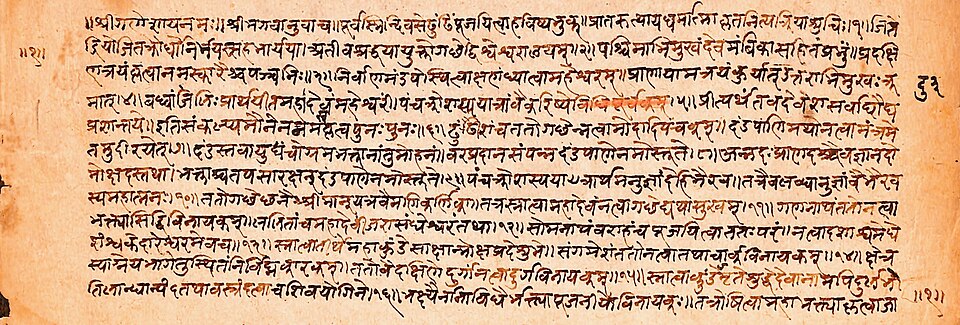
Agni Purana — Encyclopedic Purana on Rituals, Yoga and Science

Comprehensive guide to Agni Purana, the ancient Hindu encyclopedic text covering rituals, yoga, cosmology, medicine, architecture, and spiritual wisdom.

By Sanatan Hindu4 min readUpdated 20 August 2026Audio available
Share:

Affiliate disclosure: Sanatan Hindu participates in the Amazon Associates Programme and the CueLinks affiliate network (Myntra & Flipkart). This page contains affiliate links, if you click and buy, we earn a small commission at no extra cost to you. As an Amazon Associate we earn from qualifying purchases. Full disclosure.
Agni Purana — Encyclopedic Purana on Rituals, Yoga and Science

Next Makar Sankranti

Thursday, 14 January 2027· in 147 days

Set a reminder so you never miss Makar Sankranti.

Introduction

The Agni Purana stands as one of the most remarkable and encyclopedic texts in the vast corpus of Hindu sacred literature. Classified traditionally as a Mahapurana, though sometimes listed among the Upapuranas, it derives its name from Agni, the Vedic deity of fire, who is said to have narrated its contents to the sage Vashishtha. This transmission lineage — Agni → Vashishtha → Vyasa → Suta → the sages at Naimisharanya — places the text firmly within the authoritative Puranic parampara. Unlike many Puranas that focus predominantly on the exploits of a particular deity such as Vishnu, Shiva, or the Goddess, the Agni Purana distinguishes itself by its astonishing breadth, functioning as a veritable encyclopedia of ancient Indian knowledge systems. Its 383 chapters (adhyayas) and approximately 15,000 verses encompass an extraordinary range of subjects: detailed ritual procedures (karmakanda) for both Vedic and Tantric worship, temple architecture and iconography (Shilpa Shastra), cosmology and geography, genealogies of kings and sages, dharma shastra (law and ethics), Ayurveda (medicine), Jyotisha (astronomy and astrology), grammar, metrics, poetry, dramaturgy, polity, and even military science. This makes it an invaluable source not only for theologians and ritualists but also for historians of science, art, and culture.

Significance

The spiritual significance of the Agni Purana lies in its role as a bridge between the Vedic ritualistic tradition and the later Puranic, Tantric, and devotional movements. By prescribing elaborate homa (fire sacrifice) procedures, mantra nyasas, and deity worship protocols — especially for Vishnu, Shiva, Durga, Ganesha, and Surya — it provides a comprehensive manual for both householders and renunciates seeking to align their lives with cosmic order (rita). The text emphasizes Agni as the eternal mediator between humans and the divine, the mouth of the gods (devamukha), and the very embodiment of transformative consciousness. Its detailed exposition of yoga — including asana, pranayama, pratyahara, dharana, dhyana, and samadhi — alongside the esoteric physiology of nadis, chakras, and kundalini, situates it as a critical source for the history of yogic practice, complementing the Yoga Sutras of Patanjali and the Hatha Yoga texts. Culturally, the Agni Purana has profoundly shaped temple construction across India through its exhaustive chapters on Vastu Shastra, pratima lakshana (iconometric rules), and mandira nirupana (temple design), influencing the Nagara, Dravida, and Vesara styles. Its sections on Ayurveda preserve early formulations of herbal medicine, surgical techniques, and preventive health regimens, while its Jyotisha chapters codify planetary motions, eclipse calculation, and muhurta selection. The Purana also enshrines the concept of dana (charity), vrata (vows), and tirtha (pilgrimage) as means to purify karma and attain liberation (moksha), making it a living guide for dharmic living. Scriptural references such as the Agni Purana's own phalashruti (verses 383.45–50) declare that even hearing a single chapter with faith destroys sins and grants both worldly prosperity and spiritual emancipation.

Auspicious Time

Early morning (Brahma Muhurta, approx. 4:00–6:00 AM) for study, recitation, or Agni Puja; during Agni Utsav, Makar Sankranti, or any auspicious muhurta for fire rituals; daily during Sandhya Vandanam

Find your exact auspicious time Check the shubh muhurat and choghadiya for your city and date.

Required Samagri (Materials)

Agni Purana text (Sanskrit or translation)
Kusha grass (darbha) for seating
Ghee (clarified butter) for homa
Samidha (sacrificial sticks of palasha, khadira, or shami wood)
Copper or brass homa kundam (fire pit)
Panchapatra and udharini (water vessel and spoon)
Akshata (unbroken rice grains mixed with turmeric)
Flowers (especially red for Agni)
Incense (dhoop) and lamp (deepa)
Camphor (karpura) for arati
Clean white or red cloth for altar
Rudraksha or tulsi mala for japa

Preparation Steps

  1. 1Bathe and wear clean, preferably white or saffron clothing
  2. 2Clean the study/ritual area and sprinkle with Ganga jal or purified water
  3. 3Set up a small altar with an image or yantra of Agni Deva (or a lit lamp representing Him)
  4. 4Place the Agni Purana text on a wooden stand (puja peetha) covered with clean cloth
  5. 5Light a ghee lamp and incense; offer flowers and akshata to the text and Agni
  6. 6Invoke Ganesha (Vighneshvara) for obstacle-free study/ritual
  7. 7Perform achamana (sipping water with mantras) and pranayama for purification
  8. 8Recite the Guru Parampara stotra to honor the lineage of transmission
  9. 9Set a clear sankalpa (intention) for the session: study, recitation, or homa

Steps

  1. 1Begin with the opening mangalacharana of the Agni Purana: 'Om Agnim Ile Purohitam...' (Rigveda 1.1.1) to invoke Agni
  2. 2If performing homa: prepare the fire in the kundam using samidha, kindle with camphor, offer ghee with 'Svaha' while reciting Agni Sukta (Rigveda 1.1) or Purana-prescribed mantras
  3. 3For study: read one adhyaya (chapter) slowly with understanding; pause to reflect on key verses
  4. 4Recite the chapter's phalashruti (benefit verses) at the end with shraddha (faith)
  5. 5Offer naivedya (food offering) — fruits, sweets, or cooked rice — to Agni and the text
  6. 6Perform arati with camphor, circling clockwise three times while chanting 'Om Jatavedase Sunavama...' (Rigveda 1.99.1)
  7. 7Distribute prasadam to all present; apply vibhuti (ash from homa) or tilak from the altar
  8. 8Conclude with shanti mantra: 'Om Sahana Vavatu...' and offer pranams to the Guru, Agni, and the scripture
  9. 9Record insights or verses in a dedicated journal for contemplation

Mantras

Agni Gayatri Mantra

ॐ तत्पुरुषाय विद्महे महाज्वालाय धीमहि तन्नो अग्निः प्रचोदयात्

Om Tatpurushaya Vidmahe Mahajwalaya Dhimahi Tanno Agnih Prachodayat

Meaning: We meditate on the Supreme Person (Agni) of great radiance; may that Agni inspire and illumine our intellect.

Opening Invocation of Agni Purana (Mangalacharana)

ॐ अग्निं पुराणम् आदौ वशिष्ठाय अब्रवीत् विभुः । तत् श्रृणु मुनिशार्दूल सर्वपापप्रणाशनम् ॥

Om Agnim Puranam Adau Vashishthaya Abravit Vibhuh | Tat Shrinu Munishardula Sarvapapapranashanam ||

Meaning: The mighty Agni narrated this Purana first to Vashishtha. O best of sages, listen to it — it destroys all sins.

Agni Sukta Opening Verse (Rigveda 1.1.1)

ॐ अग्निमीळे पुरोहितं यज्ञस्य देवमृत्विजम् । होतारं रत्नधातमम् ॥

Om Agnim Ile Purohitam Yajnasya Devam Ritvijam | Hotaram Ratnadhatamam ||

Meaning: I invoke Agni, the Purohita (priest) of the sacrifice, the divine Ritvik, the Hotar who bestows the highest treasure.

Phalashruti Verse (Agni Purana 383.47)

एतत् पुण्यं पवित्रं च यः श्रृणोति नरोत्तमः । स गच्छेत् परमं स्थानं अग्निलोकं सनातनम् ॥

Etat Punyam Pavitram Cha Yah Shrinoti Narottamah | Sa Gacchet Paramam Sthanam Agnilokam Sanatanam ||

Meaning: The best among men who hears this sacred and purifying text attains the supreme abode, the eternal realm of Agni.

Guidelines

  • Observe purity of body, speech, and mind during study/ritual period
  • Maintain brahmacharya (celibacy/continence) on days of intensive recitation or homa
  • Eat only sattvic food; avoid onion, garlic, meat, alcohol, and intoxicants
  • Fast until completion of daily chapter recitation or homa (if health permits)
  • Sleep on the ground or simple mat; avoid luxury during vrata period
  • Speak truth, avoid gossip, and practice silence (mauna) as much as possible
  • Donate to Brahmins, cows, or temples as per capacity after completing a section

Do's

  • Handle the text with clean hands and reverence; never place it on the floor
  • Sit on kusha grass or a clean asana facing east or north while reading
  • Pronounce Sanskrit mantras with correct svara (intonation) — learn from a guru if possible
  • Offer the fruit of study/ritual to the Divine (Ishvararpana buddhi)
  • Share knowledge respectfully with sincere seekers
  • Maintain regularity: even a few verses daily is better than irregular marathon sessions

Don'ts

  • Do not read in impure state (after attending funeral, during menstruation per some traditions, without bathing)
  • Do not argue over interpretations; respect sampradaya differences
  • Do not skip the opening and closing prayers — they sanctify the session
  • Do not use the text for mere academic debate without shraddha
  • Do not blow out the homa fire with mouth; let it extinguish naturally or sprinkle water
  • Do not place other objects on top of the scripture

Common Mistakes to Avoid

  • Reciting mantras without understanding the meaning or proper pronunciation
  • Performing homa with incorrect wood (samidha) or improper mantra sequence
  • Neglecting the preliminary rites (Ganesha puja, guru vandana, sankalpa)
  • Reading only popular chapters (e.g., on temple building) while ignoring dharma/yoga sections
  • Assuming one printed edition is complete — many verses vary across manuscripts
  • Confusing Agni Purana with Agni Purana Upapurana (a different, smaller text)

Regional Variations

  • In South India, Agni Purana study often integrated with Agama traditions (Pancharatra, Shaiva) for temple rituals
  • Bengali and Odia traditions emphasize the Durga and Tantra-related chapters during Navaratri
  • Gujarati and Rajasthani communities focus on Vastu and Shilpa chapters for temple renovation
  • In Nepal, the text is central to Newar Buddhist-Hindu syncretic fire rituals (homa)
  • Kashmir Shaivism draws on its yoga and kundalini chapters for esoteric practice
  • Varanasi pandits preserve oral recitation of the entire text during Chaturmasya

Frequently Asked Questions

Is Agni Purana a Mahapurana or Upapurana?
It is traditionally counted among the 18 Mahapuranas in most lists (e.g., Matsya Purana 53.14, Padma Purana Uttara Khanda 236.18), though some earlier texts classify it as an Upapurana. Its length (15,000 verses) and scope support Mahapurana status.
Who is the author of Agni Purana?
Like all Puranas, it is attributed to Veda Vyasa (Krishna Dvaipayana) as compiler. The speaker is Agni Deva, the listener is Sage Vashishtha, and the final narrator at Naimisharanya is Suta Goswami (Romaharshana/Lomaharshana).
What are the most unique topics in Agni Purana not found in other Puranas?
Its exhaustive treatises on temple architecture (ch. 42–106), iconometry (pratima lakshana), military science (ch. 240–250), Ayurvedic formulations (ch. 279–286), and detailed yoga/kundalini physiology (ch. 372–381) are unparalleled in other Puranas.
Can laypeople read Agni Purana, or is it only for priests?
While its ritual sections are technical, the text itself declares (1.1) that it is for all varnas and even women and shudras — 'sarva varna stri shudra adhikari'. However, mantra recitation and homa require proper initiation (diksha) and guru guidance.
Which edition/translation of Agni Purana is most reliable?
The Anandashram Sanskrit Series edition (edited by Rajendralal Mitra, 1870s) is the standard critical edition. For English, the 4-volume translation by M.N. Dutt (early 1900s) is complete but Victorian in language. The Gita Press Hindi translation (Agni Puran, with Sanskrit) is widely used by practitioners.

References & Traditional Notes

  • Agni Purana 1.1–5: Narrative frame — Agni to Vashishtha
  • Agni Purana 42–106: Temple architecture and iconography (Vastu/Shilpa)
  • Agni Purana 107–117: Dharma shastra — varnashrama, samskaras, dana
  • Agni Purana 160–175: Geography, cosmology, tirthas
  • Agni Purana 279–286: Ayurveda — herbs, diagnosis, treatments
  • Agni Purana 372–381: Yoga, nadis, chakras, kundalini, samadhi
  • Agni Purana 383: Phalashruti and conclusion
  • Rigveda 1.1.1 (Agni Sukta) — foundational to Agni Purana's theology
  • Matsya Purana 53.14 — lists Agni Purana as Mahapurana with 15,000 verses
  • Kane, P.V. 'History of Dharmashastra', Vol. 1 — analysis of Agni Purana's legal sections
  • Hazra, R.C. 'Studies in the Upapuranas' — discussion on classification debates

Related Audio & Bhajans

Ov Moi Omm - Kāvya Puranas

other
View Lyrics

Puranas

otherYouTube
Open on YouTube →
Lyrics

Yoga & Meditation

otherShaun Harris
View Lyrics

Meditation and yoga

otherYouTube
Open on YouTube →
Lyrics

Making Yoga Philosophy Accessible with Jivana Heyman Ep. 25

other
View Lyrics

Yoga Philosophy

otherYouTube
Open on YouTube →
Lyrics

Jnana Yoga

otherProdarson Debnath
View Lyrics

Yoga ramacharaka - jnana yoga

other
View Lyrics

Jnana Yoga

otherYouTube
Open on YouTube →
Lyrics

Skanda Purana

otherShruti Gupta
View Lyrics

Affiliate disclosure: Sanatan Hindu participates in the Amazon Associates Programme and the CueLinks affiliate network (Myntra & Flipkart). This page contains affiliate links, if you click and buy, we earn a small commission at no extra cost to you. As an Amazon Associate we earn from qualifying purchases. Full disclosure.

Amazon Associates tag: geekydevelope-21

Shop Pooja & Festive Essentials on Flipkart

Clicking opens Flipkart via our affiliate link. Prices and availability may vary.

Shop on Flipkart

CueLinks Publisher: 300371

Shop Festive Wear on Myntra

Clicking opens Myntra via our affiliate link. Prices and availability may vary.

CueLinks Publisher: 300371

Share:

Get the daily panchang & festival updates

Join our free newsletter, no spam, unsubscribe anytime.