Sacred Texts & ScripturesKrishna (Svayam Bhagavan)Janmashtami, Kartika Masa, Guru Purnima (Vyasa Puja)

Bhagavata Purana (Shrimad Bhagavatam) — Summary, Significance & Krishna Leela

Comprehensive guide to Shrimad Bhagavatam: 12 cantos, Krishna's divine pastimes, spiritual significance, recitation vidhi, mantras, and tradition.

By Sanatan Hindu3 min readUpdated 19 August 2026Audio available
Share:

Affiliate disclosure: Sanatan Hindu participates in the Amazon Associates Programme and the CueLinks affiliate network (Myntra & Flipkart). This page contains affiliate links, if you click and buy, we earn a small commission at no extra cost to you. As an Amazon Associate we earn from qualifying purchases. Full disclosure.
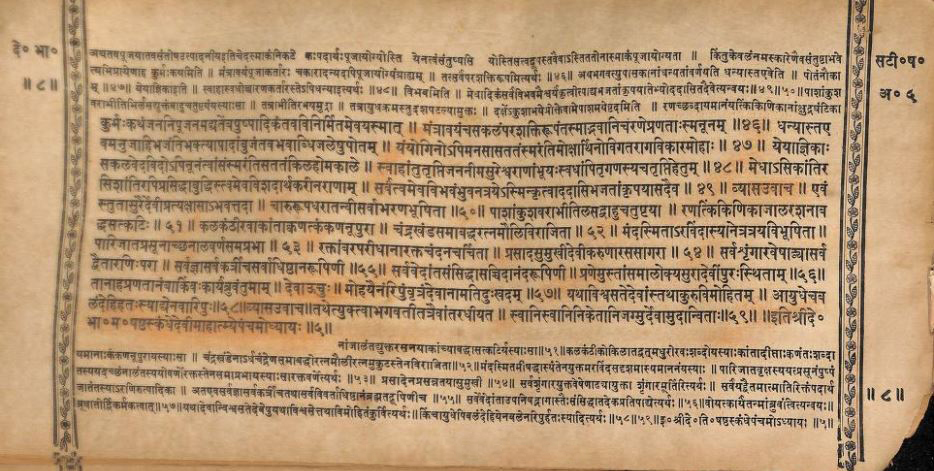
Bhagavata Purana (Shrimad Bhagavatam) — Summary, Significance & Krishna Leela

Next Janmashtami

Friday, 4 September 2026· in 16 days

Set a reminder so you never miss Janmashtami.

Introduction

The Shrimad Bhagavata Purana, often revered as the Bhagavata Purana or simply the Bhagavatam, stands as one of the eighteen Mahapuranas of Hinduism and is universally acclaimed as the crown jewel of Vedic literature. Composed by the sage Krishna Dvaipayana Vyasa — the same compiler of the Vedas and author of the Mahabharata — this sacred text consists of twelve cantos (skandhas), 335 chapters (adhyayas), and over 18,000 verses (shlokas). It was first recited by Vyasa's son, the enlightened sage Shuka Deva, to King Parikshit on the banks of the Ganges during the king's final seven days of life, as he prepared to leave his body after being cursed by a brahmana's son. This dramatic setting — a dying king seeking the highest truth — frames the entire narrative as an urgent, intimate transmission of spiritual wisdom, making the Bhagavatam not merely a scripture to be studied but a living dialogue between guru and disciple, where every verse carries the potency of direct revelation.

Significance

The spiritual significance of the Shrimad Bhagavatam is unparalleled in the Vaishnava tradition and widely acknowledged across Hindu sampradayas as the supreme Purana (Puranaratna) for the age of Kali. Its central theme is bhakti — pure, selfless, causeless devotion to Bhagavan Sri Krishna, who is declared in the text itself as Svayam Bhagavan, the original Personality of Godhead, from whom all other incarnations emanate. The Bhagavatam systematically establishes that the ultimate goal of human life (purushartha) is not dharma, artha, kama, or even moksha in the impersonal sense, but prema-bhakti — ecstatic loving service to Krishna. This is encapsulated in the famous verse 'dharmah projjhita-kaitavo 'tra' (SB 1.1.2): 'Completely rejecting all religious activities which are materially motivated, this Bhagavata Purana propounds the highest truth, which is understandable by those devotees who are pure in heart.'

Auspicious Time

Early morning (Brahma Muhurta, 4:00–6:00 AM) is ideal for daily recitation (parayana). Special periods include the month of Bhadrapada (August–September) for Janmashtami, the Kartika month (Damodara Masa), and the seven-day Saptaham reading. Ekadashi, Purnima, and appearance days of Krishna's incarnations are also highly auspicious.

Find your exact auspicious time Check the shubh muhurat and choghadiya for your city and date.

Required Samagri (Materials)

Shrimad Bhagavatam text (Sanskrit with translation/commentary)
Clean asana (seat) made of kusha grass, wool, or cotton
Ghee lamp (deepa) and camphor for arati
Incense sticks (agarbatti) and dhoop
Fresh flowers and tulsi leaves
Water in a copper/pancha patra vessel with spoon
Fruit or sweet prasada (banana, dates, peda)
Bell (ghanta) for offering
Picture or deity of Sri Krishna/Vishnu and Sri Vyasa/Shuka Deva

Preparation Steps

  1. 1Bathe and wear clean, preferably silk or cotton clothes; apply tilaka (urdhva pundra or tripundra per tradition).
  2. 2Clean the reading area thoroughly; sprinkle Ganga water if available.
  3. 3Set up a small altar with Krishna deity/picture, Vyasa, Shuka, and guru parampara.
  4. 4Light the ghee lamp and incense; offer flowers and tulsi at the deity's feet.
  5. 5Place the Bhagavatam on a wooden stand (manai) or clean cloth, never directly on floor.
  6. 6Sit facing east or north on the asana; calm the mind with a few deep breaths.
  7. 7Invoke Sri Guru, Sri Vyasa, Sri Shuka Deva, and the Bhagavata Purana personified with folded hands.
  8. 8Recite the opening mangalacharana verses (SB 1.1.1–3) to sanctify the session.

Steps

  1. 1Begin with achamana (sipping water thrice while chanting Om Kesavaya Namah, Om Narayanaya Namah, Om Madhavaya Namah) and pranayama.
  2. 2Recite the Guru Vandana and Vyasa Puja mantras to honor the disciplic succession.
  3. 3Chant the Bhagavata Dhyana Sloka: 'Srimad Bhagavatam Puranam Amalam Yad Vaishnavanam Priyam...' to invoke the text's presence.
  4. 4Read one chapter (adhyaya) or a set number of verses daily with clear pronunciation, understanding, and bhava (feeling).
  5. 5Pause at key pastimes (e.g., Krishna's birth, Govardhana lifting, Rasa Lila) to offer mental worship and reflection.
  6. 6After reading, offer pushpanjali (handful of flowers) at the deity's feet while chanting 'Idam Bhagavata Puranam Sri Krishna Pretyartham Samarpayami'.
  7. 7Perform arati with ghee lamp, bell, and camphor; sing a Bhagavata aarti or 'Om Jai Jagdish Hare'.
  8. 8Distribute prasada; conclude with 'Sri Krishna Chaitanya Prabhu Nityananda...' or sampradaya-specific closing prayers.
  9. 9Maintain a regular schedule; if doing Saptaham (7-day complete reading), follow the traditional canto-per-day division with additional homa and feeding of brahmanas.

Mantras

Bhagavata Mangalacharana (Opening Invocation)

जनमाद्यस्य यतोऽन्वयादितरतश्चार्थेष्वभिज्ञः स्वराट् । तेने ब्रह्म हृदा य आदिकवये मुह्यन्ति यत्सूरयः ॥

janmādyasya yato 'nvayād itarataś cārtheṣv abhijñaḥ svarāṭ tene brahma hṛdā ya ādi-kavaye muhyanti yat sūrayaḥ

Meaning: I meditate upon the Supreme Truth, Sri Krishna, from whom everything emanates, in whom everything rests, and into whom everything enters. He imparted Vedic knowledge into the heart of Brahma, the first created being, and even great sages are bewildered by His illusory energy.

Om Namo Bhagavate Vasudevaya (Dvadashakshara Mantra)

ॐ नमो भगवते वासुदेवाय

Om Namo Bhagavate Vasudevaya

Meaning: Om, I offer my obeisances to Lord Vasudeva, Sri Krishna, the son of Vasudeva, the Supreme Personality of Godhead.

Bhagavata Dhyana Sloka (Meditation on the Text)

श्रीमद्भागवतं पुराणममलं यद्वैष्णवानां प्रियम् । यस्मिन्प्रणीतेऽखिलधर्मसारं श्रीकृष्णचरितं सताम् ॥

Śrīmad-Bhāgavataṁ purāṇam amalaṁ yad vaiṣṇavānāṁ priyam yasmin praṇīte 'khila-dharma-sāraṁ śrī-kṛṣṇa-caritaṁ satām

Meaning: The spotless Shrimad Bhagavatam is the beloved Purana of the Vaishnavas. In it is condensed the essence of all dharma — the glorious character of Sri Krishna, which delights the saintly.

Shuka Deva Pranama (Obeisance to the Speaker)

शुकदेवं परं ब्रह्म निर्वाणं परमं सुखम् । एकं नित्यं विभुं व्योमं यत्र शब्दो न विद्यते ॥

Śuka-devaṁ paraṁ brahma nirvāṇaṁ paramaṁ sukham ekaṁ nityaṁ vibhuṁ vyomaṁ yatra śabdo na vidyate

Meaning: I bow to Shuka Deva, the Supreme Brahman, the embodiment of liberation and supreme bliss, the one eternal, all-pervading sky where no material sound vibration exists.

Bhagavata Arati (Traditional Offering Song)

जय जय श्रीमद्भागवत महाराज जय जय श्रीमद्भागवत महाराज वेद शास्त्र पुराण सार भक्ति रस अमृत भण्डार जय जय श्रीमद्भागवत महाराज

Jaya Jaya Śrīmad-Bhāgavata Mahārāja Jaya Jaya Śrīmad-Bhāgavata Mahārāja Veda Śāstra Purāṇa Sāra Bhakti Rasa Amṛta Bhaṇḍāra Jaya Jaya Śrīmad-Bhāgavata Mahārāja

Meaning: Victory, victory to the great king Shrimad Bhagavatam! You are the essence of the Vedas, scriptures, and Puranas, the treasure-house of the nectar of devotional mellows. Victory to you!

Guidelines

  • Observe celibacy (brahmacharya) during the period of serious study or Saptaham.
  • Eat only sattvic food — no onion, garlic, meat, fish, eggs, or intoxicants.
  • Preferably eat once a day (ekabhukta) or fast on Ekadashi and appearance days.
  • Sleep on the floor or a simple mat; avoid luxury and excessive comfort.
  • Maintain silence (mauna) as much as possible, speaking only about Krishna-katha.
  • Do not cut hair or nails during a 7-day Saptaham; observe full purity.
  • Offer all reading time as seva to Krishna; do not seek material benefit.

Do's

  • Read with shraddha (faith) and bhava (devotional feeling), not mere intellectual analysis.
  • Maintain regularity — even a few verses daily is better than irregular marathon sessions.
  • Study under guidance of a qualified guru or through authorized commentaries (Sridhara Swami, Jiva Goswami, Vishvanatha Chakravarti, Prabhupada).
  • Honor the physical book — never place it on the floor, blow on pages, or touch with unclean hands.
  • Share the nectar by discussing pastimes with family or in satsanga.
  • Offer the fruit of reading to the guru parampara and Krishna.

Don'ts

  • Do not read in a distracted, hurried, or disrespectful manner.
  • Do not interpret verses contrary to the acharya-parampara (e.g., impersonal or mundane readings of Rasa Lila).
  • Do not skip the first two cantos — they establish the philosophical foundation for Krishna's pastimes in Canto 10.
  • Do not use the Bhagavatam for debate or ego-display; it is for heart-transformation.
  • Do not keep the text in impure places (bathroom, near shoes, etc.).
  • Do not eat or drink while reading; keep the area sanctified.

Common Mistakes to Avoid

  • Jumping straight to Canto 10 (Krishna Leela) without understanding the cosmology and bhakti theology of Cantos 1–9.
  • Reading only translations without learning key Sanskrit terms (bhakti, prema, rasa, lila, avatar).
  • Treating Krishna's pastimes as mythology or folklore rather than transcendental reality.
  • Neglecting the prayers of great devotees (e.g., Brahma, Shiva, Prahlada, Gopis) which reveal the text's heart.
  • Inconsistent schedule — starting enthusiastically but abandoning after a few weeks.
  • Using unauthorized commentaries that distort the Vaishnava siddhanta.

Regional Variations

  • Gujarat/Rajasthan: Seven-day Saptaham with professional kathakars (reciters), elaborate decorations, and community feasts (prasada bhoj).
  • Bengal/Odisha: Daily recitation in temples and homes during Kartika month; emphasis on Chaitanya Mahaprabhu's bhava while hearing.
  • South India (Tamil Nadu/Kerala): Parayana during Margazhi (Dhanurmasa) with Tamil commentaries (e.g., Periyavachan Pillai); focus on Alvars' connection.
  • Maharashtra: Dnyaneshwari-style bhava in recitation; Warkari tradition sings abhangas between chapters.
  • Vrindavan/Mathura: Year-round daily recitation in temples; special 7-day readings at Radha-Damodara, Radha-Raman, and Gita Mandir during Janmashtami.

Frequently Asked Questions

Can I read the Bhagavatam without initiation (diksha)?
Yes, anyone can read or hear the Bhagavatam. While formal diksha in a Vaishnava sampradaya deepens access to its esoteric meanings, the text itself declares it is for all humanity (sarva-loka-hitam). Start with faith and a bona fide translation/commentary.
Why are Krishna's pastimes with the gopis (Rasa Lila) described so intimately?
The Rasa Lila (Canto 10, Chapters 29–33) is not mundane romance but the highest revelation of prema-bhakti. The gopis represent pure souls completely surrendered to Krishna. Their love is cited by acharyas as the standard of devotion. It should be heard only from realized teachers, never speculated upon.
How long does it take to read the entire Bhagavatam?
A traditional Saptaham completes it in 7 days (approx. 12–15 hours daily). Daily reading of one chapter takes about 3–4 years. Many devotees read one canto per month (12 months) or follow a personalized pace.
Is the Bhagavatam only for Vaishnavas?
While it is the foundational scripture of Vaishnavism, its philosophical depth (Sankhya, Yoga, Vedanta) and universal ethics attract scholars and seekers of all backgrounds. Advaita, Shaiva, and Shakta traditions also respect it as a Mahapurana.
What is the difference between Bhagavata Purana and Bhagavad Gita?
The Bhagavad Gita (700 verses) is a philosophical dialogue within the Mahabharata, focusing on dharma, yoga, and surrender. The Bhagavata Purana (18,000 verses) is an independent Purana narrating Krishna's incarnations and pastimes, establishing bhakti as the supreme path. The Gita is the 'essence of Upanishads'; the Bhagavatam is the 'ripened fruit of the Vedic tree'.

References & Traditional Notes

  • Bhagavata Mahatmya (Padma Purana, Skanda Purana) glorifies the text as 'Vedartha-sara' — the essence of Vedic meaning.
  • Srimad Bhagavatam 1.1.3: 'Nigama-kalpa-taror galitam phalam' — the ripe fruit of the desire-tree of the Vedas.
  • Chaitanya Charitamrita (Madhya 24.318): 'Srimad-Bhagavataṁ purāṇam amalaṁ...' — Mahaprabhu declared it the spotless Purana.
  • Commentaries: Sridhara Swami's Bhavartha-dipika (oldest extant), Jiva Goswami's Krama-sandarbha, Vishvanatha Chakravarti's Sarartha-darsini, A.C. Bhaktivedanta Swami Prabhupada's 'Bhagavatam As It Is'.
  • Traditional Saptaham schedule: Day 1–Cantos 1–2, Day 2–Canto 3, Day 3–Canto 4, Day 4–Canto 5, Day 5–Canto 6, Day 6–Cantos 7–9, Day 7–Canto 10 (first 45 chapters), often extended for Cantos 11–12.

Related Audio & Bhajans

Aarti Kunj Bihari Ki - Krishna Aarti

aartiTraditional4:24
View Lyrics

Bhai Dooj Customs Celebration Sibling Lord Krishna festival

otherYouTube
Open on YouTube →
Lyrics

Ov Moi Omm - Kāvya Puranas

other
View Lyrics

Puranas

otherYouTube
Open on YouTube →
Lyrics

Achyutam Keshavam Unveiling Divine Lord Krishna mantra

mantraYouTube
Open on YouTube →
Lyrics

Allahabad Prayagraj Triveni Sangam Kumbh Lord Shiva, Lord Krishna, Goddess Saraswati pilgrimage

otherYouTube
Open on YouTube →
Lyrics

ఉపనిషత్ ఉద్యానవనం - 108 ఉపనిషత్తులు - వాల్యూమ్ – 4 of 6 by యేలేశ్వరపు హనుమ రామకృష్ణ Upanishad Udyanavanam – 108 Upanishads Volume – 4 of 6 by Yeleswarapu Hanuma RamaKrishna

other
View Lyrics

Hare Ram Hare Krishna

otherSuresh Wadkar
View Lyrics

Shukla Paksha Krishna

otherMalati Sharma
View Lyrics

Skanda Purana

otherShruti Gupta
View Lyrics

Affiliate disclosure: Sanatan Hindu participates in the Amazon Associates Programme and the CueLinks affiliate network (Myntra & Flipkart). This page contains affiliate links, if you click and buy, we earn a small commission at no extra cost to you. As an Amazon Associate we earn from qualifying purchases. Full disclosure.

Amazon Associates tag: geekydevelope-21

Shop Pooja & Festive Essentials on Flipkart

Clicking opens Flipkart via our affiliate link. Prices and availability may vary.

Shop on Flipkart

CueLinks Publisher: 300371

Shop Festive Wear on Myntra

Clicking opens Myntra via our affiliate link. Prices and availability may vary.

CueLinks Publisher: 300371

Share:

Get the daily panchang & festival updates

Join our free newsletter, no spam, unsubscribe anytime.