
Ashoka Tree — Tree of No Sorrow and Its Sacred Significance
Discover the profound spiritual significance of the Ashoka Tree, known as the 'Tree of No Sorrow,' its connection to Kama and Rati, and its sacred rituals.
Affiliate disclosure: Sanatan Hindu participates in the Amazon Associates Programme and the CueLinks affiliate network (Myntra & Flipkart). This page contains affiliate links, if you click and buy, we earn a small commission at no extra cost to you. As an Amazon Associate we earn from qualifying purchases. Full disclosure.
Introduction
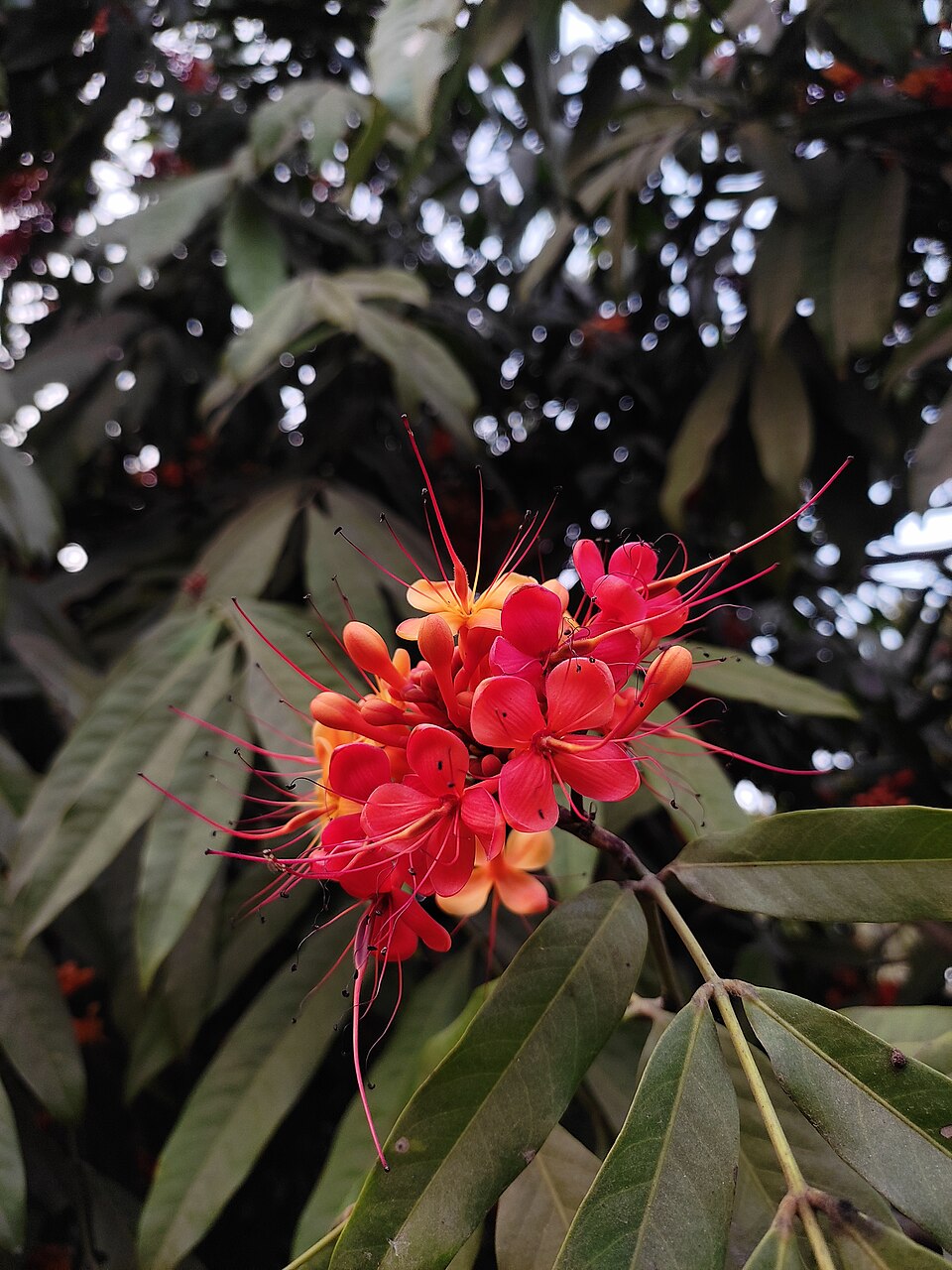
In Hindu mythology, the Ashoka tree is inextricably linked to Kama, the deity of desire, and his consort Rati, the goddess of passion and beauty. Legend suggests that the tree was created or favored by these deities to provide a sanctuary of joy and aesthetic beauty. The vibrant, orange-red blossoms of the Ashoka tree are often seen as a metaphor for the blooming of consciousness and the sweetness of divine love. It is often associated with the presence of the Divine Mother, as the tree's beauty and flowering patterns are thought to mirror the grace and nurturing qualities of Shakti.
Beyond its mythological roots, the Ashoka tree carries immense weight in the landscape of ancient Indian aesthetics and spiritual retreats. It was frequently mentioned in classical Sanskrit literature as a symbol of longing, beauty, and the rejuvenating power of nature. For the seeker, the tree represents the ability to remain equanimous amidst the fluctuations of life—to stand firm and beautiful even when the seasons of life change. It serves as a botanical reminder that sorrow is a transient state and that through spiritual alignment, one can attain a state of 'Ashoka' or eternal peace.
In many traditions, the tree is believed to be a dwelling place for various celestial beings and subtle energies. The shade of the Ashoka is considered sacred, offering not just physical relief from the sun but spiritual respite from the heat of worldly attachments (Samsara). Understanding the Ashoka tree requires looking beyond its physical form to recognize it as a bridge between the material world of sensation and the spiritual realm of bliss (Ananda). It is a living icon that invites practitioners to cultivate a garden of peace within their own hearts.
Significance
In the context of Hindu cosmology and the concept of the 'Vriksha Devata' (Tree Deities), the Ashoka is often associated with the preservation of harmony in the environment and the household. Its presence is believed to attract positive vibrations and ward off 'Alakshmi' (the energy of misfortune and poverty). Culturally, the Ashoka tree has been a staple in the sacred groves (Sacred Groves/Devrai) of India, serving as a protector of biodiversity and a site for local community worship. It is a reminder of the interconnectedness between human well-being and the health of the natural world.
Astrologically, certain traditions link the Ashoka tree to the soothing energies of the Moon (Chandra) and Venus (Shukra). Because it is associated with beauty, love, and emotional stability, worshipping or planting the Ashoka is often recommended for those seeking to balance their emotional temperament or improve their relationships. It is believed to mitigate the malefic effects of planets that cause emotional turbulence or domestic discord. The flowering of the tree is seen as an auspicious sign, marking times of renewal and the potential for new beginnings.
Furthermore, the 'Phala' (fruits/benefits) of respecting the Ashoka tree include the cultivation of 'Sattvic' (pure) qualities. It encourages the development of aesthetic appreciation (Rasa) and the ability to find joy in the simple, divine manifestations of nature. For practitioners of various Sampradayas, the Ashoka tree serves as a focus for meditation, helping them visualize the blossoming of the Kundalini or the opening of the heart chakra (Anahata). By honoring the tree, one honors the divine life force (Prana) that flows through all living things.
Auspicious Time
Find your exact auspicious time Check the shubh muhurat and choghadiya for your city and date.
Required Samagri (Materials)
Preparation Steps
- 1Clean the area around the base of the Ashoka tree thoroughly.
- 2Take a bath and wear clean, preferably light-colored or sacred clothing.
- 3Prepare the offerings: mix the sandalwood paste and arrange the flowers.
- 4Ensure a quiet and meditative mindset, free from immediate worldly distractions.
Steps
- 1Approach the tree with humility and bow before it to acknowledge the divinity within.
- 2Sprinkle water at the base of the tree as a preliminary purification (Shuddhikaran).
- 3Apply Tilak (sandalwood and turmeric) to the trunk of the tree.
- 4Light the Ghee lamp and incense, circling it around the tree in a clockwise direction (Pradakshina).
- 5Offer the red flowers and betel leaves at the roots.
- 6Recite the prescribed mantras or simply meditate on the concept of 'A-shoka' (freedom from sorrow).
- 7Perform a small Arati with the camphor to conclude the ritual.
- 8Offer a prayer for the removal of mental and emotional suffering for yourself and the world.
Mantras
Ashoka Tree Salutation
ॐ अशोकाय नमः
Om Ashokaya Namaha
Meaning: Salutations to the one who is without sorrow.
Prayer for Peace
शान्तिः शान्तिः शान्तिः
Shantihi Shantihi Shantihi
Meaning: May there be peace, peace, and absolute peace.
Guidelines
- •Maintain a Sattvic diet (avoid onion, garlic, and non-vegetarian food) if performing a specific fast associated with the tree.
- •Observe silence (Mauna) during the ritual to deepen internal connection.
- •Focus the mind on the removal of internal 'shoka' (grief) rather than just external problems.
Do's
- ✓Always perform Pradakshina (circumambulation) in a clockwise direction.
- ✓Use natural and organic offerings.
- ✓Respect the tree by not breaking branches unnecessarily.
- ✓Keep the surroundings of the tree clean and well-maintained.
Don'ts
- ✗Do not pluck leaves or flowers forcefully for ritual purposes; use fallen ones if possible.
- ✗Do not perform the ritual while in a state of anger or intense agitation.
- ✗Do not dispose of ritual offerings (Nirmalya) in a way that pollutes water bodies or litter streets.
Common Mistakes to Avoid
- •Treating the ritual as a mere mechanical task without internal devotion (Bhava).
- •Neglecting the environmental care of the tree after the ritual is complete.
- •Using artificial or plastic flowers for worship.
Regional Variations
- •In South India, the Ashoka tree is often integrated into temple gardens and receives specific floral offerings during Devi Pujas.
- •In certain tribal traditions, the tree is treated as a forest deity and is worshipped with local forest products rather than standard Vedic Samagri.
- •In some household traditions, the Ashoka is planted near the entrance to act as a spiritual guardian of the home.
Frequently Asked Questions
Is the Ashoka tree the same as the Buddhist Ashoka tree?▾
Can I worship the Ashoka tree in my garden?▾
What is the main benefit of worshipping the Ashoka tree?▾
Popular Tools
References & Traditional Notes
- •Refer to the Puranas regarding the associations of Kama and Rati for deeper meditative visualization.
- •Note that local customs regarding the specific species of 'Ashoka' may vary; always consult local elders.
- •The concept of 'Ashoka' as a state of being is central to Vedantic teachings on equanimity.
Related Audio & Bhajans
XI-THE INFLUENCE OF THE SEXES ON VEGETATION. The marriage of the King and Queen of May intended to promote the growth of vegetation by homoeopathic magic, Intercourse of the sexes practised to make the crops grow and fruit-trees to bear fruit, Parents of twins supposed to fertilise the bananas in Uganda, Relics of similar customs in Europe, Continence practised in order to make the crops grow, Incest and illicit love supposed to blight the fruits of the earth by causing drought or excessive rain, Traces of similar beliefs as to the blighting effect of adultery and incest among the ancient Jews, Greeks, Romans, and Irish, Possible influence of such beliefs on the institution of the forbidden degrees of kinship, Explanation of the seeming contradiction of the foregoing customs, Indirect benefit to humanity of some of these superstitions.
X-RELICS OF TREE-WORSHIP IN MODERN EUROPE. May-trees in Europe, especially England, May-garlands in England, May customs in France, Germany, and Greece, Whitsuntide customs in Russia, May-trees in Germany and Sweden, Midsummer trees and poles in Sweden, Village May-poles in England and Germany, Tree-spirit detached from tree and represented in human form, Esthonian tale, Tree-spirit represented simultaneously in vegetable and human form, The Little May Rose, The Walber, Green George, Double representation of tree-spirit by tree and man among the Oraons, Double representation of harvest -goddess Gauri, W. Mannhardt's conclusions, Tree-spirit or vegetation-spirit represented by a person alone, Leaf-clad mummers (Green George, Little Leaf Man, Jack-in-the-Green, etc.), Leaf-clad mummers called Kings or Queens (King and Queen of May, Whitsuntide King, etc.), Whitsuntide Bridegroom and Bride, Midsummer Bridegroom and Bride, The Forsaken Bridegroom or Bride, St. Bride in Scotland and the Isle of Man, May Bride or Whitsuntide Bride.
Sacred Temple Light Mantra
I Am The Sacred Spring: Harnessing the Energy of Birth
Affiliate disclosure: Sanatan Hindu participates in the Amazon Associates Programme and the CueLinks affiliate network (Myntra & Flipkart). This page contains affiliate links, if you click and buy, we earn a small commission at no extra cost to you. As an Amazon Associate we earn from qualifying purchases. Full disclosure.
Shop Samagri on Amazon.in
Clicking opens Amazon.in. Prices and availability may vary.
Browse all pooja itemsAmazon Associates tag: geekydevelope-21
Shop Pooja & Festive Essentials on Flipkart
Clicking opens Flipkart via our affiliate link. Prices and availability may vary.
Shop on FlipkartCueLinks Publisher: 300371
Shop Festive Wear on Myntra
Clicking opens Myntra via our affiliate link. Prices and availability may vary.
CueLinks Publisher: 300371
Need a website? Describe it, and AI builds it.
Perfect for a temple, pooja service, astrology practice or small shop. Tell the AI what you want — or drag and drop the classic way — and go live on your own web address in minutes with Sitova. Hosting, SEO, forms and analytics are all included.
- Build with AI or drag & drop
- Your domain + SEO built in
- Free forever plan
Opens sitova.site