
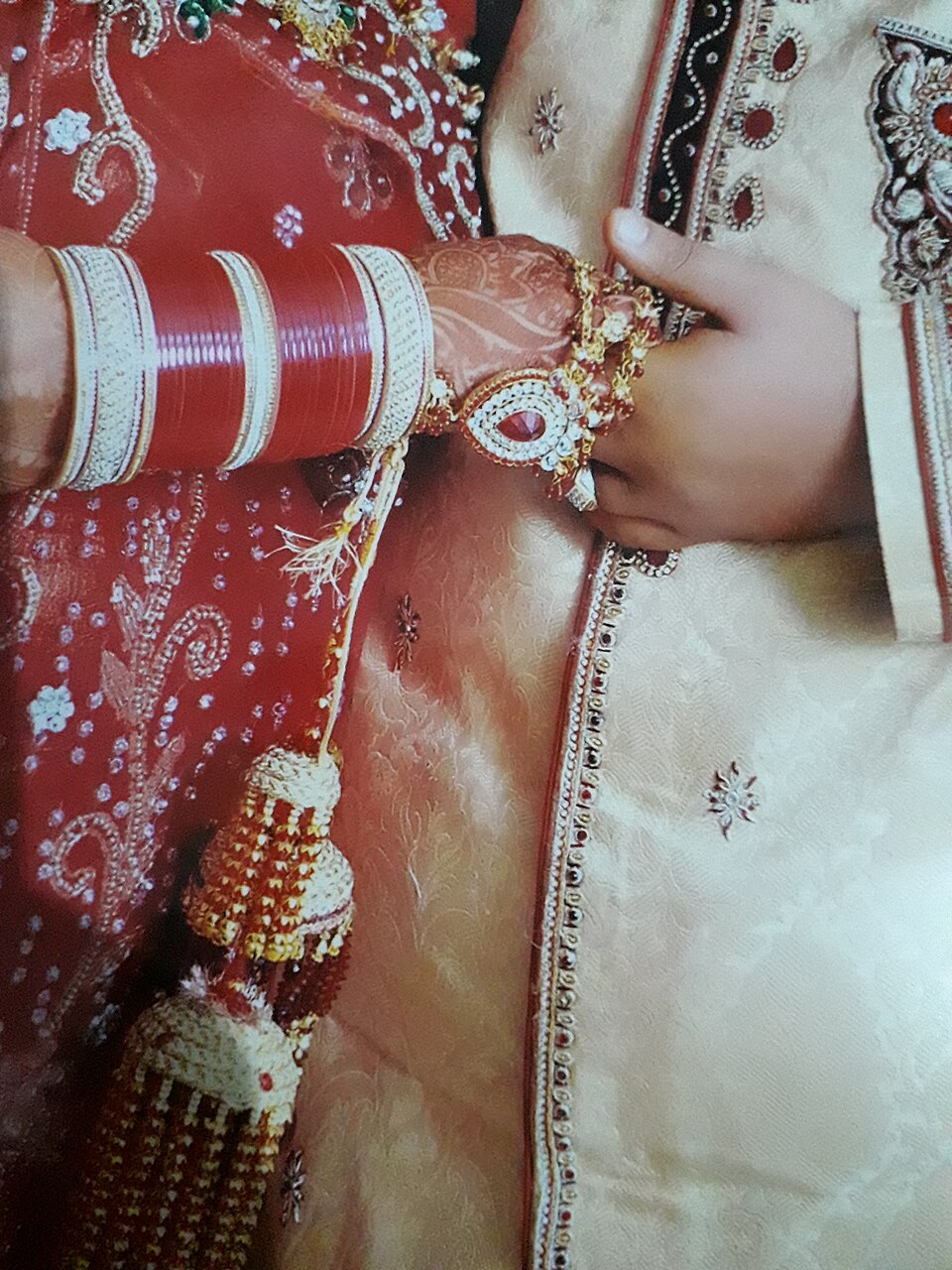
Chuda Ceremony — The Sacred Bangles Tradition for Newlywed Hindu Brides
Complete guide to the Chuda ceremony: significance, vidhi, mantras, regional variations, and customs for the sacred bangles worn by newlywed Hindu brides.
Affiliate disclosure: Sanatan Hindu participates in the Amazon Associates Programme and the CueLinks affiliate network (Myntra & Flipkart). This page contains affiliate links, if you click and buy, we earn a small commission at no extra cost to you. As an Amazon Associate we earn from qualifying purchases. Full disclosure.
Introduction
Significance
Auspicious Time
Find your exact auspicious time Check the shubh muhurat and choghadiya for your city and date.
Required Samagri (Materials)
Preparation Steps
- 1The maternal uncle (mama) and aunt (mami) purchase the chuda set as per family tradition (number, material, design).
- 2The bangles are cleaned and arranged in alternating red and white order on a red cloth-covered thali.
- 3Raw milk is poured into a bowl and mixed with a little water and rose petals.
- 4The puja area is cleaned and decorated with rangoli; a low stool (chauki) is placed for the bride.
- 5The pandit or family elder prepares the kalash (if included) with water, mango leaves, and coconut.
- 6The bride bathes and wears fresh traditional attire (usually red or maroon salwar suit or saree).
- 7All samagri items are arranged on the puja thali for easy access during the vidhi.
Ritual Steps
- 1The bride sits on the chauki facing east or north, with her head covered by a dupatta.
- 2The pandit or elder family member begins with Ganesh puja, lighting the diya and offering incense.
- 3The chuda thali is placed before the bride. The maternal uncle (mama) sits to her right.
- 4The bangles are first offered to the family deity (kuldevta) or Goddess Gauri/Parvati with kumkum, haldi, and rice.
- 5Each bangle is dipped in the milk-water-rose mixture by the mama, symbolizing purification and cooling of planetary energies.
- 6The mama then gently slides each bangle onto the bride's wrists, starting with the left hand, reciting blessings or mantras.
- 7As each set of bangles is worn, the mama and mami shower the bride with akshata (rice mixed with kumkum) and flower petals.
- 8After all bangles are worn, the bride touches the feet of her mama, mami, parents, and elders for blessings.
- 9The coconut is offered to the mama as a token of respect; he may break it or keep it.
- 10Sweets are distributed to all present. The bride may be given a light meal (often kheer or halwa) before vidai.
- 11The chuda remains covered with a red cloth when not being worn (e.g., during sleep) for the first few days.
Mantras
Gauri Shankar Mantra for Marital Bliss
ॐ गौर्यै नमः शंकराय नमः
Om Gauryai Namah Shankaraya Namah
Meaning: Salutations to Goddess Gauri (Parvati) and Lord Shankar (Shiva), the divine couple who embody ideal marriage.
Mangala Gauri Stuti
मङ्गल्यै च विद्महे गौरीप्रियाय धीमहि तन्नो गौरी प्रचोदयात्
Mangalyai Cha Vidmahe Gauripriyaya Dhimahi Tanno Gauri Prachodayat
Meaning: We meditate on the auspicious one, the beloved of Gauri; may Goddess Gauri inspire and illumine our path.
Suhag Mangal Mantra (For Longevity of Husband)
पतिं मे अमृतं कृधि दीर्घायुषं प्रजावतं कृधि
Patim Me Amritam Krudhi Dirghayusham Prajavatam Krudhi
Meaning: Make my husband immortal (long-lived), grant him long life and progeny. (From Atharva Veda 14.2.18)
Lakshmi Vandana for Prosperity
ॐ श्रीं ह्रीं क्लीं श्रीं महालक्ष्म्यै नमः
Om Shreem Hreem Kleem Shreem Mahalakshmyai Namah
Meaning: Salutations to Goddess Mahalakshmi, the bestower of wealth, fortune, and marital abundance.
Do's
- ✓Perform the ceremony during the auspicious muhurta determined by the family pandit.
- ✓Ensure the maternal uncle (mama) is present; if unavailable, a senior male relative from the maternal side may perform the rites.
- ✓Use raw, unboiled cow's milk for the purification dip.
- ✓Cover the chuda with a clean red cloth when the bride sleeps or during inauspicious times (e.g., eclipse).
- ✓Replace any broken bangle immediately with a new one of the same color and type.
- ✓Observe the full prescribed duration of wearing the chuda as per family custom.
- ✓Offer dakshina and gifts to the mama, mami, and pandit with reverence.
Don'ts
- ✗Do not let the bride wear the chuda before the formal ceremony, even if the bangles have arrived earlier.
- ✗Do not use boiled or pasteurized milk for the ritual dip; raw milk is essential for its sattvic quality.
- ✗Do not allow the bride to remove the chuda for cosmetic reasons or social events during the mandated period.
- ✗Do not perform the ceremony during Rahu Kaal, Yamaganda, or other inauspicious time windows.
- ✗Do not let anyone other than the designated maternal relative (mama) put the first bangles on.
- ✗Do not mix the chuda with other jewelry or bangles during the initial wearing period.
- ✗Do not dispose of broken bangles in dustbins; they must be respectfully immersed in a river, lake, or under a peepal tree.
Common Mistakes to Avoid
- •Using plastic or glass bangles instead of traditional ivory/lac (though modern adaptations exist, traditionalists prefer natural materials).
- •Skipping the milk-water purification dip due to time constraints.
- •Performing the ceremony without the maternal uncle, substituting with paternal relatives incorrectly.
- •Wearing the chuda for a shorter period than family tradition mandates without proper udyapan (completion ritual).
- •Allowing the bride to do heavy household work that may bang the bangles against hard surfaces, causing breakage.
- •Not consulting the panchang for muhurta, leading to performance during inauspicious hours.
- •Forgetting to offer the coconut and dakshina to the mama, which is considered a breach of ritual etiquette.
Regional Variations
- •Punjabi Hindu/Sikh tradition: 21 or 51 bangles (red and white), worn for 40 days to 1 year; ceremony at bride's home before vidai; mama puts bangles on; udyapan (removal ceremony) with havan and feast.
- •Haryanvi/Jat tradition: Similar to Punjabi but often 51 bangles; may include gold or silver kadas at the ends; worn for minimum 3 months.
- •Uttar Pradesh (Braj/Awadh): Called 'Chuda' or 'Choora'; sometimes includes green bangles (hari chudi) for fertility; duration varies by clan.
- •Rajasthani Marwari: 'Chuda' ceremony less common; instead 'Haath Peele' (haldi on hands) and 'Bangri' (ivory bangles) given by maternal side; different timeline.
- •Gujarati: No distinct chuda ceremony; brides wear 'chuda' (ivory bangles) but the ritual is integrated into the wedding day (Hasta Melap) rather than post-wedding.
- •South Indian (Tamil/Telugu/Kannada): No chuda tradition; instead, 'Valayal' (bangles) are worn during wedding and changed periodically; 'Metti' (toe rings) and 'Mangalsutra' are primary marital symbols.
- •Bengali: 'Shakha-Pola' (white conch shell and red coral bangles) worn by married women; given during wedding by groom's side, not maternal uncle; no separate post-wedding ceremony.
Frequently Asked Questions
Can the Chuda ceremony be performed if the maternal uncle (mama) is no longer alive?▾
What is the significance of the number 21 or 51 bangles?▾
Can the bride remove the chuda for medical procedures (MRI, surgery)?▾
What happens during the Chuda Udyapan (removal ceremony)?▾
Is the Chuda ceremony mentioned in Vedas or Puranas?▾
Can a widow or divorced woman wear chuda?▾
Popular Tools
References & Traditional Notes
- •The practice of wearing bangles (kankan/valaya) by married women is described in the Grihya Sutras (Ashvalayana, Paraskara) as part of the vivaha samskara.
- •Mahabharata, Adi Parva: Draupadi's bangles are mentioned as symbols of her marital status and dignity.
- •Devi Bhagavata Purana (Book 9, Chapter 1) describes Goddess Gauri adorned with bangles, establishing the divine precedent.
- •Atharva Veda 14.2.18 contains a mantra for the longevity of the husband, often recited during marital rituals.
- •The 51 bangles tradition aligns with the 51 Shakti Peethas listed in the Devi Purana and Kalika Purana.
- •Regional texts like 'Vivaha Paddhati' (Punjabi/Haryanvi manuscripts) detail the mama's role in chuda chadhana.
- •Modern adaptations include hypoallergenic materials (plastic, acrylic) for those with skin sensitivities to lac/ivory.
Related Audio & Bhajans
Affiliate disclosure: Sanatan Hindu participates in the Amazon Associates Programme and the CueLinks affiliate network (Myntra & Flipkart). This page contains affiliate links, if you click and buy, we earn a small commission at no extra cost to you. As an Amazon Associate we earn from qualifying purchases. Full disclosure.
Shop Samagri on Amazon.in
Clicking opens Amazon.in. Prices and availability may vary.
Browse all pooja itemsAmazon Associates tag: geekydevelope-21
Shop Pooja & Festive Essentials on Flipkart
Clicking opens Flipkart via our affiliate link. Prices and availability may vary.
Shop on FlipkartCueLinks Publisher: 300371
Shop Festive Wear on Myntra
Clicking opens Myntra via our affiliate link. Prices and availability may vary.
CueLinks Publisher: 300371
Need a website? Describe it, and AI builds it.
Perfect for a temple, pooja service, astrology practice or small shop. Tell the AI what you want — or drag and drop the classic way — and go live on your own web address in minutes with Sitova. Hosting, SEO, forms and analytics are all included.
- Build with AI or drag & drop
- Your domain + SEO built in
- Free forever plan
Opens sitova.site