
Nandgaon: The Sacred Foster Home of Lord Krishna and a Complete Pilgrimage Guide
Explore Nandgaon, the divine home of Nanda Maharaja and the foster mother of Lord Krishna. A complete guide to its history, temples, and spiritual significance.
Affiliate disclosure: Sanatan Hindu participates in the Amazon Associates Programme and the CueLinks affiliate network (Myntra & Flipkart). This page contains affiliate links, if you click and buy, we earn a small commission at no extra cost to you. As an Amazon Associate we earn from qualifying purchases. Full disclosure.
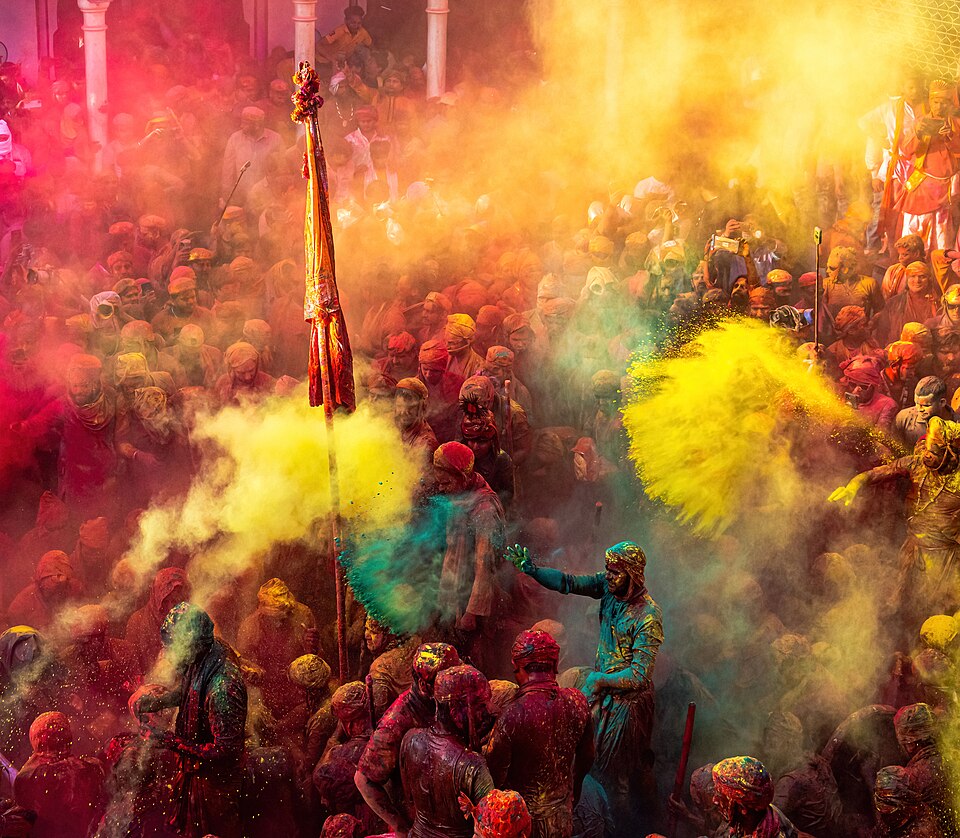
Next Holi
Tuesday, 23 March 2027· in 189 days
Set a reminder so you never miss Holi.
Introduction
The historical and Puranic backdrop of Nandgaon is deeply intertwined with the life of Shri Krishna. It is said that the hills of Nandgaon provided a protective sanctuary for the cowherd boys (Gopas) and the cows of Vraja. The very landscape is imbued with the memory of Krishna's laughter, his flute melodies, and his playful interactions with the residents of the village. Devotees believe that the energy of the land itself is a manifestation of Krishna's presence, acting as a bridge between the material world and the spiritual abode of Goloka.
Central to the spiritual identity of Nandgaon is the Nand Bhavan, the ancestral home of Nanda Maharaja. The temples here are not just structures of stone and mortar; they are living embodiments of the devotion of the Vraja-vasis. The architecture and the daily rituals conducted within these temples reflect a deep-rooted tradition of service (Seva) that has been passed down through generations. For a seeker, visiting Nandgaon is akin to stepping into a living scripture, where every stone and tree tells a story of divine love and simplicity.
In the broader cultural context of the Braj Bhoomi, Nandgaon represents the ideal of 'Saral Bhakti' or simple, unpretentious devotion. Unlike the complex rituals found in grand metropolitan temples, the traditions here are deeply communal and rooted in the lifestyle of the cowherds. It serves as a reminder that the Divine is most easily accessible through the pure, selfless love of a parent or a friend. As pilgrims travel through the winding paths of the Braj hills, they are not just visiting a site; they are participating in a timeless cosmic drama that celebrates the intimacy between the Creator and the created.
Significance
Religiously, Nandgaon is a vital link in the 'Braj Mandal' pilgrimage circuit. It is spiritually connected to Govardhan, Vrindavan, and Barsana, forming a sacred geography that encompasses the entire life of Krishna. The significance of the Nand Bhavan temple is such that it is believed the Lord resides there in a form that honors his role as the beloved son of Nanda. The rituals performed here, such as the daily offerings of milk, butter, and curd, are symbolic of the sustenance and love that the Lord provides to his devotees in return.
Culturally, Nandgaon is a bastion of Braj culture. The local language, the folk songs (Bhajans), and the traditional dances are all centered around the legends of Krishna's childhood. The village serves as a living museum of Vraja's pastoral heritage. For the local community, the presence of the Divine is not an abstract concept but a daily reality that dictates their customs, their festivals, and their social interactions. This cultural immersion provides pilgrims with a holistic experience of how spirituality can be integrated into the mundane aspects of life.
Astrologically and cosmically, the Braj region is often described as a descent of the spiritual plane into the material dimension. Performing pilgrimage or 'Parikrama' (circumambulation) around the sacred sites of Nandgaon is believed to cleanse the subtle body of karmic imprints and align the soul with the 'Lila-bhumi' (the land of divine play). The fruits (phala) of such a visit are said to include the purification of the heart, the development of steady devotion (Bhakti), and the attainment of divine grace (Kripa), which is the ultimate goal of the Hindu spiritual path.
Auspicious Time
Find your exact auspicious time Check the shubh muhurat and choghadiya for your city and date.
Required Samagri (Materials)
Preparation Steps
- 1Perform personal purification (Snanam) before embarking on the journey or entering the temple.
- 2Wear clean, traditional clothing, preferably in light colors, out of respect for the sacred atmosphere.
- 3Meditate on the form of Lord Krishna and Nanda Maharaja to set a devotional intention (Sankalpa).
- 4If planning a specific puja, ensure all samagri is gathered and sanctified beforehand.
Steps
- 1Approach the Nand Bhavan temple with humility and offer a prostration (Pranam).
- 2Begin with 'Manasa Puja' (mental worship), visualizing the Lord in the heart.
- 3Offer Chandan (sandalwood) and flowers to the deity, reciting the names of Krishna.
- 4Light the Ghee lamp and offer incense, acknowledging the presence of the divine light.
- 5Perform 'Abhishek' if permitted, or offer milk and curd as symbolic of the pastoral abundance of Nandgaon.
- 6Offer Makhan (butter) and sweets, remembering Krishna's love for these offerings.
- 7Conclude with Aarti, singing praises of Nanda Maharaja and Krishna.
- 8Take the Prasad and distribute it among family or fellow pilgrims.
Mantras
Krishna Maha-mantra
हरे कृष्ण हरे कृष्ण, कृष्ण कृष्ण हरे हरे। हरे राम हरे राम, राम राम हरे हरे॥
Hare Krishna Hare Krishna, Krishna Krishna Hare Hare | Hare Rama Hare Rama, Rama Rama Hare Hare ||
Meaning: O Lord, O energy of the Lord, please engage me in Your divine service.
Nanda Maharaja Pranam Mantra
नन्दनान्दनं भक्तवत्सलं, नन्दगोपकुलदीपकम्। नन्दनेन सदा पूजितं, तं नमामि नन्दपुत्रम्॥
Nandanandanam bhaktavatsalam, Nandagopa-kula-dipakam | Nandanena sada pujitam, tam namami Nandaputram ||
Meaning: I bow to the son of Nanda, who is affectionate to His devotees and the light of the Nanda lineage, who is always worshipped by Nanda.
Guidelines
- •Maintain mental purity and avoid negative thoughts throughout the visit.
- •Follow a vegetarian diet (Satvic) during the pilgrimage.
- •Observe silence (Mauna) during specific meditative periods if following a strict tradition.
- •If observing a fast, consume only fruits and milk (Phalahar) as per local custom.
Do's
- ✓Show utmost respect to the elders and priests in the Braj region.
- ✓Participate in Kirtan (congregational chanting) with enthusiasm.
- ✓Practice 'Daan' (charity) by providing food or aid to the needy in the village.
- ✓Keep the sacred premises clean.
Don'ts
- ✗Do not take photographs inside the inner sanctum (Garbhagriha) unless explicitly permitted.
- ✗Avoid loud or argumentative behavior, as it disrupts the spiritual sanctity.
- ✗Do not consume alcohol, meat, or non-satvic substances in the holy area.
- ✗Do not disrespect the local traditions or the customs of the Vraja-vasis.
Common Mistakes to Avoid
- •Treating the pilgrimage as a mere sightseeing tour rather than a spiritual journey.
- •Ignoring the importance of 'Bhava' (emotion/devotion) in favor of mechanical ritualism.
- •Failing to research local customs, leading to accidental disrespect.
Regional Variations
- •Gaudiya Vaishnavas focus heavily on Kirtan and the ecstatic mood of Radha-Krishna.
- •Pushtimargis emphasize the detailed 'Seva' (service) and the specific 'Ashta-yama' rituals of the deity.
- •Local Braj residents may practice customs passed down through specific family lineages (Kul-parampara).
Frequently Asked Questions
Is Nandgaon a separate village or part of Vrindavan?▾
What is the significance of the Nand Bhavan temple?▾
When is the best time to witness the Holi celebrations in Nandgaon?▾
Popular Tools
References & Traditional Notes
- •Consult the Bhagavata Purana for the foundational legends of Krishna's childhood.
- •Local traditions are often preserved through oral 'Katha' (storytelling) by local Brahmins.
- •The nuances of Seva in Nandgaon are best understood through the lens of the Pushtimarg or Gaudiya Sampradayas.
Related Audio & Bhajans
Aarti Kunj Bihari Ki - Krishna Aarti
Vāṇī Of The Day 2018 12 29 Odia Eng, Maharaj Priyavrata, Svayambhuva Manu’s Desire, Lord Brahmā, Sun God Vivasvān Instructed To Vaivasvata Manu Instructed To Ikṣvāku, Patni Nivesi Putra Pāse Athavā Chalibo Sannyāse
Story Prahlad Holika Symbol Victory Lord Vishnu story|mythology|festival
Why Apply Chandan Sandalwood Tilak Lord Ganesha, Goddess Mahalakshmi pooja
Gajendra Moksha Stotram (Lord Vishnu Mantra)
Affiliate disclosure: Sanatan Hindu participates in the Amazon Associates Programme and the CueLinks affiliate network (Myntra & Flipkart). This page contains affiliate links, if you click and buy, we earn a small commission at no extra cost to you. As an Amazon Associate we earn from qualifying purchases. Full disclosure.
Shop Samagri on Amazon.in
Clicking opens Amazon.in. Prices and availability may vary.
Browse all pooja itemsAmazon Associates tag: geekydevelope-21
Shop Pooja & Festive Essentials on Flipkart
Clicking opens Flipkart via our affiliate link. Prices and availability may vary.
Shop on FlipkartCueLinks Publisher: 300371
Shop Festive Wear on Myntra
Clicking opens Myntra via our affiliate link. Prices and availability may vary.
CueLinks Publisher: 300371