
Vamana Avatar — The Dwarf Who Measured the Universe
Explore the profound legend of Vamana Avatar, the fifth incarnation of Lord Vishnu, who reclaimed the three worlds from King Bali through cosmic proportions.
Affiliate disclosure: Sanatan Hindu participates in the Amazon Associates Programme and the CueLinks affiliate network (Myntra & Flipkart). This page contains affiliate links, if you click and buy, we earn a small commission at no extra cost to you. As an Amazon Associate we earn from qualifying purchases. Full disclosure.
Introduction
Scripturally, the narrative of Vamana is detailed extensively in the Bhagavata Purana, the Vishnu Purana, and various Upanishads. The story begins with Bali, the grandson of Prahlada, performing massive Yajnas (sacrifices) and conquering the heavens. Despite his piety, Bali's ego and his absolute control over the cosmos necessitated a divine intervention that was subtle rather than destructive. The choice of a dwarf form was intentional; it was a strategic and symbolic masterstroke to test the king's virtue and ultimately reclaim the universe through intellect and spiritual surrender rather than through bloody warfare.
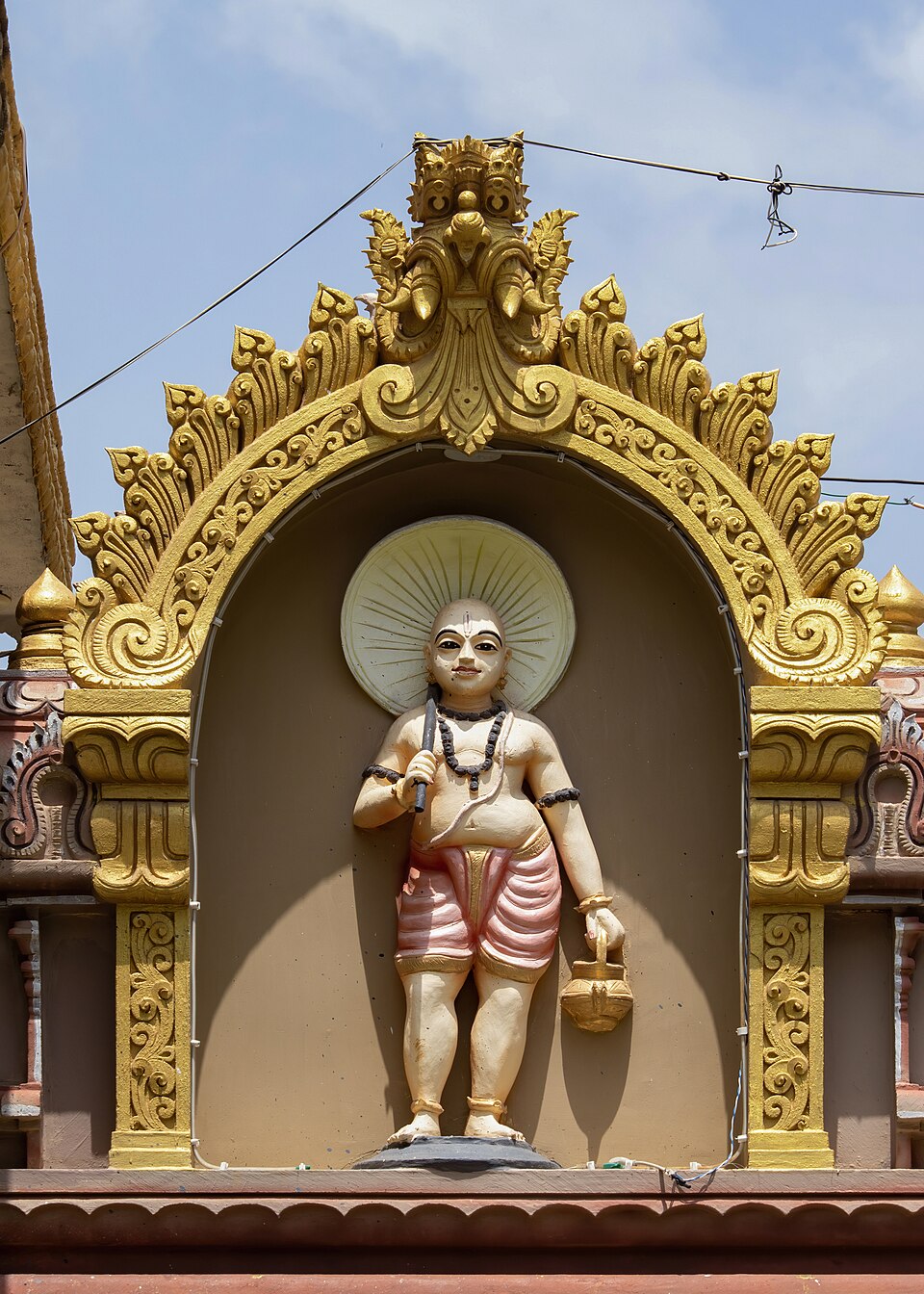
According to the Puranic accounts, Vamana approached King Bali during the performance of a grand Ashwamedha Yajna. Disguised as a young, ascetic Brahmin carrying a wooden umbrella (Chatra), he requested only as much land as he could cover in three paces. King Bali's guru, Shukracharya, sensed the divine nature of the visitor and warned the king not to grant the boon, recognizing it as a ruse by Vishnu. However, Bali, bound by his unwavering commitment to his word and his dharma of charity, ignored the warning and granted the request, thereby setting the stage for the cosmic expansion of the dwarf.
This incarnation serves as a pivotal moment in Hindu cosmology, marking the transition of power back to the Devas and establishing the principle that even the most virtuous beings must remain humble and recognize the ultimate supremacy of the Divine. It is a story of 'Trivikrama'—the one who conquered the three worlds—demonstrating that the Divine is not limited by physical form, but is an all-encompassing reality that transcends space, time, and existence itself.
Significance
Spiritually, the legend of Vamana serves as a profound lesson on the nature of 'Ahankara' (ego) and 'Dana' (charity). King Bali's downfall was not his greed, but his subtle pride in his ability to give. He believed his generosity was his own achievement, forgetting that the capacity to give is a gift from the Divine. By asking for three steps, Vishnu forced Bali to confront the limits of his worldly possession. The act of placing the third step on Bali's head represents the total surrender (Sharanagati) of the ego to the Divine. This surrender is considered the highest state of spiritual attainment in many Vedantic and Vaishnava traditions.
In the context of Dharma, Vamana Avatar illustrates that the preservation of cosmic order sometimes requires unconventional means. The intervention was not a punishment but a correction. It highlights that true righteousness must be aligned with the welfare of the entire cosmos, not just the prosperity of a single kingdom. The ritualistic remembrance of Vamana reminds devotees to cultivate humility and to understand that all material wealth is transient and ultimately belongs to the Divine.
Culturally and astrologically, the themes of Vamana are often linked to the movement of planets and the concept of 'Bali Pratipada' (the day after Diwali), which marks the beginning of the Bali Pratipada period. In many parts of India, the lessons of Vamana are celebrated to emphasize that true greatness lies in surrender and the recognition of the infinite nature of God. The avatar also serves as a precursor to the concept of 'Avatara' as a protector of the cosmic cycle (Samsara), ensuring that the struggle between Devas and Asuras maintains the equilibrium necessary for life to flourish.
Auspicious Time
Find your exact auspicious time Check the shubh muhurat and choghadiya for your city and date.
Required Samagri (Materials)
Preparation Steps
- 1Clean the puja area and ensure it is free from distractions.
- 2Take a ritual bath and wear clean, traditional clothing.
- 3Prepare the altar by spreading a clean cloth, preferably yellow or red.
- 4Place the image or idol of Lord Vamana in the center.
- 5Arrange the samagri (offerings) neatly to the side of the deity.
Steps
- 1Achaman: Begin by sipping water thrice while chanting Vishnu names to purify the self.
- 2Sankalpa: State your intention for the puja, expressing your desire for spiritual growth and humility.
- 3Deepa Prajvalan: Light the Ghee lamp to signify the presence of divine light.
- 4Dhyana: Meditate on the form of the small Brahmin boy (Vamana) and his subsequent cosmic expansion (Trivikrama).
- 5Abhisheka: If using an idol, perform a symbolic bath with water, milk, or honey.
- 6Alankar: Apply Chandan (sandalwood) and Haldi (turmeric) to the deity.
- 7Pushpa Arpan: Offer fresh flowers with reverence.
- 8Naivedya: Offer food or grain, symbolizing the surrender of all material possessions.
- 9Mantra Japa: Recite the Vamana or Vishnu mantras with focus.
- 10Aarti: Perform the final prayer with a camphor flame or lamp, circling it clockwise.
- 11Pradakshina: Walk around the puja area as a sign of respect.
- 12Shanti Path: Conclude with a prayer for universal peace.
Mantras
Vamana Gayatri Mantra
ॐ वामनाय विद्महे त्रीपादाय धीमहि तन्नो वामनः प्रचोदयात्
Om Vamanaya Vidmahe Tripadaya Dhimahi Tanno Vamanah Prachodayat
Meaning: Om, Let us meditate on the Vamana Avatar. May the Three-Stepped Lord inspire and illuminate our intellect.
Vishnu Moola Mantra
ॐ नमो भगवते वासुदेवाय
Om Namo Bhagavate Vasudevaya
Meaning: Salutations to the Lord who dwells in all beings.
Guidelines
- •Maintain mental purity and avoid anger during the observance.
- •Observe a vegetarian diet, avoiding onion and garlic.
- •Practice silence (Mauna) for specific periods if following a strict vow.
- •Focus on acts of charity (Dana) as a reflection of Bali's virtues.
Do's
- ✓Donate food or clothes to the needy.
- ✓Read stories from the Bhagavata Purana regarding Lord Vishnu.
- ✓Practice humility in all social interactions.
- ✓Offer prayers with a sense of total surrender.
Don'ts
- ✗Do not indulge in egoistic arguments or prideful behavior.
- ✗Do not perform puja with impure thoughts or cluttered surroundings.
- ✗Avoid consuming intoxicants during the period of observance.
- ✗Do not neglect the importance of charity while seeking blessings.
Common Mistakes to Avoid
- •Treating the ritual as a mere transaction for material gain rather than a spiritual surrender.
- •Neglecting the symbolic meaning of the 'three steps' (the three states of consciousness: waking, dreaming, and deep sleep).
- •Focusing only on the 'dwarf' aspect and missing the 'Trivikrama' (infinite) essence.
Regional Variations
- •In South India, Vamana is often worshipped in connection with the Vamana Moorthy in temples, emphasizing his role as a protector of the cosmic order.
- •In certain traditions, the story is used during the transition of seasonal changes to remind devotees of the cyclical nature of time.
- •Some communities perform specific 'Bali Pooja' variations during the Bali Pratipada festival to honor the king's righteousness.
Frequently Asked Questions
Why did Vishnu take a dwarf form instead of a warrior form?▾
Is King Bali considered a villain?▾
What are the 'three steps' of Trivikrama?▾
Popular Tools
References & Traditional Notes
- •Primary source: Srimad Bhagavatam, Canto 8.
- •Secondary source: Vishnu Purana.
- •Note: The concept of Trivikrama is central to the understanding of Vishnu's omnipresence in Vedantic philosophy.
Related Audio & Bhajans
Story Prahlad Holika Symbol Victory Lord Vishnu story|mythology|festival
Gajendra Moksha Stotram (Lord Vishnu Mantra)
The role of gods and goddesses in Hinduism, including Lord Rama and Lord Vishnu
Lord Vishnu Had Only Ten Avatars, But Our Dosa
Paramasivan Kazhutthil
Affiliate disclosure: Sanatan Hindu participates in the Amazon Associates Programme and the CueLinks affiliate network (Myntra & Flipkart). This page contains affiliate links, if you click and buy, we earn a small commission at no extra cost to you. As an Amazon Associate we earn from qualifying purchases. Full disclosure.
Shop Samagri on Amazon.in
Clicking opens Amazon.in. Prices and availability may vary.
Browse all pooja itemsAmazon Associates tag: geekydevelope-21
Shop Pooja & Festive Essentials on Flipkart
Clicking opens Flipkart via our affiliate link. Prices and availability may vary.
Shop on FlipkartCueLinks Publisher: 300371
Shop Festive Wear on Myntra
Clicking opens Myntra via our affiliate link. Prices and availability may vary.
CueLinks Publisher: 300371
Need a website? Describe it, and AI builds it.
Perfect for a temple, pooja service, astrology practice or small shop. Tell the AI what you want — or drag and drop the classic way — and go live on your own web address in minutes with Sitova. Hosting, SEO, forms and analytics are all included.
- Build with AI or drag & drop
- Your domain + SEO built in
- Free forever plan
Opens sitova.site