
Varanasi Ghats: A Comprehensive Guide to All 84 Ghats and Their Sacred Significance
Explore the spiritual essence of Varanasi's 84 ghats. A deep dive into the history, legends, and sacred rituals of Kashi's riverfront steps.
Affiliate disclosure: Sanatan Hindu participates in the Amazon Associates Programme and the CueLinks affiliate network (Myntra & Flipkart). This page contains affiliate links, if you click and buy, we earn a small commission at no extra cost to you. As an Amazon Associate we earn from qualifying purchases. Full disclosure.
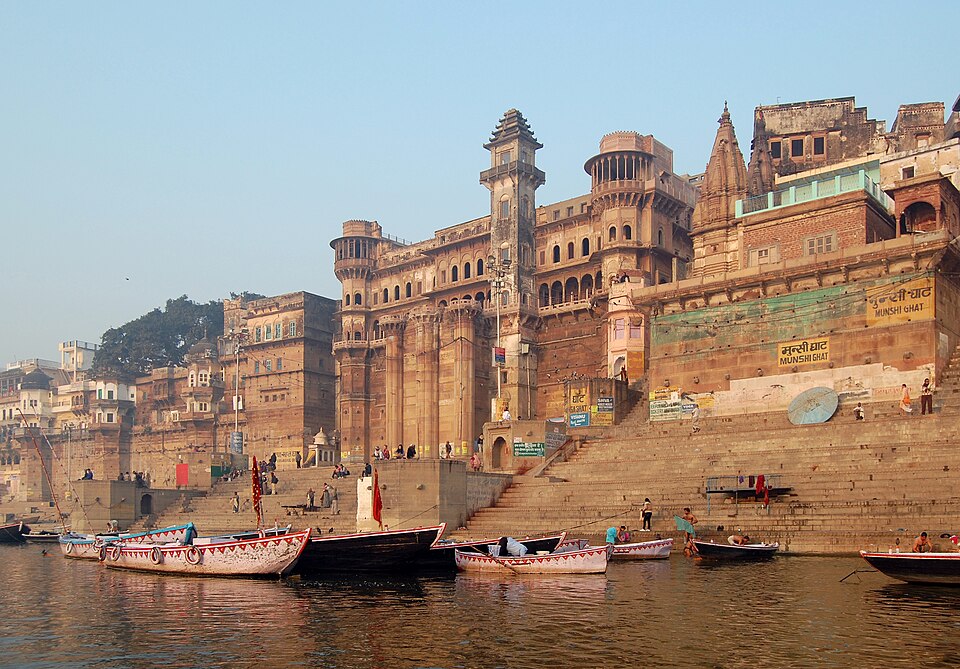
Introduction
According to the Puranas, particularly the Kashi Khanda of the Skanda Purana, the city of Kashi is built upon the tip of Lord Shiva's Trishula (trident). The ghats are not merely architectural structures; they are consecrated spaces where the vibration of the cosmos is said to be more palpable. The number 84 is deeply symbolic in Hindu cosmology, representing the 84 lakh (8.4 million) species of life forms through which a soul might travel in the cycle of Samsara. Thus, the 84 ghats are believed to provide a complete map for spiritual liberation, offering a gateway for all beings to transcend the worldly cycle.
Each ghat possesses its own unique identity, its own resident deity, and its own specific legend (katha). Some ghats are dedicated to the performance of daily prayers and Sandhya Vandanam, while others are designated for the final rites of the deceased, facilitating the transition of the Atman (soul) towards Moksha (liberation). There are ghats of profound silence and meditation, and others that pulse with the rhythmic energy of the Ganga Aarti. The history of these ghats is a tapestry of royal patronage from Maratha, Rajput, and Scindhia rulers, combined with the ancient, unyielding traditions of the Aghoris, Sadhus, and householders.
For the pilgrim, visiting the ghats is a multi-sensory journey. It is the smell of incense and sandalwood, the sound of temple bells and Vedic chanting, the sight of flickering diyas on the water, and the feel of the cool river against the skin. Understanding the distinction between the 'living' ghats used for social and religious gatherings and the 'cremation' ghats is essential for anyone seeking to navigate this sacred terrain with respect and awareness. This guide seeks to illuminate the diverse tapestry of these 84 steps to the divine.
Significance
Culturally, the ghats are the soul of Varanasi's social fabric. They are stages for the most profound human experiences: the birth of a child, the initiation into spiritual life, the celebration of festivals, and the solemnity of death. The ghats represent the continuity of Sanatana Dharma, where ancient Vedic rituals are performed daily just as they were thousands of years ago. They serve as open-air temples where the distinction between the sacred and the profane blurs, allowing the common person to interact directly with the divine through the medium of the river.
Astrologically and cosmically, the river flowing through these ghats is seen as the celestial Ganges descending from the heavens. The movement of the water is believed to mirror the flow of cosmic energy. Performing rituals at specific ghats during auspicious timings (Muhurtas), such as during Brahma Muhurta or during the month of Kartik, is said to amplify the 'phala' (fruits) of the actions performed. The presence of various deities residing in the temples lining the ghats creates a concentrated energetic field that aids in meditation and spiritual awakening.
Furthermore, the ghats hold immense symbolic value regarding the human condition. The descent from the high city to the low river represents the journey from the ego-driven material world to the humble, flowing consciousness of the divine. The various activities—from the vigorous Ganga Aarti to the silent meditations of the Sadhus—represent the different paths (margas) of Yoga: Karma Yoga (action), Bhakti Yoga (devotion), and Jnana Yoga (knowledge). To study the ghats is to study the very essence of the human quest for truth.
Auspicious Time
Find your exact auspicious time Check the shubh muhurat and choghadiya for your city and date.
Required Samagri (Materials)
Preparation Steps
- 1Perform physical cleansing (Snanam) before approaching the river.
- 2Wear clean, traditional clothing (Dhoti/Saree) to maintain sanctity.
- 3Enter a state of mental stillness through deep breathing or a short mantra recitation.
- 4Approach the water with reverence, acknowledging the deity Ganga.
- 5Ensure all offerings (flowers, lamps) are prepared and gathered in a small leaf bowl (Dona).
Steps
- 1Step 1: Approach the ghat early in the morning and descend the steps slowly, maintaining mindfulness.
- 2Step 2: Perform 'Achamana' (ritual sipping of water) to purify the internal and external self.
- 3Step 3: Take a holy dip (Snanam) in the Ganga, immersing the body fully while chanting 'Om Namah Shivaya' or 'Gange Cha Yamune Cha'.
- 4Step 4: Offer 'Arghya' (water offering) to the Sun God (Surya) using a copper vessel.
- 5Step 5: Light a Diya with ghee and place it on a leaf boat (Dona) to float on the river as an offering to the Goddess Ganga.
- 6Step 6: Offer flowers and sandalwood paste to the local deity or shrine at the specific ghat.
- 7Step 7: Sit in silence for a few moments to absorb the spiritual vibrations of the location.
Mantras
Ganga Prarthana (Prayer to Ganga)
गंगे च यमुने चैव गोदावरी सरस्वती। नस्कंदी सप्तौ नद्यौश्च महासंगमसागमे॥
Gange cha Yamune chaiva Godavari Saraswati | Nasandi Saptau Nadhyashcha Mahasangamasagame ||
Meaning: O Ganga, Yamuna, Godavari, Saraswati, and the seven other sacred rivers, flowing into the great confluence.
Shiva Mantra for Kashi
ॐ नमः शिवाय
Om Namah Shivaya
Meaning: I bow to Lord Shiva.
Guidelines
- •Maintain celibacy (Brahmacharya) during the period of intense pilgrimage.
- •Observe a Satvik diet (no onion, garlic, or non-vegetarian food).
- •Practice Mauna (silence) or limited speech to preserve mental energy.
- •Follow the lunar calendar for specific fasting days related to the local deities.
Do's
- ✓Show utmost respect to the Sadhus and Aghoris encountered.
- ✓Maintain cleanliness around the river banks.
- ✓Offer prayers with a sense of surrender (Sharanagati).
- ✓Observe the silence of the cremation ghats (Manikarnika/Harishchandra) with gravity.
Don'ts
- ✗Do not throw non-biodegradable waste or plastic into the Ganga.
- ✗Do not take photographs of rituals or individuals in a disrespectful manner.
- ✗Do not enter cremation ghats for sightseeing or casual photography.
- ✗Do not interrupt someone performing a private ritual or prayer.
Common Mistakes to Avoid
- •Approaching the river without physical or mental purification.
- •Confusing the different ghats (e.g., trying to perform festive celebrations at cremation ghats).
- •Ignoring the local customs of a specific Sampradaya (lineage).
- •Viewing the pilgrimage as a tourist excursion rather than a spiritual journey.
Regional Variations
- •South Indian pilgrims often follow specific Agamic rituals different from the local Kashi traditions.
- •Different Sampradayas (Shaiva vs. Vaishnava) may emphasize different mantras and deities at the same ghat.
- •Aghori traditions involve specific, non-mainstream rituals at certain cremation ghats.
Frequently Asked Questions
Which ghat is most famous for the Ganga Aarti?▾
Is it okay to visit Manikarnika Ghat?▾
What is the significance of the number 84?▾
Popular Tools
References & Traditional Notes
- •Consult the Kashi Khanda of the Skanda Purana for deep theological background.
- •Note that the order of ghats can vary depending on whether one counts from the north or south.
- •Local Pandits (Priests) are the primary keepers of the specific oral traditions for each ghat.
Related Audio & Bhajans
Narada Geeta - Swami Divya Chaitanya ji (Varanasi)
DON'T GOOGLE IT! 65% Of Married Women Do Not Trust Their Husbands With This..
Affiliate disclosure: Sanatan Hindu participates in the Amazon Associates Programme and the CueLinks affiliate network (Myntra & Flipkart). This page contains affiliate links, if you click and buy, we earn a small commission at no extra cost to you. As an Amazon Associate we earn from qualifying purchases. Full disclosure.
Shop Samagri on Amazon.in
Clicking opens Amazon.in. Prices and availability may vary.
Browse all pooja itemsAmazon Associates tag: geekydevelope-21
Shop Pooja & Festive Essentials on Flipkart
Clicking opens Flipkart via our affiliate link. Prices and availability may vary.
Shop on FlipkartCueLinks Publisher: 300371
Shop Festive Wear on Myntra
Clicking opens Myntra via our affiliate link. Prices and availability may vary.
CueLinks Publisher: 300371