Sacred PlacesSuryaMakar Sankranti, Equinoxes

Modhera Sun Temple: A Masterpiece of Solarpunk Architecture and Vedic Science

Discover the spiritual and architectural marvel of the Modhera Sun Temple in Gujarat, a masterpiece dedicated to Surya Dev and ancient Vedic science.

By Sanatan Hindu5 min readUpdated 2 August 2026Audio available
Share:

Affiliate disclosure: Sanatan Hindu participates in the Amazon Associates Programme and the CueLinks affiliate network (Myntra & Flipkart). This page contains affiliate links, if you click and buy, we earn a small commission at no extra cost to you. As an Amazon Associate we earn from qualifying purchases. Full disclosure.
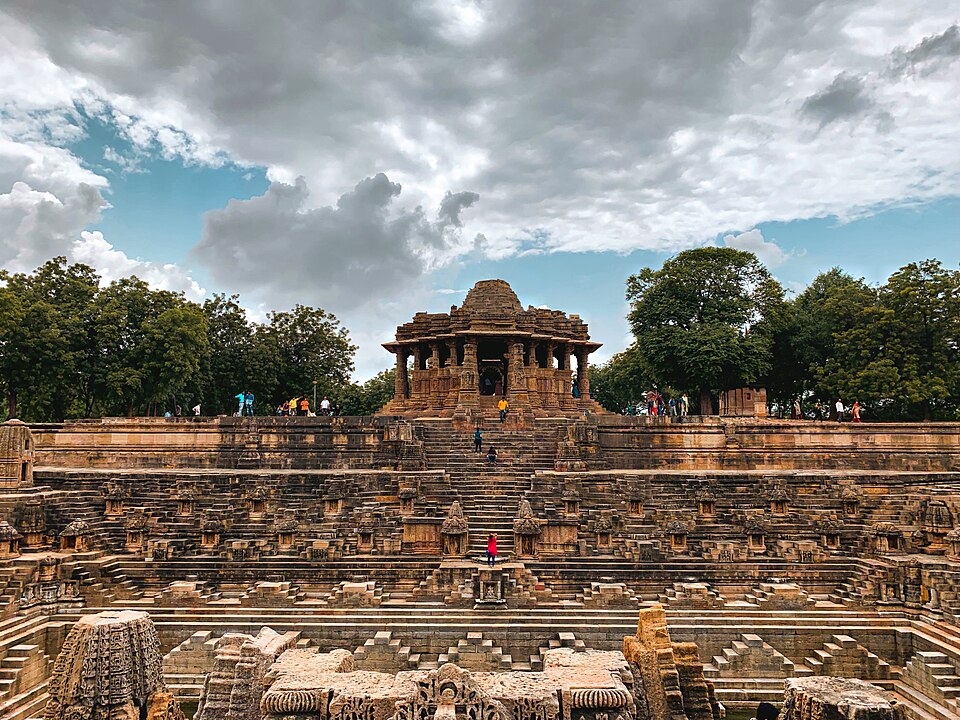
Modhera Sun Temple: A Masterpiece of Solarpunk Architecture and Vedic Science

Next Makar Sankranti

Thursday, 14 January 2027· in 165 days

Set a reminder so you never miss Makar Sankranti.

Introduction

The Modhera Sun Temple, situated on the banks of the Pushpavati River in the Mehsana district of Gujarat, stands as a breathtaking testament to the architectural brilliance of the Solanki dynasty. Built during the reign of King Bhima I in the 11th century, this temple is not merely a structure of stone but a sophisticated astronomical instrument designed to harmonize the terrestrial and the celestial. Dedicated to Surya, the solar deity who sustains all life on Earth, the temple embodies the profound Vedic understanding of the sun as the 'Atman' (soul) of the universe, the source of energy, and the ultimate giver of light and wisdom.
According to historical accounts and architectural studies, the temple is a pinnacle of the Maru-Gurjara style of architecture. It was conceived at a time when the Solanki rulers were patrons of great art and science, integrating complex mathematical proportions with deep spiritual symbolism. The temple complex is divided into several distinct components: the Surya Kund (a magnificent stepped tank), the Sabha Mandap (assembly hall), and the Guda Mandap (the sanctum sanctorum). Each element was meticulously crafted to facilitate a connection between the devotee and the divine solar light.
The legend surrounding the construction of such temples often ties back to the Puranic descriptions of Surya Dev, who is described as the regulator of time (Kala) and the provider of cosmic order (Rta). The Modhera temple was designed such that during the equinoxes, the first rays of the rising sun would penetrate the temple complex and fall directly upon the diamond-studded idol of Surya Dev in the sanctum. This celestial alignment showcases the advanced knowledge of astronomy held by ancient Indian architects, who viewed the movement of the sun not just as a natural phenomenon, but as a divine dance of the cosmic deity.
Spiritually, Modhera serves as a bridge between the material world and the transcendental light. For a newcomer, understanding Modhera requires viewing it through the lens of 'Surya Upasana' (sun worship). It is a place where the physical elements of earth (stone), water (the Kund), and light (the Sun) converge to remind the seeker of the interconnectedness of all existence. As one walks through the intricately carved pillared halls, one is reminded that the pursuit of knowledge and the pursuit of divinity are one and the same, both driven by the light of consciousness.

Significance

The significance of the Modhera Sun Temple is multi-faceted, encompassing spiritual, astrological, and cultural dimensions. Spiritually, the temple is a locus of 'Surya Shakti' (solar energy). In Hindu cosmology, Surya is the 'Pratyaksha Devata'—the deity who is visible to the naked eye, making him uniquely accessible for meditation and worship. Devotees visiting Modhera seek to align their internal rhythms with the cosmic rhythm of the sun, aiming to dispel the darkness of 'Avidya' (ignorance) with the light of 'Jnana' (wisdom). The solar energy is believed to purify the subtle body, enhancing vitality, health, and mental clarity.
Astrologically, the temple is a masterpiece of precision. The alignment with the equinoxes highlights the ancient Indian mastery of the solar calendar. The Surya Kund, with its 108 miniature shrines, serves as a geometric representation of the sacred numbers found in Vedic mathematics. The placement of the temple ensures that the solar cycles—the very foundation of agricultural and ritual life in ancient India—are honored through architectural rhythm. This intersection of astronomy and divinity suggests that the temple was a site for observing seasonal changes, which were vital for both spiritual festivals and worldly survival.
Culturally, Modhera represents the zenith of the Solanki era, often referred to as the 'Golden Age of Gujarat.' The intricate carvings on the pillars and walls depict various scenes from the Puranas, the dance of Apsaras, and the daily life of the era, preserving a frozen moment of medieval Indian aesthetics. The temple is a symbol of regional pride and a reminder of an era where science and spirituality were never viewed as conflicting disciplines, but as two sides of the same coin.
Furthermore, the practice of Surya Upasana at such a site carries the 'Phala' (fruit) of improved 'Prana' (life force). It is believed that performing rituals or even simple meditation in the presence of such architecturally sanctified space helps in balancing the solar plexus chakra (Manipura), which governs willpower, digestion, and personal power. For the seeker, Modhera is a reminder that the divine is not distant, but is the very light that allows us to see, breathe, and exist.

Auspicious Time

The best time to visit and perform meditation is during the Equinoxes (March and September) when the sun's rays align with the sanctum, or during the early morning hours (Surya Udaya) to witness the first light hitting the carvings.

Find your exact auspicious time Check the shubh muhurat and choghadiya for your city and date.

Required Samagri (Materials)

Arghya Patra (Copper vessel for offering water)
Red flowers (Hibiscus or Roses are preferred for Surya Dev)
Incense sticks (Agarbatti)
Ghee lamp (Diya)
Sandalwood paste (Chandan)
Akshata (Unbroken rice grains)
Fruits and sweets (Prasad)

Preparation Steps

  1. 1Perform 'Shaucha' (ritual purification) by bathing before approaching the temple area.
  2. 2Wear clean, preferably bright or saffron-colored clothing to resonate with solar energy.
  3. 3Ensure a calm and meditative state of mind, setting an intention (Sankalpa) for clarity and health.
  4. 4If visiting the Surya Kund, approach with respect for the sacred waters.

Steps

  1. 1Approach the Surya Kund and offer a silent prayer of gratitude to the elements of water and earth.
  2. 2Walk towards the Sabha Mandap, observing the intricate carvings to ground your consciousness in the temple's history.
  3. 3Stand facing the direction of the rising sun if possible.
  4. 4Perform 'Arghya': Take water in a copper vessel, hold it with both hands at chest level, and slowly pour it while chanting Surya Mantras, allowing the stream of water to be viewed through the sunlight.
  5. 5Light a Ghee lamp to represent the dispelling of darkness.
  6. 6Offer flowers and sandalwood paste to the symbolic representation of the deity.
  7. 7Sit in silence (Dhyana) for a few minutes to absorb the vibrations of the space.

Mantras

Surya Gayatri Mantra

ॐ आदित्याय विद्महे मार्तण्डाय धीमहि तन्नो सूर्यः प्रचोदयात्॥

Om Adityaya Vidmahe Martandaya Dhimahi Tanno Suryah Prachodayat

Meaning: We meditate on the Sun God, the son of Aditi. May the radiant one illuminate our intellect and guide us on the right path.

Surya Beeja Mantra

ॐ ह्रां ह्रीं ह्रौं सः सूर्याय नमः॥

Om Hraam Hreem Hroum Sah Suryaya Namah

Meaning: Salutations to the solar deity, the embodiment of cosmic energy and light.

Guidelines

  • Maintain a Sattvic diet (no onion, garlic, or heavy spices) during solar worship periods.
  • Observe silence (Mauna) during meditation to conserve energy.
  • Focus on early morning rituals (Brahma Muhurta) to align with the sun's rising.

Do's

  • Offer water (Arghya) during sunrise.
  • Maintain cleanliness of the mind and body.
  • Respect the architectural heritage and the sanctity of the site.
  • Practice gratitude towards the sun as the source of all life.

Don'ts

  • Do not enter the sanctum areas with footwear.
  • Avoid loud or disruptive behavior that disturbs the meditative atmosphere.
  • Do not touch the ancient carvings with oily or dirty hands.
  • Avoid engaging in negative or angry thoughts during the ritual.

Common Mistakes to Avoid

  • Performing Arghya without focusing on the rising sun.
  • Neglecting the importance of the intention (Sankalpa) behind the prayer.
  • Viewing the temple merely as a historical monument rather than a living spiritual space.

Regional Variations

  • In certain traditions, Surya is worshipped with specific colored flowers depending on the nakshatra (star) of the devotee.
  • Some lineages emphasize the use of 'Suryanamaskar' (Sun Salutations) as a physical form of prayer, while others focus strictly on mantra japa.

Frequently Asked Questions

Is the Modhera Sun Temple still an active place of worship?
While it is primarily managed as a protected historical monument by the ASI, many devotees still visit for spiritual meditation and to honor Surya Dev, especially during solar events.
What is the significance of the Surya Kund?
The Surya Kund is a massive stepped tank with 108 small shrines. It is used for ritual purification and symbolizes the connection between the celestial sun and the earthly water elements.

References & Traditional Notes

  • The architecture follows the 'Shilpa Shastras' (ancient canons of sculpture and architecture).
  • The temple's design is a physical manifestation of the 'Surya Siddhanta', an ancient Indian astronomical text.
  • Customs for Surya worship can vary between Smarta and Vaishnava traditions.

Related Audio & Bhajans

Hindu Mythology Vedic and Puranic

other
View Lyrics

Nagara Architecture

otherYouTube
Open on YouTube →
Lyrics

HPI 28 - Who Wants to Live Forever? - Early Ayurvedic Medicine

other
View Lyrics

Ayurvedic medicine

otherYouTube
Open on YouTube →
Lyrics

Padham Vedichi

otherKarthik
View Lyrics

40 Aspects Of Veda And Vedic Literature In The Human Physiology 01

other
View Lyrics

Vedic literature

otherYouTube
Open on YouTube →
Lyrics

Vedic Shukra Mantra

otherNavagrahas
View Lyrics

Vedic Astrology, Enneagram of Personality & Wheel of Totality with Indra Rinzler

other
View Lyrics

Vedic astrology

otherYouTube
Open on YouTube →
Lyrics

Affiliate disclosure: Sanatan Hindu participates in the Amazon Associates Programme and the CueLinks affiliate network (Myntra & Flipkart). This page contains affiliate links, if you click and buy, we earn a small commission at no extra cost to you. As an Amazon Associate we earn from qualifying purchases. Full disclosure.

Amazon Associates tag: geekydevelope-21

Shop Pooja & Festive Essentials on Flipkart

Clicking opens Flipkart via our affiliate link. Prices and availability may vary.

Shop on Flipkart

CueLinks Publisher: 300371

Shop Festive Wear on Myntra

Clicking opens Myntra via our affiliate link. Prices and availability may vary.

CueLinks Publisher: 300371

Share:

Get the daily panchang & festival updates

Join our free newsletter, no spam, unsubscribe anytime.